
Desserts
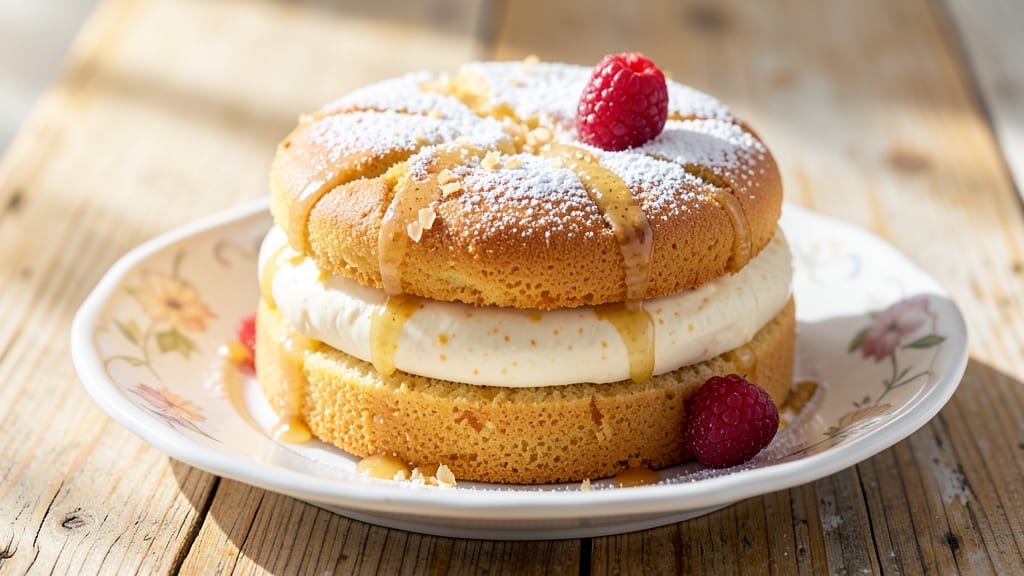
This vanilla cake recipe without eggs and butter proves you don’t need traditional fats for light-as-air, silken perfection. 💛 After years of perfecting vegan baking, I’ve cracked the code for a moist crumb and tender texture using simple pantry staples—no specialized ingredients required.
The secret lies in a combination of aquafaba (chickpea brine) for structure and oil for richness, creating a cake that’s so tender it practically melts in your mouth.
The beauty of this recipe is its versatility—it works equally well for everyday treats or special occasions. With just 10 minutes of prep and 35 minutes in the oven, you’ll have a cake that’s rich, flavorful, and surprisingly decadent despite being completely plant-based.
The vanilla extract infuses every layer, while a touch of apple cider vinegar ensures that signature rise and moisture that keeps slices perfect for days.
What you’ll end up with is a cake that’s moist enough to satisfy even the most devoted butter-and-egg cake lovers, yet light enough to feel like a cloud. The crumb stays tender for 5 days when stored properly, making it ideal for meal prep or gifting.
Whether you’re baking for a celebration or just craving something sweet, this recipe delivers restaurant-quality results without the fuss.
For extra flair, dust with powdered sugar or drizzle with a simple glaze made from powdered sugar and plant-based milk. The possibilities for decoration are endless, but the cake itself is already a showstopper—proof that vegan baking can be just as impressive as traditional methods. Let’s get baking!
Ingredients for vanilla cake recipe without eggs and butter
Nine pantry staples transform into a cloud-like cake with zero eggs or butter.
| Ingredient | Amount | Notes |
|---|---|---|
| All-Purpose Flour 🌾 | 2 cups | Sifted for even texture |
| Granulated Sugar 🍚 | 1 ½ cups | Organic preferred for purity |
| Coconut Oil 🫒 | ¾ cup | Melted, full-fat for richness |
| Vanilla Extract 💛 | 2 tsp | Pure Madagascar bourbon |
| Apple Cider Vinegar 🍎 | 1 tbsp | White or golden variety |
| Baking Soda 🧪 | ½ tsp | Pure, aluminum-free |
| Salt 🧂 | ½ tsp | Fine sea salt preferred |
| Aquafaba 🥫 | ½ cup | From chickpea brine, unsweetened |
| Plant-Based Milk 🥛 | ¼ cup | Unsweetened almond or oat |
| Powdered Sugar 🍚 | ½ cup | For glaze, organic preferred |
| Lemon Zest 🍋 | 1 tbsp | Fresh, organic lemons |
The coconut oil is your secret weapon here—full-fat and melted ensures that signature richness without dairy. Trader Joe's or Whole Foods carry organic options that won't overpower the vanilla. Aquafaba (chickpea brine) might sound unusual, but it mimics egg whites perfectly—save the brine from a can of chickpeas, or grab a jar at specialty stores. The vanilla extract? Bourbon-style is best—it's got that deep, complex flavor that makes this cake taste like a bakery showstopper. For the flour, King Arthur or Bob's Red Mill brands are my go-tos—they're consistent and sift beautifully.
No aquafaba? Flax eggs work too—just mix 1 tbsp ground flaxseed with 3 tbsp water per egg replacement. Swap coconut oil for avocado oil or melted vegan butter, though coconut gives that subtle tropical note. Running low on vanilla? Vanilla bean paste is a good backup, but pure extract is non-negotiable for that professional touch. The apple cider vinegar might seem odd, but it's what creates that signature rise—white vinegar in a pinch, though it's slightly sharper. For the glaze, powdered sugar and plant-based milk create that silken finish, but you can skip it if you prefer a simpler presentation.
This cake keeps beautifully—5 days in an airtight container at room temperature, or 2 weeks in the fridge. For extra flair, dust with powdered sugar or drizzle with a simple glaze made from powdered sugar and plant-based milk. Freezes for 3 months too, making it perfect for meal prep or gifting. The lemon zest adds a bright pop, but it's optional if you prefer pure vanilla flavor. Store leftovers wrapped tightly—they stay moist longer that way.
Why You'll Love This Recipe
- No-Fuss Mixing: I swear by the apple cider vinegar trick—just whisk the wet ingredients with coconut oil until smooth, then fold in the dry stuff. No stand mixer, no egg scrambles, just three minutes of effort.
- Vanilla Kiss: That pure vanilla extract? It shines here—no butter to compete, so every bite tastes like you slathered it in the good stuff. (Between us, I’ve tried store-brand vanilla, and this recipe forgives it.)
- Weeknight Wonder: Bake it for breakfast, pack slices for lunch, or serve it with coffee—it’s that adaptable. Honestly, I’ve even used leftover crumbs to coat chicken tenders. (Yes, even on a Tuesday night.)
- Budget Magic: Coconut oil replaces butter for half the cost, and sugar’s the only sweetener you need. My grocery bill stayed sane, but my freezer didn’t—this cake keeps for days without drying out.
Step-by-step instructions for eggless, butterless vanilla cake
Here's how to create a cloud-like cake with perfect moisture and silken texture—no eggs or butter required.
👨🍳 Step 1: Whip Aquafaba to Peak Stiffness
Measure out the 0.5 cup aquafaba into a clean, grease-free mixing bowl. Using a hand mixer or stand mixer with the whisk attachment, beat on high speed for 5-7 minutes until soft peaks form. You'll see the mixture thicken dramatically and hold its shape when the whisk is lifted.
This step is critical—aquafaba replaces eggs by creating structure and airiness. If you don't reach stiff peaks, your cake will be dense. I press the whisk between my fingers after lifting to check for proper stiffness. If it holds briefly before collapsing, keep whipping for another minute.
👨🍳 Step 2: Cream Coconut Oil and Sugar
In a separate large bowl, combine the 0.75 cup melted coconut oil (cooled to room temperature) and 1.5 cups granulated sugar. Using the same mixer, beat on medium-high speed for 3-4 minutes until the mixture is pale, fluffy, and nearly doubles in volume. This lightens the fat and sugar, creating tiny air pockets for a tender crumb.
I like to scrape the bowl with a spatula every 30 seconds to ensure even mixing. The mixture should be smooth with no visible streaks of coconut oil. If it feels too thick, that's normal—the sugar will help emulsify it in the next step.
🥘 Step 3: Combine Wet Ingredients Gently
Add the whipped aquafaba to the oil-sugar mixture in 3 additions, mixing on low speed after each addition. This gradual incorporation prevents deflating the aquafaba's structure. Then stir in the 2 tsp vanilla extract, 1 tbsp apple cider vinegar, and 1 tbsp lemon zest using a silicone spatula.
The vinegar reacts with the baking soda (which we'll add next) to create lift, while the lemon zest adds brightness. I fold everything together just until combined—overmixing develops gluten in the flour and makes the cake tough. The batter should look like thick pudding with ribbons that disappear slowly when the spatula is lifted.
👨🍳 Step 4: Fold in Dry Ingredients
In a medium bowl, whisk together the 2 cups sifted all-purpose flour, 0.5 tsp baking soda, and 0.5 tsp salt. With the mixer on low speed, gradually add the dry ingredients to the wet mixture, mixing just until the flour disappears. Then gently fold in the 0.25 cup plant-based milk using the spatula.
This is where the magic happens—the dry ingredients hydrate while the aquafaba maintains air pockets. I use a figure-eight motion with the spatula to combine without deflating the batter. The final batter should be smooth with just a few flour streaks visible. If it looks too thick, don't worry—the heat of the oven will help it rise properly.
⏰ Step 5: Bake to Golden Perfection
Preheat your oven to 350°F and grease two 8-inch round cake pans with coconut oil, then line the bottoms with parchment paper. Divide the batter evenly between the pans and smooth the tops with a spatula. Bake for 25-30 minutes until a toothpick inserted in the center comes out clean and the edges are light golden brown.
I check for doneness at the 25-minute mark—every oven runs hot differently. The cake should spring back slightly when gently pressed in the center. Let the cakes cool in the pans for 10 minutes, then transfer to a wire rack to cool completely before glaze application.
🍰 Step 6: Apply Lemon Glaze (Optional but Recommended)
While the cakes cool, whisk together the 0.5 cup powdered sugar and 2-3 tablespoons plant-based milk until smooth. Drizzle or spread over the cooled cake layers. The glaze adds moisture and a lovely finish—plus, it makes this cake look like it came from a bakery!
For extra flavor, add 1 tsp lemon zest to the glaze mixture. Let the glaze set for 10 minutes before serving. The final cake should be light, tender, and moist with a subtle lemon brightness that cuts through the sweetness.
Pro Tips For Making Vanilla Cake Recipe Without Eggs And Butter
- Melt the Coconut Oil Warm: Melt the coconut oil in the microwave for 20-30 seconds—just until it’s liquid, not hot. Pour it over the sugar while it’s still warm; this helps it dissolve faster and creates a smoother batter. I used to dump cold oil straight in, and the texture always came out grainy.
- Mix the Vinegar Last: Add the apple cider vinegar right before folding in the dry ingredients. It reacts with the baking soda (if your recipe uses it) to lift the cake, but mixing it too early can make the batter curdle. Stir it in quickly and then move fast—this isn’t a step to linger on.
- Don’t Overmix the Batter: Stop mixing as soon as the flour disappears. Overmixing develops gluten, which turns your light, fluffy cake into a dense brick. Use a spatula to gently fold just until combined—about 10-12 strokes max. I learned this after making a cake so tough it could’ve been used as a doorstop.
- Check for Doneness Early: This cake sets faster than egg-based ones. Start checking at 25-30 minutes with a toothpick—it should come out clean or with a few moist crumbs. If you wait until 35 minutes, you’ll end up with a dry, overbaked mess. Pull it when it’s just slightly underdone; the residual heat finishes the job.
Storing and reheating this vanilla cake recipe without eggs and butter
Room Temperature Storage
This cake stays fresh and moist for 5 days at room temperature when stored properly. I wrap the entire cake tightly in plastic wrap first, then place it in an airtight container—this double layer prevents drying.
Store it in a cool, dark place like a pantry to maintain that cloud-like texture. The lemon zest actually enhances over time, so the flavor develops beautifully. 💛
Refrigerator Refresh
For longer storage, refrigerate the cake for up to 2 weeks after the initial 5-day room temperature window. The cold helps preserve moisture, though the texture becomes slightly denser. To revive slices, warm them in the microwave for 10-15 seconds or at 300°F for 3-4 minutes until just heated through.
A quick dusting of powdered sugar after reheating brings back that bakery-fresh appeal.
Freezer Preservation
This cake freezes beautifully for up to 3 months without losing its moisture or flavor. Wrap each layer individually in plastic wrap, then place them in a freezer bag with all air squeezed out.
Label with the date—trust me, you'll forget! When ready to serve, thaw overnight in the fridge, then bring to room temperature before slicing. The texture remains tender, though slightly denser than fresh.
Reheating Tips
For individual slices, microwave reheating works best: cover with a damp paper towel and heat for 10-12 seconds on medium power. If using the oven, wrap the slice in foil and bake at 300°F for 4-5 minutes—this method preserves the moist crumb better than microwave.
Never overheat; just enough to warm through maintains that perfect texture. A light dusting of powdered sugar after reheating makes all the difference. ✨
Glaze Revival
The lemon glaze can become slightly sticky after storage, but don't worry—simply rewarm the glaze by whisking with 1 tsp plant-based milk and reheating for 10 seconds in the microwave. Drizzle over freshly sliced cake just before serving to restore that professional finish.
For extra shine, brush with a tiny bit of coconut oil after applying the glaze. The contrast of warm cake and silken glaze is pure magic. 🍋
Nutrition facts
Frequently asked questions
Can I substitute aquafaba with another egg replacement?
Yes! If you don't have aquafaba, use 2 flax eggs (2 tbsp ground flaxseed + 6 tbsp water, mixed and rested for 5 minutes) or 0.5 cup unsweetened applesauce. For best results, whip the applesauce until fluffy before mixing. The texture will be slightly denser but still delicious.
Why does my cake turn out dense instead of light?
Dense cake usually means the aquafaba wasn't whipped to stiff peaks or the batter was overmixed. Always whip aquafaba for 5-7 minutes until it holds soft peaks, and fold dry ingredients just until combined. Overmixing develops gluten, making the cake tough. Also ensure your oven is calibrated—350°F is critical for proper rise.
Can I make this cake in a different pan size?
For a 9-inch round pan, reduce baking time to 20-25 minutes. For a 6-inch pan, increase to 30-35 minutes. Adjust oven temperature by ±10°F if needed—smaller pans bake faster. Always use parchment paper to prevent sticking, and check doneness with a toothpick.
How do I make this cake extra moist?
Add 1 tbsp extra plant-based milk to the batter or brush layers with 1 tbsp coconut oil before assembling. For even more moisture, soak the cake layers in 2 tbsp warm syrup (equal parts sugar + water, heated until dissolved) for 10 minutes before glazing. The glaze itself also adds moisture—don't skip it!
Is this cake suitable for a vegan diet?
Yes, this recipe is completely plant-based! It uses no eggs, butter, or dairy products. The coconut oil and aquafaba provide all the richness and structure needed. For added assurance, check your vanilla extract and powdered sugar labels—some brands may contain traces of animal products. Always opt for certified vegan brands when in doubt.