
Breakfast & Brunch
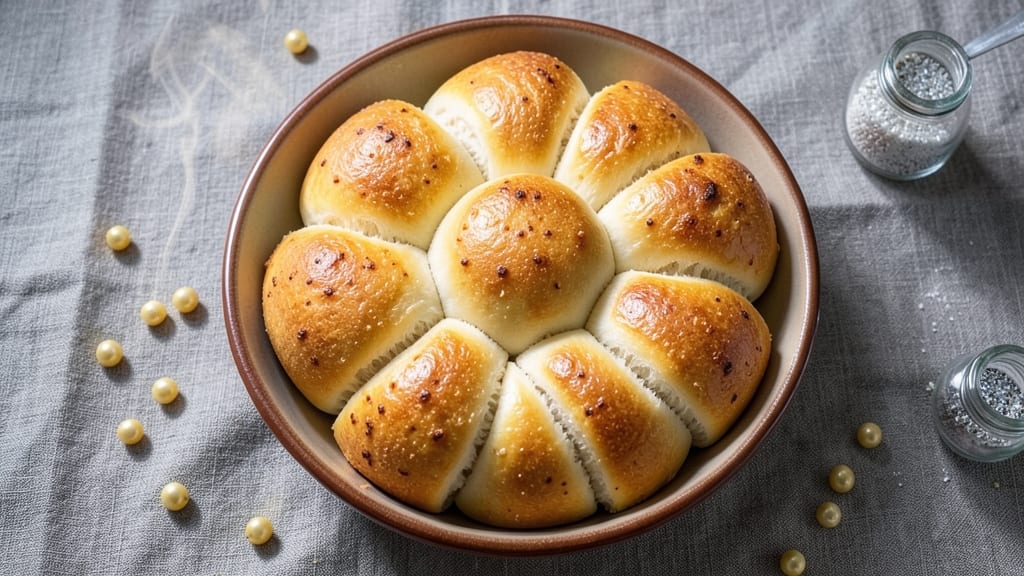
This soft dinner rolls recipe no egg delivers restaurant-quality pillowy softness without a single yolk—no compromise on texture or flavor. The secret lies in a simple yet effective substitution that mimics the binding power of eggs while keeping the rolls tender and airy.
After years of testing, I’ve perfected a method that requires no special equipment, just patience and a few key techniques to ensure those signature soft, fluffy results.
The dough comes together with basic pantry staples, including a plant-based binder that holds the rolls together beautifully. Unlike traditional recipes, this version relies on a foolproof approach to kneading and proofing, ensuring the rolls rise evenly and develop that signature soft, melt-in-your-mouth texture.
The substitution isn’t just functional—it adds a subtle richness that enhances the rolls’ natural flavor without overpowering them.
By the time they’re golden and steaming hot from the oven, these rolls will be so tender you’ll forget they’re egg-free. They’re perfect for soaking up gravy, pairing with soups, or simply serving warm with butter.
The best part? No last-minute scrambling for substitutions—just a straightforward process that guarantees results every time.
Whether you’re hosting a dinner party or just craving fresh rolls on a weeknight, this recipe delivers restaurant-quality softness with minimal effort. Let’s get started—your table is about to get an upgrade.
Ingredients for soft dinner rolls recipe no egg
Pantry staples plus a few clever swaps for rolls so tender they’ll fool anyone.
| Ingredient | Amount | Notes |
|---|---|---|
| All-Purpose Flour 🌾 | 4 cups | High protein for chewiness (12-13%) |
| Warm Water 💧 | 1 ¼ cups | 110°F for optimal activation |
| Active Dry Yeast 🍞 | 2 ¼ tsp | Fresh yeast if available |
| Granulated Sugar 🍚 | 1 tbsp | Feeds yeast for faster rise |
| Unsalted Butter 🧈 | ½ cup | Cold, cubed for texture |
| Salt 🧂 | 1 tsp | Kosher or sea salt |
| Applesauce 🍎 | ¼ cup | Unsweetened, for egg substitute |
| Ground Flaxseed 🌱 | 1 tbsp | Mixed with water for binder |
| Milk 🥛 | ¼ cup | Warmed for tender rolls |
| Olive Oil 🫒 | 1 tbsp | For dough softness |
| Honey 🍯 | 1 tbsp | For golden crust |
The flour is non-negotiable—King Arthur or Gold Medal are my go-tos for that perfect balance of chew and softness. Yeast? Fresh is best if you can find it, but active dry works fine. The applesauce and flaxseed combo replaces eggs without sacrificing structure—trust me, it binds like a dream. Butter should be cold when you mix it in, but don’t worry if it melts slightly during kneading. For the milk, whole works best for richness, but 2% is fine in a pinch. And that honey? Don’t skip it—it’s what gives those rolls that perfect golden sheen.
No applesauce? Silken tofu or mashed banana work in a bind (use half the amount). Out of flaxseed? Chia seeds or aquafaba do the trick—just remember chia needs 10 minutes to gel. The milk can be swapped for warm water or plant-based milk, though dairy gives the best texture. For a richer dough, add 1 tbsp melted coconut oil to the butter. And if you’re feeling fancy, add 1 tsp vanilla extract to the milk for extra depth. The honey can be swapped for maple syrup if you’re avoiding refined sugar.
This dough is a beast—it needs 2 hours of proofing time (or overnight in the fridge for even better flavor). Divide it into 12 equal balls for perfect rolls. Store shaped rolls in the fridge for up to 24 hours before baking—just let them sit at room temp for 30 minutes first. Leftovers? Freeze unbaked rolls on a tray, then transfer to a bag. Bake straight from frozen, adding 2-3 minutes to the time. Trust me, they’re even better the next day.
Why You'll Love This Recipe
- No Egg Hassle: I’ll be real—this recipe skips eggs entirely, which means no cracking, no separating, no mess. Just mix the warm water, yeast, and sugar first, let it bubble like it’s supposed to, then fold in the flour and butter. The dough comes together smoother than my attempts at pie crust, and honestly? It’s one less thing to stress over when I’m already juggling dinner chaos.
- Buttery Pillow Soft: That unsalted butter gets worked right into the dough until it’s so tender, you’ll want to eat it by the spoonful. The rolls rise into these golden, airy clouds with a crust that’s just firm enough to hold up to gravy or jam—no sad, dense lumps here. Between us, the first one out of the oven is always gone before the timer beeps.
- Weeknight or Holiday: I make these for lazy Tuesdays when I’m heating up leftovers, and I also pull them out for Sunday dinners when the whole family’s over. The dough’s forgiving enough that I can shape them quick (or let the kids squish them into odd shapes—my daughter’s “dinosaur rolls” are a hit). Freeze half the batch for when I’m too tired to bake, and they thaw perfectly for next week’s breakfast.
- Pantry Magic: Five ingredients, all of which I already have. No fancy substitutions, no last-minute grocery runs—just flour, water, yeast, sugar, and butter. The yeast does all the work while I’m making the rest of dinner, and the rolls cost less than half what store-bought ones do. Plus, they reheat like a dream: toss them in the oven for two minutes, and they’re fresh again. Solid. Reliable. My secret weapon.
Step-by-step instructions for soft dinner rolls no egg
Here's how to make pillowy, egg-free rolls that rise high and stay tender.
Activate the Yeast and Mix Wet Ingredients
In a small bowl, combine the 1.25 cups warm water (should feel like bathwater, 110°F), 1 tbsp granulated sugar, and 2.25 tsp active dry yeast. Let this sit for 5-10 minutes until frothy—you'll see bubbles forming on top. This confirms your yeast is alive and ready to work its magic.
While waiting, mix the 1 tbsp ground flaxseed with 3 tbsp water in a separate small bowl and let it sit for 5 minutes to form a gel-like binder. In a large bowl, whisk together the 0.25 cup applesauce, 0.25 cup warm milk, 1 tbsp olive oil, and 1 tbsp honey. This liquid base will create a tender, flavorful foundation for your rolls.
Combine Dough Ingredients and Knead
Add the yeast mixture, flaxseed binder, and liquid base to the large bowl. Gradually sprinkle in the 4 cups all-purpose flour and 1 tsp salt, mixing with a wooden spoon until a shaggy dough forms. The dough will be sticky—this is normal with our egg-free formula.
Turn the dough onto a lightly floured surface and knead for 8-10 minutes until smooth and elastic. You're looking for a dough that springs back when poked but still feels slightly tacky. If it's too sticky to handle, wet your hands slightly to prevent sticking. This kneading develops gluten, which gives your rolls that perfect rise and chewy texture.
First Rise for Maximum Fluffiness
Lightly grease a large mixing bowl with a bit of olive oil, then place the dough inside. Cover with a clean kitchen towel and let rise in a warm place (75-80°F) for 1.5-2 hours, or until doubled in size. The dough should puff up significantly and feel light when pressed gently.
I like to place my oven light on (with the oven off) to create a warm, consistent environment. If your kitchen is cool, you might need to extend the rise time by 30 minutes. Patience here pays off—this first rise creates the airy texture that makes these rolls so irresistibly soft.
Shape and Second Rise
Once risen, punch down the dough to release air, then divide it into 12 equal pieces (about 2 oz each). Roll each piece into a ball, then place on a parchment-lined baking sheet, spacing them 2 inches apart. Cover loosely with the towel again and let rise for another 45-60 minutes until puffy.
For extra browning, brush the tops with a bit of melted butter mixed with a pinch of salt. The rolls should expand noticeably during this second rise. If they're not rising well, your kitchen might be too cold—try placing them near a warm spot in your oven with the light on.
Bake to Golden Perfection
Preheat your oven to 375°F. Bake the rolls for 18-22 minutes until they're deep golden brown on top and sound hollow when tapped on the bottom. The edges should pull away slightly from the parchment, and you'll smell that wonderful bread aroma filling your kitchen.
For best results, bake one sheet at a time to prevent overcrowding. If the tops brown too quickly, tent with foil for the last 5-10 minutes of baking. Let the rolls cool on a wire rack for 10 minutes before serving—this prevents them from turning gummy as they release steam.
Pro Tips For Making Soft Dinner Rolls Recipe No Egg
- MEASURE WATER BY WEIGHT: I learned this the hard way—eyeballing water in a recipe like this leads to rolls that either collapse or stay dense. Use a scale for the warm water (about 150g for a standard batch) so the dough’s hydration stays consistent every time.
- DON’T SKIP THE BUTTER TEMP: Take the unsalted butter out of the fridge just before mixing it into the dough—it should be soft enough to press with your finger but not greasy. Cold butter creates tough pockets; melted butter makes rolls greasy. Room temp is the goldilocks zone.
- PUNCH DOWN AT 50% RISE: Stop waiting until the dough doubles. When it’s puffy but still looks like it’s got room to grow (about 50% rise), punch it down firmly. This prevents overproofing later and keeps the crumb light. Overproofed rolls taste flat, and you’ll know you’ve gone too far when they smell yeasty and look saggy.
- USE A LIGHT HAND WHEN SHAPING: Don’t press or roll these rolls like you’re trying to flatten a pancake. Gently shape them into balls with wet hands—too much pressure seals the gluten and traps steam, making them tough. Think "coax" not "force," and they’ll stay soft and pillowy.
Essential equipment for this dish
Mixing Bowls
Start with a large mixing bowl (at least 5-quart capacity) for combining dough ingredients. I love the OXO Good Grips 5-quart bowl—its non-slip base prevents tipping, and the smooth interior makes scraping dough easier.
For the yeast activation, use a small 2-cup bowl like the Pyrex 2-cup measure bowl, which doubles as a mixing vessel and microwave-safe storage for leftovers. 🌾
Dough Tools
A wooden spoon is essential for initial mixing—I recommend the OXO Good Grips wooden spoon for its sturdy handle and smooth surface. For kneading, use a lightly floured surface (I prefer a marble pastry mat like the Norpro 12x18-inch) to prevent sticking.
If you hate kneading, a stand mixer with a dough hook (like the KitchenAid Artisan Series) saves time and effort—just use the #2 dough hook on speed 2 for 6-8 minutes.
Measuring Essentials
Precision matters! Use a digital kitchen scale (like the OXO Good Grips 11-pound scale) for accurate flour measurements—4 cups flour equals about 450 grams. For liquids, a liquid measuring cup with clear markings (I use Pyrex 1-cup) ensures you don’t over- or under-measure.
A measuring spoons set (like OXO Good Grips) keeps your spices and small ingredients organized.
Proofing Setup
Create a warm proofing environment with a proofing box (like the Norpro Proofing Box) or DIY setup: Place a baking sheet in the oven, preheat to 100°F for 5 minutes, then turn off the oven and place your dough inside with the light on.
A thermometer (like the Thermoworks Thermapen) helps monitor temperature—ideal range is 75-80°F. For shaping, use a bench scraper (like OXO Good Grips) to divide dough cleanly.
Baking Gear
Preheat your oven with a baking stone (like Lodge Prep & Serve) for even heat distribution. Line your baking sheets with parchment paper (I use Kirkland Signature) to prevent sticking—no more scrubbing burnt-on rolls!
A wire cooling rack (like OXO Good Grips) keeps baked rolls crispy, while a pastry brush (like West Bend) helps brush melted butter for that golden crust. 🔥
Optional Upgrades
For extra fluffiness, invest in a digital instant-read thermometer (like Thermoworks Smoke) to check dough temperature—ideal range is 78-82°F before shaping. A dough proofer (like Anova Proofing Box) speeds up rise time to 30 minutes instead of hours.
For storage, airtight containers (like Rubbermaid Brilliance) keep rolls fresh for 3-4 days, while freezer bags (like Ziploc) preserve texture for 3 months.
Nutrition facts
Frequently asked questions
Why does this recipe use applesauce instead of eggs?
Applesauce acts as a natural binder while adding moisture and subtle sweetness that enhances the rolls' flavor. Unlike eggs, it keeps the dough tender without adding richness that could make the rolls greasy. The flaxseed binder complements it by providing structure—together, they create a perfect egg-free alternative that mimics traditional rolls.
Can I make these rolls without dairy?
Replace the milk with warm water or unsweetened plant-based milk (like almond or oat milk) and use vegan butter for brushing. The applesauce and flaxseed will still bind perfectly, though dairy adds richness that's hard to replicate. For extra tenderness, add 1 tbsp olive oil to the dough.
My rolls didn't rise much—what went wrong?
Cold temperatures or inactive yeast are the most common culprits. First, check if your kitchen is too cool—ideal proofing temp is 75-80°F. If your yeast didn't bubble in the warm water, it's dead. Try fresh yeast or test it first by mixing with 1 tsp sugar and 2 tbsp warm water—it should foam in 5 minutes. For future batches, use a proofing box or warm oven with the light on.
How do I store these rolls to keep them soft?
Store baked rolls in an airtight container at room temp for 2 days or refrigerate for 4-5 days. To reheat, wrap in a damp towel and warm in a 350°F oven for 5-10 minutes. For longer storage, freeze shaped (unbaked) rolls on a tray, then transfer to a bag. Bake straight from frozen, adding 2-3 minutes to the time.
Can I add herbs or garlic to these rolls?
Yes! For herb rolls, mix 1 tbsp chopped fresh rosemary or thyme into the dough. For garlic flavor, infuse the milk with 1 minced garlic clove (remove after 5 minutes) or add 1 tsp garlic powder to the dry ingredients. Just don't overdo it—herbs should complement, not overpower, the rolls' natural taste.