
Main Courses
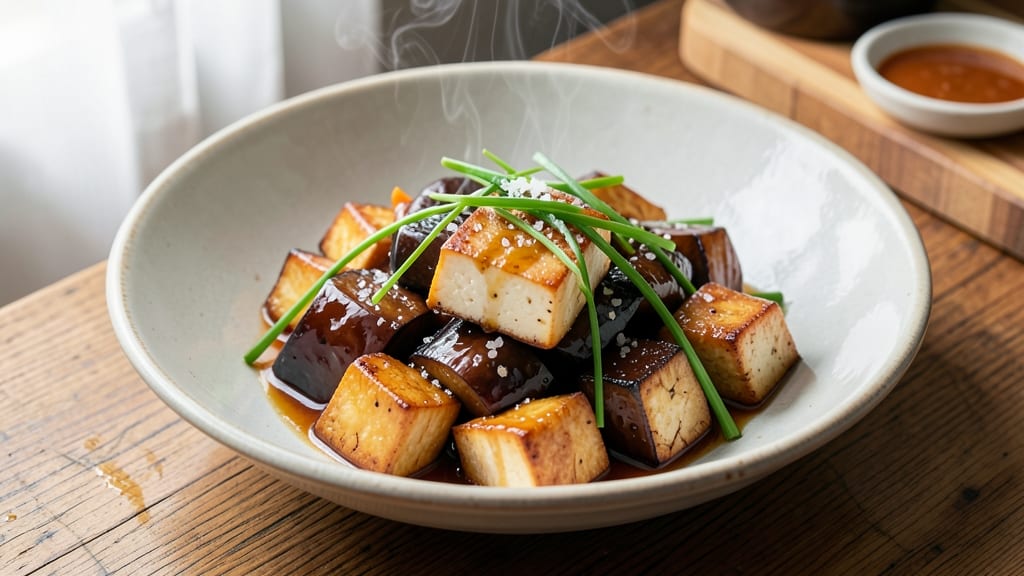
This Japanese eggplant stir-fry delivers crisp-tender bites packed with umami depth that transforms simple vegetables into a restaurant-worthy dish. The secret lies in properly salting the eggplant first—this draws out excess moisture, ensuring perfect texture when stir-fried.
I've perfected this technique over years of testing, and the results are consistently tender yet crisp edges that hold up to every bite.
The magic happens in the balance of flavors: a touch of sweetness from soy sauce, umami from dashi (or vegetarian substitute), and a hint of garlic and ginger for aromatic depth. Traditional recipes often include butter, but this version keeps it plant-based while maintaining that signature Japanese flavor profile.
The stir-fry method is simple but requires attention to heat control—high enough to develop color, but not so hot that it burns before the eggplant cooks through.
What you'll end up with is a dish that's vibrant, flavorful, and satisfying—each piece of eggplant holding its shape while delivering that perfect contrast of textures. The aroma alone will have everyone at the table asking what's for dinner.
This recipe serves as both a complete vegetarian main course and a perfect side dish for grilled meats or rice bowls.
The finishing touches—like toasted sesame seeds and sliced green onions—elevate the presentation without overpowering the natural flavors. Whether you're cooking for a weeknight dinner or preparing for a gathering, this Japanese eggplant stir-fry delivers professional-quality results with minimal effort. Let's get started on creating this umami-packed masterpiece.
Ingredients for japanese eggplant recipe stir fry
Umami-packed ingredients that transform simple vegetables into restaurant-quality bites—just 13 staples away.
| Ingredient | Amount | Notes |
|---|---|---|
| Japanese Eggplant 🍆 | 2 lb | Cut into 1-inch cubes |
| Extra-Firm Tofu 🥬 | 1 lb | Pressed and cubed |
| Soy Sauce 🍶 | ½ cup | Kikkoman preferred |
| Dashi Powder 🍜 | 1 tbsp | Vegetarian version |
| Mirin 🍶 | 2 tbsp | Sweet rice wine |
| Sesame Oil 🫒 | 1 tbsp | Toasted for aroma |
| Garlic Cloves 🧄 | 4 cloves | Minced finely |
| Fresh Ginger 🌿 | 2 tbsp | Finely grated |
| Neutral Oil 🫒 | ½ cup | Avocado or vegetable |
| Toasted Sesame Seeds 🌾 | 1 tbsp | For garnish |
| Green Onions 🧅 | 3 whole | Sliced thinly |
| Diamond Crystal Kosher Salt 🧂 | 1 ½ tsp | For salting eggplant |
| White Pepper 🌶️ | ½ tsp | Freshly ground |
The eggplant is non-negotiable here—Japanese eggplant has thinner skin and fewer seeds, delivering that perfect crisp-tender texture. Asian markets usually carry it, but most grocery stores stock it too. Look for firm, heavy ones—those are the freshest. The tofu needs pressing (wrap in a towel, place a heavy pan on top for 30 minutes) to remove excess water. Trader Joe's sells pre-pressed tofu if you're short on time. For the dashi, Hondashi powder is my go-to—it dissolves easily and delivers that authentic umami punch without any fish content.
No mirin? Substitute 1 tbsp sugar plus 1 tbsp rice vinegar—it won't be identical but works in a pinch. Short on sesame oil? Toasted sesame seeds at double the amount add flavor without the strong aroma. The garlic and ginger can be swapped for garlic powder and ground ginger at half the amount if you're in a hurry. For the neutral oil, avocado oil has the highest smoke point—essential for stir-frying. And if you can't find Japanese eggplant, Italian eggplant works but will have more seeds. The key is salting the eggplant first—let it sit 20 minutes after salting to draw out moisture.
The eggplant cubes keep best in the fridge for 3 days if you prep them ahead. Store them in a sealed container with paper towels to absorb any excess moisture. The stir-fry reheats beautifully—just add a splash of water or soy sauce to the pan and toss. For meal prep, portion into containers with the sauce—lasts 4 days refrigerated or 3 months frozen. The sesame seeds and green onions can be toasted and sliced just before serving to keep everything fresh. Double the recipe—it disappears fast!
Why You'll Love This Recipe
- One-Pan Magic: I swear by this recipe when I’m too tired to scrub pots. The eggplant and tofu sizzle together in the same pan—no chopping boards left behind, no extra dishes. Just salt the eggplant, sear it, toss in the tofu, and let the soy and mirin work their magic while I stir.
- Umami Bomb: That first bite? Chef’s kiss. The dashi powder deepens the soy sauce into something rich and savory, while the mirin adds just enough sweetness to balance the eggplant’s natural bitterness. Honestly, it’s the kind of flavor that makes me reach for seconds without thinking.
- Lunchbox Hero: Between us, this is my go-to for meal prep. The stir-fry keeps well in the fridge for three days—perfect for lunches or quick dinners when I’m not in the mood to cook. Pack it cold or reheat it, and it’s still solid every time.
- Budget Win: Japanese eggplant might look fancy, but it’s actually cheaper than regular eggplant at the store. A block of tofu and a few pantry staples stretch this recipe into four servings without breaking the bank. Plus, the leftovers taste just as good the next day.
Step-by-step instructions for Japanese eggplant stir-fry
Here's how to create restaurant-quality crisp-tender eggplant with perfect umami balance.
Prepare the Eggplant for Maximum Crispiness
Cut the 2 lb Japanese eggplant into 1-inch cubes—keep them uniform in size for even cooking. Sprinkle them generously with the 1.5 tsp Diamond Crystal kosher salt and toss to coat completely. Let them sit in a colander for 20 minutes while you prep the rest. This salting step draws out excess moisture, ensuring crispy edges when stir-fried.
After 20 minutes, rinse the eggplant under cold water to remove the salt residue, then pat them very dry with paper towels. Any remaining moisture will steam the eggplant instead of crisping it. Arrange them on a clean kitchen towel to air-dry for another 10 minutes—this final drying step is non-negotiable for that perfect texture.
Press and Cube the Extra-Firm Tofu
Wrap the 1 lb extra-firm tofu in a clean kitchen towel and place a heavy object (like a cast-iron skillet) on top for 15 minutes. This pressing removes excess water, giving you tofu that will brown beautifully instead of steaming. After pressing, cut the tofu into ½-inch cubes—smaller pieces cook faster and absorb more flavor.
Heat 2 tablespoons of the 0.5 cup neutral oil in a large skillet over medium-high heat. Add the tofu cubes in a single layer and cook undisturbed for 4-5 minutes until golden brown on all sides. Flip gently with a spatula—don't press down, or the tofu will turn mushy. Transfer the cooked tofu to a plate and set aside, leaving the oil in the skillet for the eggplant.
Build the Umami-Packed Stir-Fry Sauce
In a small bowl, whisk together the 0.5 cup soy sauce, 1 tbsp dashi powder, 2 tbsp mirin, and 0.5 tsp white pepper. The dashi powder will dissolve completely, creating a rich, savory base. Set this aside while you finish prepping the aromatics—this sauce will infuse the eggplant with deep, complex flavor.
In the same skillet (with the remaining 0.3 cup neutral oil), add the 4 cloves minced garlic and 2 tbsp finely grated ginger. Cook over medium heat for 1-2 minutes until fragrant but not browned—ginger burns quickly, so keep an eye on it. You want the aromatics to perfume the oil without adding bitterness to the dish.
Stir-Fry the Eggplant to Perfect Crisp-Tenderness
Add the dried eggplant cubes to the skillet in a single layer, leaving space between them. Cook over medium-high heat for 8-10 minutes, stirring occasionally, until the edges are deep golden brown and the centers remain slightly soft—this ensures tender eggplant with crispy edges. If the eggplant starts to steam instead of brown, reduce the heat slightly.
Once the eggplant is nearly done, return the tofu to the skillet along with the prepared sauce. Toss everything together for 2-3 minutes until the eggplant is fully coated and the sauce has thickened slightly. The residual heat from the pan will help emulsify the sauce, creating a glossy finish. Taste and adjust seasoning if needed—you might want to add a splash of water if the sauce is too thick.
Finish and Serve with Garnishes
Remove the skillet from heat and drizzle in the 1 tbsp sesame oil and 1 tbsp toasted sesame seeds. Toss gently to distribute the oil and seeds evenly—they add a nutty aroma and beautiful texture contrast. The sesame oil should sizzle slightly, releasing its toasted flavor into the dish.
Garnish with the 3 whole green onions, sliced thinly, and serve immediately while the eggplant is still crisp-tender. This dish tastes best fresh out of the pan, with the eggplant's edges holding their crunch while the centers remain juicy. Pair with steamed rice to soak up every last bit of that umami-packed sauce.
Pro Tips For Making Japanese Eggplant Recipe Stir Fry
- SEAR THE TOFU FIRST: I learned this the hard way—if you toss the tofu in raw, it’ll turn to mush before the eggplant even gets a chance to brown. Press the tofu, cube it, and sear it in a dry pan for 3-4 minutes per side until golden. Then remove it and set aside. The eggplant will thank you by not turning into a sad, soggy side dish.
- SLICE EGGPANT THINLY, THEN SALT: Japanese eggplant has a weird texture if you cut it too thick—uneven cooking, bitter spots, the whole mess. Slice it paper-thin (about 1/8 inch) and immediately salt both sides. Let it sit for 10 minutes while you prep the rest. This draws out the bitterness and keeps the slices tender without falling apart.
- LOW-AND-SLOW FOR THE SAUCE: After frying the eggplant and tofu, resist the urge to blast the sauce on high heat. Simmer the soy-mirin-dashi mix on medium-low for 5-6 minutes—just until it thickens slightly. High heat burns the mirin and ruins the balance. You want that glossy, umami-rich coating, not a charred mess.
- USE A LITTLE WATER: Sounds counterintuitive, but add 2 tablespoons of water to the sauce pan when deglazing. The eggplant releases a ton of moisture, and that little extra water keeps the stir-fry from turning into a sticky, overcooked glop. Stir it in at the end—just enough to loosen everything up without drowning it.
Flavor customization for this japanese eggplant recipe stir fry
Sweet and Tangy Twist
Add 1 tbsp honey or agave syrup to the sauce for a subtle sweetness that balances the umami. I find 1 tsp rice vinegar in the sauce adds a bright tang that cuts through the richness.
For extra depth, swap 1 tbsp mirin for 1 tbsp sake—the alcohol burns off during cooking, leaving behind a delicate floral note. 🍶
Spicy Kick Options
For heat lovers, stir in ½ tsp gochugaru (Korean chili flakes)—it adds a smoky, fruity spice that pairs beautifully with eggplant. A pinch of Sichuan peppercorns (toasted and crushed) brings a subtle numbing heat.
If you prefer fresh heat, add 1 thinly sliced Thai chili—remove it before serving if you want to control the spice level. 🌶️
Umami Boosters
Enhance the savory depth by adding 1 tbsp miso paste—whisk it into the sauce at the end and simmer for 1 minute—it dissolves completely for a rich, fermented umami.
For a smoky touch, add ½ tsp smoked paprika—just a hint is enough to elevate the dish. A splash of fish-free Worcestershire sauce (like Annie's) adds complexity without overpowering. 💫
Herbaceous Variations
Fresh herbs brighten up the dish—toss in 1 tbsp chopped cilantro—it adds a citrusy freshness that cuts through the richness. For a more traditional Japanese touch, use shiso leaves—their minty flavor pairs beautifully with the eggplant.
A sprinkle of thinly sliced scallions right before serving adds a crisp, oniony bite that contrasts perfectly with the crispy eggplant. 🌿
Texture Contrasts
Add crunch with ½ cup panko breadcrumbs—toast them in the skillet for 1 minute—before adding the eggplant. For extra richness, fold in ¼ cup finely chopped roasted peanuts—they add a satisfying crunch and nutty depth.
A handful of toasted edamame—lightly salted—brings a sweet, fresh contrast to the savory eggplant. ✨
Regional Adaptations
For a Korean-inspired version, add 1 tbsp gochujang—the fermented chili paste adds both heat and depth. A Chinese-style twist includes 1 tsp Shaoxing wine—it enhances the caramelization of the eggplant.
For a Thai-inspired flavor, stir in ½ tsp palm sugar—it adds a caramelized sweetness that pairs wonderfully with the umami. 🗺️
Nutrition facts
Frequently asked questions
Why do I need to salt the eggplant before cooking?
Salting removes excess moisture from the eggplant, which prevents steaming and ensures crispy edges when stir-fried. The 20-minute salt soak followed by thorough drying is key—this step transforms mushy eggplant into tender yet crispy bites every time.
Can I use regular eggplant instead of Japanese eggplant?
Yes, but expect more seeds and a slightly different texture. Japanese eggplant has thinner skin and fewer seeds, giving it that signature crisp-tender quality. If using regular eggplant, increase the salt soak to 30 minutes and dry it extra thoroughly to compensate for its higher water content.
What's the best way to reheat leftovers?
Reheat in a skillet over medium heat with a splash of water or soy sauce to restore crispiness. Microwaving works in a pinch, but the texture won't be as satisfying. For best results, reheat just until warmed through—2-3 minutes—and serve immediately.
How can I make this vegetarian without dashi?
Replace dashi with a mix of 1 tbsp soy sauce + ½ tsp mushroom powder for umami depth. Alternatively, use 1 tsp nutritional yeast—it adds a cheesy, savory note that works beautifully. Both substitutes maintain the dish's rich flavor profile while keeping it plant-based.
Why is my eggplant turning mushy instead of crispy?
This usually happens when the eggplant isn't dried properly after salting. Double-check that you've thoroughly patted it dry and let it air-dry for 10 minutes before cooking. Also ensure your pan isn't overcrowded—cook in batches if needed to maintain high heat for crispiness.