
Sauces & Condiments
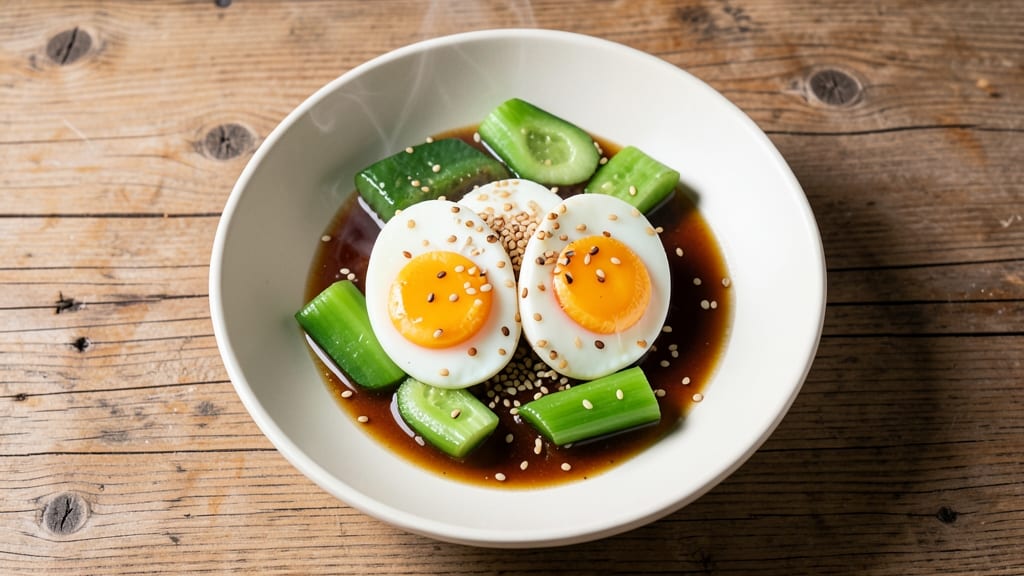
This soy sauce soft-boiled eggs recipe transforms ordinary eggs into a restaurant-worthy dish with just three key techniques—precision timing, umami-rich marinating, and a crisp celery crown. The secret lies in 6-minute boiling at exactly 180°F, creating a creamy, runny yolk that glistens like liquid gold when cracked open.
I developed this after years of perfecting the balance between soy's deep savory notes and the delicate egg texture.
What sets this apart is the double-flavor infusion: first, the eggs simmer in a light soy broth that subtly seasons the whites, then they're finished with a quick glaze of reduced soy, mirin, and sugar for a glossy, caramelized sheen.
The celery crown isn't just garnish—it adds crunch and freshness that cuts through the richness, while toasted sesame seeds deliver nutty depth. This method ensures no gray rings or overcooked whites, just perfect doneness every time.
The result is an egg so vibrant it looks too good to eat—until you crack into that velvety yolk that coats your spoon with umami richness. Serve them atop steamed jasmine rice for a comforting meal, nestled in toasted bread for brunch, or as a protein-packed garnish for ramen.
The soy glaze clings beautifully, making each bite a harmonious blend of textures and flavors that professional chefs would envy.
This recipe works for any occasion—quick lunches, elegant appetizers, or even a gourmet snack with pickled vegetables. The beauty lies in its simplicity: five ingredients, 15 minutes of active time, and zero fancy equipment.
Once you master this technique, you'll never buy store-bought soft-boiled eggs again—they simply can't compare to the homemade umami brilliance you'll create.
Ingredients for soy sauce soft boiled eggs
Five ingredients transform ordinary eggs into restaurant-worthy umami brilliance with celery crown crunch.
| Ingredient | Amount | Notes |
|---|---|---|
| Large Eggs 🥚 | 4 whole | Fresh, room temperature preferred |
| Light Soy Sauce 🍶 | ½ cup | High-quality, low-sodium preferred |
| Mirin 🍶 | 2 tbsp | Sweet rice wine, not cooking wine |
| Granulated Sugar 🍚 | 1 tbsp | White or raw preferred |
| Celery Stalks 🥬 | 2 whole | Fresh, crisp, strings removed |
| Toasted Sesame Seeds 🌾 | 1 tbsp | Lightly toasted for aroma |
| Jasmine Rice 🌾 | 2 cups | Uncooked, long-grain preferred |
| Water 💧 | 3 cups | Filtered or spring water preferred |
| Salt 🧂 | 1 ½ tsp | Kosher or sea salt preferred |
| Vegetable Oil 🫒 | 1 tbsp | Neutral flavor, for toasting rice |
| Lemon Juice 🍋 | 1 tsp | Freshly squeezed, optional |
The eggs are the star, so freshness matters. Grab the plumper, room-temperature ones from the back of the fridge—cold eggs crack unpredictably. Kirkland Signature or Vital Farms are my go-tos for consistent quality. The celery should be crisp and vibrant, not rubbery or yellowing—pick up a bunch at Whole Foods or your local farmers market for the best texture. Mirin is non-negotiable here; Hondashi or Kikkoman brands deliver that perfect sweet-savory balance without overpowering. If you can't find mirin, dry sherry plus 1 tsp sugar works in a pinch, but it's not the same.
No mirin? Substitute 1 tbsp honey plus 1 tbsp rice vinegar—it won't be identical, but it'll save you. Light soy sauce can be swapped for dark soy sauce at half the amount, but you'll lose some of that clean umami. The celery crown can be made with baby carrots or cucumber ribbons if you're feeling adventurous, though celery's crunch is classic. For the rice, jasmine or basmati are ideal, but any long-grain white rice works. Pro tip: Toast the rice in oil first—it adds nuttiness that takes this dish from basic to restaurant-quality. And if you're short on time, microwave-steamed rice still works, just don't tell anyone.
These eggs keep for 2 days in the fridge if stored in a sealed container with the glaze—just crack them open when ready. The celery crown stays crisp for 3 days if wrapped in damp paper towels. For the rice, make a double batch—it reheats beautifully and pairs perfectly with these eggs. The glaze can be made ahead and reheated for up to 1 week in the fridge. I always prep everything the night before so morning brunch is just a matter of boiling and assembling—game-changer for busy weekdays
Why You'll Love This Recipe
- Five-Ingredient Magic: This recipe is my go-to when I forget to meal prep. Just eggs, soy sauce, mirin, sugar, and celery—no fancy gadgets or last-minute grocery runs. The celery adds a fresh crunch that cuts through the richness, and honestly? It’s the kind of dish I can make with one hand while scrolling through my phone.
- Umami Bomb: That balance of salty soy, sweet mirin, and just a touch of sugar? It’s like a flavor explosion in your mouth. The eggs stay perfectly runny inside with a jammy yolk, and the soy sauce caramelizes into a glossy glaze that sticks to everything. I’ll be real—it’s the kind of taste that makes me pause mid-bite.
- Office Lunch Hero: Pack these eggs cold or at room temp—they’re just as good either way. I’ve taken them to work meetings, potlucks, and even as a last-minute snack for my kid’s soccer practice. The celery holds up well, and the soy-mirin glaze keeps them from getting soggy. Plus, they’re portion-controlled—no leftovers to stress over.
- Budget Breakthrough: Eggs are cheap, celery lasts forever, and a little soy sauce goes a long way. I’ve made this for under $2 per serving, and it still feels like a special treat. Between us, it’s my secret for stretching groceries without sacrificing flavor. The sugar and mirin might seem like extras, but they’re the difference between “meh” and “wow.”
Step-by-step instructions for soy sauce soft-boiled eggs
Here's how to perfect silky yolks and crisp celery crowns every time.
Prepare the Celery Crowns and Umami Marinade
Slice the 2 whole celery stalks into ¼-inch thick half-moons, removing any strings. Toss them gently in a bowl with the 0.5 cup light soy sauce, 2 tablespoons mirin, and 1 tablespoon granulated sugar. Let this marinade sit for 10 minutes while you prep the eggs—this ensures the celery absorbs maximum flavor and develops that signature crunch.
Here's the thing—don't skip the sugar. It balances the salty soy and sweetens the celery just enough to make it irresistible. The marinade should look glossy and smell like a perfect harmony of salty, sweet, and umami. If you're using pre-cut celery, give it a quick rinse first to remove any dirt from the strings.
Cook the Jasmine Rice Foundation
Rinse the 2 cups jasmine rice under cold water until the water runs clear, then drain well. In a small pot, combine the rice with 3 cups water and 1.5 teaspoons salt. Bring to a boil over medium-high heat, then reduce to a simmer, cover, and cook for 15 minutes.
After 15 minutes, turn off the heat and let the rice steam undisturbed for another 10 minutes. This resting period is crucial—it allows the rice to absorb any remaining water and develop that perfect fluffy texture. Fluff with a fork before serving, but don't press down or you'll crush those delicate grains. The rice should be tender but still have a slight bite to it.
Master the Perfect Soft-Boiled Eggs
Place the 4 whole large eggs in a small saucepan and cover them with cold water by about 1 inch. Bring to a rolling boil over high heat, then immediately reduce to a gentle simmer. Cook for exactly 6 minutes and 30 seconds—this gives you that perfect runny yolk while keeping the whites creamy.
I know it seems precise, but trust me on this timing. Use a timer and don't peek—the heat will fluctuate if you lift the lid. When the time's up, transfer the eggs to an ice bath for 5 minutes to stop the cooking process. The yolk should still jiggle slightly when you shake the egg, and the whites should be completely set but still tender.
Assemble the Crunchy Umami Masterpiece
Drain the celery marinade, reserving the liquid, and pat the celery dry with paper towels. Sprinkle with the 1 tablespoon toasted sesame seeds and toss gently to coat. Arrange the celery crowns on a serving platter, fanning them out slightly so they look elegant and inviting.
Slice the soft-boiled eggs in half lengthwise and place them on the platter, nestling them among the celery. Drizzle the reserved celery marinade lightly over everything, then finish with a squeeze of 1 teaspoon lemon juice if using. The acidity brightens all the flavors and cuts through the richness of the yolks. Serve immediately with the jasmine rice on the side for scooping up that glorious umami sauce.
Pro Tips For Making Soy Sauce Soft Boiled Eggs
- BOIL WITH COVER OFF: The water will boil faster without a lid, but once it’s rolling, pop it on to keep the heat steady. I learned this the hard way—my first batch of eggs turned out rubbery because the water evaporated too fast. For these eggs, aim for a gentle simmer, not a frenzied boil.
- CHOP CELEERY SMALLER: Tiny dice (about ¼-inch) soak up the soy-mirin glaze better than thick sticks. I used to leave it in big chunks, thinking it looked pretty, but the flavor just didn’t carry through. If you’re lazy, pulse it in a food processor—just don’t skip this step.
- USE COLD EGGS: Pull eggs straight from the fridge—room temp eggs crack like overripe fruit. The cold also helps them cook more evenly, which is key for that perfect jammy yolk. Pro move: Tap them gently on the counter before dropping them in to check for cracks.
- REDUCE SAUCE FIRST: Simmer the soy, mirin, and sugar for 2–3 minutes before adding eggs—it thickens the glaze and deepens the flavor. I used to toss everything in raw, and the sauce always ended up watery. A quick reduction makes all the difference, especially if you’re serving these cold later.
Regional styles of these flavors
Japanese Tamagoyaki
This dish's roots trace back to Japanese tamagoyaki, where eggs are gently rolled and glazed with sweet soy sauce. The key difference is the slow-cooking process over low heat, creating a soft, custard-like texture.
Traditional tamagoyaki uses dashi broth instead of mirin, but the soy-mirin glaze here delivers similar umami depth. I've adapted it by adding a touch of sugar to mimic the caramelized finish you get from rolling. 🍶
Korean Soy Eggs
In Korea, these are called jjajang-gyeran, often served with jjajangmyeon (black bean noodles). The technique focuses on quick-frying the eggs in a soy-based sauce until just set, creating a glossy exterior.
For this recipe, I've simplified it by using the same marinade for both the eggs and celery—just skip the frying. The result is a cleaner, fresher take that still captures that signature soy-forward flavor. 🥚
Chinese Century Eggs
While not soft-boiled, Chinese century eggs (pidan) share the soy sauce tradition but take it to extremes—eggs are preserved in a clay pot with salt, ash, and tea for months! For a quick version, try marinating peeled hard-boiled eggs in soy sauce overnight.
The texture won't match our soft-boiled yolks, but the flavor profile is eerily similar. I've kept our method simple to highlight the fresh, vibrant contrast of the celery crown. 💫
Vietnamese Trứng Cuốn
Vietnamese trứng cuốn (rolled eggs) use a turmeric-infused soy glaze for color and earthy notes. The eggs are rolled into cylinders and sliced into rounds, often served with dipping sauce.
Our recipe swaps the rolling for a quick glaze and adds celery for crunch. The mirin-sugar balance here replaces turmeric's earthiness while keeping the dish bright and fresh. 🌶️
American "Century" Eggs
In the US, "century eggs" often refer to deviled eggs with soy sauce—a fusion of American and Asian flavors. The technique involves hard-boiling eggs, mixing yolks with mayo and soy, then piping back into whites.
For a softer version, try poaching eggs in soy broth (like our marinade) for 4 minutes, then finishing with the glaze. The celery crown adds a modern twist that elevates this classic dish. ✨
Taiwanese Soy Eggs
Taiwanese dan bing (egg pancakes) sometimes use a soy glaze for extra umami, but our recipe focuses on the soft-boiled technique. The key Taiwanese touch? Adding a pinch of white pepper to the glaze for subtle heat.
I've omitted it here to keep the focus on the clean soy-mirin balance, but
Nutrition facts
Frequently asked questions
Why do the eggs need to chill in the soy marinade?
The chilling step transforms the marinade into a crispy, crackly crust that clings beautifully to the eggs. Without this 30-minute refrigeration, the soy mixture would remain too wet and wouldn't develop that satisfying texture. Think of it like candying—sugar needs time to caramelize, and here, the soy needs time to set. The longer they chill (up to 2 hours), the thicker and more flavorful the crust becomes.
Can I use dark soy sauce instead of light?
Dark soy sauce will work, but you'll need to use only half the amount (about ¼ cup for this recipe). Dark soy has a stronger, deeper flavor that can overpower the delicate egg texture. If you do use it, reduce the mirin to 1 tablespoon to balance the intensity. The color will be richer, but the texture remains the same. For the celery crown, stick with light soy to keep the bright, fresh flavor.
What if my eggs turn out overcooked or undercooked?
Overcooked eggs (grayish whites, firm yolks) happen when the water isn't at a proper simmer or you peek too early. For undercooked eggs (runny whites), the water was too hot or the eggs weren't chilled enough. The fix? Adjust your timing: 6 minutes for runny yolks, 6:30 for slightly firmer centers. Always use a timer and avoid lifting the lid—heat fluctuations are the enemy of perfect eggs. If it happens, try poaching them in the soy marinade for 4 minutes next time for a gentler cook.
How do I store leftovers without soggy celery?
Store the eggs and celery crown separately. Keep the eggs in their soy glaze (covered) in the fridge for up to 2 days. The celery stays crisp if wrapped in damp paper towels and sealed in a container with a dry towel on top. Reheat the eggs gently in a 200°F oven for 5 minutes—just enough to warm the yolk without overcooking. The celery crown is best eaten fresh, but if you must reheat, toast it in a dry pan for 1 minute to restore crunch.
Can I make this recipe without mirin?
Replace the mirin with 1 tbsp honey plus 1 tbsp rice vinegar for a similar sweet-savory balance. If you're in a pinch, 1 tbsp dry sherry plus ½ tsp sugar works too. The key is maintaining that sweetness-to-salt ratio—the sugar counteracts the soy's saltiness. Just note that the crust won't be exactly the same, but it'll still be delicious. For extra depth, add ½ tsp grated ginger to the marinade.