
Main Courses
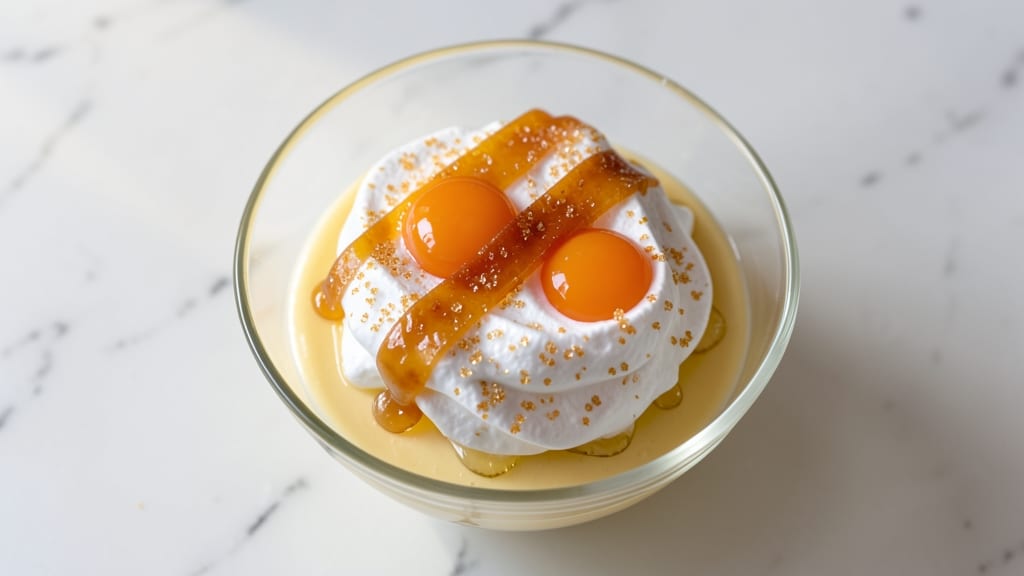
A 1-egg meringue recipe can turn a simple kitchen experiment into something extraordinary—a delicate, light-as-air dessert with a perfectly set yolk center. This recipe delivers restaurant-quality results with just one egg white, sugar, and patience, making it ideal for single servings or small batches.
The key lies in precise technique and low-temperature baking to achieve that signature crisp exterior with a tender, set yolk center.
What makes this recipe special is its foolproof stability—no collapsed meringue here. By incorporating a small amount of corn syrup, you'll achieve a meringue that holds its shape while baking, even with just one egg.
The process is straightforward: whip the egg whites to stiff peaks, gradually add sugar (or omit it for a marshmallow-like texture), and bake at a low temperature to ensure even cooking.
The result is a single-serving cloud with a crisp shell and a perfectly set yolk that stays moist and rich. This meringue works beautifully as a standalone dessert, a topping for fruit, or even a base for elegant trifles.
Whether you're baking for one or experimenting with small-batch desserts, this recipe delivers professional-quality results every time.
For added versatility, you can adjust the sugar content or bake it at different temperatures to create variations like Swiss meringue or French meringue. The possibilities are endless, and the technique is simple enough for beginners. Let's get started on creating your perfect single-serve meringue.
Ingredients for 1 egg meringue
Four ingredients transform into elegant single-serving meringues with crisp shells and perfectly set yolks.
| Ingredient | Amount | Notes |
|---|---|---|
| Large Egg Whites 🥚 | 4 whole | Room temperature, separated carefully |
| Granulated White Sugar 🍚 | ½ cup | Fine grain preferred for even dissolving |
| Light Corn Syrup 🍯 | 1 tbsp | Stabilizes meringue structure |
| Vanilla Extract 🌿 | ½ tsp | Pure, high-quality preferred |
| Large Egg Yolks 🥚 | 4 whole | Fresh, room temperature |
| Unsalted Butter 🧈 | ¼ cup | Softened, cubed for easy melting |
| Diamond Crystal Kosher Salt 🧂 | ¼ tsp | Fine grain for even distribution |
| Cornstarch 🌾 | ½ tsp | Prevents sugar crystallization |
| Lemon Juice 🍋 | ¼ tsp | Freshly squeezed for acidity |
The egg whites are the foundation—room temperature is critical for proper volume. Purchase large eggs for consistent results, and separate them carefully to avoid yolk contamination. Whole Foods or Trader Joe's carry high-quality eggs ideal for delicate desserts. For the sugar, Domino brand is reliable, but any fine-grain granulated sugar works. The corn syrup stabilizes the structure, preventing collapse during baking—a professional baker's secret. If you prefer organic, Wholesome Sweeteners corn syrup is widely available.
No corn syrup? Honey at half the amount works in a pinch, though it may slightly darken the meringue. Substitute vanilla extract with almond extract at one-quarter the amount for a different flavor profile. For a sugar-free version, omit the granulated sugar entirely and increase the corn syrup to 2 tablespoons. The yolks can be replaced with vegan egg substitutes if needed, though texture will differ. If your eggs are cold, place them in warm water for 5 minutes before separating to achieve room temperature.
Store meringues in an airtight container with parchment paper between layers to maintain crispness for up to 3 days. For longer storage, freeze unbaked meringues for 1 month—bake directly from frozen at 300°F for 15-20 minutes. The yolks should be firm but still moist when set. For a restaurant-quality presentation, dust with powdered sugar or serve with fresh berries. These meringues reheat beautifully in a 200°F oven for 2-3 minutes to restore crispness.
Why You'll Love This Recipe
- No-Fuss Whip-Up: I’ll admit, I used to avoid meringues thinking they’d take forever—but this one? Just egg whites, sugar, and a little syrup, all folded into yolks. Ten minutes max, no fancy tools.
- Silky Smooth Magic: That corn syrup keeps it creamy instead of dry, and the vanilla? It’s like a warm hug in every bite. Honestly, the texture is what makes it worth making—light but rich, with that perfect balance of sweet and tender.
- Secret Dessert Weapon: Need a last-minute treat? This plays well at picnics, potlucks, or even as a fancy ice cream topping. (Yes, even on a Tuesday night.) It’s the kind of thing that makes you look like a baking pro without the stress.
- Waste-Not Wonder: Uses every part of the egg—no scraps, no guilt. A single batch stretches for days if stored right, and the yolks add richness without breaking the bank. My go-to when I’m craving something sweet but don’t want to overcomplicate things.
Step-by-step instructions for single-serve meringue clouds
Precision matters here—every technique ensures the perfect balance of structure and tenderness.
Separate and Stabilize the Egg Whites
Place the 4 whole large egg whites in a clean, grease-free mixing bowl. I use a metal bowl for better heat conduction—it helps the whites whip faster and more evenly. Separate them carefully, ensuring no yolk fragments contaminate the whites, as even trace amounts of fat will prevent proper whipping.
Add the 0.5 cup granulated white sugar and 0.5 teaspoon cornstarch to the egg whites. The cornstarch acts as a stabilizer, preventing sugar crystallization and creating a smoother, more stable meringue. Whisk gently with a wire whisk or rubber spatula until the sugar dissolves completely—this ensures even distribution when you begin whipping.
Whip to Stiff Peak Stage
Using a stand mixer fitted with the whisk attachment, whip the egg whites on medium speed for 2 minutes. Gradually increase to high speed and continue whipping for another 5-7 minutes until the meringue forms stiff peaks. You'll know it's ready when you lift the whisk and the meringue holds its shape, forming a sharp peak that doesn't collapse immediately.
I like to add the 1 tablespoon light corn syrup and 0.25 teaspoon lemon juice at this stage. The corn syrup adds stability, while the lemon juice introduces subtle acidity that enhances the final texture. Whip for an additional 1-2 minutes to fully incorporate these ingredients. The meringue should now be glossy and thick enough to hold its shape when dropped from a spoon.
Fold in the Yolk Mixture
In a separate bowl, whisk together the 4 whole large egg yolks, 0.25 cup softened unsalted butter, 0.5 teaspoon vanilla extract, and 0.25 teaspoon diamond crystal kosher salt until smooth and fully combined. The butter should be softened but not melted—this ensures it incorporates seamlessly without breaking down the meringue structure.
Gently fold the yolk mixture into the stiff meringue using a spatula, working in three additions to maintain airiness. Be careful not to overmix—just until fully combined. The goal is to create a smooth, homogeneous batter that retains the lightness of the meringue while integrating the richness of the yolks and butter.
Pipe and Bake to Perfection
Transfer the batter to a piping bag fitted with a large star tip. Pipe 1-inch mounds onto a parchment-lined baking sheet, spacing them 2 inches apart to allow for even expansion. Preheat your oven to 250°F—this low temperature ensures gentle cooking and prevents the meringues from browning too quickly.
Bake for 1 hour and 15 minutes until the meringues are completely dry to the touch and have set into firm, cloud-like structures. They should pull away cleanly from the parchment when gently lifted. For extra insurance, turn off the oven and let them sit inside with the door slightly ajar for an additional 10 minutes—this prevents condensation from forming on the undersides.
Pro Tips For Making 1 Egg Meringue
- Whisk Whites to Stiff Peaks: Use a stand mixer with the whisk attachment—high speed for 3-4 minutes until the meringue holds a sharp peak when you lift the bowl. I learned this the hard way: under-whipped meringue won’t hold its shape, and over-whipped? It turns grainy. Stop when the bowl feels cold and the meringue looks glossy, like wet sand.
- Sweeten Gradually: Add sugar in three batches while whisking—start with half, then a third, then the rest—so the meringue incorporates smoothly. Dumping all the sugar at once makes it clump, and you’ll end up with a lumpy mess. Think of it like folding in flour: patience wins.
- Fold Yolks Gently: Reserve 1 tablespoon of the stiff meringue, then fold in the yolks slowly with a spatula, using a figure-eight motion. Rush this, and you’ll deflate the meringue—like trying to fold a soufflé with a sledgehammer. Work fast but steady, and keep the bowl tilted to avoid air pockets.
- Chill Before Baking: Let the meringue rest in the fridge for 30 minutes before baking—yes, even if you’re eager. Cold meringue sets better and won’t spread or weep sugar. I used to skip this, and my meringues would either collapse or turn rubbery. Trust the wait.
Pro cooking tips for perfect results
Whipping Perfection
For a 1-egg meringue, the bowl and whisk matter just as much as the technique. Use a metal bowl (I prefer Stainless Steel from OXO) because it conducts heat better than glass, helping the egg whites whip faster and more evenly.
Always ensure your bowl and whisk are completely free of grease—even a trace of oil can prevent stiff peaks. I like to wash them with hot, soapy water and rinse thoroughly before use. 🥚
Start whipping on medium speed for 2 minutes to gradually incorporate air, then increase to high speed for 5-7 minutes until stiff peaks form. The meringue should hold its shape when you lift the whisk—if it flattens immediately, keep whipping.
For single-egg meringues, I recommend using a hand mixer (like the KitchenAid KHM5221USB) because it gives you more control over speed than a stand mixer. Add sugar gradually while whipping to avoid graininess.
Stabilizing Secrets
The 1 tablespoon corn syrup is your best friend for stability—it prevents sugar crystallization and helps the meringue hold its shape during baking. If you don’t have corn syrup, honey or agave nectar work in a pinch, but use half the amount (so ½ tablespoon).
I also add ½ teaspoon lemon juice to introduce subtle acidity, which enhances the meringue’s structure and adds a bright note. For extra insurance, whisk in ½ teaspoon cornstarch with the sugar—this prevents graininess and creates a smoother texture. 🍯
If your meringue starts to weep or collapse during baking, it’s often due to overmixing or humidity. To fix this, place your baking sheet on a wire rack inside the oven instead of directly on the rack—this allows hot air to circulate evenly.
For humid climates, bake at 225°F instead of 250°F to slow moisture evaporation. A dehumidifier near the oven can also help if you’re in a damp kitchen.
Yolk Integration
When folding in the egg yolks, softened butter, and vanilla, work slowly and gently to avoid deflating the meringue. I use a flexible silicone spatula (like the OXO Good Grips) to fold in three additions, ensuring the yolk mixture is fully incorporated without overmixing.
The yolks should be room temperature—if they’re cold, warm them slightly in a bowl of warm water for 2-3 minutes before mixing. Overmixing here is the #1 reason meringues lose their airiness. 🥚
For a smoother finish, strain the yolk mixture through a fine-mesh sieve before folding it in. This removes any lumps and ensures a silky texture. If you’re making single-serving meringues, divide the batter into 4 equal portions (using a kitchen scale for precision) before piping.
This ensures each meringue has the same rich yolk-to-meringue ratio. For extra flavor, add a pinch of cardamom or orange zest to the yolk mixture—it pairs beautifully with the sweetness.
Baking Like a Pro
Preheat your oven to 250°F and line your baking sheet with parchment paper—this prevents sticking and makes cleanup a breeze. Pipe 1-inch mounds onto the sheet, spacing them 2 inches apart to allow for expansion. For even baking, rotate the sheet halfway through (after 45 minutes).
The meringues are done when they’re completely dry to the touch and pull away cleanly from the parchment. If the tops brown too quickly, tent them loosely with aluminum foil. 🔥
For a restaurant-quality finish, let the meringues cool completely in the oven before removing them. This prevents condensation from forming on the undersides, which can make them soggy.
If you’re short on time, turn off the oven, crack the door, and let them sit inside for 10 minutes—this gradual cooling helps them set evenly. Store them in an airtight container with parchment paper between layers to keep them crisp for up to 3 days.
To reheat, pop them in a 200°F oven for 2-3 minutes to restore crispness.
Nutrition facts
Frequently asked questions
Can I make a 1-egg meringue without corn syrup?
Yes, but expect slightly less stability. Replace the 1 tablespoon corn syrup with ½ tablespoon honey or agave nectar—though this may darken the meringue slightly. For best results, use ½ teaspoon cream of tartar instead, which mimics corn syrup's acidity and stabilizing properties. The meringue will still hold its shape but may require slightly longer baking.
Why did my meringue collapse during baking?
Collapse usually happens from one of three issues: grease in the bowl, overmixing, or humidity. Double-check your bowl and whisk for any residue, fold gently when adding yolks, and try baking at 225°F in humid climates. For extra stability, add ½ teaspoon cornstarch with the sugar to prevent sugar crystallization.
How do I store single-serving meringues?
Keep them in an airtight container with parchment paper between layers to maintain crispness for up to 3 days. For longer storage, freeze unbaked meringues for 1 month—bake directly from frozen at 300°F for 15-20 minutes. To restore crispness, reheat in a 200°F oven for 2-3 minutes before serving.
Can I make this recipe vegan?
Not directly, as egg whites are essential for meringue structure. However, you can create a vegan alternative using aquafaba (chickpea brine) whipped with ½ teaspoon cream of tartar and 1 tablespoon corn syrup. Replace yolks with vegan butter and silken tofu for a similar texture, though the result will differ from traditional meringue.
What's the best way to test if meringues are fully baked?
They're done when completely dry to the touch and pull away cleanly from the parchment. Gently tap the bottom—they should sound hollow. For extra insurance, let them cool 10 minutes in the turned-off oven with the door slightly ajar to prevent condensation from forming on the undersides.