
Breakfast & Brunch
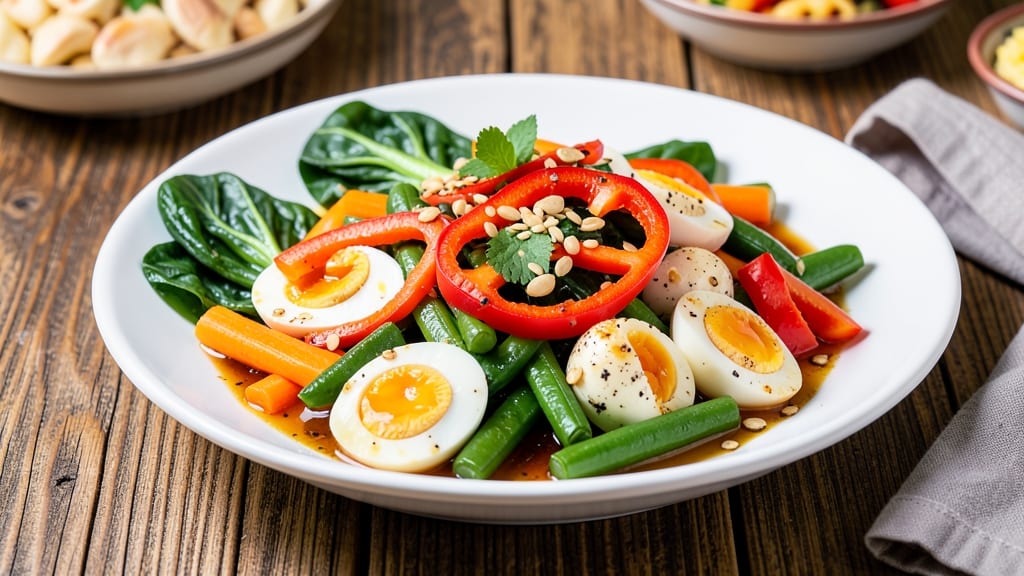
This Panlasang Pinoy vegetables with quail eggs recipe transforms simple wok-fried vegetables into a restaurant-quality dish with silky quail yolks at its heart. 🌟 The secret lies in balancing sweet, salty, and umami flavors—just like my host mother Claudine taught me—while keeping the technique accessible for home cooks.
What starts as crisp-tender vegetables becomes a harmonious plate where each bite delivers both texture and depth.
The beauty of this dish is its adaptability—use whatever seasonal vegetables you have on hand, from bok choy to bell peppers, and let the quail eggs add that luxurious, velvety finish.
I developed this recipe to prove that Filipino comfort food doesn’t require complicated techniques, just the right balance of seasoning and timing. The result? A dish that’s vibrant, satisfying, and perfect for breakfast or brunch.
Ready in just 20 minutes, this recipe delivers restaurant-quality results with minimal effort. The wok-fried vegetables maintain their crunch, while the quail eggs poach perfectly in the hot oil, creating those signature runny yolks that make every bite worth it.
Serve with steamed rice for the full experience—simple, flavorful, and impossible to resist.
Between you and me, this is the kind of dish that transforms ordinary vegetables into something extraordinary. Once you try it, you’ll never look at a wok the same way again. Let’s get cooking!
Ingredients for vegetables with quail eggs recipe panlasang pinoy
Fresh, vibrant vegetables meet delicate quail eggs in this Filipino-inspired wok dish—where every bite balances crisp crunch with velvety yolks.
| Ingredient | Amount | Notes |
|---|---|---|
| Quail Eggs 🥚 | 12 whole | Room temperature for even cooking |
| Bok Choy 🥬 | 1 lb | Baby or regular, cut into bite-sized pieces |
| Baby Carrots 🥕 | 1 lb | Whole or halved lengthwise |
| Green Beans 🌱 | 1 lb | Trimmed and cut into 1-inch pieces |
| Red Bell Pepper 🌶️ | 1 whole | Thinly sliced, any color |
| Garlic Cloves 🧄 | 4 cloves | Minced, for aromatic base |
| Oyster Sauce 🍜 | 2 tbsp | High-quality, for umami depth |
| Soy Sauce 🥢 | 1 ½ tbsp | Light or dark, to taste |
| Sesame Oil 🫒 | 1 tbsp | Toasted, for nutty aroma |
| Vegetable Oil 🫒 | ½ cup | High smoke point for wok-frying |
| White Peppercorns 🌶️ | ½ tsp | Freshly ground for subtle heat |
| Sugar 🍚 | 1 tsp | Balances savory flavors |
| Steamed White Rice 🍚 | 2 cups | For serving, cooked separately |
| Fresh Cilantro 🌿 | ¼ cup | Chopped, for garnish |
| Toasted Sesame Seeds 🌾 | 1 tbsp | For crunchy texture |
The quail eggs are the star, so grab them from the Asian market or specialty grocer—they’re fresher and more flavorful than the grocery store variety. Look for eggs with smooth, unbroken shells and store them in the fridge until ready to use. Bok choy and baby carrots should be crisp and bright green/orange—avoid anything wilted or rubbery. I always buy organic green beans from Whole Foods when I can, but regular ones work too. The bell pepper adds a pop of color and sweetness, so pick one that’s firm and free of blemishes.
No oyster sauce? Soy sauce plus a dash of sugar works in a pinch, though it won’t have the same depth. Fresh cilantro is ideal, but dried oregano at half the amount gets you close if you’re out. The sesame oil is non-negotiable for that nutty aroma—Trader Joe’s has a great toasted version that’s perfect. For the quail eggs, if you can’t find them, duck eggs at half the quantity are a decent substitute, though the texture won’t be identical. The sugar in the sauce might seem odd, but it’s key to balancing the salty-savory flavors—brown sugar works too if you’re out of white.
This dish reheats beautifully—just warm it gently in the wok with a splash of water to revive the crunch. Store leftovers in an airtight container for up to 3 days in the fridge, though I rarely have any left. The quail eggs are best used fresh, so don’t prep them ahead. If you’re making this for a crowd, double the vegetables but keep the quail eggs at the same quantity—they’re the showstopper. Serve immediately with steamed rice for the full experience, and trust me, the extra minute to garnish with sesame seeds and cilantro makes all the difference.
Why You'll Love This Recipe
- One-Pan Magic: I swear by this recipe when I’m too tired to scrub pots—just toss everything on a sheet pan, drizzle with soy-vinegar sauce, and let the quail eggs nestle among the veggies like little golden surprises. The bok choy wilts into crisp-tender perfection while the carrots caramelize just enough to steal the show.
- Umami Bomb: That crispy quail egg yolk breaking over tender green beans? Chef’s kiss. The savory-sweet glaze—soy, vinegar, and a hint of sugar—cuts through the fresh crunch of bell pepper and baby carrots, making every bite taste like a tiny flavor explosion. (Yes, even on a Tuesday night.)
- Lunchbox Hero: Between us, this is my secret weapon for packed lunches. The quail eggs stay intact in the fridge for days, and the veggies hold up beautifully—just reheat and serve. My kids still argue over who gets the last piece of bell pepper, but honestly? That’s the real win.
- Budget-Friendly Luxe: Quail eggs might sound fancy, but they’re cheaper than chicken eggs and pack way more flavor. Bok choy and seasonal veggies stretch this dish into a full meal without breaking the bank. Leftovers? Even better—toss them into fried rice or ramen the next day. Waste not, want not.
Step-by-step instructions for wok-fried quail eggs with vegetables
Here's how to create that perfect balance of crispy vegetables and silky quail yolks.
🍳 Step 1: Prepare the Vegetables for Perfect Texture
Start by cutting the 1 lb bok choy into bite-sized pieces, separating the leaves from the stems. Trim the 1 lb green beans and cut them into 1-inch pieces, then halve the 1 lb baby carrots lengthwise if they're large. Thinly slice the 1 whole red bell pepper into half-moon shapes - this ensures even cooking and maximum crunch.
Keep all vegetables separate at this stage. The bok choy leaves will cook faster than the stems, so we'll handle them differently. The bell pepper and carrots should be cut uniformly for consistent doneness. I like to give everything a quick rinse and pat dry - this prevents steaming and helps achieve that perfect wok-fried texture.
🔥 Step 2: Wok-Fry the Vegetables in Stages
Heat 0.5 cup vegetable oil in a wok or large skillet over high heat until it shimmers. Add the baby carrots and green beans first, stirring constantly for 2-3 minutes until they begin to soften but still maintain some bite. Remove them and set aside - they'll finish cooking later.
In the same wok, add 0.5 tsp freshly ground white peppercorns and 4 cloves minced garlic. Stir for 30 seconds until fragrant, then add the bok choy stems first (they need more time) and cook for 1 minute. Add the bok choy leaves and red bell pepper slices, tossing continuously for 1-2 minutes until everything is vibrant and just tender-crisp.
🍳 Step 3: Create the Signature Sauce
Reduce heat to medium, then add 2 tbsp oyster sauce, 1.5 tbsp soy sauce, and 1 tsp sugar. Stir well to combine, letting the sauce simmer for 1 minute until slightly thickened. This is where the magic happens - the umami from oyster sauce and salty depth from soy sauce meld together with a touch of sweetness.
Here's a pro tip: If your sauce looks too thick, add 1-2 tablespoons of water to loosen it. The sauce should coat the back of a spoon but still allow the vegetables to remain distinct. Taste and adjust seasoning - you might want to add a bit more soy sauce for saltiness or a touch more sugar to balance.
🥘 Step 4: Fry the Quail Eggs to Silky Perfection
Crack the 12 whole quail eggs into a small bowl. In a clean, dry skillet over medium-low heat, add 1 tbsp sesame oil and swirl to coat. When the oil is shimmering (not smoking), gently pour in the eggs, spacing them about 1 inch apart. Cook for 2-3 minutes until the whites are set but yolks remain runny.
Real talk: Don't walk away during this step. The eggs cook quickly and can go from perfect to overdone in seconds. You want that beautiful contrast of crispy whites with molten yolks. Once set, transfer the eggs to a plate and keep them warm.
🥘 Step 5: Combine and Finish with Crunchy Garnishes
Return the previously cooked vegetables to the wok and toss them with the sauce. Add the 1 tbsp toasted sesame seeds and stir for 30 seconds to toast them lightly. Now carefully nestle the quail eggs into the vegetable mixture, letting them absorb some of the sauce without breaking.
Garnish with 0.25 cup chopped fresh cilantro and serve immediately over 2 cups steamed white rice. The contrast of warm, crispy vegetables with silky quail yolks breaking against the rice creates that perfect Pinoy comfort food experience. Each bite should deliver a symphony of textures and flavors - crispy, tender, creamy, and umami-rich.
Pro Tips For Making Vegetables With Quail Eggs Recipe Panlasang Pinoy
- PREP VEGETABLES UNIFORMLY: Cut bok choy into 1-inch chunks, baby carrots into ½-inch rounds, and green beans into 1-inch pieces—consistent sizing means everything cooks at the same pace. I learned this the hard way when my carrots turned mushy while the green beans stayed crunchy.
- CRACK EGGS IN HOT OIL: Drop quail eggs into the oil after it’s smoking hot—this guarantees a clean break and instant cooking. Cold oil makes them splatter like tiny grenades, and nobody wants egg shrapnel in their stir-fry.
- SALT THE WOK FIRST: Toss in a pinch of salt with the oil before adding anything else—it seasons the vegetables from the start and prevents blandness. My grandmother swore by this, and she was right: the bok choy and bell pepper absorb flavor better this way.
- STIR-FRY IN BATCHES: Cook the harder veggies (carrots, bell pepper) first, then push them to the sides and add the softer ones (bok choy, green beans) to avoid steaming. Crowding the wok turns your crispy stir-fry into a sad, soggy mess.
Essential equipment for vegetables with quail eggs recipe panlasang pinoy
Wok Essentials
A carbon steel wok is my go-to for this recipe—it heats up fast and retains heat perfectly, which is crucial for that signature wok-fried texture. If you don’t have one, a heavy-bottomed cast iron skillet works just as well.
I’ve even used a nonstick pan in a pinch, but the flavor isn’t quite the same. The key is getting that oil hot enough to create a good sear on the vegetables. 🔥
Oil Selection
Use a high-smoke-point oil like vegetable oil or peanut oil for frying—both handle the heat without breaking down. I avoid olive oil because it burns too easily and can make the vegetables taste bitter.
For the quail eggs, sesame oil is a must—it adds that nutty aroma that ties everything together. Keep a small bottle on hand for finishing touches too.
Small Tools
A pair of tongs is essential for tossing the vegetables without overcrowding the pan. I also recommend a small bowl for cracking the quail eggs—this keeps them contained while you fry them.
A fine-mesh strainer comes in handy for rinsing and draining the vegetables quickly. Trust me, these little tools make all the difference in keeping the cooking process smooth and efficient.
Garnish Kit
Fresh cilantro and toasted sesame seeds are the stars of the garnish game. I like to keep pre-toasted sesame seeds in a small jar in my pantry for quick access. If you’re feeling fancy, a microplane for zesting a little lime or lemon adds a bright finish.
A small spoon helps with plating—just nestle those quail eggs into the veggies for that restaurant-worthy presentation. ✨
Optional Upgrades
If you’re serious about wok cooking, invest in a wok lid to control heat and steam. A thermometer helps monitor oil temperature—aim for around 350°F for frying. For extra flavor, a garlic press makes mincing garlic a breeze.
And if you’re making this often, a small bowl set keeps your workspace organized. These aren’t must-haves, but they’ll elevate your cooking game. 💡
Nutrition facts
Frequently asked questions
Can I substitute chicken eggs for quail eggs in this recipe?
While you can use chicken eggs, the texture and presentation will be different. Quail eggs are smaller and cook faster, creating those signature runny yolks that make this dish special. If substituting, use 3 large chicken eggs instead of 12 quail eggs, but expect them to be larger and less delicate. For best results, poach them separately in simmering water for 3-4 minutes instead of frying.
What vegetables work best if I don’t have bok choy or baby carrots?
This recipe is all about adaptability! Swap bok choy for broccoli florets or Chinese cabbage, and use snap peas or asparagus instead of baby carrots. Just ensure they’re cut into similar sizes for even cooking. The key is maintaining that crisp-tender texture—avoid overly soft vegetables like zucchini or mushrooms that absorb too much sauce.
How do I prevent the quail eggs from sticking to the pan?
Heat is your friend here! Use a clean, dry skillet and ensure the oil is shimmering but not smoking before adding the eggs. A medium-low heat setting prevents burning while allowing the whites to set gently. If the pan isn’t hot enough, the eggs will stick—give it a minute to heat up fully. Also, make sure your quail eggs are room temperature before cracking them.
Can I make this recipe ahead of time?
While the vegetables can be prepped and stored in the fridge for 1 day, the quail eggs are best cooked fresh. For a make-ahead option, cook the vegetables and sauce separately, then reheat gently in the wok with a splash of water. Fry the eggs fresh and assemble just before serving—this keeps those yolks silky and runny. Leftovers (without eggs) keep for 3 days in an airtight container.
What’s the secret to getting that perfect wok-fried texture?
High heat and proper oil are everything! Use a high-smoke-point oil (like vegetable or peanut oil) and heat the wok until it’s smoking hot before adding vegetables. Work in batches if needed—overcrowding steams instead of sears. Toss constantly for 2-3 minutes until edges are crispy but centers stay tender. The goal is crisp-tender, not mushy!