
Sauces & Condiments
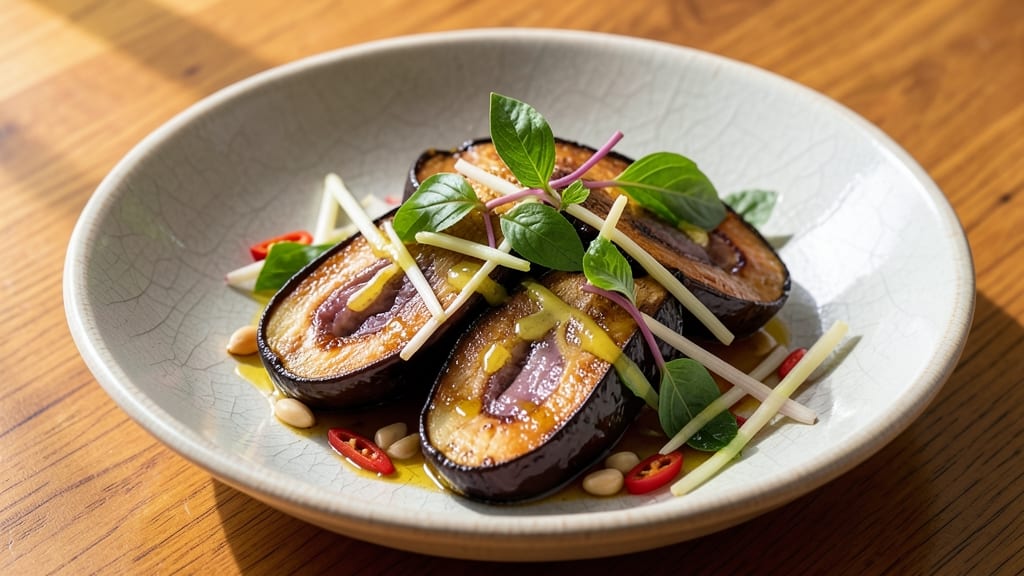
This vegan Thai basil eggplant dish delivers the bold, aromatic flavors of Thailand in a single pan—no compromise on taste, just plant-based magic. 🌿 The secret lies in fragrant lemongrass, fiery chili, and fresh Thai basil, which transforms simple eggplant into a restaurant-worthy stir-fry with tender-crisp texture and layered heat.
What makes this recipe special is its simplicity: just a handful of ingredients work together to create depth of flavor. The eggplant absorbs the aromatic marinade while cooking, developing a caramelized crust that contrasts beautifully with the bright, herby sauce.
No complicated techniques—just one pan, 30 minutes, and a dish that feels indulgent yet guilt-free.
By the time you're done, you'll have a fragrant, chili-kissed eggplant stir-fry with vibrant green Thai basil leaves wilted just enough to release their aromatic oils. The sauce clings to every bite, delivering a perfect balance of sweet, spicy, and umami.
Serve it over steamed jasmine rice or with a side of cucumber salad for a complete meal.
This dish proves vegan cooking can be just as vibrant and satisfying as traditional Thai cuisine. The lemongrass and chili create a fragrant aroma that fills your kitchen, while the basil adds that signature Thai brightness.
Perfect for weeknight dinners or impressing guests—every bite tells a story of bold flavors and thoughtful preparation.
Ingredients for vegan thai basil eggplant
Fragrant lemongrass, fiery chili, and tender eggplant create a vegan Thai stir-fry bursting with authentic flavor.
| Ingredient | Amount | Notes |
|---|---|---|
| Japanese Eggplant 🍆 | 2 lb | Cut into 1-inch cubes |
| Fresh Thai Basil Leaves 🌿 | 1 ½ cups | Packed, stems removed |
| Lemongrass Stalks 🌿 | 3 whole | Bruised and cut into 2-inch pieces |
| Red Chili Peppers 🌶️ | 2 whole | Thai or serrano, finely chopped |
| Garlic Cloves 🧄 | 6 cloves | Minced finely |
| Lime Juice 🍋 | ¼ cup | Freshly squeezed |
| Coconut Aminos 🥫 | ½ cup | Or soy sauce for gluten-free |
| Maple Syrup 🍯 | 2 tbsp | For subtle sweetness |
| Vegetable Oil 🫒 | 3 tbsp | High smoke point preferred |
| Salt 🧂 | 1 ½ tsp | Kosher or sea salt |
| Black Pepper 🌶️ | ½ tsp | Freshly ground |
| Coconut Milk 🥥 | ¼ cup | Full-fat for creaminess |
| Brown Sugar 🍚 | 1 tbsp | Light or dark |
| Ginger Root 🌿 | 1 tbsp | Freshly grated |
Lemongrass is the aromatic backbone of this dish—look for fresh stalks at Asian markets or the frozen section of most supermarkets. The eggplant should be firm with glossy skin; Japanese eggplant has thinner flesh that caramelizes beautifully, but regular eggplant works too. For Thai basil, Asian grocery stores carry the freshest leaves, but if you can't find it, sweet basil with a pinch of Thai chili powder comes close. The chili peppers are non-negotiable for that signature heat—Thai bird's eye chilies are ideal, but serrano or jalapeño work in a pinch (adjust to taste).
No coconut aminos? Soy sauce or tamari keeps this vegan-friendly, though coconut aminos add that authentic umami depth. Short on maple syrup? Agave nectar or coconut sugar works just as well. The brown sugar and maple syrup combo balances the heat beautifully—don't skip the ginger, though. Freshly grated packs the most punch, but powdered works if you're in a hurry. For extra richness, stir in 1 tbsp of vegan butter at the end (trust me on this). The sauce should coat the back of a spoon—if it's too thick, add a splash of water or coconut milk.
This dish tastes even better the next day as the flavors meld. Store leftovers in an airtight container in the fridge for up to 4 days. For longer storage, freeze portions for 3 months—the eggplant holds up surprisingly well. Reheat gently in a pan with a splash of water to restore moisture. The basil wilts fast, so add it fresh at the end when serving. Double the batch—it disappears quickly at dinner parties.
Why You'll Love This Recipe
- One-Pan Magic: I swear by this—just slice the eggplant, toss it in oil, and let the garlic and chili work their magic while you prep the basil-lemon grass paste. No flipping, no fuss, just that perfect smoky char from the grill or stovetop.
- Umami Bomb: That first bite? The eggplant soaks up the garlic-chili paste until it’s tender but still holds shape, then the Thai basil hits you with its peppery, anise kiss—honestly, it’s the kind of flavor that makes you pause mid-chew. The lemongrass adds this bright, citrusy backbone that cuts through the richness.
- Weeknight to Party: Between us, this is my lazy dinner and my "I’m hosting but don’t want to slave" go-to. Serve it over rice for a quick meal, or pile it on toast with a fried egg (even if it’s vegan) for brunch. The leftovers? Just as good reheated or cold in wraps the next day.
- Budget Flex: Japanese eggplant might sound fancy, but it’s cheaper than you think, especially if you buy it whole and slice it yourself. Thai basil grows like a weed in pots, and lemongrass lasts forever in the freezer. I’ve made this for under $10 for four servings—and no one ever guesses it’s vegan.
Step-by-step instructions for vegan Thai basil eggplant
This one-pan wonder delivers restaurant-quality Thai basil eggplant with perfect balance of heat and aroma.
🔥 Step 1: Sear the Eggplant Until Deeply Caramelized
Heat the 3 tablespoons vegetable oil in a large skillet over medium-high heat until shimmering. Add the 2 lb Japanese Eggplant cut into 1-inch cubes, working in batches if needed to avoid crowding. Cook undisturbed for 5-6 minutes until the edges develop a deep golden brown crust.
Here's the thing—don't touch the eggplant during the first 2 minutes. You want that initial sear to create a crispy exterior while keeping the interior tender. Flip the pieces and cook another 4-5 minutes until all sides are beautifully browned. The eggplant should still hold its shape but feel tender when pierced with a fork.
👨🍳 Step 2: Build the Flavor Base with Aromatics
Reduce heat to medium and add the 3 whole Lemongrass Stalks cut into 2-inch pieces (bruised by pounding gently with the side of your knife). Cook for 2 minutes until fragrant. Add the 2 whole Red Chili Peppers chopped finely, 6 cloves Garlic Cloves minced, and 1 tbsp Ginger Root freshly grated. Stir for 1 minute until the garlic becomes golden and aromatic.
This is where the magic happens. The lemongrass releases its citrusy notes while the chili and garlic develop their signature flavors. Don't let the garlic burn—watch it carefully and remove the pan from heat if needed. You'll know it's ready when the entire pan smells like a Thai street market.
🥘 Step 3: Combine Sauce Ingredients and Simmer
Pour in the 0.5 cup Coconut Aminos, 2 tbsp Maple Syrup, 1 tbsp Brown Sugar, 0.25 cup Lime Juice, and 0.25 cup Coconut Milk. Stir well to combine, scraping up any browned bits from the bottom of the pan. Bring to a gentle simmer over medium heat for 3-4 minutes until the sauce thickens slightly.
The sauce should coat the back of a spoon but still be pourable. If it reduces too quickly, add 1-2 tablespoons water to maintain the right consistency. Season with 1.5 tsp Salt and 0.5 tsp Black Pepper, then add the 1.5 cups Fresh Thai Basil Leaves packed and stems removed. Stir gently to wilt the basil just enough to release its flavor without turning it to mush.
⏰ Step 4: Finish and Rest for Maximum Flavor
Return the seared eggplant to the pan and toss gently to coat everything in the fragrant sauce. Cover and simmer on low heat for 5-7 minutes, stirring occasionally, until the eggplant absorbs the flavors and the basil leaves are just wilted. The dish should be hot but not boiling—this prevents the basil from turning bitter.
Transfer to serving bowls and let rest for 5 minutes before serving. This resting period allows the flavors to meld completely and the eggplant to absorb all that beautiful sauce. Garnish with additional Thai basil leaves if desired, and serve with steamed jasmine rice to soak up every last drop of that complex, aromatic sauce.
Pro Tips For Making Vegan Thai Basil Eggplant
- CHAR THE EGPLANT FIRST: Japanese eggplant is spongy—don’t skip the salting step. Sprinkle it with 1 teaspoon of kosher salt per pound, let it sit 20 minutes, then pat very dry. I used to skip this and ended up with a soggy mess; the salt draws out moisture so it sears properly and soaks up the sauce like a dream.
- SLICE LEMONGRASS LENGTHWISE: Most recipes say to bruise the stalks, but I’ve found slicing them lengthwise into thin strips—about 1/4-inch thick—releases more flavor without bitterness. Toss them in the wok with the garlic first; they’ll soften just enough to perfume the dish without turning to mush.
- STOP WHEN BASIL WILTS: Thai basil burns faster than you’d think. Add it last, stir once, then pull the pan off heat immediately—even if it looks undercooked. The residual heat wilts it perfectly; overcooking turns it bitter and sad. (Yes, I’ve done this. No, you don’t want to repeat my mistake.)
- USE FROZEN GARLIC MINCE: Fresh garlic burns easily in this dish, and I’m lazy about peeling cloves mid-recipe. Frozen garlic mince (thawed and drained) works just as well—no burning, no fuss, and it blends right into the sauce. Just don’t skip the garlic; it’s the thing that matters most when you’re vegan.
Common mistakes when making this dish
Overcrowding the Pan
I’ve made this mistake more than once—adding all the eggplant cubes at once and ending up with soggy, unevenly cooked pieces. The key is working in batches: cook half the eggplant first, then remove it to a plate before adding the rest.
This ensures each piece gets that perfect golden crust instead of steaming in its own juices. 🔥
Skipping the Eggplant Rest
After searing, it’s tempting to rush the eggplant into the sauce immediately. But letting it rest for 5 minutes after cooking makes all the difference—it prevents the pieces from turning mushy when they hit the liquid. Trust me, that 5-minute wait keeps the texture tender-crisp.
Burning the Garlic
The garlic is the soul of this dish, but it’s also the easiest to ruin. Once it turns golden, it’s done—don’t walk away! If it starts to brown too quickly, immediately reduce the heat or remove the pan from the burner.
Overcooked garlic turns bitter, and that’ll throw off the whole balance of flavors.
Adding Basil Too Early
Thai basil wilts fast, and adding it too soon turns it into a sad, mushy mess. Wait until the very end—just 1-2 minutes before serving—to toss in the leaves.
This keeps their vibrant color and fresh aroma intact. If you’re making this ahead, add the basil fresh at the table for the best experience.
Ignoring the Sauce Consistency
The sauce should be glossy but not watery—it’s the glue that holds everything together. If it’s too thick, add 1 tablespoon water or coconut milk to loosen it.
If it’s too thin, simmer it longer to reduce. The perfect consistency coats the eggplant without making it soggy. Taste as you go!
Underestimating the Heat
Thai cuisine is all about balance, and chili is no exception. If your dish lacks heat, it’s missing a core flavor. Start with 2 Thai chilies and adjust to taste—you can always add more later. But remember, once it’s in, you can’t take it out. 🌶️
Nutrition facts
Frequently asked questions
Can I substitute Japanese eggplant with regular eggplant?
Yes, but there are a few key differences. Japanese eggplant has thinner skin and fewer seeds, so it caramelizes faster and stays tender. Regular eggplant will work if you cut it into ½-inch cubes (smaller than the recipe calls for) and cook it for 2-3 minutes less per side to prevent mushiness.
What if I can't find Thai basil? Can I use regular basil?
Regular basil won't give you the same anise-like flavor, but you can mimic it by using 1 cup sweet basil + ½ tsp Thai chili powder. For a closer match, try holy basil (also called tulsi) if available at Asian markets. Add the basil at the very end to preserve its freshness and aroma.
How can I make this dish less spicy?
Reduce the chili heat by using 1 serrano pepper (milder) instead of Thai chilies or removing the seeds/membranes. For an extra-mild version, omit the chili entirely and add ½ tsp smoked paprika for depth. Taste the sauce before adding the eggplant to adjust further.
Can I make this recipe in an air fryer?
Yes! Toss the eggplant cubes with 1 tbsp oil and air fry at 375°F for 12-15 minutes, shaking the basket halfway. Then proceed with the sauce instructions, adding the eggplant back to the pan to finish. The texture will be slightly different but still delicious.
What are the best sides to serve with this dish?
Jasmine rice soaks up the sauce beautifully, while a cucumber-mint salad adds refreshing contrast. For extra protein, serve with tofu or tempeh lightly pan-seared with garlic. A sprinkle of crushed peanuts on top adds crunch and texture.