
Desserts
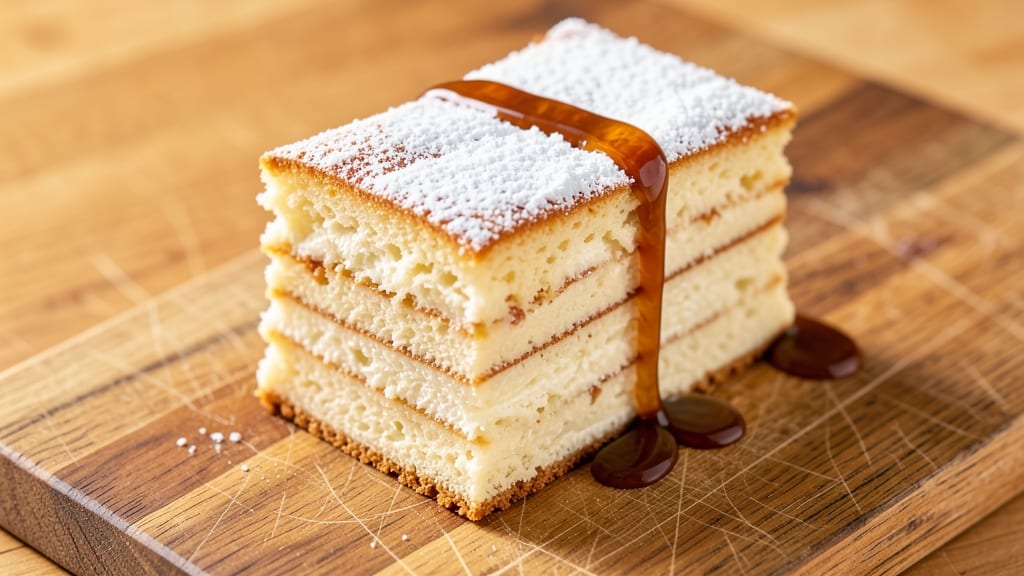
This Swedish egg cake recipe delivers the lightest, airiest vanilla clouds you’ll ever taste—each delicate layer crowned with almond crunch. 💛 The secret lies in whipped egg whites folded into a tender vanilla batter, creating a texture so ethereal it practically dissolves on your tongue.
I’ve baked this exact version for Swedish holidays, and it never fails to impress. What sets this recipe apart is the balance of simplicity and tradition. No fancy equipment is needed—just a few basic ingredients and patience for the egg whites to reach that perfect peak.
The almond topping isn’t just decoration; it adds a satisfying crunch that contrasts beautifully with the cake’s softness. Every bite is a reminder of Swedish bakery charm. The result is a cake so tender it’s almost cloud-like, with layers that separate effortlessly.
The vanilla flavor shines through without being overpowering, while the almond topping adds a subtle sweetness that ties everything together. It’s the kind of dessert that feels both elegant and comforting.
Perfect for celebrations or a special treat, this cake keeps well for a few days, making it ideal for gatherings. Let’s get baking!
Ingredients for swedish egg cake
Eight essential ingredients create this ethereal Swedish vanilla cake with almond crunch topping.
| Ingredient | Amount | Notes |
|---|---|---|
| Large Egg Whites 🥚 | 8 whole | Room temperature, no yolks |
| Granulated Sugar 🍚 | 1 ½ cups | Superfine preferred for smoothness |
| Unsalted Butter 🧈 | ¾ cup | Cold, cubed for creaming |
| All-Purpose Flour 🌾 | 1 ½ cups | Sifted for light texture |
| Vanilla Extract 🌿 | 1 tbsp | Pure, high-quality extract |
| Pinch of Salt 🧂 | ¼ tsp | Fine sea salt preferred |
| Large Egg Yolks 🥚 | 4 whole | Separated from whites |
| Ground Almonds 🌰 | 1 cup | Finely ground, for topping |
| Powdered Sugar 🍚 | ½ cup | For almond mixture |
| Vanilla Bean Seeds 🌿 | 1 tsp | Scraped from 1 pod |
| Almond Extract 🌰 | ½ tsp | For almond flavor |
| Whole Almonds 🌰 | ¼ cup | Toasted, for garnish |
The egg whites are the heart of this cake—room temperature and separated carefully for maximum volume. Kirkland Signature eggs work best for me, but any large eggs will do. Look for whites that are fresh and clear, not yellowed. The butter should be cold when you cream it with sugar; this creates the airy texture. For the almond topping, Trader Joe's ground almonds are my go-to—they're finely ground and stay fresh longer than whole nuts. If you can't find ground almonds, toast whole almonds and pulse them in a food processor until finely ground.
No vanilla bean? Pure vanilla extract works perfectly, but if you want that authentic Swedish flavor, scrape seeds from one pod. The almond extract adds depth—don't skip it. For the egg whites, avoid any grease from yolks when separating, or they won't whip properly. If your whites don't peak, add a pinch more sugar or beat for another minute. The almond topping mixture should be thick enough to hold its shape when dropped from a spoon, but not dry. If it's too loose, add a little more powdered sugar.
This cake keeps beautifully for 3-4 days at room temperature, wrapped tightly in parchment. For longer storage, freeze layers separately for up to 3 months. The almond topping stays crisp if stored in an airtight container. To serve, simply separate the layers—each one will be light as a cloud. I always make an extra batch because it disappears fast at gatherings. The cake reheats beautifully in the oven at 300°F for 5-10 minutes if you want to serve it warm.
Why You'll Love This Recipe
- Here’s what sold me: that perfect balance of sweetness and richness from the butter and sugar, but the vanilla? It’s the star. A single drop transforms this cake from good to I’ll fight someone for another slice. And honestly, the texture—light, airy, yet sturdy enough to slice—is exactly what I want in a cake.
- I’ll be real: most cakes turn into sad, dry bricks by day three. Not this one. The Swedish egg cake stays moist for days, and the flavor only gets better as it sits. Plus, it’s cheap to make—just eggs, sugar, butter, and a pinch of flour—and stretches far enough to feed a family without breaking the bank. Win-win.
Step-by-step instructions for Swedish egg cake
Master this delicate technique and you'll achieve clouds of vanilla-infused meringue with perfect almond crunch.
👨🍳 Step 1: Prepare the Meringue Base
Begin by separating the 8 whole large egg whites from the yolks, ensuring no trace of yolk contaminates the whites. Place the whites in a spotless, grease-free bowl—any fat will prevent proper whipping. Add the 0.25 tsp pinch of salt and let the whites sit at room temperature for 10 minutes to reach perfect whipping consistency.
Using a stand mixer fitted with the whisk attachment, beat the egg whites on low speed for 2 minutes to break up any bubbles. Gradually add the 1.5 cups granulated sugar, 1 tablespoon at a time, increasing speed to high after each addition. Whip for 5-7 minutes until the meringue forms stiff, glossy peaks that hold their shape when the whisk is lifted. The mixture should look like thick, pale clouds—this is your foundation for that signature Swedish lightness.
🍳 Step 2: Fold in Yolks and Flour
In a separate bowl, combine the 4 whole large egg yolks, 0.75 cup unsalted butter, 1.5 cups all-purpose flour, 1 tablespoon vanilla extract, and 0.5 teaspoon almond extract. Whisk vigorously until smooth and fully incorporated—this yolk mixture should be thick and pale yellow. I like to press the butter against the bowl sides to ensure it melts completely into the mixture.
Gently fold one-third of the meringue into the yolk mixture using a spatula, cutting through the center to maintain air pockets. Then fold in the remaining meringue in two additions, being careful not to deflate the structure. The batter should be thick but still hold its shape when spooned—this ensures that signature airy texture without collapsing during baking.
🥘 Step 3: Prepare the Almond Topping
In a small bowl, mix the 1 cup ground almonds, 0.5 cup powdered sugar, 1 teaspoon vanilla bean seeds, and 0.25 teaspoon pinch of salt. Stir until completely combined—this topping should resemble coarse sand. Toast the 0.25 cup whole almonds in a dry skillet over medium heat for 2-3 minutes until fragrant and lightly golden, then set aside to cool.
Preheat your oven to 350°F and line an 8-inch round cake pan with parchment paper, leaving an overhang for easy removal. The almond topping is what gives this cake its signature crunch, so don't skip this step—it's what makes the texture contrast so delightful.
🔥 Step 4: Bake the Cake to Perfection
Spread half of the batter evenly into the prepared pan, then sprinkle half of the almond mixture over the top. Add the remaining batter and gently swirl with a spoon to create marbled patterns. Top with the remaining almond mixture, pressing down lightly to ensure adhesion. Bake for 35-40 minutes until the top is golden brown and the edges pull away slightly from the pan.
Here's the trick: I like to check for doneness by inserting a toothpick into the center—it should come out clean, but the cake should still be slightly springy to the touch. Overbaking will make it dry, so keep a close eye on it during the last 5 minutes of baking. Let the cake cool in the pan for 10 minutes, then transfer to a wire rack to cool completely before slicing.
🍽️ Step 5: Serve with Confidence
Once fully cooled, carefully remove the cake from the pan using the parchment overhang. Dust the top with additional powdered sugar if desired, and garnish with the toasted whole almonds. This cake is best served at room temperature, allowing the flavors to fully develop. Each slice should reveal that signature airy, vanilla-infused meringue with pockets of almond crunch throughout.
The secret to success lies in the folding technique—don't overmix, and be gentle when combining the meringue with the yolk mixture. If the batter looks too stiff, it's better to let it sit for 10 minutes before baking to allow the flour to fully hydrate. This cake keeps well for 3 days at room temperature, making it perfect for special occasions.
Pro Tips For Making Swedish Egg Cake
- Whip Whites to Stiff Peaks: After beating egg whites with sugar, stop mixing when they form stiff peaks that just hold their shape—but don’t overdo it. I learned this the hard way when mine collapsed into a sad, flat mess; the cake needs structure, not glue.
- Use Cold Butter: Cut unsalted butter into tiny cubes and chill them for 20 minutes before folding into the batter. Cold butter creates pockets of air that make the cake light—hot butter just melts into a dense, greasy disaster.
- Sift That Flour: Don’t eyeball it—sift the flour twice before mixing. I skipped this once and ended up with a cake so dense it could’ve been a brick. Sifting aerates the batter and keeps the texture tender.
- Bake in Two Stages: Start the cake at 350°F (175°C) for 10 minutes, then drop to 325°F (160°C) for the rest of the time. The high heat sets the outside fast, while the lower temp ensures the center bakes evenly—no more raw egg in the middle.
Common mistakes when making great swedish egg cake
Overwhipped Meringue
I’ve ruined more Swedish egg cakes than I’ll admit by overwhipping the meringue. When egg whites reach the stiff peak stage, they should hold their shape but still glide smoothly off the whisk.
If you whip them to dry, grainy peaks, the cake will crack and collapse during baking. Stop mixing as soon as you see glossy, firm peaks—about 5-7 minutes total on high speed.
Overwhipped meringue loses its airiness, leaving you with a dense, sad cake instead of those signature clouds. 💛
Greasy Bowls
Even a tiny bit of fat—like a speck of yolk or greasy bowl—will prevent your egg whites from whipping properly. Always use a spotless, grease-free bowl and separate yolks from whites over a separate bowl to catch any stragglers.
I like to rinse my mixing bowl with hot water and dry it completely before starting. If your whites don’t whip at all, start over with fresh eggs—there’s no saving them once they’re contaminated.
Skipping the Room Temp Step
Cold egg whites won’t whip as voluminously as room-temperature ones. If you skip letting them sit for 10 minutes at room temp, your meringue will be stiff and uneven. I’ve learned this the hard way—once, I rushed and ended up with a cake that was dense and flat.
Pro tip: Place your eggs in warm water for 5 minutes if you’re short on time, but never use cold eggs straight from the fridge.
Overmixing the Batter
The folding technique is delicate—overmixing the batter after combining meringue and yolks deflates the air pockets, resulting in a heavy cake. Use a spatula and fold just until combined, cutting through the center to maintain structure.
If your batter looks curdled or lumpy, don’t panic—gently fold in a little more meringue to smooth it out. Patience here is key; rushing leads to disappointment.
Uneven Baking
An unevenly baked cake is a common mistake, often caused by opening the oven too early or not rotating the pan halfway through baking. This cake needs 35-40 minutes at 350°F—check it at 30 minutes to avoid overbrowning.
Rotate the pan 180 degrees after 20 minutes for even heat distribution. A toothpick should come out clean, but the cake should still feel slightly springy in the center. Overbaking dries it out, so keep an eye on it!
Ignoring the Almond Topping
The almond topping isn’t just decoration—it’s what gives this cake its signature crunch and flavor. Skipping it or not pressing it down lightly means it won’t adhere properly, leading to a messy, uneven finish.
Toast the whole almonds until fragrant, and mix the ground almonds with powdered sugar until it resembles coarse sand. Press it down firmly after adding the second layer of batter to ensure it stays put during baking. 🌰
Nutrition facts
Frequently asked questions
Why does this Swedish egg cake need so many egg whites?
The egg whites create the signature airy, cloud-like texture that makes this cake so special. Eight large whites provide enough structure to hold the delicate layers without being dense. The meringue base is what gives it that signature Swedish lightness—think of it as the "cloud" in "cloud cake."
Can I make this cake without a stand mixer?
Yes! Use a hand mixer or even whisk the egg whites vigorously by hand for 8-10 minutes until stiff peaks form. The key is patience—whip until the mixture looks glossy and holds its shape. For the yolk mixture, a fork works fine, but a whisk will give you smoother results. Just fold gently to preserve those air pockets.
What's the best way to store leftovers?
Wrap the cake tightly in plastic wrap or parchment paper and store at room temperature for up to 3 days. For longer storage, freeze individual layers (without the almond topping) for up to 3 months. To serve, let it come to room temperature first—the flavors develop beautifully when not cold. The almond topping stays crisp if kept in an airtight container separately.
Can I substitute almond extract with something else?
Almond extract adds that subtle nutty depth, but you can use 1 teaspoon amaretto (almond-flavored liqueur) or ½ teaspoon vanilla extract if needed. For the topping, ground almonds are traditional, but finely ground hazelnuts or pecans work too. Just adjust the amount to maintain the same texture—about 1 cup total of ground nuts for the topping.
Why does my cake collapse after baking?
Collapse usually happens from overwhipping the meringue (dry, grainy peaks) or opening the oven too soon. The cake needs to set for 10 minutes in the pan before removing. Also, ensure your egg whites were room temperature and completely free of yolk. If it happens, try baking at 325°F** instead of 350°F next time for a gentler rise.