
Breakfast & Brunch
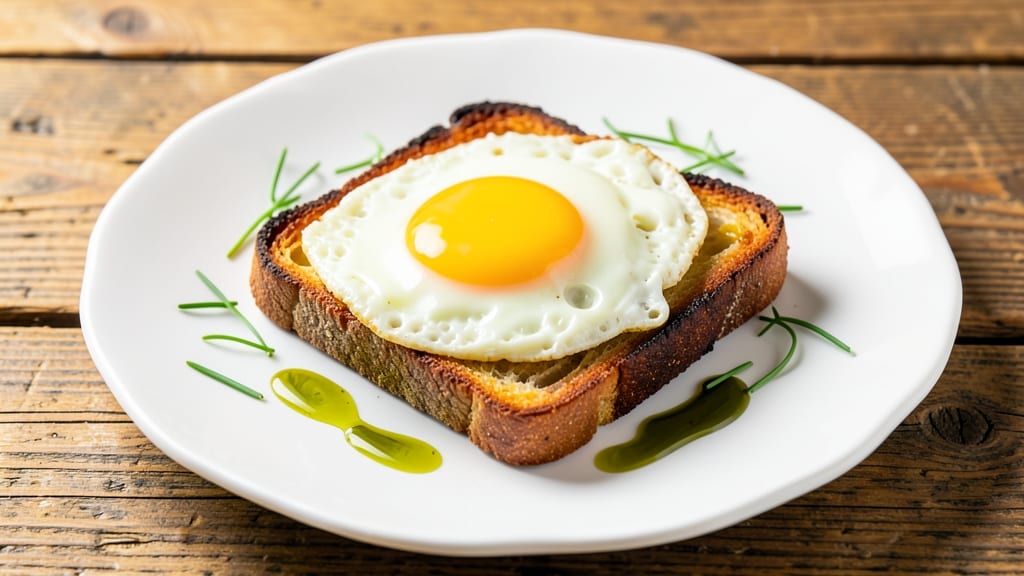
This sunny side up egg toast recipe transforms simple breakfast ingredients into a golden, velvety masterpiece that's impossible to resist. 💛 The secret lies in perfectly crisped sourdough and eggs cooked just until the yolk remains runny—creating a luxurious bite that feels like a restaurant breakfast at home.
I've perfected this technique after years of trial and error, and it never fails to impress even the most skeptical breakfast eaters.
The beauty of this recipe is its simplicity—just a few quality ingredients and a hot skillet. We're talking rich, buttery sourdough that toasts to a crispy golden brown, paired with eggs cooked to that perfect sunny side up finish where the yolk stays gloriously runny.
The combination of textures and temperatures creates a breakfast experience that's both comforting and exciting.
What you'll end up with is a plate that looks as good as it tastes: crispy toast topped with a perfectly cooked egg, the yolk still vibrant and unbroken.
The contrast between the warm, buttery bread and the cool, creamy yolk is pure magic, especially when finished with a sprinkle of flaky salt and fresh herbs. It's the kind of breakfast that makes you want to linger at the table.
This recipe works equally well for lazy weekend mornings or quick weeknight breakfasts when you need something satisfying in minutes. The method is foolproof—no fancy techniques required—just attention to timing and temperature. Let's create this golden breakfast masterpiece together.
Ingredients for sunny side up egg toast
Just eight ingredients transform ordinary mornings into golden, velvety breakfast perfection.
| Ingredient | Amount | Notes |
|---|---|---|
| Sourdough Bread 🍞 | 4 slices | Thick-cut, crusty, day-old preferred |
| Large Eggs 🥚 | 2 whole | Fresh, room temperature |
| Unsalted Butter 🧈 | 2 tbsp | European-style, cold |
| Extra-Virgin Olive Oil 🫒 | 1 tbsp | Light, fruity variety |
| Flaky Sea Salt 🧂 | ½ tsp | Maldon or Jacobsen preferred |
| Fresh Chives 🌿 | 2 tbsp | Finely chopped, for garnish |
| Fresh Thyme Leaves 🌿 | 2 tbsp | Or substitute dried thyme |
| Garlic Cloves 🧄 | 1 clove | Minced, for butter infusion |
The sourdough is non-negotiable here. Day-old bread toasts to ideal crispiness without burning, and thick-cut slices hold up beautifully to the runny yolk. For the butter, European-style (like Plugrá or President) has higher fat content—it spreads perfectly without melting too quickly. If you're using fresh bread, toast it first and keep warm in a 200°F oven while you cook the eggs. The garlic in the butter adds subtle depth, but don't skip it—it's what elevates this from basic toast to restaurant-quality. For the eggs, farm-fresh from a local market yields richer yolks, but store-bought works perfectly fine if you're in a rush.
No sourdough? Brioche or crusty whole-grain bread works as a substitute—just toast it longer to achieve that crispy texture. Out of fresh herbs? Dried thyme at one-third the amount gives you a similar earthy note, though fresh is ideal. The olive oil is there to prevent butter from burning—if you're using a nonstick skillet, you can reduce it to just 1 teaspoon. For the eggs, room temperature is key—they'll cook more evenly. If you're cooking multiple eggs, keep the first one warm in the oven while you finish the others. And if you're serving this for a crowd, double the butter and bread quantities—it's that good.
Butter and bread should be stored in airtight containers in the fridge, but bring them to room temperature before toasting. Fresh herbs keep best in the fridge, wrapped in damp paper towels, for up to 5 days. The eggs will stay fresh for 3 weeks in their carton. This dish reheats beautifully—just pop slices in a 350°F oven for 5 minutes to revive that crispy texture. For meal prep, assemble components separately and toast-to-order. The magic lies in the contrast of temperatures: crispy, warm bread meets cool, creamy yolk—always serve immediately for that perfect bite.
Why You'll Love This Recipe
- Five-Ingredient Magic: I swear by this one—just eggs, sourdough, butter, olive oil, and salt. That’s it. The kind of simplicity where you don’t need a recipe, but having one makes it better.
- Golden Crust Alert: The butter-toasted sourdough meets that runny, golden yolk? It’s the kind of bite that makes you pause mid-morning. Honestly, I’ve had worse meals costing 10x more.
- Breakfast or Snack: Need a quick bite before lunch? Same thing for dinner after a long day. Slather it with avocado or keep it bare—it works either way. (Yes, even on a Tuesday night.)
- Zero Guilt Leftovers: Make a batch on Sunday, store in the fridge, and reheat in seconds. The eggs stay creamy, the bread stays crisp—no sad soggy toast here. My wallet and I thank you.
Step-by-step instructions for sunny side up egg toast
Here's how to achieve perfectly crispy sourdough with runny yolks—every time.
🔥 Step 1: Toast the Sourdough to Maximum Crisp
Preheat your oven to 400°F—this high heat ensures deep, even browning. Arrange the 4 slices of sourdough on a baking sheet in a single layer. Brush each slice generously with the 1 tablespoon of extra-virgin olive oil, focusing on the top surfaces and edges. This creates a crispy crust while preventing the bread from drying out.
Bake for 8-10 minutes until the edges are deep golden brown and the bread feels firm to the touch. Watch closely after 6 minutes—the bread should toast quickly at this temperature. Remove immediately when done; overcooking will make it brittle. Let the toast cool for 2 minutes on a wire rack before proceeding.
👨🍳 Step 2: Infuse the Butter with Garlic and Herbs
While the toast bakes, place the 2 tablespoons of unsalted butter in a small saucepan over low heat. Add the minced 1 clove of garlic and cook for 30 seconds**—just until fragrant, not browned. Remove from heat and stir in the 2 tablespoons of fresh thyme leaves and 2 tablespoons of fresh chives, letting the herbs steep for 1 minute to infuse the butter with flavor.
This herb-infused butter will elevate your toast from simple to extraordinary. The garlic adds depth, while the thyme and chives bring bright, fresh notes that complement the eggs perfectly. Keep the butter warm until ready to use—it should remain soft but not melted.
🍳 Step 3: Cook the Eggs to Perfect Runny Yolk
Heat a nonstick skillet over medium-low heat—this gentle temperature is crucial for sunny-side-up eggs. Crack the 2 whole large eggs into a small bowl, then carefully slide them into the skillet. You want just enough space between them to flip easily later.
Cook for 2-3 minutes until the whites are set but still slightly translucent at the edges, and the yolks remain completely liquid. The edges should be opaque white with a slight golden hue at the bottom. Avoid moving the eggs—any disturbance will prevent that perfect round shape. When the whites are nearly set, sprinkle with 0.5 teaspoon of flaky sea salt and let it dissolve slightly.
🥘 Step 4: Assemble with Herb Butter and Garnish
Place a toasted sourdough slice on each plate. Top each with one sunny-side-up egg, allowing the runny yolk to spill slightly over the edges. Immediately spoon the herb-infused butter over the eggs, letting it melt slightly and coat the toast. The butter should be warm enough to create a delicate sheen on the eggs.
Garnish with additional chives and thyme leaves, and serve right away. The contrast between the crispy, toasted bread, the silky egg yolks, and the aromatic herb butter creates a harmonious bite. Each component should be at its peak—hot toast, warm eggs, and fresh herbs—ensuring every mouthful delivers perfect texture and flavor.
Pro Tips For Making Sunny Side Up Egg Toast
- CRACK EGGS IN COLD PANS: I learned this the hard way—hot pans make eggs splatter like a science experiment gone wrong. Crack the eggs into the pan after the butter has melted and the sourdough is golden, but while the pan is still cool enough to handle. The yolk stays intact, and you won’t be scrubbing egg bits off your stovetop later.
- TOAST BREAD UNTIL CRISPY: Sourdough’s chewy when fresh, but you want that perfect toasted crunch. Butter the dry sourdough on both sides first, then toast in a preheated pan over medium-high until the edges are deep golden and the center resists a gentle press. Skip the soft middle—it’ll soak up butter like a sponge and ruin the texture.
- USE OLIVE OIL AFTER BUTTER: Sounds weird, but it works: After the butter browns and you’ve removed the toast, add a tiny splash of extra-virgin olive oil (about ½ teaspoon) to the pan. Swirl it around, then crack the egg in—this creates a thin, flavorful barrier that keeps the egg from sticking without overpowering the dish. (Yes, even if you’re impatient like me.)
- SALT THE BUTTER FIRST: More salt than you think, especially if using unsalted butter. Sprinkle a generous pinch of flaky sea salt directly into the melted butter before adding the sourdough—this distributes it evenly and gives the toast a built-in seasoning boost. Resist the urge to add salt later; the egg will just dilute it.
Regional styles of this dish
Classic American Diner
This is the version you'd find at a classic New York diner—simple, hearty, and designed for quick service. The key difference here is using thick-cut white bread instead of sourdough, toasted in a heavy cast-iron skillet with butter and a pinch of coarse salt.
The eggs are cooked in the same skillet after the toast to maximize flavor, and finished with a sprinkle of black pepper and hot sauce on the side.
I remember my first time at a diner in Chicago—they'd even add a tiny pat of butter to the egg yolk before serving. 🥞
French Bistro Twist
For a more refined approach, the French version swaps sourdough for baguette slices and uses clarified butter (beurre noisette) for toasting.
The eggs are cooked in a copper or stainless steel pan to achieve that signature golden hue, and finished with a drizzle of truffle oil and fresh chervil instead of chives.
The French also emphasize buttering the toast while still warm—this creates a shimmering, almost liquid layer that's pure indulgence. I first tried this in a Parisian café where the waiter would actually melt the butter on the toast with a torch!
Japanese Shokudo Style
In Japan, this dish often appears as part of a breakfast set called "eggo toast" (エゴトースト), where the eggs are cooked with soy sauce and mirin for a subtle sweet-savory flavor. The bread is typically shokupan (Japanese milk bread), lightly buttered and toasted until just crisp.
The eggs are finished with grated daikon radish and bonito flakes for umami depth. I had this at a tiny family-run shokudo in Kyoto—they'd even add a tiny piece of pickled ginger on the side to cut through the richness. 🍜
Southern U.S. Comfort
The Southern version takes this dish to new heights by using cornbread or buttermilk biscuits instead of traditional bread. The eggs are cooked with a splash of heavy cream in the pan, and the toast is finished with crumbled bacon and hot honey drizzle.
The Southern touch? Adding a dash of cayenne pepper to the eggs for a subtle kick. I grew up with this version at my grandma's house—she'd always say "the yolk should be like liquid gold" and she wasn't wrong. 🍯
Modern Brunch Fusion
For a contemporary twist, try using sourdough with a seed crust and topping the eggs with avocado slices and microgreens. The butter is infused with smoked paprika and lemon zest for a bright, smoky flavor. This version pairs beautifully with a spicy mango salsa on the side.
I developed this version after brunching at a trendy LA spot—they'd even add a crispy shallot on top for extra crunch. The contrast of textures makes this dish feel fresh and exciting while keeping that classic comfort factor. 🌱
Nutrition facts
Frequently asked questions
Can I use any type of bread for this recipe?
While sourdough is ideal for its crispy texture, you can use brioche, crusty whole-grain, or even baguette slices. The key is toasting until deeply golden—thicker bread like brioche holds up better to runny yolks. For softer breads, toast longer to achieve that satisfying crunch.
How do I get the perfect runny yolk every time?
Cook eggs over medium-low heat for exactly 2-3 minutes—whites set but yolks stay liquid. Use a nonstick skillet and avoid moving the eggs. For extra insurance, remove from heat when whites are just set (about 1 minute before they look fully done). The residual heat will finish cooking them while keeping yolks creamy.
Can I make this ahead of time?
Toast the bread and cook the eggs fresh—this dish is all about temperature contrast! Store components separately: toast in an airtight container for 2 days, eggs can be prepped ahead but cook to order. Reheat toast in a 350°F oven for 5 minutes to revive crispiness. The magic happens when hot toast meets cool eggs.
What's the best way to clean my skillet after cooking?
Immediately after cooking, wipe out any egg residue with a paper towel while warm. For stuck-on bits, add 1 tablespoon of water to the skillet and scrape with a spatula—the steam helps release everything. Soak in warm, soapy water for 10 minutes if needed. Never use metal utensils on nonstick pans.
How can I make this vegetarian?
Swap the eggs for tofu scramble (firm tofu crumbled with turmeric, nutritional yeast, and veggies) or mushroom "eggs" (portobello slices pan-seared with soy sauce). Keep the herb butter and toast exactly the same—it maintains all the delicious textures. Add avocado or hummus for extra richness.