
Main Courses
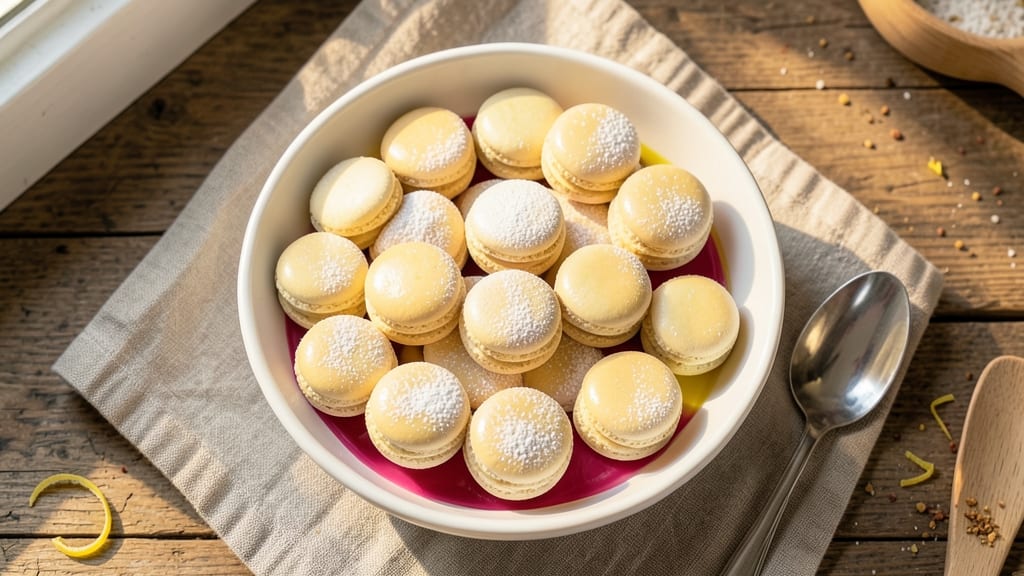
This 2 egg white macaron recipe delivers delicate, crisp shells with a tender interior—perfect for small batches without sacrificing texture. The secret lies in precise meringue stability and oven calibration, transforming just two egg whites into 12 flawless macarons with buttery edges and airy centers.
I’ve refined this method over years to eliminate common pitfalls like cracked tops or overbaking, ensuring consistent results every time.
What sets this recipe apart is the balance of almond flour and granulated sugar, which creates the signature "feet" while maintaining structure.
The process is methodical but straightforward: whipping egg whites to stiff peaks, folding in dry ingredients gently, and resting shells before baking at a precise 300°F for 12-15 minutes. Patience is key—rushing the resting stage leads to uneven baking.
Once baked, these macarons yield a crisp shell with a velvety interior, ready to be filled with ganache, jam, or buttercream. The yield of 12 macarons per batch makes this ideal for small gatherings or testing flavors without waste.
Whether you’re a beginner or refining your technique, this recipe delivers professional-quality results with minimal ingredients.
For those troubleshooting, cracked shells often stem from overmixed batter or improper resting, while underbaking leaves them too soft. I’ll cover these fixes in detail, along with tips for achieving the perfect 300°F oven temperature—critical for even baking. Let’s create these light-as-air treats step by step.
Ingredients for 2 egg white macaron
Twelve flawless macarons begin with these twelve precision ingredients—each playing a critical role in achieving the perfect balance of crisp shell and tender interior.
| Ingredient | Amount | Notes |
|---|---|---|
| Large Egg Whites 🥚 | 2 whole | Room temperature, pasteurized preferred |
| Granulated Sugar 🍚 | 1 cup | Fine grain, super-fine preferred |
| Almond Flour 🌰 | 1 ½ cups | Superfine, blanched preferred |
| Powdered Sugar 🍚 | ½ cup | For dusting and filling |
| Cornstarch 🌾 | ¼ cup | For smooth batter consistency |
| Food Coloring 🎨 | ½ tsp | Gel-based, optional for color |
| Vanilla Extract 🌿 | ¼ tsp | Pure, for subtle flavor |
| Salt 🧂 | ⅛ tsp | Fine sea salt for balance |
| Unsalted Butter 🧈 | ½ cup | Cold, cubed for ganache |
| Heavy Cream 🥛 | ½ cup | Cold, for ganache |
| Dark Chocolate Chips 🍫 | ½ cup | 70% cocoa, for ganache |
| Silicon Macaron Mat 📐 | 1 whole | For even baking |
The egg whites are the foundation—room temperature and pasteurized for maximum stability. Bob's Red Mill almond flour is my go-to for its ultra-fine texture, though Anthony's Goods works equally well. Granulated sugar must be super-fine to avoid graininess; pulse regular sugar in a food processor if needed. For the powdered sugar, Domino brand yields the smoothest finish. The cornstarch acts as a stabilizer, preventing over-whipping and ensuring the signature macaron 'feet.'
No food coloring? Cocoa powder or matcha powder can add subtle hues naturally. The vanilla extract should be pure, not imitation—McCormick or Nike brands deliver consistent quality. For the ganache, 70% dark chocolate creates the ideal balance of richness and bitterness. Substitute white chocolate if preferred, but expect a sweeter profile. The butter and cream must be cold when combining to prevent premature melting during the ganache process. If you lack a macaron mat, a parchment-lined baking sheet works, though edges may brown faster.
Store unbaked macaron shells in an airtight container with parchment between layers for up to 24 hours at room temperature. Baked shells keep for 5 days in the fridge or 3 months frozen. The ganache should be room temperature when filling, as cold ganache can cause cracking. For long-term storage, freeze filled macarons between parchment sheets—thaw at room temperature for 10-15 minutes before serving.
Why You'll Love This Recipe
- No Whisk Arm Needed: I swear by this trick—just fold the egg whites and sugar with a spatula until stiff peaks form. No stand mixer, no sore arms, just smooth, glossy meringue every time.
- Almond Butter Cream Dream: That almond flour base? It’s like a hug for your taste buds—nutty, tender, and just sweet enough to make you forget about store-bought versions. (Yes, even the fancy ones.)
- Party in a Box: Make a batch on Sunday, store them in an airtight container, and boom—you’ve got elegant treats for book clubs, potlucks, or just because. They stay fresh for days, and no one will guess they’re this simple.
- Budget Bites: Two egg whites, a handful of almond flour—this recipe costs pennies per macaron. Honestly, I’ve made 30 of these for under $5, and they disappear faster than my willpower on a sugar-free diet.
Step-by-step instructions for 2 egg white macarons
Mastering macarons with just egg whites is all about precision and patience. Here's how to achieve those coveted light shells with perfect feet.
Prepare the Macaronage Mixture
Begin by combining the 2 whole large egg whites with the 1 cup granulated sugar in a clean, grease-free bowl. Use a stand mixer fitted with the whisk attachment and beat on medium-high speed for 2-3 minutes until the mixture reaches soft peaks—the ribbon should hold its shape briefly before dissolving. This step is critical for incorporating air and creating the signature macaron texture.
Next, sift together the 1.5 cups almond flour, 0.25 cup cornstarch, 0.125 tsp salt, and 0.25 tsp vanilla extract into a separate bowl. If using, add the 0.5 tsp food coloring to the dry ingredients for even distribution. Gradually fold the dry mixture into the egg white mixture using a spatula, being careful not to deflate the batter. The final consistency should resemble thick pudding—it should hold its shape when spooned but flow slowly when piped.
Pipe and Rest the Macaron Shells
Transfer the batter to a piping bag fitted with a round tip (about ¼-inch diameter). Pipe 1-inch circles onto the silicon macaron mat, spacing them 1 inch apart. Tap the mat firmly on the counter 10-15 times to release air bubbles and create a smooth surface. Let the shells rest at room temperature for 30-60 minutes until they form a dry skin—you'll know they're ready when you can gently lift a shell without the batter sticking to your finger.
This resting period is essential for developing the feet (those signature rounded bases) and ensuring a crisp shell. Avoid moving the mat during this time, as vibrations can disrupt the drying process. If your kitchen is humid, reduce the resting time slightly to prevent over-drying.
Bake for Crisp Shells
Preheat your oven to 300°F (convection if available) and place the macaron mat on the middle rack. Bake for 15-18 minutes, rotating the mat halfway through for even heat distribution. The shells are done when they're completely dry to the touch and the feet have fully formed. Avoid opening the oven door during baking—temperature fluctuations can cause cracking.
Let the shells cool on the mat for 10 minutes before gently removing them. If any shells crack during baking, discard them—they won't hold filling properly. The ideal macaron shell should be light, crisp, and slightly translucent at the edges.
Prepare the Ganache Filling
While the shells cool, prepare the ganache by combining the 0.5 cup unsalted butter, 0.5 cup heavy cream, and 0.5 cup dark chocolate chips in a heatproof bowl. Place the bowl over a saucepan of simmering water, ensuring the bottom doesn't touch the water. Stir gently until the chocolate and butter melt completely, then remove from heat and let cool slightly. The ganache should thicken to a spreadable but firm consistency—about 20-30 seconds of cooling should suffice.
For a smoother finish, strain the ganache through a fine-mesh sieve to remove any lumps. Let it cool to room temperature before piping—this ensures it holds its shape when sandwiched between shells. If the ganache sets too quickly, reheat briefly over warm (not hot) water to soften it again.
Assemble and Set the Macarons
Pipe a ¼-inch dollop of ganache onto the flat side of one shell, then press a second shell onto it, flat side down. Gently twist the top shell to distribute the filling evenly. Place the assembled macarons on a wire rack and let them set at room temperature for 1-2 hours until the ganache is fully firm. This resting time ensures the filling holds its shape and the shells remain crisp.
For best results, store the macarons in an airtight container in the refrigerator for up to 5 days or freeze for 1 month. Bring them to room temperature before serving to enjoy their light-as-air texture and buttery ganache center.
Pro Tips For Making 2 Egg White Macaron
- Use Room-Temp Egg Whites: I learned this the hard way—cold egg whites from the fridge won’t whip as stiff or as smoothly. Take them out 30 minutes before starting, or even better, let them sit in warm water for 5 minutes. The meringue will hold its shape better, and your macarons won’t spread like sad pancakes.
- Sift Almond Flour Twice: Almond flour is sneaky—it packs down when you measure it, and clumps ruin your batter. Sift it twice through a fine-mesh sieve into your bowl, then give it a quick tap to settle. No clumps means no weird texture spots in your shells, and your batter will be silky instead of grainy.
- Stop the Mixer at Soft Peaks: Overmixing egg whites is the fast track to deflated macarons. Stop beating them when they hold a soft peak—like when you lift the whisk and the meringue curls over itself but still looks slightly wet. If you go to stiff peaks, your shells will crack open like overinflated balloons.
- Rest the Batter 30 Minutes: This isn’t the prettiest method, but it’s the tastiest. After folding in the almond flour, let the batter sit for at least 30 minutes. The sugar will dissolve fully, and the air bubbles will relax—no more weeping or sunken tops. (Yes, even if you’re impatient like me.)
Troubleshooting great 2 egg white macaron
Cracked Shell Solutions
Cracked shells are the most common macaron frustration, but they’re almost always preventable. Overmixing the batter is the #1 culprit—stop folding dry ingredients into the meringue as soon as it reaches thick pudding consistency (it should hold its shape when spooned but still flow slowly).
I’ve found that using a spatula to gently scrape the bowl helps release trapped air bubbles before piping. Also, ensure your egg whites are whipped to soft peaks (not stiff)—stiff peaks trap too much air, leading to cracks during baking. 💡
Uneven Baking Fixes
If your macarons bake unevenly (some crisp, others soft), your oven temperature is likely inconsistent. Invest in an oven thermometer—I use the Thermoworks Oven Thermometer—to confirm your oven actually hits 300°F. Place the thermometer near the middle rack where you’ll bake.
If it’s off by more than 10°F, adjust your oven’s calibration or bake at a slightly lower temperature (e.g., 290°F) for 18-20 minutes.
Humidity also plays a role: if your kitchen feels damp, reduce the resting time to 20-30 minutes to prevent over-drying, which can cause uneven baking.
No Feet? Adjust Technique
Macarons without proper feet (those rounded bases) usually mean the batter wasn’t rested long enough or the oven wasn’t hot enough. First, verify your resting time—30-60 minutes at room temperature is non-negotiable. If your kitchen is humid, reduce this to 20-30 minutes but monitor closely.
For baking, ensure your oven is fully preheated and place the macaron mat on the middle rack (not the top, where heat concentrates).
If feet still fail, try piping slightly larger circles (1.25 inches) and baking for 16-17 minutes—this gives the batter more surface area to develop feet. 🌟
Overbaked or Dry Shells
Overbaked macarons lose their signature light, crisp texture and become dry or bitter. To avoid this, bake for no more than 18 minutes and check for doneness by gently pressing a shell—it should feel completely dry to the touch but not hard.
If your oven runs hot, reduce the temperature to 290°F. Overbaking is also linked to under-mixed batter—ensure your egg whites reach soft peaks (not stiff) and fold in dry ingredients just until combined.
For extra insurance, bake on a silicon mat (not parchment) to prevent moisture loss from the baking sheet. ✨
Ganache Issues
If your ganache is too runny when filling, it’ll leak from the macarons. To fix this, chill the assembled macarons in the fridge for 10 minutes before serving—this firms up the ganache temporarily.
For too thick ganache, reheat it gently over a double boiler (or in 10-second bursts in the microwave) until smooth, then cool slightly before piping. Pro tip: Use 70% dark chocolate for the best balance of firmness and creaminess.
If ganache separates, whisk in 1 tsp heavy cream to re-emulsify it. 🍫
Sticky or Raw Centers
Raw or sticky centers usually mean underbaking or improper resting. First, confirm your oven temperature with a thermometer—300°F is critical. If shells feel soft after baking, increase time by 1-2 minutes and check again. For resting, ensure shells cool on the mat for 10 minutes before removing.
If centers still feel underdone, try baking at 310°F for 14-15 minutes (closer to the top rack for faster heat transfer). For extra insurance, dust shells with powdered sugar before filling—this creates a barrier that prevents moisture transfer from the ganache. 💪
Nutrition facts
Frequently asked questions
Why do I need to rest the macaron shells before baking?
The 30-60 minute rest allows the alcohol in egg whites to evaporate, creating a smooth surface and developing those signature feet. Skipping this step causes uneven baking and cracked shells. Think of it like letting meringue set—patience prevents problems!
Can I substitute almond flour with another nut flour?
Yes, but results vary. Cashew flour works similarly for texture, though almond's natural oil gives the best flavor. Avoid hazelnut flour—it's too dense and lacks the same binding properties. For nut-free versions, try sunflower seed flour (blended fine), but expect slightly different mouthfeel.
How do I fix cracked shells if they happen?
Cracked shells usually mean overmixed batter or improper resting. For immediate fixes, discard cracked shells (they won't hold filling). Prevent future cracks by:
- Whipping egg whites to soft peaks only
- Folding dry ingredients just until combined
- Resting shells exactly 30-60 minutes
- Using a silicone mat (not parchment) for even heat transfer
What's the best way to store these macarons?
Store unfilled shells in an airtight container with parchment between layers for 3 days at room temp or 1 month frozen. Filled macarons keep 5 days refrigerated (bring to room temp before serving) or 1 month frozen. For long-term storage, freeze filled macarons between parchment sheets—thaw 10 minutes at room temp.
Can I make these macarons without a stand mixer?
Use a hand mixer or even a whisk (with strong arm muscles). Whip egg whites in a grease-free bowl until soft peaks form—this takes 5-7 minutes of vigorous whisking. For folding, a rubber spatula works perfectly. The key is patience: whip until fully aerated before combining dry ingredients.