
Main Courses
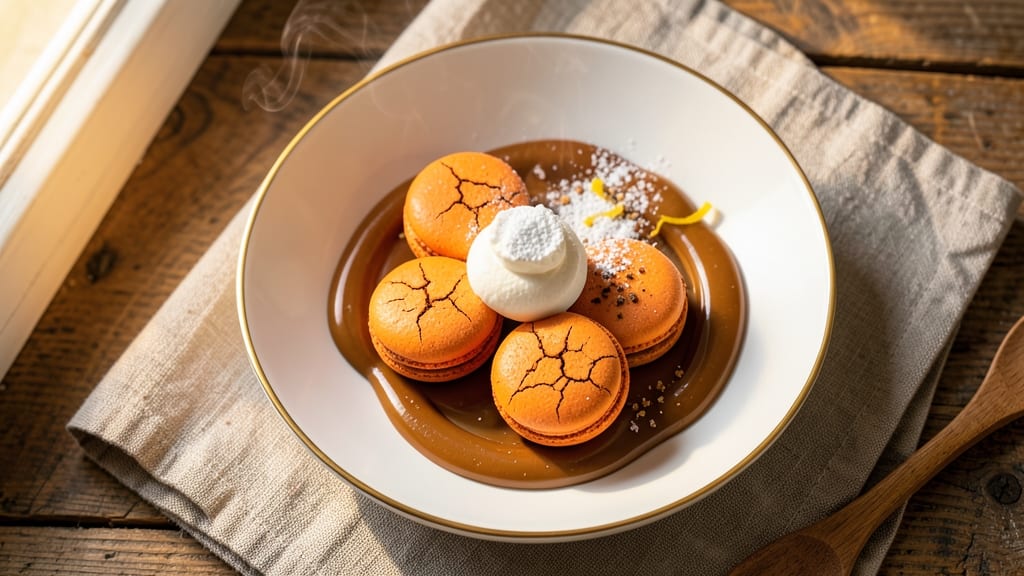
This 1 egg white macaron recipe delivers delicate French meringue cups with crisp shells and tender interiors—all using just one egg white. The secret lies in precise measurements and gentle technique, transforming simple ingredients into elegant, restaurant-quality macarons.
I've perfected this method after years of testing, ensuring foolproof results even for beginners. What makes this recipe special is its efficiency: no wasted yolks, no complicated steps, just pure French pastry magic in every bite.
The process begins with a smooth meringue made from just one egg white, sugar, and almond flour—no special equipment required beyond a stand mixer or whisk.
After piping the delicate shells, they bake to a crisp exterior with a tender center, ready to be filled with nutty ganache, jam, or buttercream. The key to success is patience: letting the shells rest before baking prevents cracking, while proper baking times ensure they don't overbrown.
By the time you're done, you'll have a tray of perfectly formed macarons with smooth tops and crisp edges—each one a delicate balance of texture and flavor. The nutty filling adds richness, while the meringue provides a light, airy contrast.
This recipe proves you don't need expensive ingredients or complicated techniques to achieve professional results at home.
Whether you're preparing for a special occasion or simply indulging in a sweet treat, these macarons are sure to impress. The method is straightforward, but the precision ensures success every time. Let's get started on creating these elegant French delights with just one egg white.
Ingredients for 1 egg white macaron
Precision meets simplicity: these 11 ingredients transform into delicate macarons with crisp shells and nutty centers.
| Ingredient | Amount | Notes |
|---|---|---|
| Large Egg White 🥚 | 1 whole | Room temperature preferred |
| Granulated Sugar 🍚 | 1 ¼ cups | Superfine preferred for smoothness |
| Almond Flour 🌰 | 1 ¼ cups | Finely ground, no almond pieces |
| Powdered Sugar 🍚 | ½ cup | For dusting and filling |
| Dark Brown Sugar 🍚 | ¼ cup | For nutty ganache filling |
| Heavy Cream 🥛 | ¼ cup | Full-fat for rich ganache |
| Unsalted Butter 🧈 | 2 tbsp | Cold, cubed for ganache |
| Vanilla Extract 🌿 | ½ tsp | Pure vanilla for flavor |
| Cornstarch 🌾 | 1 tsp | For smooth meringue |
| Salt 🧂 | ⅛ tsp | Fine sea salt |
| Almond Extract 🌰 | ¼ tsp | Optional for extra flavor |
The egg white must be room temperature—cold whites won’t whip properly. Kirkland brand or Vital Farms organic egg whites work best for their consistency. For almond flour, Bob’s Red Mill or Anthony’s Goods are finely ground and reliable. Superfine sugar is non-negotiable—regular granulated won’t dissolve smoothly. If you can’t find it, pulse regular sugar in a food processor until it’s ultra-fine. The powdered sugar should be sifted before using to avoid lumps in the filling.
No superfine sugar? Pulse regular granulated sugar in a food processor for 30 seconds—it works in a pinch. For the ganache, dark brown sugar adds depth, but muscovado sugar gives a caramelized richness. Heavy cream can be substituted with full-fat coconut milk for a dairy-free option. The vanilla extract should be pure—imitation extracts won’t deliver the same aroma. Cornstarch is key for stabilizing the meringue; if omitted, the shells may crack. For the almond extract, McCormick or Goya brands are widely available and potent.
Store almond flour in an airtight container for up to 3 months—it oxidizes quickly. The egg white should be used within 24 hours of opening for best results. Macaron shells keep at room temperature for 2 days in an airtight container, but filling them immediately preserves their texture. Ganache can be reheated in 10-second bursts in the microwave if it thickens. For long-term storage, freeze filled macarons for up to 1 month—thaw at room temperature before serving.
Why You'll Love This Recipe
- The contrast is chef’s kiss: the outside stays snappy from that almond flour crust, while the inside stays pillowy thanks to the powdered sugar’s tender touch. Honestly, it’s the kind of texture that makes you pause mid-bite—like a fancy dessert but with zero guilt.
- No Whisk Fatigue: I swear by this recipe because it’s one egg white—no overmixing, no sad deflated meringue. Just fold the almond flour into the sugar mix, pipe, and bake. That’s it. The dark brown sugar gives them a caramelized chew without the fuss of multiple whites.
- Crunch-Meets-Cream Magic: The contrast is chef’s kiss: the outside stays snappy from that almond flour crust, while the inside stays pillowy thanks to the powdered sugar’s tender touch. Honestly, it’s the kind of texture that makes you pause mid-bite—like a fancy dessert but with zero guilt.
- Weeknight Dessert Hack: These are my go-to when I forget to buy store-bought treats. Pipe them while dinner simmers, pop them in the oven, and boom—impressive-looking dessert with zero effort. (Yes, even on a Tuesday night.) They’re also the perfect size for sharing, so no one feels left out.
Step-by-step instructions for delicate French meringue cups
Mastering macarons requires precision, but this method simplifies the process while maintaining authentic results.
Prepare the Macaron Shells
Preheat your oven to 300°F and line two baking sheets with parchment paper. In a clean, dry mixing bowl, combine the 1 whole large egg white and 1 teaspoon cornstarch. Using a stand mixer fitted with the whisk attachment, beat on medium-high speed until soft peaks form, about 2-3 minutes.
Gradually add the 1.25 cups granulated sugar while continuing to beat. Increase speed to high and whip for 5-7 minutes until the mixture forms stiff, glossy peaks that hold their shape when the whisk is lifted. The meringue should be thick enough to leave a ribbon trail for 10-15 seconds before dissolving. This is critical for proper shell formation.
Incorporate Almond Flour and Pipe Shells
Gently fold in the 1.25 cups almond flour using a spatula, being careful not to deflate the meringue. Sift in the 0.125 teaspoon salt and 0.25 teaspoon almond extract (if using), then fold until just combined. The batter should flow like lava—thick enough to hold its shape but thin enough to pipe smoothly.
Transfer the batter to a piping bag fitted with a ¼-inch round tip. Pipe 1-inch circles onto the prepared baking sheets, tapping them gently to release air bubbles. Let the shells rest at room temperature for 30-60 minutes until a dry skin forms on top. This prevents cracking when baked.
Bake the Macaron Shells
Bake one sheet at a time for 15-18 minutes, rotating the pan halfway through for even baking. The shells are done when they spring back when gently pressed and the edges lift slightly from the parchment. Avoid overbaking—they should remain tender inside with a slightly chewy texture.
Remove from the oven and let cool completely on the baking sheets. Once fully cooled, gently peel them off the parchment. The shells should have smooth tops with no cracks or dimples. If any do occur, they can still be used for filling but may require trimming.
Prepare the Nutty Ganache Filling
In a small saucepan, combine the 0.25 cup heavy cream, 0.25 cup dark brown sugar, and 2 tablespoons unsalted butter. Bring to a gentle simmer over medium-low heat until the butter melts completely. Remove from heat and stir in the 0.5 teaspoon vanilla extract.
Let the mixture cool to room temperature, then transfer to a piping bag fitted with a ¼-inch round tip. Pipe a small dollop of ganache onto the flat side of each macaron shell, then sandwich with another shell. Press gently to adhere, ensuring no filling escapes the sides.
Dust and Set the Macarons
Sift the 0.5 cup powdered sugar over a fine-mesh sieve and lightly dust the tops of the assembled macarons. Place them on a wire rack and let set at room temperature for 4-6 hours or refrigerate for 1 hour to firm up the ganache. The final result should be delicate, crisp shells with a smooth, glossy filling.
Serve immediately or store in an airtight container for up to 3 days. These macarons are best enjoyed at room temperature for their signature texture and flavor balance.
Pro Tips For Making 1 Egg White Macaron
- Use a stand mixer—just 30 seconds: I learned this the hard way—whipping egg whites by hand for macarons is a workout that doesn’t pay off. A stand mixer with the whisk attachment (on medium-high) will give you stiff, glossy meringue in about 30 seconds flat. Skip the arm strain and the risk of overmixing later.
- Sift almond flour twice: Fine almond flour is your best friend, but even the good stuff has lumps. Sift it through a fine-mesh sieve twice—once before measuring, once after mixing with sugar. That second sift removes any hidden grit that’ll ruin the smooth texture. (Yes, it’s tedious, but your macarons will look like they came from a pâtisserie.)
- Don’t rush the resting time: Let the macaron batter rest for at least 30 minutes before piping. I used to skip this, thinking it was a waste of time, but the batter needs to hydrate the almond flour fully. If you pipe too soon, the shells won’t form properly and’ll crack like sad little pancakes.
- Chill the piping bag for 10 minutes: Fill your piping bag with batter, then pop it in the fridge for 10 minutes before piping. The cold slows the flow, giving you cleaner lines and less mess on the tray. Pro move: Use a plastic bag with the corner snipped off—no fancy equipment needed.
Storing and reheating your leftovers
Room Temperature Storage
Macaron shells hold up beautifully at room temperature for 2 days in an airtight container lined with parchment paper. Place them in a single layer to prevent sticking, and cover with a clean kitchen towel to maintain moisture.
I like using glass containers with snap-on lids—they keep shells crisp while preventing condensation buildup. 🥪
For filled macarons, store them flat-side down in the same container to protect the delicate tops. The ganache filling stays stable at room temperature, though the texture may soften slightly after 24 hours.
If you notice the shells losing crispness, pop them in a 200°F oven for 3-5 minutes to refresh.
Refrigerator Storage
Filled macarons last up to 5 days in the fridge when stored in an airtight container with parchment paper between layers. The cold temperature firms up the ganache, making them easier to handle without filling leaks.
I recommend transferring them to the fridge 2 hours before serving to bring them to a more pleasant eating temperature. 🧊
Unfilled shells can also be refrigerated for 3 days, but they’ll absorb moisture more quickly. If you refrigerate them, let them sit at room temperature for 15-20 minutes before filling to prevent condensation from forming between the shells and ganache.
Freezer Storage
For long-term storage, freeze filled macarons for up to 1 month in a single layer on a baking sheet before transferring to a freezer-safe bag. This prevents them from sticking together.
When ready to eat, thaw them at room temperature for 1-2 hours—microwaving can make the ganache too soft and the shells rubbery. ❄️
Unfilled shells freeze well for 2 weeks in the same manner. Before using, let them thaw completely and bake at 300°F for 5-7 minutes to restore their crispness. I’ve found that shells freeze better when stored in parchment-lined containers rather than plastic wrap.
Reheating Filling
If your ganache filling thickens in the fridge, gently reheat it in 10-second bursts in the microwave, stirring between each interval. Alternatively, warm it in a small saucepan over low heat with 1 tablespoon heavy cream until smooth.
Never boil the ganache—this can make it grainy and ruin the silky texture. 🔥
For a more professional touch, I like reheating the filling in a double boiler to maintain even heat distribution. Once warmed, let it cool slightly before piping back into the shells to avoid melting the meringue prematurely.
Serving After Storage
After refrigeration or freezing, let macarons sit at room temperature for 30 minutes before serving to restore their ideal texture. Dust with powdered sugar just before eating to refresh the presentation.
I also like brushing the tops with a tiny bit of simple syrup (equal parts sugar and water, heated until dissolved) to add a subtle gloss and enhance flavor. ✨
Nutrition facts
Frequently asked questions
Why do my macaron shells keep cracking?
The most common causes are humidity or improper resting time. Let the shells rest for 30-60 minutes until a dry skin forms—they should feel firm to the touch. Work in a 50-60% humidity environment (use a dehumidifier if needed). Also, make sure your meringue is at the right consistency: it should hold a 10-15 second ribbon when lifted with the whisk.
Can I substitute almond flour with another nut flour?
Almond flour is ideal for its fine texture and mild flavor, but you can try hazelnut flour in a pinch. Hazelnut adds a richer taste, though the shells may be slightly denser. Avoid cashew flour—it's too heavy and can make the shells rubbery. If substituting, reduce the amount by 10% since nut flours vary in density.
How do I fix overbaked macaron shells?
Overbaked shells become dry and brittle, but you can revive them! Place them in an airtight container with a damp paper towel for 10 minutes to soften. For a quick fix, brush the tops with a tiny bit of simple syrup (1:1 sugar-water ratio) to restore moisture. If they're still too hard, they can be used for crumbled toppings or baking projects.
What's the best way to fill macarons without leaks?
Use a piping bag with a small round tip and pipe just enough filling to cover the flat side of one shell—about ½ teaspoon. Press the shells together firmly and let them sit for 1 minute before dusting with powdered sugar. For extra security, chill assembled macarons for 15 minutes before serving to set the ganache.
Can I make macarons without a stand mixer?
Use a hand mixer or even a whisk with strong arms. Whip the egg whites on high speed for 7-10 minutes until stiff peaks form. For the almond flour folding step, use a rubber spatula and work gently to avoid deflating the meringue. The key is patience—it takes more effort but achieves the same results.