
Soups & Stews
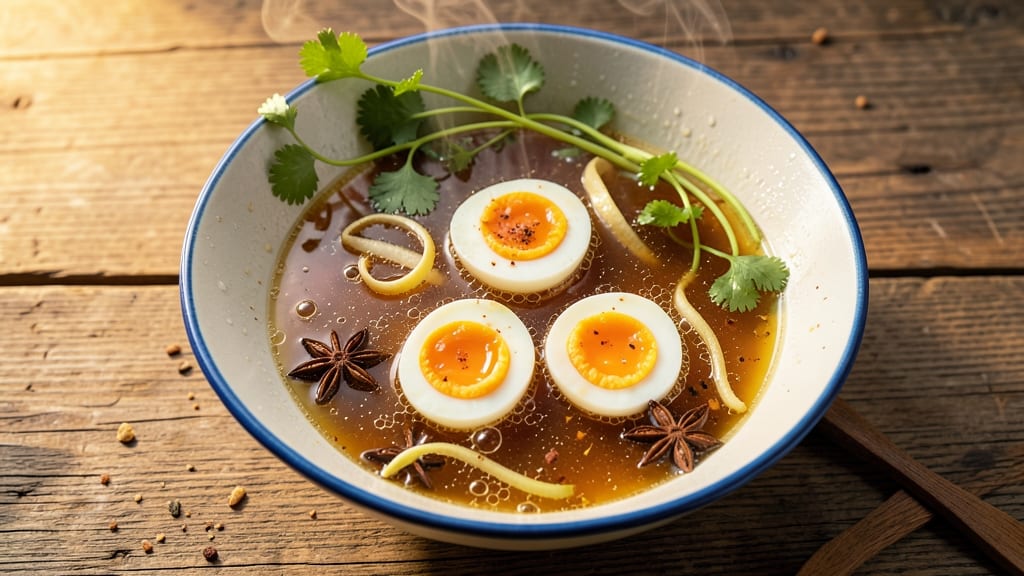
This Vietnamese egg drop soup recipe delivers the perfect balance of fragrant ginger-lime broth, silky egg ribbons, and fresh herbs in every spoonful. The secret lies in simmering aromatic spices like star anise and cinnamon to create a complex, comforting base that's both light and deeply flavorful.
Unlike its Chinese cousin, this version incorporates traditional Vietnamese ingredients like fish sauce and lime, creating a bright, umami-rich broth that's impossible to resist.
What sets this recipe apart is the technique for creating those signature silky egg ribbons—slowly drizzling beaten eggs into the simmering broth while stirring continuously. This method transforms simple eggs into delicate, melt-in-your-mouth strands that become the star of the soup.
The broth builds flavor gradually through layering spices, fish sauce, and lime juice, resulting in a depth of taste that's both comforting and refreshing.
By the time you're done, you'll have a steaming bowl of Vietnamese egg drop soup with a golden, aromatic broth, delicate egg ribbons floating throughout, and fresh herbs like Thai basil and mint adding vibrant color and freshness.
The combination of textures—silky eggs, tender rice noodles, and crisp bean sprouts—makes each bite satisfying while maintaining that light, refreshing quality that makes this soup perfect for any occasion.
This recipe works equally well as a light lunch, comforting dinner, or even a healing meal when you're under the weather. The broth can be made ahead and reheated, making it perfect for meal prep or when you want to serve a crowd.
Serve it with a side of fresh herbs for garnishing and let everyone customize their bowls with their favorite proteins or additional vegetables.
Ingredients for vietnamese egg drop soup
These aromatic ingredients transform simple broth into a fragrant Vietnamese masterpiece.
| Ingredient | Amount | Notes |
|---|---|---|
| Large Eggs 🥚 | 4 whole | Freshly beaten for silky ribbons |
| Chicken Broth 🍲 | 4 cups | Homemade or high-quality store-bought |
| Fresh Ginger 🧄 | 2 tbsp | Finely grated, aromatic variety |
| Lime Juice 🍋 | 2 tbsp | Freshly squeezed, bright flavor |
| Fish Sauce 🍶 | 1 ½ tbsp | Red Boat preferred for authenticity |
| Star Anise Pods 🌟 | 2 whole | Lightly crushed for aroma |
| Cinnamon Sticks 🌿 | 1 whole | 1-inch pieces for subtle warmth |
| Garlic Cloves 🧄 | 3 cloves | Minced, fresh for depth |
| Thai Basil Leaves 🌿 | ¼ cup | Fresh, for vibrant garnish |
| Fresh Mint Leaves 🍃 | ¼ cup | Chopped, for bright finish |
| Rice Noodles 🍜 | 4 oz | Thin, for delicate texture |
| Bean Sprouts 🌱 | ½ cup | Fresh, for crisp crunch |
| Sesame Oil 🫒 | ½ tbsp | Toasted, for aromatic finish |
| Salt 🧂 | ½ tsp | Adjust to taste, fine grain |
| White Pepper 🌶️ | ¼ tsp | Freshly ground for subtle heat |
The spices are where the magic happens. Star anise and cinnamon from Penzeys Spices or your local Asian market add that signature depth—don't skimp on quality here. Fresh ginger and garlic should be vibrant, not woody (that's a flavor killer). For fish sauce, Red Boat is the gold standard, but any reputable brand works. The Thai basil and mint? Grab them from the produce section—they should smell fresh and bright, not dried out. If you can't find Thai basil, regular basil plus a pinch of anise gets you close.
No star anise? 1 tsp anise extract works in a pinch, but it's not the same. Fresh ginger too fibrous? Ginger paste from a tube saves time without sacrificing flavor. Running low on fish sauce? Soy sauce plus a splash of oyster sauce mimics the umami, though it won't be identical. The rice noodles should be thin and translucent—Vietnamese rice vermicelli from the Asian aisle is ideal. If you can't find them, egg noodles work in a bind, but they'll be chewier. And for the love of soup, don't overcook the noodles—they should be tender but still hold shape.
Broth keeps beautifully for 3 days in the fridge or 3 months frozen—make a double batch. Fresh herbs like Thai basil and mint wilt fast, so store them in damp paper towels in a sealed bag. The rice noodles? Keep them in the fridge in a sealed container with a damp towel to prevent drying. This soup actually tastes better the next day as flavors meld—perfect for meal prep. And if you've got leftovers, reheat gently with a splash of water to restore that silky texture.
Why You'll Love This Recipe
- 20-Minute Miracle: I swear by this—simmer broth, slice ginger, crack eggs, stir. That’s it. No chopping mountains of veggies or last-minute grocery runs. The broth does the heavy lifting while I sip my coffee, watching the silky egg ribbons form like magic.
- Umami Bomb: Fish sauce and lime juice? Oh, it’s a flavor marriage made in heaven. The ginger’s sharp kick, the egg’s delicate swirl—each spoonful balances salty, bright, and creamy. Honestly, I’ve tried store-bought versions, but homemade? Chef’s kiss. The broth sings.
- Lunchbox Hero: Pack it cold or reheat—this soup travels like a champ. My kids take it to school (yes, even with the lime zest floating on top), and coworkers beg for my recipe. Bonus: Swap chicken broth for shrimp or beef, and suddenly it’s dinner for guests. Zero fuss, all win.
- Budget-Friendly Luxury: Eggs, broth, ginger—these ingredients won’t break the bank, but the results feel fancy. I make a big pot on Sundays, and it lasts all week. Leftovers? Even better the next day. (Between us, I’ve “accidentally” doubled the recipe just to have seconds.)
Step-by-step instructions for Vietnamese egg drop soup
This fragrant broth transforms simple ingredients into a restaurant-quality bowl of comfort.
Infuse the Broth with Aromatics
Combine the 4 cups chicken broth, 2 whole star anise pods, 1 whole cinnamon stick, and 3 cloves minced garlic in a clean pot. Bring to a gentle simmer over medium heat—you'll see tiny bubbles forming at the edges but not a rolling boil. Simmer uncovered for 10 minutes to allow the spices to steep and release their aromatic oils.
Here's the thing—star anise and cinnamon need time to perfume the broth. If you rush this step, you'll miss that subtle warmth that defines authentic Vietnamese flavors. After 10 minutes, strain the broth through a fine-mesh sieve into a clean pot, pressing gently on the spices to extract every last drop of flavor. Discard the solids.
Build the Flavor Base
Return the strained broth to the pot and add 2 tablespoons finely grated fresh ginger, 1.5 tablespoons fish sauce, 0.5 teaspoon salt, and 0.25 teaspoon white pepper. Stir gently to combine, then bring to a gentle simmer—again, just small bubbles breaking the surface. Let it cook for 5 minutes to meld all the flavors together.
This is where the magic happens. The ginger should dissolve completely, releasing its bright, zesty notes. Taste the broth now—it should be seasoned but not overpowering. If you need more depth, add another ½ teaspoon fish sauce. The broth should have a clean, aromatic quality with just a hint of saltiness.
Prepare the Egg Ribbons
In a small bowl, whisk the 4 whole large eggs until the yolks and whites are fully combined and the mixture is uniform in color. I like to add 1 tablespoon lime juice to the egg mixture—this brightens the flavor and prevents the eggs from becoming too rich. Set this aside near the stove.
Here's the secret to perfect egg ribbons: the broth must be at a gentle simmer but not boiling when you add the eggs. If the broth is too hot, the eggs will scramble into curds. If it's too cool, they'll turn out watery. You want tiny bubbles breaking the surface—just enough movement to create those delicate ribbons.
Create the Signature Egg Ribbons
With the broth at a gentle simmer, slowly drizzle the egg mixture into the center of the pot. Use a long spoon to gently stir the broth in small circles, creating ribbons that float to the surface. Work quickly but deliberately—you have about 30 seconds before the eggs start to set. The goal is to create long, silky strands that maintain their shape.
If the eggs start to break apart too soon, your broth is too hot. If they form a thick mass, it's not hot enough. The perfect temperature creates those signature egg ribbons that melt in your mouth. Once all the egg mixture is incorporated, let the soup simmer for another 2 minutes to gently cook the ribbons through.
Assemble and Garnish
While the soup simmers, prepare the 4 ounces rice noodles according to package instructions—usually 3-4 minutes in boiling water until al dente. Drain and rinse briefly under cold water to stop the cooking process. Divide the noodles among 4 bowls, adding 0.125 cup bean sprouts to each bowl.
Ladle the hot broth over the noodles, filling each bowl about ¾ full. Drizzle with 0.125 tablespoon sesame oil and top with 0.0625 cup Thai basil leaves and 0.0625 cup fresh mint leaves. Finish with a final squeeze of lime juice—just ½ teaspoon per bowl—to brighten all the flavors.
Here's the final touch: the contrast of temperatures makes this soup extraordinary. The hot broth meets the cool noodles and fresh herbs, creating a perfect balance. Serve immediately while the egg ribbons are still silky and the aromatics are at their peak. Each spoonful should deliver that perfect harmony of ginger's warmth, lime's brightness, and fish sauce's umami depth.
Pro Tips For Making Vietnamese Egg Drop Soup
- STIR NOT DROP: Vietnamese egg drop soup isn’t about tossing eggs in—it’s about ribboning them in. Crack the egg into a small bowl first, then let it drip slowly into the simmering broth while stirring gently with chopsticks or a fork. The goal is silky strands, not scrambled bits. I learned this the hard way after making a lumpy mess that looked like overcooked pasta.
- GINGER JUICE FIRST: Toss finely minced ginger (about 1 teaspoon) into the hot broth before adding anything else. Let it bloom for 30 seconds—this extracts the bright, peppery notes without bitterness. Skip this, and your soup will taste like it’s hiding something. (Yes, even if you’re impatient like me.)
- SALT THE BROTH LAST: Season the broth with fish sauce and lime juice after the eggs are cooked, not before. The acidity and umami need to balance the delicate egg ribbons, not compete with them. I used to add salt early and ended up with a soup that tasted flat—like someone forgot the finishing touch.
- UPGRADE WITH COLD EGGS: Chill the eggs in ice water for 10 minutes before cracking them into the broth. The cold temperature tightens the proteins, making the ribbons smoother and more defined. It’s a tiny effort that makes a real difference—your future self will notice. (And no, you don’t need to be a chef to pull this off.)
Common mistakes when making your vietnamese egg drop soup
Overcooking the Broth
The most common mistake is letting the broth boil vigorously, which burns the delicate aromatics and makes the soup taste bitter. I’ve ruined more batches than I’d admit by forgetting that gentle simmer is key—tiny bubbles at the edges, not a rolling boil.
If you see large bubbles or hear a loud rolling sound, reduce the heat immediately. The spices need time to infuse, not scorch. 🌡️
Skipping the Straining Step
Leaving star anise and cinnamon sticks in the broth can make it taste bitter or overly spiced. Always strain the broth after simmering to remove the solids—this ensures a clean, aromatic flavor.
I’ve seen home cooks skip this step and end up with a soup that tastes more like a spice cabinet than a comforting bowl. Press the spices gently with a spoon to extract every last drop of flavor before discarding.
Adding Eggs Too Fast
Dumping all the egg mixture into the broth at once creates clumps instead of silky ribbons. The trick is to drizzle slowly while stirring continuously—think of it like drawing circles in the broth. If you rush, you’ll end up with scrambled egg bits instead of elegant strands.
Work quickly but deliberately, and keep the broth at a gentle simmer. The eggs should dissolve into delicate ribbons in about 30 seconds.
Using Old or Poor-Quality Ingredients
Fresh ginger, high-quality fish sauce (Red Boat is my go-to), and vibrant herbs make all the difference. I’ve tasted soups made with dried or old spices, and they lack that bright, fresh quality.
For example, if your ginger is woody or your fish sauce smells off, the entire dish suffers. Invest in fresh ingredients—your taste buds will thank you. A little extra effort here transforms a good soup into a great one. 💛
Overcooking the Noodles
Rice noodles cook faster than you think, and overcooking turns them mushy. Follow package instructions closely—usually 3-4 minutes in boiling water—then rinse briefly under cold water to stop the cooking. Overcooked noodles ruin the texture contrast that makes this soup so satisfying.
I like to divide them into bowls first, then ladle the hot broth over them to maintain that perfect al dente bite.
Ignoring the Lime Juice
Lime juice isn’t just for garnish—it brightens the entire dish. Adding 1 tablespoon to the egg mixture and a final squeeze per bowl balances the richness of the broth and eggs.
Skipping it leaves the soup flat and one-dimensional. Trust me, that zesty finish is what makes this Vietnamese egg drop soup sing. A little acidity goes a long way! 🍋
Nutrition facts
Frequently asked questions about Vietnamese egg drop soup
Can I make this soup vegetarian?
Replace the chicken broth with a rich vegetable broth made from mushrooms, carrots, and celery. Use vegetarian fish sauce (like Red Boat's vegan version) or soy sauce for umami depth. Tofu or mushrooms work well as protein substitutes. The egg ribbons will still be the star, and the broth will maintain its signature aromatic quality.
How do I adjust the spice level?
The recipe is naturally mild, but you can adjust it easily. For extra heat, add ½ teaspoon chili flakes or a dash of Sriracha to the broth. If you prefer less ginger heat, reduce the amount to 1 tablespoon instead of 2 tablespoons. The lime juice already balances any spiciness, so no additional adjustments are needed.
Can I prepare the broth ahead of time?
Yes, this broth actually tastes better the next day! Make it a day ahead, then reheat gently over low heat until just simmering. Add fresh lime juice and herbs before serving. The flavors meld beautifully overnight, creating deeper aromatics. Store in an airtight container in the fridge for up to 3 days or freeze for 3 months.
What if I don't have Thai basil?
Don't worry—regular basil with a pinch of anise powder works well. For a different flavor profile, try cilantro or even parsley. The key is freshness. If using parsley, add an extra ½ teaspoon lime juice per bowl to compensate for its milder taste. The soup will still be delicious, just with a slightly different herbal note.
How do I make the egg ribbons extra silky?
For the most delicate ribbons, whisk the eggs with 1 tablespoon cold water before adding to the broth. This creates a thinner consistency that dissolves more easily. Also ensure your broth is at a gentle simmer (tiny bubbles) and use a long spoon to stir continuously in small circles. The slower you work, the silkier the result.