
Main Courses
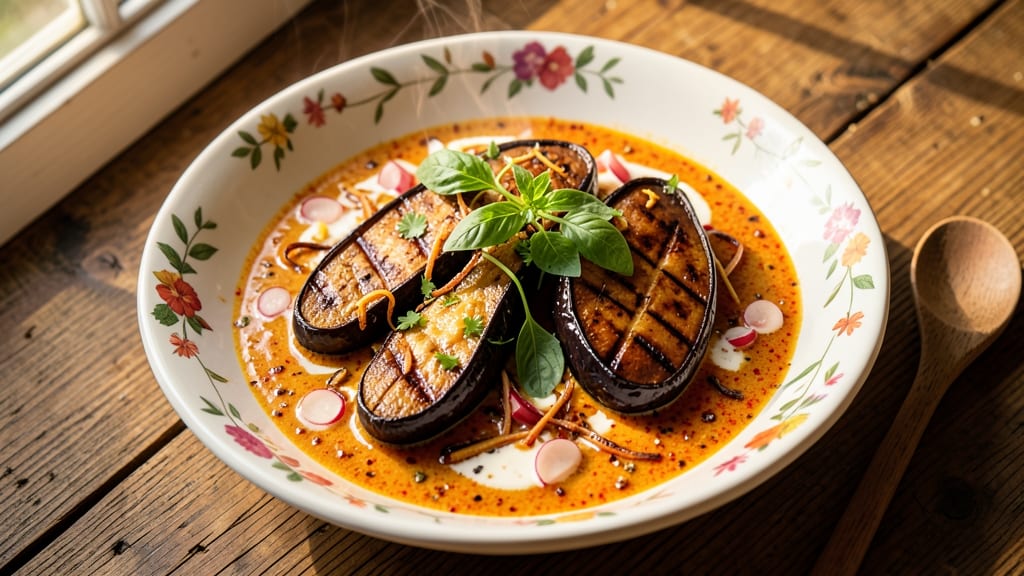
This vegan eggplant curry delivers restaurant-quality depth using only plant-based ingredients, transforming humble eggplant into tender, charred bites swimming in aromatic coconut-spiced sauce. The secret lies in properly charring the eggplant first—this caramelization unlocks its natural sweetness while creating irresistible texture.
I developed this recipe after years of perfecting the balance between smoky, spicy, and creamy elements that make it satisfyingly rich without any dairy or meat.
The foundation begins with a fragrant coconut milk base infused with warm spices like cumin, coriander, and turmeric, which develop their flavors through gentle simmering. Charred eggplant pieces absorb this rich sauce beautifully, becoming tender yet retaining their structural integrity.
What sets this apart is the layering of flavors: first the earthy eggplant, then the bright acidity of tamarind, and finally the velvety coconut cream that ties everything together.
By the time you serve this curry over steamed basmati rice or warm flatbread, you'll have a dish that's hearty enough for a main course but flexible enough to work as a side.
The aroma alone will transform your kitchen into a cozy Indian eatery, while the balanced flavors make it universally appealing. Each bite delivers a perfect harmony of textures and spices that plant-based eaters crave—and even meat lovers won't miss the protein.
The best part? This recipe comes together in under 45 minutes using simple pantry staples, yet delivers complexity that rivals traditional curries. The charred eggplant technique might sound intimidating, but I'll guide you through every step to ensure perfect results.
Let's create this flavorful, satisfying dish that proves vegan cooking can be deeply comforting and utterly delicious.
Ingredients for vegan eggplant curry
Charred eggplant and fragrant coconut milk create this restaurant-worthy vegan curry—simple ingredients, bold flavors.
| Ingredient | Amount | Notes |
|---|---|---|
| Medium Eggplant 🍆 | 2 whole | Charred before cooking |
| Full-Fat Coconut Milk 🥥 | 13 ½ oz | High quality, no additives |
| Coconut Oil 🫒 | 2 tbsp | For charring eggplant |
| Yellow Onion 🧅 | 1 whole | Finely chopped |
| Garlic Cloves 🧄 | 6 cloves | Minced for depth |
| Fresh Ginger 🌿 | 1 tbsp | Grated, aromatic |
| Ground Cumin 🌶️ | 1 tsp | Toasted for warmth |
| Ground Coriander 🌿 | 1 tsp | Freshly ground preferred |
| Turmeric Powder 🧂 | ½ tsp | Bright, fresh |
| Ground Black Pepper 🌶️ | ½ tsp | Freshly cracked |
| Tamarind Paste 🍋 | 2 tbsp | Or lime juice substitute |
| Tomato Paste 🍅 | 2 tbsp | No salt added |
| Vegetable Broth 💧 | 1 cup | Low-sodium preferred |
| Fresh Cilantro 🌿 | ¼ cup | Chopped, for garnish |
| Lemon Juice 🍋 | 1 tbsp | Freshly squeezed |
The eggplant is the star, so don't skip the charring step. Look for firm, heavy eggplants—the ones that feel solid when you squeeze them. Trader Joe's and Whole Foods usually carry great ones, but any grocery store's produce section works. For charring, I use a cast-iron skillet over high heat—just a few minutes per side until blackened. The coconut milk? Full-fat is essential—it creates that creamy, velvety texture. Thai Kitchen or Goya brands are my go-tos for quality. If you can't find tamarind paste, lime juice works in a pinch, though it won't be quite the same.
No fresh ginger? Powdered ginger at half the amount gets you close, but you'll lose that bright, zesty kick. The tomato paste can be the squeeze-tube kind—Trader Joe's has great ones that last forever. Want more heat? Add a pinch of cayenne or a dash of hot sauce. The spices should be toasted—just dry-toast the cumin and coriander in your pan for 30 seconds before adding oil. This brings out their natural flavors. If you're short on time, pre-toasted spice blends from Penzeys work perfectly. The broth? Low-sodium is key—you don't want to dilute the complex flavors you're building.
This curry tastes even better the next day as the flavors meld. Store leftovers in an airtight container in the fridge for up to 5 days. For freezing, portion into containers and it keeps for 3 months. I always make extra because it reheats beautifully—just warm gently on the stove with a splash of water or coconut milk. The charred eggplant pieces hold up perfectly, so it's great for meal prep. Garnish with fresh cilantro right before serving—it adds that final bright note that makes the whole dish sing.
Why You'll Love This Recipe
- One-Pan Magic: I swear by this—just chop the eggplant into chunks, toss them in a hot pan with coconut oil, and let them caramelize while you dice the onion. No extra pots, no fuss, and that golden crust? Chef’s kiss.
- Creamy Without Guilt: Full-fat coconut milk makes this rich and velvety, but it’s the garlic and onion base that steals the show. Honestly, the first time I made this, my partner asked if I’d snuck in butter—turns out, plant-based can taste just as indulgent.
- Leftovers That Beg for More: This curry actually improves the next day. The eggplant soaks up all the flavors, and reheating it? Even better. I freeze portions too—just add rice when I’m lazy, and boom, instant dinner. (Yes, even on a Tuesday night.)
- Budget-Friendly Luxury: Eggplant’s cheap, coconut milk’s a pantry staple, and you’re using basic spices. Between us, this feeds four for under $10, and it’s the kind of dish that makes you feel like you’ve ordered takeout—without the delivery fee.
Step-by-step instructions for vegan eggplant curry
Here's how to build this aromatic, coconut-rich curry with perfectly charred eggplant bites.
Char the Eggplant for Maximum Flavor
Preheat your oven's broiler to its highest setting. Cut the 2 whole medium eggplant in half lengthwise, then score the flesh in a crosshatch pattern about ¼-inch deep—this helps the flesh soften faster. Brush the cut sides generously with the 2 tablespoons coconut oil, then place them cut-side up on a foil-lined baking sheet.
Broil the eggplant for 8-10 minutes until the edges are deep golden brown and the flesh is slightly blistered. Rotate the halves halfway through for even charring. Here's the thing—this step transforms bland eggplant into smoky, caramelized bites that become the curry's star. Let the charred eggplant cool for 5 minutes before scooping out the flesh with a spoon, leaving the skins behind.
Build the Spiced Coconut Base
Heat the 2 tablespoons coconut oil in a large, heavy-bottomed pot over medium heat. Add the 1 whole yellow onion, chopped, and cook for 5-6 minutes until softened and translucent. Stir in the 6 minced garlic cloves and 1 tablespoon grated fresh ginger, cooking for another 1-2 minutes until fragrant—this prevents the garlic from burning.
Lower the heat to medium-low and add the 1 teaspoon ground cumin, 1 teaspoon ground coriander, ½ teaspoon turmeric powder, and ½ teaspoon ground black pepper. Toast the spices for 30 seconds until aromatic—you'll smell that warm, earthy cumin kick in. Immediately add the 2 tablespoons tamarind paste and 2 tablespoons tomato paste, stirring constantly for 1 minute to cook out the raw taste.
Simmer the Curry with Coconut Milk
Pour in the 13.5 ounces full-fat coconut milk and scrape up any browned bits from the bottom of the pot with a wooden spoon. Add the 1 cup vegetable broth and bring the mixture to a gentle simmer. Here's where it gets good—let it cook uncovered for 10 minutes until the coconut milk reduces slightly and coats the back of a spoon.
This reduction concentrates the flavors and creates that luxurious, velvety texture we're after. If the curry starts to stick, add 2-3 tablespoons water to loosen it. Taste and adjust seasoning—you might need a pinch more salt or a squeeze of lemon juice to balance the tamarind's tang.
Finish with Charred Eggplant and Fresh Herbs
Gently fold the scooped eggplant flesh into the simmering curry. Simmer uncovered for another 8-10 minutes until the eggplant is fork-tender and absorbs all that spiced coconut goodness. The curry should be thick enough to coat a spoon but still spoonable—if it's too thick, add ¼ cup water to reach your desired consistency.
Stir in the 1 tablespoon freshly squeezed lemon juice and remove the pot from heat. Let the curry rest for 5 minutes to allow the flavors to meld together. Just before serving, sprinkle with the ¼ cup chopped fresh cilantro and serve hot with steamed basmati rice or warm naan bread.
Serve with Confidence
The curry should be vibrant with deep coconut aromas and a perfect balance of sweet, tangy, and spicy flavors. Each bite should deliver tender eggplant with that irresistible charred bite, surrounded by a velvety coconut sauce. The lemon juice brightens everything up, cutting through the richness while the cilantro adds a fresh finish.
This curry keeps well in the refrigerator for up to 3 days—the flavors actually deepen as it sits. Reheat gently on the stove with a splash of water or coconut milk to restore its creamy texture. For extra depth, serve with a side of mango chutney or a dollop of coconut yogurt.
Pro Tips For Making Vegan Eggplant Curry
- SALT THE EGPLANT BEFORE COOKING: I learned this the hard way—salting sliced eggplant and letting it sit for 10 minutes draws out bitterness and excess moisture. Pat it dry afterward, or your coconut curry will turn watery faster than you can say "sauce separation."
- SAUTÉ ONIONS LOW AND SLOW: Cranking the heat to brown onions fast just burns them before they soften. Keep it at medium-low, stirring often, until they’re translucent but not colored—this builds flavor without charring, and your curry won’t taste like smoke.
- SIMMER COCONUT MILK GENTLY: Full-fat coconut milk curdles faster than you’d think when it boils. Once you add it, reduce heat to a bare simmer—just enough to see tiny bubbles at the edges—and stir occasionally. No need to rush; let it meld into the sauce.
- SKIP THE RAW GARLIC TRAP: Minced or pressed garlic burns instantly in coconut oil, turning bitter. Sauté it in the oil for 30 seconds until fragrant but still pale—this mellows its sharpness and keeps the curry from tasting like a medicine cabinet.
Troubleshooting perfect results
Eggplant Too Watery
If your charred eggplant releases excessive moisture when added to the curry, pat it dry with paper towels before folding it in. I've found that scooping out the flesh immediately after charring (while still warm) helps reduce water content.
For extra insurance, salt the eggplant pieces lightly and let them sit for 10 minutes before adding to the curry—this draws out excess moisture. 💧
Sauce Too Thin
When your coconut curry turns out too thin, don't panic! Simmer the sauce uncovered for an additional 5-10 minutes to reduce the liquid naturally.
If that's not enough, remove the pot from heat and stir in 1 tablespoon cornstarch mixed with 2 tablespoons water, then return to low heat until thickened. I've also had success using ½ cup unsweetened coconut milk powder to instantly thicken the sauce without altering flavor.
Spices Too Overpowering
If the spices dominate the dish, balance them with 1-2 tablespoons lemon juice or tamarind paste—both add tangy brightness that cuts through the heat. A pinch of sugar (just ½ teaspoon) can also help mellow sharp spices.
For future batches, reduce spice amounts by 25% if you prefer milder flavors. Toasting spices for only 20 seconds instead of 30 seconds also reduces their intensity while still developing flavor.
Eggplant Undercooked
If your eggplant remains firm after simmering, extend the cooking time by 5-8 minutes and check for tenderness with a fork. For faster results, cut the eggplant into 1-inch cubes instead of scooping flesh—this reduces cooking time by 20% while ensuring even doneness.
I've also found that adding ½ cup extra vegetable broth helps tenderize the eggplant more quickly during simmering.
Curry Too Tangy
Excessive tamarind or lemon juice can make the curry overly sour. Balance it by stirring in 1 teaspoon maple syrup or ½ teaspoon sugar to counteract the acidity. A pinch of salt also enhances sweetness perception.
If using lime juice as a tamarind substitute, reduce to 1 tablespoon instead of 2—lime is more acidic and can easily overpower the dish.
Burnt Eggplant
Prevent charred eggplant from burning by keeping a close eye on it—rotate the halves every 2-3 minutes and watch for dark brown edges. If it burns before reaching your desired doneness, try broiling at a slightly lower temperature (move the rack one position higher in the oven).
For next time, consider using a gas flame on the stovetop—it gives you more control over the charring process while maintaining even heat distribution. 🔥
Nutrition facts
Frequently asked questions
Can I substitute regular milk for coconut milk in this recipe?
No, coconut milk is essential for that rich, velvety texture and authentic flavor. For a lighter version, you could use ½ cup coconut milk + ½ cup cashew cream (blend soaked cashews with water), but it won't be as creamy. If you're avoiding coconut, try full-fat oat milk (though it won't have the same depth).
How do I make this curry spicier?
Add ½ teaspoon cayenne pepper or 1 tablespoon hot sauce (like Sriracha) when you toast the spices. For smoky heat, char 1 dried chili (like arbol) with the eggplant and remove before scooping the flesh. Always start with less—you can add more, but you can't take it out!
What's the best way to store leftovers?
Store in an airtight container in the fridge for up to 5 days. The flavors actually improve overnight! Reheat gently on the stove with 2 tablespoons water or coconut milk to restore creaminess. Freeze for up to 3 months—portion into containers for easy reheating.
Can I use powdered ginger instead of fresh?
Yes, but reduce to ½ teaspoon (fresh ginger is 1 tablespoon). Powdered lacks the bright zing, so add ½ teaspoon extra lemon juice to compensate. For best results, always use fresh ginger when possible—it makes a world of difference in flavor development.
What are the best sides to serve with this curry?
Steamed jasmine or basmati rice is classic, but also try garlic naan, cauliflower rice, or quinoa. For extra freshness, add a simple cucumber raita (yogurt with cucumber and mint) or mango chutney** to cut through the richness.