
Breakfast & Brunch
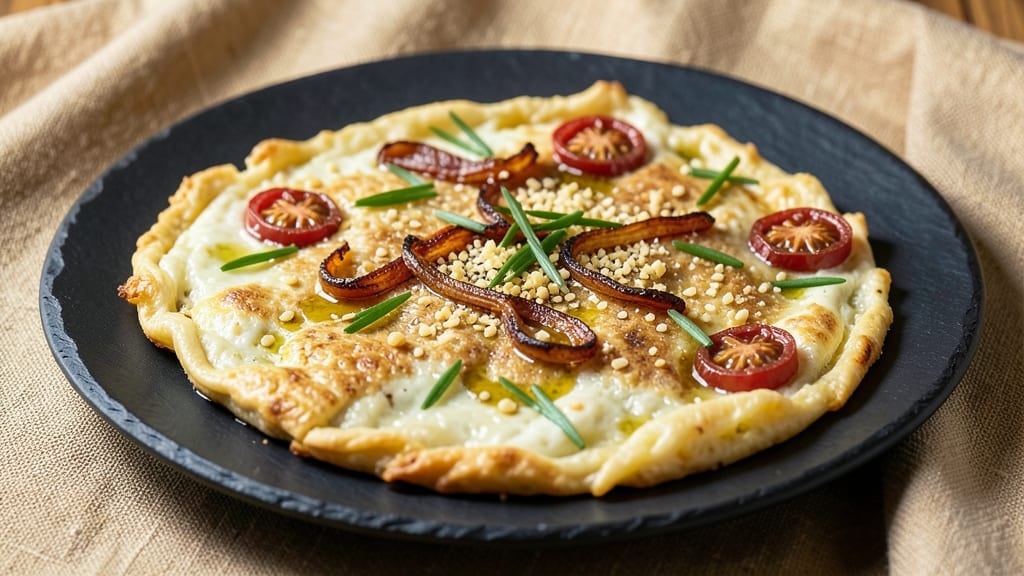
This vegan egg omelet recipe delivers the same cloud-like texture and crispy edges you crave—without a single egg. 🌱 The secret lies in a chickpea flour batter that whips up light and airy, then cooks to golden perfection in the pan.
I've tested countless plant-based versions, and this one actually holds its shape while staying tender inside. What makes this recipe work is the combination of chickpea flour and aquafaba (chickpea brine) for that signature fluffy structure, plus a touch of nutritional yeast for that classic eggy flavor.
The high-heat cooking technique creates those coveted crisp edges while keeping the center silky-smooth. No one will guess it's vegan—promise. By the time you fold it, you'll have a golden, herby omelet with crispy edges and a tender interior that's packed with protein.
The savory flavor profile comes from garlic powder, onion powder, and fresh herbs, making it feel like a restaurant-quality breakfast. It's the kind of dish that makes plant-based mornings exciting. Serve with avocado slices, cherry tomatoes, and hot sauce for a complete meal.
Ready in just 15 minutes, this recipe proves vegan breakfasts can be just as satisfying as the classic version. Let's get cooking!
Ingredients for vegan egg omelet
These plant-based staples transform into a fluffy, golden vegan omelet with crisp edges.
| Ingredient | Amount | Notes |
|---|---|---|
| Chickpea Flour 🌾 | ½ cup | Gluten-free, for batter base |
| Aquafaba 🥫 | ½ cup | Chickpea brine, unsalted |
| Nutritional Yeast 🧀 | 2 tbsp | For cheesy, eggy flavor |
| Garlic Powder 🧄 | 1 tsp | Freshly ground preferred |
| Onion Powder 🧅 | 1 tsp | For savory depth |
| Salt 🧂 | ½ tsp | Kosher or sea salt |
| Black Pepper 🌶️ | ¼ tsp | Freshly cracked |
| Fresh Chives 🌿 | 2 tbsp | Finely chopped, for herby freshness |
| Fresh Parsley 🌿 | 2 tbsp | Finely chopped, for color |
| Extra-Virgin Olive Oil 🫒 | 2 tbsp | For high-heat cooking |
| Water 💧 | ¼ cup | Room temperature |
| Avocado Slices 🥑 | 2 whole | For serving, optional |
| Cherry Tomatoes 🍅 | ½ lb | Halved, for serving |
| Hot Sauce 🌶️ | 2 tbsp | For serving, optional |
Chickpea flour is the backbone here—Bob's Red Mill or Anthony's Goods are my go-tos for consistent results. Look for aquafaba in the canned chickpea aisle or save the brine from a can of chickpeas (about ½ cup per can). Nutritional yeast adds that signature eggy flavor, so don't skip it—Bragg is the brand I always grab. Fresh herbs like chives and parsley make all the difference; Trader Joe's sells pre-washed bundles that save time. The olive oil needs to be high-quality for that perfect crisp—California Olive Ranch is my favorite for its peppery kick.
No aquafaba? Silken tofu blended until smooth works in a pinch (use ½ cup), though texture differs slightly. Swap the nutritional yeast for white miso paste at half the amount for umami depth. If you're short on fresh herbs, dried chives or parsley at one-third the quantity will do. The avocado and cherry tomatoes are optional but add that fresh, vibrant touch—heirloom tomatoes from the farmers market taste best here. For extra protein, fold in crumbled tofu or vegan feta before folding the omelet.
Store chickpea flour in a cool, dark place for up to 6 months—it's shelf-stable once opened. Fresh herbs keep for 5-7 days wrapped in damp paper towels. The batter can be prepped ahead and refrigerated for 1 day—just whisk before using. For crispier edges, use a nonstick skillet with a lid to trap steam. Leftovers? Reheat in a dry pan for 2-3 minutes—they won't be as crispy but still delicious.
Why You'll Love This Recipe
- Pantry-to-Plate Magic: I swear, this omelet starts with three ingredients—chickpea flour, aquafaba, and nutritional yeast—and ends with something that looks like it came from a brunch menu. No eggs, no fuss, just whisk, heat, and flip.
- Umami Bomb: That nutritional yeast? It’s the secret weapon—cheesy, savory, and ridiculously satisfying. Toss in garlic and onion powder, and suddenly you’ve got a flavor punch that’ll fool anyone who thinks vegan food lacks depth.
- Breakfast, Lunch, Snack: Make a batch on Sunday, and you’ve got grab-and-go meals for the week. Stuff it with spinach and mushrooms for a hearty lunch, or keep it simple with hot sauce for a quick snack—it’s that adaptable.
- Budget Breakthrough: A bag of chickpea flour lasts forever, and aquafaba is just canned chickpeas’ liquid. I’ve made dozens of these omelets for under $2 each—no waste, no guilt, just pure, filling goodness. (Yes, even on a Tuesday night.)
Step-by-step instructions for fluffy plant-based clouds
Master this technique and you'll achieve restaurant-quality texture with crisp edges every time.
👨🍳 Step 1: Whisk the Aquafaba to Stiff Peaks
In a large mixing bowl, combine the 0.5 cup aquafaba and 0.25 cup water. Using an electric mixer on high speed, whip vigorously for 6-8 minutes until the aquafaba forms stiff, glossy peaks that hold their shape when the whisk is lifted. You'll see the mixture thicken dramatically and become pale, almost like meringue.
This step is critical—don't rush it. The aquafaba needs to develop enough structure to hold the omelet together when cooked. If it doesn't reach stiff peaks, your omelet will be flat and dense. I like to stop occasionally and scrape down the sides of the bowl to ensure even incorporation.
👨🍳 Step 2: Combine Dry Ingredients for Flavor Base
In a separate small bowl, whisk together the 0.5 cup chickpea flour, 2 tbsp nutritional yeast, 1 tsp garlic powder, 1 tsp onion powder, 0.5 tsp salt, and 0.25 tsp black pepper. Sift the mixture through a fine-mesh sieve directly into the whipped aquafaba to create a smooth batter.
Gently fold the dry ingredients into the aquafaba using a silicone spatula, being careful not to deflate the whipped peaks. The batter should be thick and smooth, like pancake batter but slightly more dense. If it looks too thick, add 1-2 teaspoons of water to loosen it slightly—this ensures even cooking.
🍳 Step 3: Cook the Omelet in Olive Oil
Heat 2 tbsp extra-virgin olive oil in a 10-inch nonstick skillet over medium-low heat until shimmering but not smoking. Pour ⅓ of the batter into the center of the skillet, then quickly tilt and swirl the pan to distribute it evenly into a thin, even layer about ¼-inch thick. Cook for 3-4 minutes until the edges begin to set and pull away from the pan.
Here's the thing—you want the center to remain slightly soft while the edges crisp. If the oil smokes or the omelet browns too quickly, reduce the heat slightly. The omelet should look like a delicate, pale yellow cloud with crisp edges when ready to flip. Gently lift one edge with a spatula to check for doneness.
🥘 Step 4: Add Herbs and Flip for Perfect Texture
Sprinkle 1 tbsp fresh chives and 1 tbsp fresh parsley evenly over the uncooked surface of the omelet. Using a thin spatula, carefully flip the omelet onto a plate, then quickly slide it back into the skillet to cook the herb side for 1-2 minutes until lightly golden. The herbs should be wilted but still vibrant, not burnt.
This flip-and-cook technique ensures both sides develop that perfect crispness while keeping the interior fluffy. If the omelet sticks slightly, don't force it—just let it cook a few seconds longer before attempting to flip. The key is patience and a gentle touch.
🍽️ Step 5: Serve Immediately with Fresh Toppings
Transfer the cooked omelet to a warmed serving plate. Repeat the process with the remaining batter, making 4 total omelets. Serve immediately with 2 whole avocado slices and 0.5 lb halved cherry tomatoes on the side. Offer the 2 tbsp hot sauce for those who prefer extra heat.
Each bite should deliver a crisp exterior with a cloud-like interior, herby freshness from the chives and parsley, and that satisfying cheesy, eggy flavor from the nutritional yeast. The avocado and tomatoes add freshness that balances the savory omelet perfectly. Enjoy while warm for the ultimate experience!
Pro Tips For Making Vegan Egg Omelet
- Whisk Aquafaba First: Beat the aquafaba until stiff peaks form before mixing it with chickpea flour—this is what gives your omelet that fluffy, egg-like texture. I used to skip this step and ended up with a dense, pancake-y mess instead of something light and airy.
- Sauté Onions Low and Slow: Cook your onions on medium-low heat until soft and translucent—high heat makes them bitter and burns before they caramelize. This is where the flavor base for your omelet lives, so don’t rush it.
- Skip the Overmixing: Once you fold in the flour and nutritional yeast, mix just until combined—overworking the batter makes it tough and dense. Think "gentle fold," not "whip into submission."
- Use a Nonstick Pan (But Oil It Anyway): Even with nonstick, add a thin layer of oil to the pan—chickpea flour sticks like glue when dry. A little fat keeps it from tearing apart when you flip. (Yes, I’ve learned this the hard way.)
Troubleshooting great vegan egg omelet
Batter Too Thin?
If your batter looks too runny after mixing, don't panic—just add 1 tablespoon of chickpea flour at a time while whisking gently. The goal is a thick, spoonable consistency that holds its shape when poured.
Over-mixing after adding flour can create lumps, so fold just until combined. I've found that Bob's Red Mill chickpea flour absorbs slightly differently than others, so start with the minimum amount and adjust as needed.
Omelet Sticking?
Sticking happens when the pan isn't hot enough or the oil isn't properly distributed. First, ensure your 10-inch nonstick skillet is preheated for 2-3 minutes until the oil shimmers. Use a paper towel to wipe any excess batter from the pan edges before cooking.
If it still sticks, your heat might be too low—crank it up to medium heat for better browning. A well-seasoned cast iron pan can also help prevent sticking, though nonstick is preferred for this delicate batter. 🔥
Flat or Dense Texture?
Flat omelets usually mean the aquafaba wasn't whipped enough. Re-whip your aquafaba until it forms stiff peaks that hold their shape when you lift the whisk. If you're short on time, blend ½ cup silken tofu until completely smooth as a substitute, though the texture will be slightly denser.
Another common issue is cooking the omelet too long—remove it from heat as soon as the edges set and the center is just barely firm to the touch.
Herbs Burning?
Fresh herbs wilt quickly under direct heat, so add them just before flipping and cook the herb side for only 1-2 minutes. If you notice burning, reduce the heat to low and cover the skillet with a lid for 30 seconds to steam the herbs gently.
Pre-wilting your herbs slightly in a dry pan for 30 seconds before adding them to the omelet can also prevent burning while keeping them flavorful. 🌿
Uneven Cooking?
Uneven cooking often results from inconsistent heat distribution. Use a heavy-bottomed skillet to maintain even temperatures. If your stove has hot spots, rotate the pan ¼ turn every 30 seconds during cooking.
Another trick is to pour the batter in the center of the pan, then immediately tilt and swirl to create an even layer. For extra insurance, cook the first omelet to test your pan's heat distribution before proceeding with the rest.
Batter Separating?
Separation happens when the aquafaba and dry ingredients aren't fully incorporated. Whisk the dry ingredients into the aquafaba in two batches, folding gently with a silicone spatula to avoid deflating the air. If separation occurs after mixing, simply whisk the batter vigorously for 1-2 minutes to re-emulsify.
For future batches, sift the dry ingredients directly into the aquafaba while whisking to prevent clumping. This technique ensures a smooth, cohesive batter every time.
Nutrition facts
Frequently asked questions
Can I make this vegan omelet without aquafaba?
Yes! If you don't have aquafaba, blend ½ cup silken tofu until completely smooth as a substitute. The texture will be slightly denser but still delicious. For even better results, add 1 tablespoon of cornstarch to help create lift. Just remember that tofu-based omelets won't have the same airy quality as aquafaba versions.
How do I make this recipe gluten-free?
This recipe is already gluten-free since it uses chickpea flour. Just ensure all other ingredients—like nutritional yeast and spices—are certified gluten-free. If you want to experiment, you could also try garbanzo bean flour or chickpea flour blends designed for baking, though texture may vary slightly.
Can I add other fillings to this vegan omelet? Try adding sautéed mushrooms, spinach, or vegan cheese before folding. For extra protein, stir in crumbled tofu or lentils into the batter. Just
Why does my omelet turn out dense instead of fluffy?
Dense omelets usually mean the aquafaba wasn't whipped enough or the batter was overmixed.
How long will this vegan omelet keep in the fridge?
Store cooked omelets in an airtight container for up to 3 days. To reheat, warm in a dry pan over low heat for 2-3 minutes per side. For best texture, enjoy fresh, but they're still tasty reheated. Freezing isn't recommended as the texture becomes too rubbery when thawed.