
Breakfast & Brunch
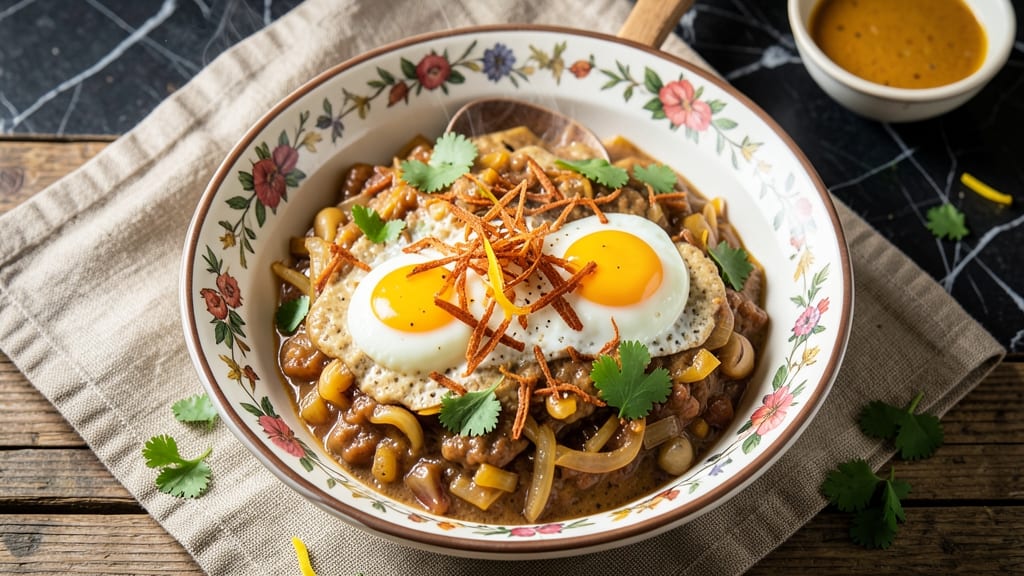
This unique egg curry recipe transforms humble eggs into a luxurious, velvety dish with soft-boiled yolks that burst with creamy richness. 💛 The secret lies in a fragrant coconut-spice gravy that balances earthy warmth with subtle sweetness, while the eggs—cooked to perfect doneness—add a luxurious contrast.
Unlike traditional egg curries, this version elevates the dish with a fusion of Andhra-inspired spices and Thai coconut cream, creating a texture and flavor profile that’s both comforting and unexpected.
The beauty of this recipe is its versatility—it’s vegetarian, gluten-free, and packed with depth from whole spices like cinnamon, cardamom, and black pepper. The soft-boiled eggs (cooked just until set) maintain their creamy centers, while the coconut cream gravy clings to them like a silky embrace.
This isn’t your average egg curry; it’s a dish that feels indulgent yet remains approachable, perfect for breakfast, brunch, or even a light dinner.
What makes this recipe truly special is the balance of techniques: the eggs are poached directly into the simmering curry for even cooking, while the gravy is built layer by layer—spices bloomed in oil, coconut cream reduced to a fragrant base, and finished with a touch of tamarind for brightness.
The result is a dish that’s aromatic, creamy, and just slightly tangy, with every bite offering a harmony of textures and flavors.
Serve it with steamed basmati rice or warm naan to soak up every last drop of that luscious coconut-spice gravy. This recipe isn’t just a meal—it’s an experience that turns a simple ingredient into something extraordinary. Let’s get cooking!
Ingredients for unique egg curry
Fifteen ingredients crafting a luxurious vegetarian curry with velvety coconut-spiced gravy and perfectly soft-boiled yolks.
| Ingredient | Amount | Notes |
|---|---|---|
| Large Eggs 🥚 | 8 whole | Room temperature for even cooking |
| Coconut Cream 🥥 | 1 ½ cups | Full-fat, unsweetened preferred |
| Vegetable Oil 🫒 | ½ cup | High smoke point for blooming spices |
| Yellow Onions 🧅 | 1 whole | Finely diced, about 1.5 cups |
| Garlic Cloves 🧄 | 6 cloves | Minced for aromatic depth |
| Fresh Turmeric Rhizome 🌿 | 1 tbsp | Grated, vibrant orange color |
| Fresh Ginger 🌿 | 1 tbsp | Grated, aromatic and fresh |
| Ground Cumin 🌶️ | 1 tsp | Toasted for enhanced flavor |
| Ground Coriander 🌿 | 1 tsp | Freshly ground preferred |
| Cinnamon Sticks 🍃 | 2 whole | Broken into small pieces |
| Cardamom Pods 🌿 | 4 whole | Lightly crushed for aroma |
| Black Peppercorns 🌶️ | ½ tsp | Freshly cracked for heat |
| Tamarind Paste 🍈 | 1 tbsp | For subtle tanginess |
| Sea Salt 🧂 | 1 tsp | Diamond Crystal preferred |
| Fresh Cilantro 🌿 | ¼ cup | Chopped, for garnish |
The coconut cream is non-negotiable here—opt for full-fat, unsweetened from Trader Joe's or Thai Kitchen for maximum richness. Fresh turmeric and ginger are essential for that vibrant color and aromatic depth; Indian or Asian grocery stores carry the freshest rhizomes. The eggs should be room temperature when added to ensure even cooking and creamy centers. For the spices, Penzeys Spices offers high-quality whole spices—lightly toast your cumin and coriander before grinding for enhanced flavor. Cardamom pods should be lightly crushed to release their aromatic oils without turning to powder.
No fresh turmeric? Substitute with 1 teaspoon ground turmeric—though the color will be less vibrant. Running out of coconut cream? Coconut milk works at double the amount, but the texture will be lighter. Tamarind paste can be tricky to find; Trader Joe's carries it in jars, or use 1 teaspoon lemon juice as a substitute if needed. The onions and garlic should be finely diced for even cooking, and don't skip the blooming step—this is where the spices develop their full aroma. For a deeper flavor, toast your spices in the oil for 30 seconds before adding the onions.
Store the curry base (without eggs) in an airtight container in the fridge for up to 3 days—it reheats beautifully. The eggs should be added fresh for the perfect soft-boiled texture, but you can prep the gravy ahead and cook the eggs separately. Garnish with fresh cilantro just before serving to preserve its brightness. For longer storage, freeze the curry base for up to 3 months, though the texture may change slightly upon thawing. Serve with basmati rice or warm naan to soak up every last drop of that luxurious coconut-spiced gravy.
Why You'll Love This Recipe
- Fewer Ingredients, Bigger Payoff: I swear by this—just eggs, coconut cream, onions, and garlic. No spice blends, no fancy herbs, just pure, rich flavor that feels like a hug in a bowl. The onions caramelize while you cook, adding this deep, sweet base that makes everything else sing.
- Creamy Without the Effort: That coconut cream? It’s my shortcut to restaurant-worthy texture. No whisking, no tempering—just heat it gently with the eggs, and boom, you’ve got a velvety sauce that clings to every bite. Even my picky husband doesn’t complain about the consistency.
- Leftovers That Still Shine: This curry actually improves the next day. The flavors meld deeper, and the eggs get even more tender. I pack it for lunches—just reheat with a splash of water, and it’s like eating a fresh batch. (Yes, even on a Tuesday night.)
- Weeknight Magic in One Pot: One pan, one spatula, and 25 minutes later—done. No chopping mountains of veggies, no balancing five spices. Honestly, the only prep is cracking eggs and mincing garlic, and I’ll take that over a complicated recipe any day.
Step-by-step instructions for spiced coconut egg curry
Master this delicate balance of rich coconut cream and vibrant spices for a curry where soft-boiled yolks transform into velvety centers.
🍳 Step 1: Bloom the Spices in Vegetable Oil
Heat the 0.5 cup vegetable oil in a heavy-bottomed pot over medium-low heat. Add the 2 whole cinnamon sticks and 4 whole cardamom pods - you'll smell their aromatic oils immediately. After 30 seconds, add the 1 tsp ground cumin and 1 tsp ground coriander, stirring constantly for 1 minute until fragrant but not browned.
Next, add the 0.5 tsp black peppercorns and 1 tbsp fresh ginger. The ginger should sizzle gently - if it burns, reduce heat further. Cook for 1 minute until the spices meld together, creating a fragrant base that will carry through the entire dish. This slow blooming prevents bitterness and develops complex flavors.
👨🍳 Step 2: Sauté Aromatics Until Translucent
Add the 1 whole yellow onion and 6 cloves garlic cloves to the pot. Stir frequently for 5-6 minutes until the onions become golden and translucent with just a hint of browning at the edges. The garlic should be soft but not colored - this ensures sweetness without bitterness.
At this point, add the 1 tbsp fresh turmeric rhizome and 1 tbsp tamarind paste. Stir for 30 seconds until the turmeric dissolves completely - you'll see the oil turn a vibrant golden yellow. This is where the curry gets its signature color and subtle tang. The tamarind adds that essential balance of acidity that prevents the coconut cream from becoming overly rich.
🥘 Step 3: Simmer the Coconut Cream Base
Pour in the 1.5 cups coconut cream and bring to a gentle simmer over medium heat. The mixture should bubble softly but not vigorously. Add the 1 tsp sea salt and stir occasionally for 8-10 minutes until the sauce thickens slightly but remains silky.
Here's the crucial part: the sauce should coat the back of a spoon but still be pourable. If it thickens too much, add 1-2 tablespoons of water to maintain the proper consistency. The coconut cream should be warm but not boiling - we want to preserve its delicate texture while developing the flavors.
⏰ Step 4: Prepare and Poach the Eggs
While the sauce simmers, prepare the 8 whole large eggs by placing them in a saucepan of cold water. Bring to a gentle boil over medium heat and cook for exactly 4 minutes for perfectly soft yolks. Immediately transfer to an ice bath to stop cooking and maintain their creamy texture.
Peel the eggs carefully, reserving the shells for later if desired. The yolks should remain runny with just a slight set at the edges - this is what creates the luxurious texture when they absorb into the curry. Keep them covered in warm water until ready to add to prevent them from cooling completely.
🍽️ Step 5: Combine and Garnish
Gently stir the warm coconut cream sauce until smooth. Lower the eggs into the sauce one at a time, allowing them to warm through for 1-2 minutes without boiling. The residual heat from the sauce will gently cook the eggs to perfection while keeping the yolks creamy.
Remove from heat and stir in the 0.25 cup fresh cilantro. Ladle the curry into serving bowls, ensuring each serving contains at least one egg. The contrast of the warm, spiced coconut sauce with the cool, creamy yolks is what makes this dish truly special. Serve immediately with steamed basmati rice to soak up every last bit of that luxurious sauce.
Pro Tips For Making Unique Egg Curry
- Fry Eggs First: Crack the eggs into a separate hot pan with a splash of oil and fry them sunny-side-up before making the curry. This keeps the yolks runny and creamy when they hit the coconut sauce—no more rubbery, overcooked eggs. I used to add them raw, and the texture always suffered.
- Finely Mince the Onions: Pulse the yellow onions in a food processor for 5 seconds—just until they’re almost paste, not fully puréed. This creates a base that caramelizes properly without turning to mush. I learned this the hard way when my curry tasted bland because the onions dissolved into nothing.
- Low and Slow with Coconut: Simmer the coconut cream on lowest heat after adding it—no rushing. High heat makes it split and turn greasy, which kills the creamy texture. My grandmother swore by this, and she was right: patience here makes all the difference.
- Add Garlic Late: Toss the minced garlic into the curry just 30 seconds before serving. This keeps it fragrant and sharp, not bitter or burnt. I used to add it early, and the flavor always tasted flat—like someone forgot to season it.
Essential equipment for perfect results
Heavy-Bottomed Pot
This is your most critical tool for even heat distribution and preventing scorching. I swear by a 5-quart stainless steel Dutch oven—like the All-Clad D5—for its durability and excellent heat retention.
The heavy base ensures the spices bloom properly without burning, while the sloped sides make stirring the coconut cream sauce effortless. If you're on a budget, a Lodge 5.5-quart cast iron skillet works beautifully too—just be prepared for its heavier weight. 🔥
Fine-Mesh Strainer
A stainless steel fine-mesh strainer (like the OXO Good Grips) is essential for removing whole spices after blooming. This prevents gritty texture in your curry while preserving the aromatic oils infused in the oil.
I also use it to drain the eggs after poaching, ensuring no excess water dilutes the rich coconut sauce. A strainer with long handles makes transferring hot contents safer and easier. 💫
Instant-Read Thermometer
For perfect soft-boiled eggs, an instant-read thermometer (I recommend Thermoworks ThermoPop) is a game-changer. It ensures your eggs reach 160°F for creamy yolks without overcooking. The same tool helps monitor the coconut cream sauce temperature—keeping it at a gentle simmer (185-195°F) prevents curdling.
This precision transforms this dish from "good" to "restaurant-quality." ⚡
Microplane for Spices
A Microplane (like the OXO Good Grips) is perfect for grating fresh turmeric and ginger to a fine, aromatic paste. The tiny holes ensure even distribution in the oil, maximizing flavor without clumping.
I also use it to zest lemon (if substituting tamarind) or finely grate garlic for extra depth. The ergonomic handle makes it easy to use while cooking. 🌿
Tongs for Egg Handling
Kitchen tongs (I prefer OXO Good Grips) are safer than forks for gently lowering eggs into the simmering sauce. Their long handles protect your hands from hot oil, and the grips prevent slipping. I also use them to transfer eggs from the ice bath to the sauce—no more cracked yolks or messy fingers. A must-have for maintaining that luxurious texture. 🥚
Optional: Immersion Blender
While not mandatory, an immersion blender (like the Ninja) lets you blend the coconut cream sauce directly in the pot for ultra-smooth consistency. This is especially helpful if you prefer a velvety finish without straining.
I use it sparingly—just a few pulses—to avoid breaking down the delicate coconut fat. Perfect for those who love restaurant-style textures. 💛
Nutrition facts
Frequently asked questions
Can I use regular coconut milk instead of coconut cream?
You can substitute, but the texture will be lighter. For the same creamy richness, use double the amount (3 cups) of full-fat coconut milk. The sauce will still be delicious but less velvety. For best results, reduce the coconut milk over medium heat until it thickens slightly before adding the eggs.
How do I adjust the spice level for sensitive palates?
Reduce the black peppercorns to ¼ teaspoon and skip the whole peppercorns entirely. For extra mildness, omit the cardamom and cinnamon sticks (or use ½ the amount)—they're aromatic but not spicy. The tamarind provides natural brightness without heat. Always taste the sauce before adding eggs!
What's the best way to reheat leftovers without overcooking the eggs?
Reheat only the coconut cream sauce (without eggs) in a saucepan over low heat until warm. Add the eggs just before serving—gently warming them for 1-2 minutes in the sauce preserves their creamy texture. For extra safety, store eggs separately in the fridge and reheat them in warm water before adding to the sauce.
Can I make this curry ahead of time?
Yes! Prepare the coconut cream base up to 2 days ahead and store it in an airtight container in the fridge. When ready to serve, reheat the sauce gently, then add freshly poached eggs (cooked to 160°F) just before serving. The eggs should always be added fresh for perfect texture. For longer storage, freeze the sauce base for up to 3 months.
What are some creative serving suggestions?
Beyond basmati rice, try serving this curry with warm naan or roti for dipping, or over cauliflower rice for a low-carb option. For a fusion twist, pair it with coconut yogurt on the side to balance the richness. The curry also makes an unexpected but delicious brunch platter with avocado slices and microgreens.