
Breakfast & Brunch
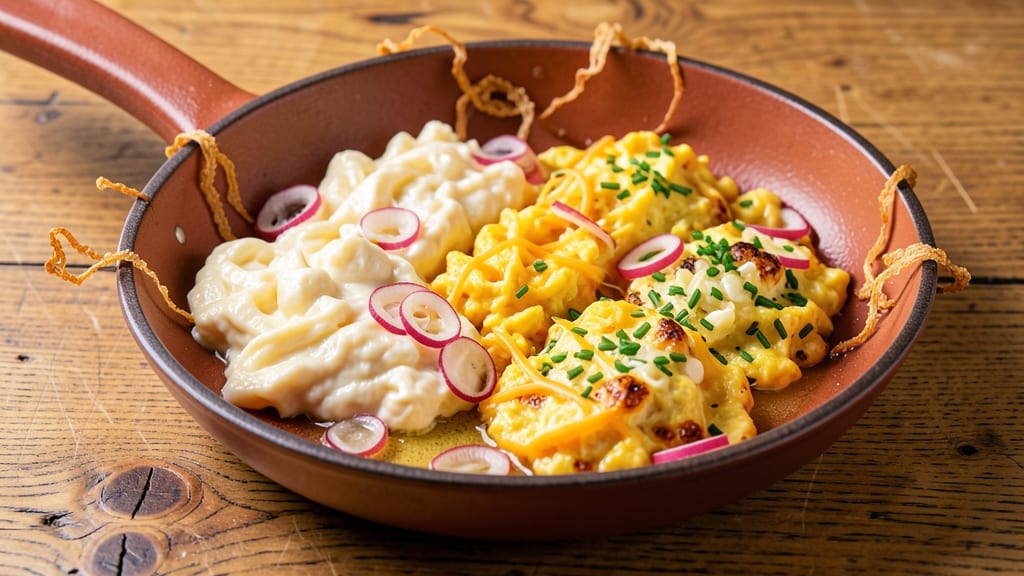
These types of scrambled eggs recipe don’t have to be boring—this guide unlocks three perfect styles that transform a simple breakfast into something extraordinary. 💛 Whether you crave crispy edges, fluffy clouds, or silky-smooth texture, each method delivers restaurant-quality results with just a few tweaks. The secret? Heat control and egg-to-fat ratios that turn ordinary eggs into a gourmet experience.
First up: classic fluffy scrambled eggs, where gentle heat and constant stirring create tender curds that melt in your mouth. Then we’ll tackle crispy-edged eggs for texture lovers, and finish with a silky version that’s so smooth it feels like a cheat.
Each style uses the same base ingredients—just different techniques and timing. Trust me, your taste buds will thank you.
What makes these recipes foolproof is understanding how heat and fat work together. Too much heat? Dry, rubbery eggs. Too little? Soupy mess. We’ll show you exactly how to nail the perfect temperature for each style, plus when to stop stirring (yes, there’s a right time).
The best part? These eggs pair perfectly with avocado toast, crispy bacon, or fresh berries—no matter which version you choose.
Ready to upgrade your breakfast game? Let’s get cooking—your ideal scrambled eggs are just a few minutes away. The only question is: crispy, fluffy, or silky? Pick your favorite and make it yours.
Ingredients for types of scrambled eggs
Eight essential ingredients transform ordinary eggs into extraordinary breakfast masterpieces.
| Ingredient | Amount | Notes |
|---|---|---|
| Large Eggs 🥚 | 8 whole | Freshly cracked, room temperature |
| Unsalted Butter 🧈 | 4 tbsp | Cold, cubed for crispy edges |
| Heavy Cream 🥛 | ¼ cup | Full-fat for silkiness |
| Diamond Crystal Kosher Salt 🧂 | ½ tsp | Fine grain preferred |
| Freshly Ground Black Pepper 🌶️ | ¼ tsp | Freshly cracked peppercorns |
| Shallots 🧅 | 2 whole | Finely minced, vibrant color |
| Extra-Virgin Olive Oil 🫒 | 1 tbsp | For silky texture |
| Chives 🌿 | 2 tbsp | Finely chopped, for garnish |
| Crispy Bacon 🥓 | 4 slices | Optional, crumbled for topping |
| Freshly Squeezed Lemon Juice 🍋 | 1 tsp | Brightens flavors |
| Freshly Grated Parmesan Cheese 🧀 | ¼ cup | For finishing touch |
The eggs and butter are your dynamic duo—room temperature eggs incorporate better, and cold butter cubes create those coveted crispy edges. Grab farm-fresh eggs if possible—they have richer yolks. For butter, Plugrá or Land O'Lakes work perfectly. Shallots add depth without overpowering, so look for firm, vibrant ones at the market. Pro tip: Pat them dry before mincing to prevent excess moisture in your eggs. The heavy cream is non-negotiable for silky texture—avoid light cream or you'll end up with something closer to scrambled egg soup.
No heavy cream? Full-fat Greek yogurt at half the amount works in a pinch, though texture will be slightly different. Swap shallots for finely minced red onion if needed, but you'll lose some sweetness. Fresh herbs? Dried chives at one-third the amount can substitute, though fresh is always better. For the crispy version, use more butter and lower heat—this is where patience pays off. The lemon juice might seem minor, but it brightens the whole dish. No fresh lemon? Bottled works fine, but freshly squeezed is always superior. And that Parmesan? Freshly grated from a block melts beautifully—pre-grated just won't cut it.
Eggs keep best in the fridge for 3 weeks—use the oldest first. Butter should stay in the fridge until ready to use, then let it sit at room temperature for 15-20 minutes before cooking. The heavy cream can be stored for up to 2 weeks if kept tightly sealed. For meal prep, cook eggs fresh and reheat gently—they don't reheat as beautifully as other dishes. Portion into ramekins before baking for easy grab-and-go breakfasts. And if you're making all three styles? Cook them in batches—each style needs slightly different heat control, and your stovetop can only handle one technique at a time.
Why You'll Love This Recipe
- Same recipe, different vibes: fluffy plates for lazy mornings or crispy, golden bites over toasted sourdough for a quick dinner. My college-aged son requests it for both—proof it works.
- Five-Ingredient Magic: The butter and heavy cream make this richer than takeout, but somehow it still feels like a treat—not a splurge. Honestly, I’ve made scrambled eggs a dozen ways, and this combo wins every time.
- Weeknight Superstar: No chopping, no fuss—just crack eggs, melt butter, and stir. Even on days when I’m too tired to think, these come together faster than I can reheat coffee.
- Breakfast or Dinner: Same recipe, different vibes: fluffy plates for lazy mornings or crispy, golden bites over toasted sourdough for a quick dinner. My college-aged son requests it for both—proof it works.
Step-by-step instructions for perfect scrambled eggs
Master three legendary techniques—fluffy, crispy, and silky—using the same ingredients with just a few clever twists.
🍳 Step 1: Whisk Eggs and Infuse Flavor
Crack the 8 whole Large Eggs into a bowl and add the 0.25 cup Heavy Cream, 0.5 tsp Diamond Crystal Kosher Salt, and 0.25 tsp Freshly Ground Black Pepper. Whisk vigorously for 30 seconds until the mixture is completely smooth and frothy—this incorporates air for lighter eggs. Real talk: the cream makes all the difference for that velvety texture.
Add the 2 whole Shallots (finely minced) and 1 tbsp Extra-Virgin Olive Oil to the egg mixture. Stir well to distribute the flavors evenly. Here's the thing—shallots add depth without overpowering, and the olive oil prevents the eggs from drying out. Let the mixture sit for 5 minutes at room temperature while you prep your pan.
🔥 Step 2: Choose Your Heat and Cooking Style
For fluffy eggs, heat an 8-inch nonstick skillet over medium-low heat until warm. Add 2 tbsp of the cubed Unsalted Butter and let it melt completely, swirling to coat the pan evenly. You'll see the butter foam and then settle—this is your signal to add the eggs. Pour them in and let them sit undisturbed for 10 seconds before gently stirring with a silicone spatula.
For crispy edges, crank the heat to medium-high and use all 4 tbsp Unsalted Butter, letting it melt into a bubbling pool. Pour in the eggs and immediately push them toward the center of the pan, letting the edges crisp before folding them in. This creates those coveted golden-brown patches—don't rush it, or you'll end up with rubbery eggs.
For silky eggs, use medium heat with 2 tbsp butter and 1 tbsp olive oil combined. The oil lowers the surface tension, creating that luxurious, almost custard-like texture. Stir constantly with a fork, lifting and folding the eggs as they begin to set—this breaks them into delicate ribbons.
🥘 Step 3: Finish with Signature Touches
When the eggs are 80% set (still slightly runny in the center for fluffy/silky, or fully set with crispy edges), remove the pan from heat. Here's where it gets fun—stir in 1 tsp Freshly Squeezed Lemon Juice and 0.25 cup Freshly Grated Parmesan Cheese for a bright, tangy finish. The acidity cuts through the richness, and the cheese adds a salty crunch.
Fold in the 4 slices Crispy Bacon (crumbled) and 2 tbsp Chives just before serving. The bacon adds smoky depth, while the chives bring a fresh, herbal note. For extra decadence, spoon the eggs onto warm plates and garnish with additional Parmesan and a crack of black pepper. Serve immediately—scrambled eggs don't wait!
⏰ Step 4: Master the Timing for Each Style
Fluffy eggs take 3-4 minutes total on medium-low heat. They should be soft, custardy, and still slightly moist in the center—like a cloud you can cut with a fork. If they look dry, you went too fast. For crispy edges, work quickly—2-3 minutes on high heat. The edges should be deep golden brown, almost like a thin omelet crust, while the interior stays creamy.
Silky eggs require 4-5 minutes of constant stirring on medium heat. They'll look glossy and almost liquid-like when done—think of them as scrambled eggs' more luxurious cousin. The secret is never letting them sit too long in one spot. Each style delivers the same core ingredients but transforms them completely with technique.
Pro Tips For Making Types Of Scrambled Eggs
- WHISK LIKE A MANIAC: Crack the eggs into a cold bowl first, then whisk aggressively for 30 seconds—you’re not just combining, you’re aerating. I used to skip this, and my eggs turned out dense and sad; now they’re light and cloud-like, especially with the heavy cream.
- LOW AND SLOW AFTER THE CRUST: Start on medium-high to get that golden butter crust, then immediately drop the heat to low. The moment the edges lift, let them sit undisturbed for 10 seconds—this guarantees creamy centers without scrambling the whole batch into rubber.
- MEASURE THE CREAM PRECISELY: Use 2 tablespoons of heavy cream per 4 eggs, no more. Too much dilutes the egg flavor and makes them gummy; too little means they’ll dry out faster. I learned this after making a batch that tasted like a sad custard.
- SALT THE BUTTER FIRST: Melt 2 tablespoons of unsalted butter in the pan, sprinkle in ½ teaspoon of kosher salt before adding eggs, and let it bloom for 10 seconds. The butter emulsifies better, and the salt distributes evenly—no more salty bites or bland patches. (Yes, even if you’re impatient like me.)
Common mistakes when making your types of scrambled eggs
Overcooking the Eggs
I’ve burned more scrambled eggs than I care to admit by walking away from the stove. The second your eggs start to look dry or rubbery, they’re past the point of no return.
For fluffy eggs, remove them from heat when they’re still slightly runny in the center—about 80% set. For crispy edges, pull them off heat as soon as the edges turn golden brown. The residual heat will finish cooking them perfectly. 🔥
Skipping the Butter
Some recipes call for oil, but butter is non-negotiable for flavor and texture. Butter adds richness and helps create those beautiful, tender curds. If you’re using oil, you’ll end up with eggs that taste flat and may even stick to your pan.
For crispy edges, cold butter cubes are your secret weapon—they melt slowly, creating crispy pockets. Never substitute margarine or vegetable shortening.
Stirring Too Much
Constant stirring breaks down the egg proteins too quickly, leading to tough, dry eggs. For fluffy eggs, let them sit undisturbed for 10 seconds before gently stirring with a spatula. For silky eggs, stir constantly but gently with a fork to create delicate ribbons.
The key is to move the eggs just enough to prevent sticking without overworking them. Over-stirring is the fastest way to ruin an otherwise perfect batch.
Using Cold Eggs
Cold eggs from the fridge won’t blend smoothly and may cook unevenly. Let them sit at room temperature for 5-10 minutes before whisking. Cold eggs also take longer to cook, increasing the risk of overcooking or drying out.
Pro tip: Crack them into a bowl first, then let the whole mixture sit while you prep your pan. This ensures even cooking and a creamy texture every time. ❄️
Ignoring Heat Control
Heat is everything when it comes to scrambled eggs. Too high, and you’ll get rubbery, dry eggs. Too low, and you’ll end up with a soupy mess. Use medium-low heat for fluffy eggs, medium-high heat for crispy edges, and medium heat for silky eggs.
Invest in a good infrared thermometer to monitor pan temperature—aim for 275-300°F for fluffy, 350-375°F for crispy, and 325-350°F for silky.
Not Seasoning at the End
Adding salt and pepper too early can toughen the eggs as they cook. Instead, season them right at the end for maximum flavor. Stir in freshly ground black pepper and a pinch of kosher salt just before serving.
The same goes for lemon juice and Parmesan—adding them off-heat brightens the dish and keeps the texture tender. Trust me, this small tweak makes all the difference in flavor and texture. 💫
Nutrition facts
Frequently asked questions
Can I make these scrambled egg styles without butter?
You can try using olive oil or avocado oil, but butter creates those signature tender curds and rich flavor. For crispy edges, cold butter cubes are essential—they melt slowly to create golden pockets. If you must substitute, use 1 tbsp butter + 1 tbsp oil for fluffy eggs, or 2 tbsp oil for silky eggs. Just expect slightly less richness and potential sticking.
How do I adjust these recipes for 2 people?
Halve all ingredients: use 4 eggs, 2 tbsp butter, 2 tbsp heavy cream, and 1 tbsp olive oil. Keep the same ratios—2 tbsp butter per 4 eggs for fluffy, all 2 tbsp butter for crispy, and 1 tbsp butter + 1 tbsp oil for silky. Cooking time remains the same, just reduce pan size to 6-inch for efficiency.
What's the secret to keeping scrambled eggs moist?
The magic trio: low heat, butter, and timing. For fluffy eggs, remove them from heat when 80% set—they'll finish cooking from residual heat. Use medium-low heat and let them sit undisturbed for 10 seconds before first stir. The heavy cream also adds moisture without making them soupy. Never overcook!
Can I make these ahead of time?
Fresh is best, but you can prep components ahead: whisk eggs with cream and seasonings up to 1 day in advance. For crispy edges, cook them just until set (not fully crispy), then refrigerate. Reheat in a 350°F oven for 5-7 minutes until warmed through. Fluffy and silky eggs reheat best in a skillet with 1 tbsp butter on low heat for 2-3 minutes.
What's the best pan for each style?
Use nonstick for fluffy/silky eggs to prevent sticking, but a well-seasoned cast iron works best for crispy edges. For fluffy: 8-inch nonstick on medium-low. For crispy: 10-inch cast iron on medium-high. For silky: 8-inch nonstick or stainless steel on medium. The pan material affects texture—nonstick gives smoother eggs, while cast iron creates deeper browning.