
Salads
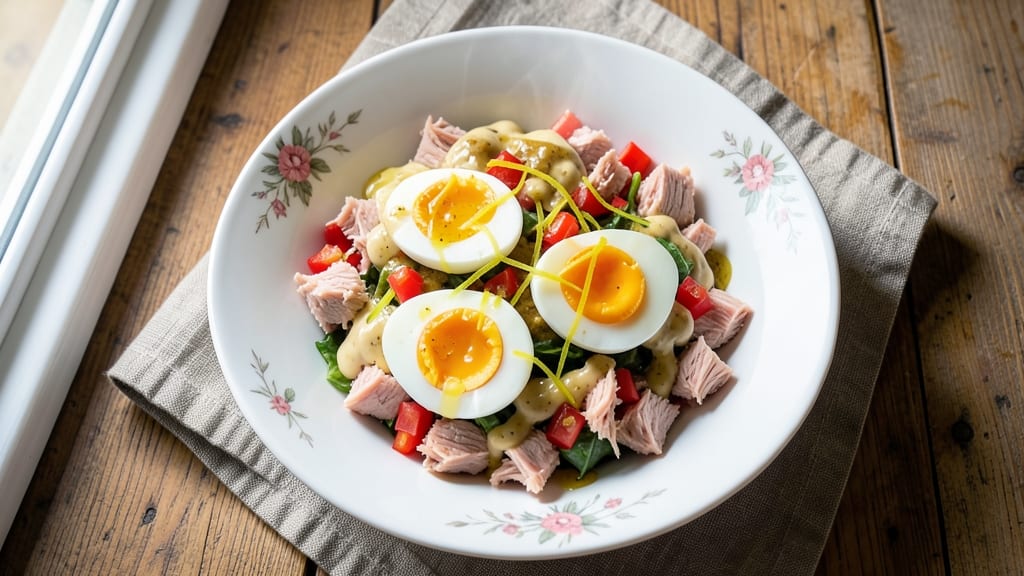
This tuna salad recipe with egg and mustard delivers the perfect balance of silky creaminess and crunchy texture that makes every bite irresistible.
The classic combination of flaked tuna, hard-boiled eggs, and tangy mustard creates a flavor profile that’s both nostalgic and refined—ideal for sandwiches, crackers, or as a protein-packed side dish. I’ve perfected the ratios to ensure the dressing binds just enough without overpowering the freshness of the ingredients.
The secret lies in the egg-to-mustard ratio and how you chop the ingredients. Finely diced eggs add richness, while Dijon mustard provides the right amount of tang to cut through the tuna’s oiliness.
A splash of lemon juice brightens the flavors, and a touch of celery or red onion adds crunch that keeps the texture exciting. This isn’t just any tuna salad—it’s the kind that makes you reach for seconds.
What sets this recipe apart is the foolproof technique for achieving that signature creamy yet light consistency. The dressing is emulsified with mayo, but the real magic happens when you let the flavors meld for at least 10 minutes before serving.
That’s when the mustard’s sharpness softens, the eggs’ creaminess develops, and the tuna’s brininess comes alive. It’s simple, but it’s never basic.
Serve this classic tuna salad on crisp lettuce wraps, piled high in a sandwich with your favorite bread, or paired with toasted crackers for a sophisticated appetizer.
The possibilities are endless, but the foundation—tuna, egg, and mustard—remains timeless. Let’s get started on a recipe that’s as versatile as it is delicious.
Ingredients for tuna salad recipe with egg and mustard
Nine essential ingredients transform simple pantry staples into nostalgic, restaurant-quality tuna salad.
| Ingredient | Amount | Notes |
|---|---|---|
| Canned Tuna in Water 🐟 | 2 cans | High-quality, drained well |
| Large Eggs 🥚 | 4 whole | Hard-boiled, finely diced |
| Dijon Mustard 🌶️ | 1 ½ tbsp | For tangy depth |
| Mayonnaise 🥛 | ½ cup | High-quality, full-fat |
| Fresh Lemon Juice 🍋 | 1 tbsp | Brightens flavors |
| Red Bell Pepper 🌶️ | ¼ cup | Finely diced, for crunch |
| Celery Stalks 🥬 | 2 whole | Finely diced, for texture |
| Extra-Virgin Olive Oil 🫒 | 1 tsp | For finishing drizzle |
| Kosher Salt 🧂 | ½ tsp | Diamond Crystal preferred |
| Freshly Ground Black Pepper 🌶️ | ¼ tsp | For finishing |
| Fresh Dill 🌿 | 1 tbsp | Chopped, for freshness |
| Ice Water 💧 | 2 tbsp | For emulsifying |
The tuna quality makes all the difference—Wild Planet or Vital Choice brands deliver superior texture and flavor. For the eggs, pasture-raised from local farms adds richness, but any high-quality large eggs work. Dijon mustard should be vibrant yellow with no additives—Maille or Whole Foods 365 are reliable choices. Celery and bell pepper should be crisp and fresh; store them in the crisper drawer until use. The mayo is non-negotiable—Duke's or Hellmann's provide the right balance of creaminess without overpowering.
No Dijon mustard? Yellow mustard at half the amount works in a pinch, though the flavor will be milder. Swap bell pepper for red onion or jalapeño for a different crunch profile. The ice water is crucial for emulsifying—don't skip it if your mayo separates. For extra richness, add 1 tbsp sour cream or Greek yogurt. If you prefer a lighter texture, reduce the mayo by 1 tbsp and add 1 tbsp light mayo instead. The dill can be omitted if you dislike its flavor, but it adds a bright contrast to the richness of the tuna and eggs.
This tuna salad keeps beautifully for 4-5 days in an airtight container in the fridge. For best texture, wait at least 30 minutes before serving to let flavors meld. Portion into small containers for easy grab-and-go lunches. If the salad starts to dry out after a day, simply stir in 1 tsp lemon juice and 1 tsp olive oil to restore moisture. Avoid storing with metal utensils, as they can react with the lemon juice and cause discoloration.
Why You'll Love This Recipe
- I’ll be real: this costs me about $3 for four servings. The tuna and eggs stretch forever, and the mustard adds depth without breaking the bank. It’s the kind of recipe that makes me feel smart about spending—because I’m not.
- Fewer Ingredients, More Flavor: I swear by this combo—just tuna, eggs, mustard, mayo, and lemon. No fancy add-ins needed. That tangy Dijon and bright lemon cut through the richness, making it taste like a gourmet spread without the fuss.
- No Chopping, No Stress: Honestly, I’ve made this while chatting on the phone. Drain the tuna, mash the egg (no peeling!), mix it all together—done. The hardest part is cracking the eggs, and even that’s worth it for how smooth and creamy it turns out.
- Lunch Box Legend: Between us, this is my go-to for school lunches or office meals. Pack it in a jar, and it stays fresh for days. My kids (and my coworkers) always ask for it—no mystery meat here, just protein-packed goodness that’s actually exciting.
Step-by-step instructions for tuna salad with egg and mustard
Here's how to craft the perfect balance of texture and flavor in this timeless recipe.
Prepare the Hard-Boiled Eggs
Place the 4 whole large eggs in a saucepan and cover them with cold water by about 1 inch. Bring to a rolling boil over high heat, then immediately remove from heat, cover, and let sit for 12 minutes. This timing ensures fully set yolks without overcooking.
Transfer eggs to an ice bath for 10 minutes to stop cooking. Peel carefully under running water—this prevents carrying overcooked bits into your salad. Finely dice the peeled eggs and set aside in a small bowl. The texture should be uniform, with no large chunks remaining.
Mix the Base Ingredients
In a medium mixing bowl, combine the 2 cans drained tuna in water, 0.5 cup mayonnaise, 1.5 tablespoons Dijon mustard, and 1 tablespoon fresh lemon juice. Use a fork to break up the tuna slightly while incorporating the wet ingredients. This creates a smooth foundation for your salad.
Add the finely diced hard-boiled eggs and mix gently to distribute evenly. The eggs will begin to absorb some of the mayonnaise, creating a creamy texture. Avoid overmixing at this stage—you want visible flecks of egg for texture contrast.
Add Crunchy Vegetables and Seasonings
Finely dice the 2 whole celery stalks and 0.25 cup red bell pepper—aim for pieces no larger than 1/8 inch for even distribution. Add these to the bowl along with 0.5 teaspoon kosher salt and 0.25 teaspoon freshly ground black pepper. Mix thoroughly to combine all ingredients.
The celery and bell pepper should be evenly distributed throughout the mixture. This step is where the classic crunch comes together. Taste the mixture now—you should detect the bright acidity of the lemon, the tang of Dijon, and the subtle sweetness of the bell pepper.
Emulsify with Ice Water
Add the 2 tablespoons ice water to the bowl and stir vigorously with a fork for 30 seconds. This crucial step emulsifies the mayonnaise, creating a silky texture. The ice water prevents the mixture from becoming greasy while maintaining moisture.
Continue mixing until the consistency reaches your preference—it should be thick enough to hold its shape when scooped but still spreadable. If it's too thick, add 1 additional teaspoon ice water; if too thin, mix in 1 teaspoon mayonnaise. This adjustment ensures perfect texture for sandwiches or serving.
Finish with Fresh Dill and Olive Oil
Chop the 1 tablespoon fresh dill finely and stir it into the tuna salad. Drizzle in the 1 teaspoon extra-virgin olive oil and mix gently to combine. The dill adds a bright, herbal note that cuts through the richness, while the olive oil enhances the overall flavor profile.
Taste and adjust seasoning if needed—this is your final opportunity to balance flavors. The finished salad should have a perfect harmony of creamy, crunchy, and tangy elements. Cover and refrigerate for at least 30 minutes before serving to allow flavors to meld completely.
Pro Tips For Making Tuna Salad Recipe With Egg And Mustard
- Drain the Tuna Properly: Don’t just open the can and dump it—rinse the tuna under cold water in a fine-mesh strainer. The starch in the canned water makes the salad gummy, and nobody wants that. I learned this after making a batch where the texture was off, and now I never skip it.
- Chill the Eggs First: Pop those eggs into ice water for 10 minutes before peeling. Cold eggs slide out of the shell cleanly, and you won’t end up with egg bits in your salad. (Yes, even if you’re impatient like me.)
- Balance the Mustard Ratio: Start with 1 tablespoon of Dijon for every 2 tablespoons of mayo, then adjust. Too much mustard? The flavor gets sharp. Too little? It’s bland. Taste as you go—this isn’t a math problem.
- Add Lemon Last: Mix everything else first, then fold in the lemon juice just before serving. The acid cuts through the richness, but if you add it too early, the salad can turn watery. (Your future self will thank you.)
Storing and reheating this dish
Fridge Storage Tips
Store your tuna salad in an airtight glass container—I swear by Pyrex with snap-on lids—to maintain freshness for up to 4-5 days. The glass keeps flavors pure and prevents absorption from plastic.
Divide into small portions for easy grab-and-go lunches, and press plastic wrap directly on the surface to minimize drying. 🥫
Let the salad sit at room temperature for 10-15 minutes before refrigerating to prevent condensation. This simple step helps maintain the perfect texture. I always label containers with the date to track freshness—trust me, it saves headaches later!
Freezer-Friendly Adaptations
This salad isn’t ideal for freezing due to the mayo and eggs, but you can prep components ahead. Freeze the diced celery and bell pepper separately in a ziplock bag for up to 3 months.
Thaw overnight in the fridge before mixing. For the eggs, hard-boil them fresh or freeze unpeeled eggs in their shells for up to 3 months—peel and dice when ready to use. ❄️
Reheating Without Ruin
If your tuna salad starts to dry out after a day, revive it by stirring in 1 teaspoon lemon juice and 1 teaspoon olive oil.
For a quick fix, microwave individual portions on 50% power for 30 seconds, then stir and let sit for 1 minute to redistribute moisture. Avoid reheating in bulk—it’s better to refresh small batches as needed.
Texture Rescue Tricks
If the celery loses its crunch, swap it out with freshly diced cucumber or avocado when serving. For extra moisture, add 1 teaspoon Greek yogurt or a splash of ice water just before eating.
The key is to work with the salad’s natural evolution—sometimes "ruined" texture just means it’s ready for a creative upgrade! 💡
Serving After Storage
Always let stored tuna salad sit at room temperature for 5-10 minutes before serving to restore its creamy consistency. If the flavors seem muted, brighten them with a fresh squeeze of lemon juice or a sprinkle of smoked paprika.
I love serving it on toasted sourdough or with crisp lettuce cups to highlight the improved texture. 🥖
Nutrition facts
Frequently asked questions
Can I use tuna in oil instead of water for this recipe?
Yes, but you'll need to drain it extremely well and adjust the mayo slightly. Tuna in oil is richer, so reduce the mayo by 1 tablespoon and add 1 teaspoon lemon juice to balance the flavors. The texture will be creamier, but the recipe will still hold together beautifully.
What's the best way to chop the eggs for perfect texture?
Use a sharp chef's knife and cut the eggs into 1/8-inch dice for even distribution. For extra creaminess, you can also pulse them in a food processor for 3-5 seconds—just don't overprocess, or they'll turn into a paste. The goal is tiny, uniform pieces that blend into the salad without losing texture contrast.
How can I make this tuna salad lighter without losing flavor?
Swap half the mayo for Greek yogurt or light mayo (about 2.5 tbsp each) and add 1 tbsp extra lemon juice to keep it bright. Use more finely diced vegetables (like cucumber or avocado) for moisture and crunch. The mustard-to-egg ratio stays the same—this keeps the tangy depth intact.
Why does my tuna salad get watery after sitting in the fridge?
This happens when the mayo separates or the eggs release too much moisture. Fix it by stirring in 1 teaspoon Dijon mustard (which acts as a binder) and 1 teaspoon ice water to re-emulsify. For prevention, always use ice water when mixing and store the salad in a glass container with plastic wrap pressed directly on the surface.
Can I add other proteins to this recipe?
Try diced ham (2 tbsp) for a classic twist, crumbled feta (1/4 cup) for Mediterranean flair, or diced avocado (1/2 cup) for creaminess. For seafood lovers, add finely chopped shrimp or crab meat (1/2 cup). Just reduce the mayo by 1 tablespoon to balance moisture from these additions.