
Breakfast & Brunch
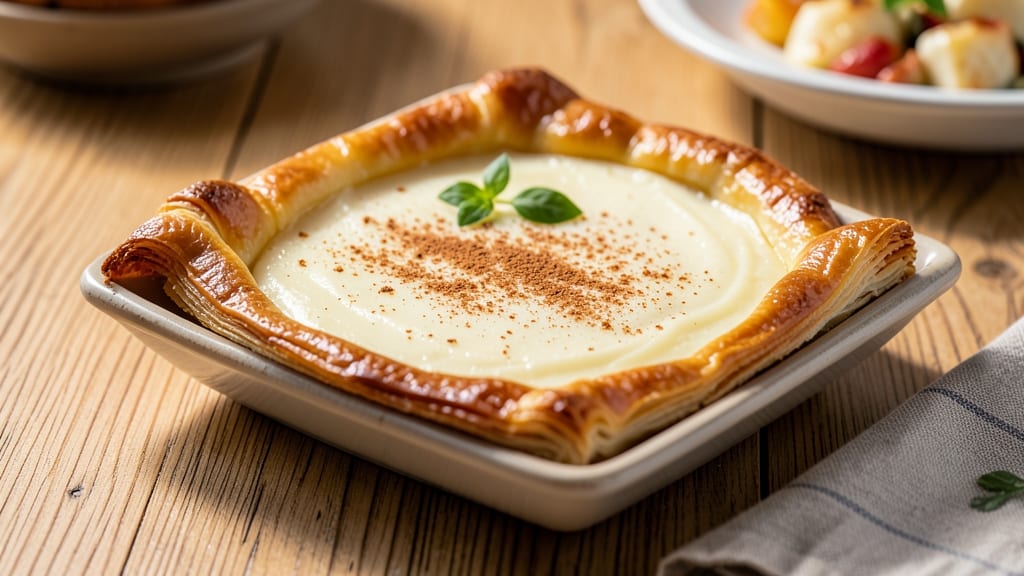
This traditional Portuguese egg tart recipe brings the legendary pastel de nata from Lisbon's Convent of Belém straight to your kitchen. 🌟 The secret lies in a delicate, flaky pastry that encases a creamy custard made from just five simple ingredients—eggs, sugar, cinnamon, and milk.
I've perfected the technique over years of baking, ensuring that crispy, golden crust meets velvety, caramelized custard with every bite.
The foundation of authentic pastel de nata begins with a light, airy dough that puffs beautifully in the oven. The custard filling, cooked to precise temperatures, develops a signature caramelized crust at the bottom while remaining silky smooth inside.
This recipe stays true to tradition while offering modern twists—like chocolate or matcha variations—without compromising that iconic Portuguese flavor.
What you'll achieve is a batch of egg tarts that rivals those from Lisbon's famous pastelarias. The crust is perfectly crisp, the custard rich and fragrant with cinnamon, and the caramelized bottom adds a touch of sweetness that makes each bite irresistible.
The aroma alone—warm, buttery, and slightly nutty—will transport you to Portugal's historic streets.
These tarts are ideal for breakfast, brunch, or even dessert, and they reheat beautifully. Whether you stick to the classic version or experiment with flavors, the technique remains the same. Let's create pastel de nata that captures the soul of Portugal in every bite.
Ingredients for traditional portuguese egg tart
Twelve ingredients transform into Portugal's iconic pastel de nata: crisp pastry embracing velvety custard.
| Ingredient | Amount | Notes |
|---|---|---|
| Large Eggs 🥚 | 6 whole | Room temperature for even cooking |
| Granulated Sugar 🍚 | 1 ½ cups | White sugar preferred for traditional flavor |
| Whole Milk 🥛 | 2 cups | Full-fat for creamy custard texture |
| Ground Cinnamon 🌿 | 1 tsp | Freshly ground for authentic aroma |
| Unsalted Butter 🧈 | ½ cup | Cold, cubed for pastry layers |
| All-Purpose Flour 🌾 | 2 cups | Plus 1 tbsp for dusting |
| Diamond Crystal Kosher Salt 🧂 | ½ tsp | Fine grain preferred |
| Granulated Sugar (for caramel) 🍚 | ¼ cup | For custard base caramelization |
| Vanilla Extract 🌸 | ½ tsp | Pure vanilla for subtle depth |
| Baking Powder 🍞 | ½ tsp | For pastry lift |
| Ice Water ❄️ | ¼ cup | For dough handling |
The eggs and milk form the custard's heart, so choose large, fresh eggs—the yolks should be vibrant orange. Whole milk delivers the creamiest texture, though 2% works in a pinch. For the pastry, European-style butter (like Plugrá) creates superior flakiness, but Land O'Lakes unsalted is a reliable substitute. The sugar matters too—domestic white sugar caramelizes perfectly, while raw sugar may alter the tart's signature crispness. Ground cinnamon should be fresh; pre-ground loses potency quickly. I source mine from Penzeys for authenticity, but any quality brand works. The vanilla extract? Pure Madagascar bourbon adds depth, though imitation won't ruin your batch.
No vanilla? Almond extract at half the amount works surprisingly well. Running short on butter? Coconut oil (solid) mimics the pastry's flakiness, though with a subtle coconut note. The baking powder is non-negotiable—double-acting ensures proper rise. For the caramel base, brown sugar can replace white, but expect a deeper molasses flavor. The dough requires ice water for proper handling; if your kitchen's warm, chill the mixing bowl first. Need to make ahead? Prepare the dough and custard separately, then assemble just before baking—this prevents soggy bottoms. The cinnamon can be omitted entirely for a purist approach, though it's traditional for a reason.
Store unbaked tarts in the fridge for up to 24 hours before baking—this allows flavors to meld. Once baked, keep them at room temperature in an airtight container for 3 days, though they're best enjoyed fresh. For longer storage, freeze the unbaked tarts on a tray, then transfer to a bag for up to 1 month. Reheat in a 350°F oven for 5-7 minutes to restore that signature caramelized bottom. The aroma alone—warm, buttery, and slightly caramelized—will have your kitchen smelling like Lisbon's pastelarias. These reheat beautifully, making them perfect for breakfast the next morning.
Why You'll Love This Recipe
- No Egg Waste Here: I crack open every egg—no sad half-shells left in the fridge. That rich yolk-to-milk ratio? It turns into the smoothest custard you’ll ever spoon out, with just a whisper of cinnamon to warm it up.
- One-Pan Magic: Honestly, this is the kind of recipe where you mix, pour, and bake—no fancy layers or tempering. The butter-lined tin does all the work while you sip coffee and pretend you’re not actually cooking.
- Crowd-Pleaser for Any Day: Between us, these tarts disappear at picnics, holiday spread tables, and even my very picky teenage nephew’s lunchbox. (Yes, even on a Tuesday.) The sugar crust stays crisp, the custard stays creamy—no one overthinks them.
- Budget Breakfast Win: Five ingredients, all pantry staples, and they stretch for days. I make a batch on Sunday, slice them up, and suddenly I’ve got a week’s worth of grab-and-go treats that cost pennies per serving. Leftovers? More like never leftovers.
Step-by-step instructions for traditional Portuguese egg tarts
Master the delicate balance of crisp pastry and velvety custard with these precise techniques.
👨🍳 Step 1: Prepare the Caramel Base
In a clean, heavy-bottomed saucepan, combine the 0.25 cup granulated sugar (for caramel) and melt over medium heat without stirring. Real talk: this is where patience pays off—let it bubble gently for 5-7 minutes until it turns a deep amber color with a rich, buttery aroma. You'll know it's ready when it smells like toasted sugar and pulls into threads when a spoon touches it.
Immediately pour the caramel into a 12-cup muffin tin (or individual tart molds) and tilt to coat the bottom evenly. Here's the thing—don't try to hurry this step. If you rush, the caramel will crystallize and ruin the tart's signature golden base. Let it cool completely before adding the pastry dough.
👨🍳 Step 2: Make the Pastry Dough
Cut the 0.5 cup unsalted butter into small cubes and place in the bowl of a food processor. Add the 2 cups all-purpose flour and 0.5 tsp diamond crystal kosher salt, then pulse until the mixture resembles coarse crumbs. With the processor running, gradually add the 0.25 cup ice water until the dough just comes together—it should hold when pressed but still feel slightly crumbly.
Transfer the dough to a lightly floured surface and divide it into 12 equal portions (about 1.5 ounces each). Roll each portion into a ball and flatten slightly—these will form the tart shells. Don't overwork the dough or you'll develop gluten and lose that signature flakiness.
🍳 Step 3: Assemble and Blind-Bake the Tarts
Preheat your oven to 375°F. Press each dough ball into the muffin tin, gently stretching it to cover the caramel-coated bottom and up the sides. Press down firmly with your fingers to create a smooth, even surface—this ensures the pastry cooks uniformly. Poke a few small holes in the bottom of each shell with a fork to prevent steam buildup.
Line the shells with parchment circles cut to fit, then fill with pie weights or dried beans. Bake for 15 minutes until the pastry edges are light golden brown. Remove the weights and bake for another 5 minutes until the shells are completely set and the edges are crisp. Let cool for 10 minutes before filling.
🥘 Step 4: Make the Custard Filling
In a medium saucepan, combine the 6 whole large eggs, 1.5 cups granulated sugar, 2 cups whole milk, 1 tsp ground cinnamon, 0.5 tsp vanilla extract, and 0.5 tsp baking powder. Whisk vigorously until the mixture is smooth and slightly thickened—this ensures a silky texture without lumps.
Place the saucepan over medium-low heat and cook, stirring constantly with a wooden spoon, until the mixture reaches 170°F on an instant-read thermometer and coats the back of the spoon. Here's the critical part: the custard should thicken but not boil—if it gets too hot, the eggs will curdle. Remove from heat immediately when it reaches temperature.
⏰ Step 5: Fill and Finish the Tarts
Carefully ladle the hot custard into the cooled tart shells, filling each about ¾ full. The custard will puff slightly as it cooks, so don't overfill. Bake in the preheated 375°F oven for 12-15 minutes until the custard is set but still slightly wobbly in the center—this gives that signature silky texture.
Let the tarts cool completely in the pan before removing. The contrast between the crisp, caramelized pastry and the velvety custard is what makes these tarts legendary. Serve warm for the best experience—each bite should deliver that perfect balance of textures and flavors.
Pro Tips For Making Traditional Portuguese Egg Tart
- STOP STIRRING THE CUSTARD: Once you mix eggs, milk, sugar, and cinnamon, stop stirring after the sugar fully dissolves—whisking too much introduces air, which makes the custard grainy instead of silky. I learned this the hard way when my first batch turned out like scrambled eggs.
- USE COLD BUTTER FOR CRUST: Chill your butter and the tart pans before pressing in the dough—this prevents it from melting into a greasy mess. My grandmother swore by this, and she was right: the crust stays crisp, not soggy.
- BAKE LOW AND SLOW: Preheat the oven to 350°F (175°C) and bake the tarts on the middle rack—not the top. I used to blast them at 400°F, and they’d brown too fast before the custard set properly.
- SKIP THE PRE-BAKED CRUST: The traditional method skips pre-baking the puff pastry—just press it into the pan, score it, and bake straight through. I was skeptical until I tried it: the custard stays moist, and the crust stays flaky. (Yes, even if you’re impatient like me.)
Creative variations of this traditional portuguese egg tart
Chocolate Twist
Swap the cinnamon for 1 tbsp unsweetened cocoa powder and add ¼ cup Dutch-process cocoa to the custard for a rich, fudgy variation. I recommend using Ghirardelli 100% Cacao for the best flavor. Top with a sprinkle of flaky sea salt before baking to enhance the chocolate notes.
This version tastes like a cross between pastel de nata and a molten chocolate cake—trust me, it's a crowd-pleaser. 🍫
Matcha Green Tea
Replace the cinnamon with 1 tsp high-quality matcha powder (I use Ippodo Tea) and reduce the sugar to 1.25 cups to balance the earthy matcha flavor. The custard will have a vibrant green hue and a subtle umami sweetness.
This variation is perfect for tea lovers and adds a sophisticated twist to the classic recipe. 🍵
Spiced Orange
Add 1 tsp orange zest and ½ tsp orange extract to the custard for a bright, citrusy variation. I like to use Florida Valencia oranges for their sweet-tart balance.
The zest adds a beautiful color contrast to the golden pastry, while the extract elevates the traditional flavor with a refreshing twist. 🍊
Coconut Cream
Substitute the milk with 2 cups full-fat coconut cream and add ½ tsp coconut extract for a tropical-inspired version. The custard will have a naturally sweet, creamy texture with subtle coconut undertones. This variation works beautifully with toasted coconut flakes on top for added crunch. 🥥
Lemon Lavender
Infuse the custard with 1 tbsp lemon zest and ½ tsp culinary lavender buds (steeped in the warm milk before mixing). The result is a fragrant, floral variation with a bright citrus kick.
I recommend using culinary lavender from a trusted source like Frontier Co-op to avoid bitter garden varieties. 🌸
Almond Cream
Replace the milk with 2 cups almond milk (unsweetened) and add 1 tsp almond extract for a nutty, dairy-free variation. The custard will be lighter in texture but still rich and flavorful. This version is ideal for those with dairy sensitivities while keeping the traditional Portuguese essence. 🌰
Nutrition facts
Frequently asked questions
Why does my Portuguese egg tart custard turn grainy?
Overcooking or boiling the custard causes the eggs to curdle and create lumps. The key is removing it from heat at exactly 170°F—it should coat the back of a spoon but not boil. Also, whisk vigorously before cooking to eliminate any egg yolk streaks that could separate later.
Can I make these tarts without a muffin tin?
Use individual tart pans (about 2.5-inch diameter) or even small ramekins. Just ensure your molds are oven-safe and have removable bottoms for easy release. For a rustic look, try baking them on a parchment-lined sheet pan as free-form tarts.
How do I store leftover egg tarts?
Keep them in an airtight container at room temperature for up to 3 days. For longer storage, freeze the unbaked tarts (assembled with caramel and dough) for 1 month. Reheat frozen tarts at 350°F for 8-10 minutes to restore that caramelized bottom.
What's the secret to that perfect caramelized bottom?
The caramel must be cooked to a deep amber color (about 5-7 minutes without stirring) and the pastry needs to be fully pre-baked until golden. The custard should fill the tarts only ¾ full—this allows room for expansion while keeping the base crisp.
Can I make the dough ahead of time?
Yes! Prepare the dough up to 24 hours ahead and store it wrapped in plastic in the fridge. Let it sit at room temperature for 30 minutes before rolling to prevent cracking. The custard can also be made a day ahead and refrigerated—just reheat it gently before filling the tarts.