
Main Courses
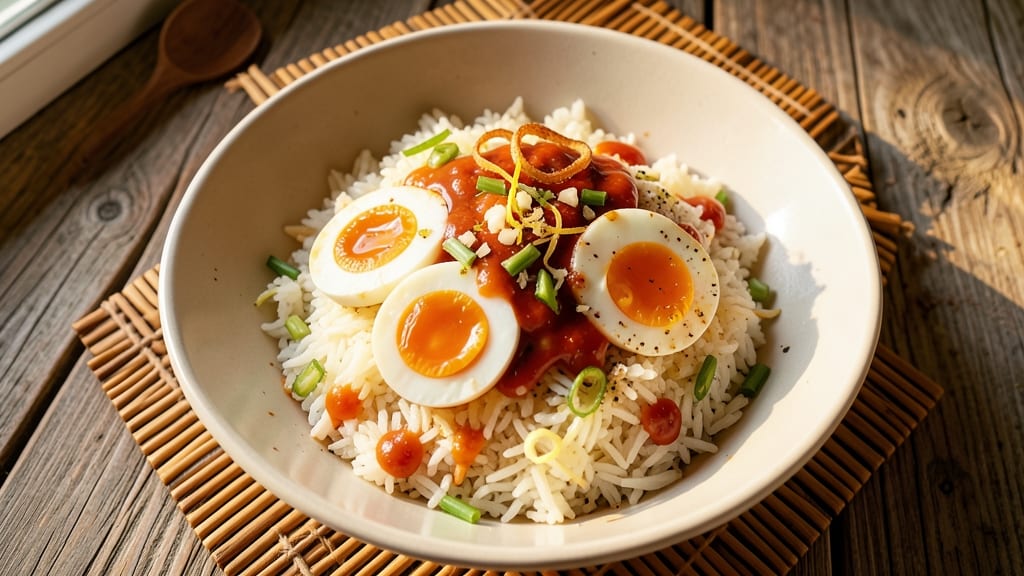
This Thai egg rice recipe transforms simple ingredients into a fragrant, restaurant-quality meal that balances silky poached eggs with perfectly seasoned jasmine rice. The secret lies in the aromatic base of lemongrass, garlic, and fish sauce that infuses every bite, creating a dish that's both comforting and deeply flavorful.
I developed this version after years of experimenting with Thai home cooking techniques, ensuring the eggs remain perfectly runny at the center while the rice stays fragrant and separate.
The beauty of this recipe is its simplicity—just a handful of ingredients come together in a matter of minutes, yet the result is undeniably sophisticated. The poaching technique for the eggs is foolproof, requiring only patience and a gentle simmer in flavorful broth.
What makes this dish truly special is how the fragrant rice absorbs the subtle spices while maintaining its delicate texture, creating a harmonious balance that's essential in Thai cuisine.
By the time you're done, you'll have a plate of golden jasmine rice topped with perfectly poached eggs in their delicate shells, all bathed in a light, aromatic sauce. The dish is elegant enough for dinner guests but simple enough for a quick weeknight meal.
Each bite delivers the perfect combination of creamy eggs, fragrant rice, and the bright, savory flavors of traditional Thai seasoning.
This recipe works equally well as a vegetarian dish or with added protein like shrimp or chicken. The technique is adaptable, making it perfect for both beginners and experienced cooks looking to master authentic Thai flavors. Let's get cooking!
Ingredients for thai egg rice
Jasmine rice, fragrant aromatics, and silky eggs—just nine ingredients for restaurant-quality Thai egg rice.
| Ingredient | Amount | Notes |
|---|---|---|
| Jasmine Rice 🍚 | 1 ½ cups | Uncooked, long-grain preferred |
| Fresh Lemongrass 🌿 | ¼ cup | Stalks finely chopped, bottom inch used |
| Garlic Cloves 🧄 | 6 cloves | Minced, fresh preferred |
| Fish Sauce 🍶 | 2 tbsp | Red Boat preferred for quality |
| Large Eggs 🥚 | 4 whole | Room temperature for perfect poach |
| Vegetable Oil 🫒 | 2 tbsp | For rice cooking, neutral flavor |
| Water 💧 | 2 cups | Filtered preferred for rice |
| White Wine Vinegar 🍷 | 1 tbsp | For poaching liquid |
| Salt 🧂 | 1 ½ tsp | Kosher or sea salt |
| Black Pepper 🌶️ | ½ tsp | Freshly ground preferred |
| Thai Chili Paste 🌶️ | 1 tbsp | Adjust for heat preference |
| Fresh Cilantro 🌿 | ¼ cup | Chopped, for garnish |
| Lime Wedges 🍋 | 2 whole | For serving, fresh preferred |
| Soy Sauce 🍶 | 1 tbsp | For rice seasoning |
The lemongrass is non-negotiable here. Look for fresh stalks with vibrant green leaves—the more tender the better. Asian markets usually carry the best quality, but most grocery stores stock it too. Trim the root end, then finely chop the bottom 3 inches for maximum flavor. If you can't find fresh, paste works in a pinch—just use half the amount. For the garlic, peel and mince it fresh—pre-minced cloves lose flavor fast. The fish sauce? Red Boat brand is worth the splurge if you're making this often, but any good-quality fish sauce will work.
No fish sauce? Soy sauce plus a pinch of sugar mimics the umami, though it won't be identical. Running short on lemongrass? Substitute 1 tsp of lemongrass paste or 1/4 tsp of lemongrass extract, but the texture won't be the same. Want more heat? Add a dash of chili flakes or extra Thai chili paste. The eggs should be room temperature—cold eggs sink and cook unevenly. For the rice, jasmine is essential—basmati or long-grain white won't give that signature fragrance. If you're serving this vegetarian, skip the fish sauce entirely and boost the soy sauce to 2 tbsp instead.
Rice keeps 2 days in the fridge, but the eggs must be eaten fresh. Poach them the same day—they won't reheat well. Store any leftover rice in an airtight container with a damp paper towel to keep it moist. The poaching liquid can be reused once—just reheat and add fresh vinegar. For extra authenticity, garnish with crispy fried shallots if you're feeling fancy, but it's not required. This dish tastes even better the next day as flavors meld, so make extra rice if you can.
Why You'll Love This Recipe
- One-Pot Magic: I swear by this—just rice, eggs, and a handful of aromatics in one pan. No fancy equipment, no stress. The lemongrass infuses the rice while you scramble those eggs, and suddenly, dinner’s ready.
- Garlic-Lemongrass Punch: That first whiff of crushed garlic and fresh lemongrass hitting the pan? Chef’s kiss. The fish sauce ties it all together with this perfect salty-umami kick that makes every bite irresistible.
- Lunchbox Hero: Between us, this is my go-to for meal prep. Cook a big batch of rice, fry up extra eggs, and pack them separately—reheat with a splash of water, and boom. Tastes just as good cold as it does hot.
- Budget Breakfast for Dinner: Eggs, rice, and a few pantry staples? This feeds four for under $5. Honestly, I’ve made it when I forgot to grocery shop, and it still delivered—crispy edges, fragrant rice, and zero guilt.
Step-by-step instructions for fragrant jasmine rice with silky poached eggs
Here's how to create restaurant-quality Thai egg rice with perfectly balanced flavors and textures.
Prepare the Aromatic Base
In a small bowl, combine the 0.25 cup fresh lemongrass (finely chopped bottom inch), 6 cloves garlic cloves (minced), 1 tablespoon white wine vinegar, 1 tablespoon soy sauce, and 1 tablespoon Thai chili paste. This aromatic blend forms the flavor foundation for both the rice and poaching liquid. Let it sit for 5 minutes while you prepare the rice—this allows the flavors to meld together.
The vinegar and soy sauce work together to tenderize the lemongrass and garlic while building depth of flavor. Don't skip this resting time—it makes a noticeable difference in the final dish's complexity. You'll use this mixture later for both the rice and the poaching water, so keep it handy.
Cook the Fragrant Jasmine Rice
Rinse the 1.5 cups jasmine rice under cold water until the water runs clear, then drain well. In a medium saucepan, heat 2 tablespoons vegetable oil over medium heat until shimmering. Add the drained rice and stir for 1 minute until each grain is lightly coated with oil.
Pour in 2 cups water and bring to a gentle boil. Immediately reduce heat to low, cover tightly with a lid, and simmer for 15 minutes. After 15 minutes, remove from heat and let it steam undisturbed for 10 minutes. This resting period is crucial—it allows the rice to absorb all the moisture evenly and develop that signature Thai fragrance.
While the rice steams, stir the aromatic base mixture into the rice. Gently fold it in using a wooden spoon, then return the lid and let it sit for another 5 minutes. The flavors will continue to infuse, creating that authentic Thai aroma that makes this dish so special.
Poach the Silky Eggs
Bring a small pot of water to a gentle simmer (not a rolling boil—you want small bubbles breaking the surface). Add 1.5 teaspoons salt and 0.5 teaspoon black pepper to the water. Stir in the aromatic base mixture you prepared earlier, then gently lower in the 4 whole large eggs (room temperature) one at a time.
Poach the eggs for 3 minutes for runny yolks or 4 minutes for slightly firmer yolks. You'll know they're ready when the whites are completely set but the yolks are still silky. Use a slotted spoon to carefully transfer them to a paper towel-lined plate to drain briefly before serving.
Here's the thing—I like to add a splash of hot water from the poaching pot to the rice just before serving. This keeps the rice moist and adds an extra layer of flavor from the poaching liquid. The eggs should slide onto the rice with minimal disturbance, maintaining their perfect shape and silky texture.
Assemble and Serve
Using a rice paddle or large spoon, gently fluff the rice to separate the grains. Divide the rice evenly among 4 plates, creating a small well in the center of each portion. Place 1 poached egg in each well, allowing the runny yolk to nestle into the rice when cut into.
Garnish each serving with 2 lime wedges and 0.25 cup chopped fresh cilantro. The lime adds a bright, citrusy contrast to the rich, savory flavors, while the cilantro provides a fresh herbal note. Serve immediately while the eggs are still warm and the rice is perfectly fragrant.
This dish is all about balance—fragrant rice, silky eggs, and bright acidity from the lime. The aromatic base ties everything together, creating a harmonious blend of Thai flavors in every bite. The key is keeping everything warm and serving it fresh so you can enjoy that perfect first mouthful.
Pro Tips For Making Thai Egg Rice
- CHAR THE GARLIC LOW: I learned this the hard way—crispy garlic turns bitter fast. Once it’s golden, pull the pan off heat immediately and let it sit for 30 seconds. That last bit of residual heat finishes it without burning, and you’ll taste the sweetness, not the harshness.
- SLICE LEMONGRASS THIN: Skip the bruising—use a sharp knife to slice the lemongrass stalks lengthwise into ¼-inch-thick pieces, then chop. This releases more aroma and oils into the rice without turning it mushy. (Yes, even if you’re impatient like me.)
- SALT THE RICE WATER: The rice needs a pinch of salt in the cooking water—about ½ teaspoon per cup of rice. It balances the fish sauce later and keeps the grains from tasting bland. I used to skip this, and the dish always felt flat.
- FRY EGGS IN BATCHES: Crowding the pan makes the eggs steam instead of crisp. Fry 2 eggs at a time over medium heat until the whites set but yolks are still runny, then set aside. The second batch won’t steal heat from the first, and you’ll get that perfect custardy center.
Troubleshooting this dish
Rice Overcooking
If your jasmine rice turns out mushy or sticky, you likely cooked it too long or didn't rest it properly. The key is maintaining a low simmer after the initial 15 minutes of cooking—never peek while it's resting!
I've found that using a tight-fitting lid and a heavy-bottomed pot helps maintain even heat distribution. If you're unsure, undercook the rice slightly by 1-2 minutes—it'll finish steaming during the resting period. 🌡️
Poached Eggs Too Firm
Overcooked eggs happen when the water boils too vigorously or the eggs aren't fresh. For silky yolks, maintain a gentle simmer—small bubbles breaking the surface, not a rolling boil. Use room-temperature eggs (cold eggs cook unevenly) and poach them for exactly 3 minutes for runny yolks.
If your eggs still turn out too firm, try reducing the heat to low and adding ½ cup ice cubes to the poaching water to lower the temperature slightly. 🥚
Flat Flavors
If your dish lacks depth, the aromatic base might not have infused properly. Always let the lemongrass and garlic mixture sit for 5 minutes before using it—this allows the flavors to meld. For extra punch, add 1 teaspoon of fish sauce directly to the rice after cooking.
I also recommend toasting the garlic and lemongrass in 1 tablespoon of oil for 30 seconds before adding the vinegar and soy sauce—this caramelizes the flavors for a richer taste. 🌿
Eggs Breaking During Poaching
Eggs often break when lowered into boiling water too quickly. Start with lukewarm water (around 160°F) and gradually bring it to a simmer. Gently lower the eggs in with a slotted spoon to minimize disturbance.
For extra stability, add 1 tablespoon of cornstarch to the poaching water—it creates a gentle barrier that helps the whites hold their shape. I've also had success using older eggs (7-10 days old) as their whites are firmer and less prone to breaking. 💡
Rice Too Dry
Dry rice usually means the water-to-rice ratio was off or the rice was disturbed while cooking. Stick to the 2 cups water to 1.5 cups rice ratio and avoid lifting the lid during cooking.
If your rice turns out dry, try adding 1-2 tablespoons of hot water from the poaching liquid just before serving—this adds moisture and extra flavor. For future batches, I recommend using a rice cooker with a steaming function, which maintains perfect moisture levels automatically. 💧
Uneven Egg Cooking
Unevenly cooked eggs often result from temperature fluctuations in the poaching water. Use a small pot (no more than 2 quarts) to maintain consistent heat.
If your eggs cook unevenly, try adding ½ cup of milk to the poaching water—it helps stabilize the temperature and creates a gentler cooking environment. Also, ensure your eggs are uniform in size (large eggs cook faster than jumbo).
For extra insurance, poach them one at a time in the same water. 🔥
Nutrition facts
Frequently asked questions
Can I make this Thai egg rice vegetarian?
Simply omit the fish sauce and replace it with an extra 1 tablespoon of soy sauce plus a pinch of sugar to mimic the umami. For extra depth, add ½ teaspoon of vegetarian fish sauce alternative or a splash of coconut aminos. The dish will still taste delicious while keeping all the fragrant Thai flavors intact.
How do I store leftovers?
The jasmine rice keeps well in an airtight container for 2 days in the fridge, but the poached eggs should be eaten fresh. Reheat only the rice portion (never the eggs) in a steamer or microwave with a damp paper towel to maintain moisture. For extra flavor, add a splash of hot water from the original poaching liquid when reheating.
What's the best way to make the rice extra fragrant?
Toast the lemongrass and garlic in 1 tablespoon of oil for 30 seconds before adding the vinegar and soy sauce—this caramelizes the flavors for richer aroma. Also, use freshly chopped lemongrass (not paste) and let the aromatic base sit for 5 minutes before mixing with rice. For an extra boost, add ½ teaspoon of pandan extract to the cooking water.
Can I use basmati rice instead?
While you can substitute basmati, it won't have the same fragrant aroma as jasmine rice. For best results, use long-grain white rice if jasmine isn't available, but expect slightly less floral flavor. The texture will be similar, but the authentic Thai fragrance comes from jasmine's unique properties. If you're committed to basmati, add 1 teaspoon of pandan extract to the cooking water for better aroma.
Why are my poached eggs breaking?
Eggs break when added to water that's too hot or when disturbed too much. Start with lukewarm water (160°F) and gently lower eggs in with a slotted spoon. For extra stability, add 1 tablespoon of cornstarch to the poaching water or use older eggs (7-10 days old)—their firmer whites hold shape better. Also, avoid overcrowding the pot.