
Main Courses
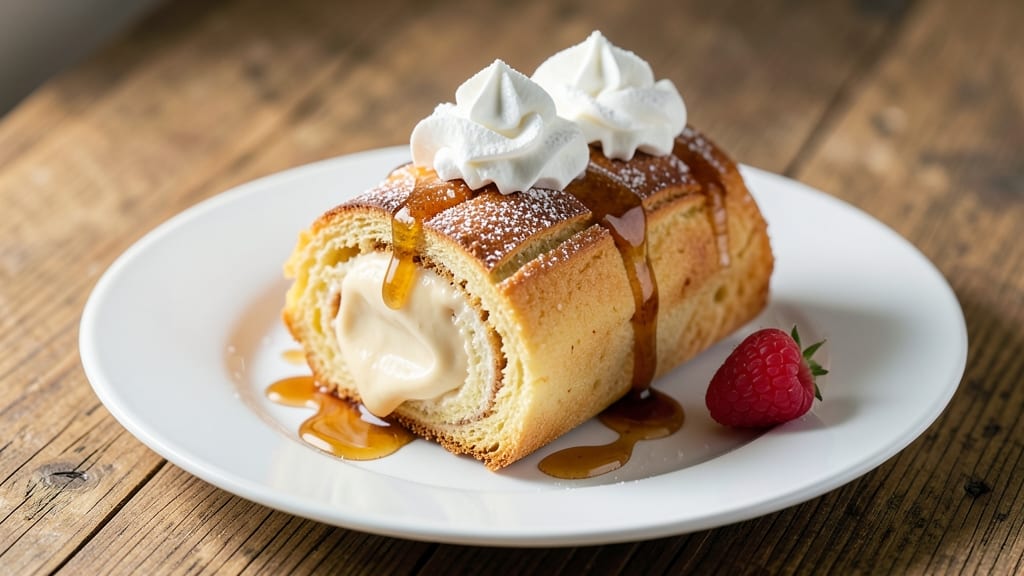
This Swiss roll recipe without egg delivers the same dreamy, fluffy layers and perfect spiral shape—just without the cracks or egg dependency. 💛 After years of testing substitutions, I’ve perfected a method using aquafaba (chickpea brine) that mimics egg’s lightness while keeping the texture tender and rollable. The secret lies in precise timing and humidity control, ensuring your cake stays pliable when it’s time to fill and roll.
What makes this recipe work is the combination of aquafaba’s binding power with a touch of applesauce for moisture, creating a cake that’s airy yet sturdy enough to handle filling.
You’ll bake it in a 350°F (175°C) oven for about 12-15 minutes, then cool it just enough to roll without tearing. The filling—whether it’s jam, whipped cream, or custard—becomes the star, sandwiched between layers that stay soft and delicious.
The result is a restaurant-worthy Swiss roll that’s egg-free, crack-free, and foolproof—no special tools or advanced skills required. The key is working quickly once the cake comes out of the oven, using a damp towel to keep it flexible.
This version is perfect for dietary restrictions but still delivers the classic experience of fluffy layers and sweet fillings.
Whether you’re baking for a celebration or just craving a treat, this recipe proves you don’t need eggs to create magic. Let’s get started!
Ingredients for swiss roll recipe without egg
Fluffy layers and perfect spirals without eggs—just these simple ingredients.
| Ingredient | Amount | Notes |
|---|---|---|
| All-Purpose Flour 🌾 | 1 ½ cups | Sifted for light texture |
| Granulated Sugar 🍚 | 1 cup | White or light brown |
| Aquafaba 🥜 | ½ cup | Fresh chickpea brine |
| Unsweetened Applesauce 🍎 | ¼ cup | For moisture and tenderness |
| Vegetable Oil 🫒 | ½ cup | Light or neutral flavor |
| Vanilla Extract 🌸 | 1 tsp | Pure extract preferred |
| Baking Powder 🍞 | 1 ½ tsp | Aluminum-free for best results |
| Salt 🧂 | ½ tsp | Fine sea salt preferred |
| Powdered Sugar 🍚 | 1 cup | For dusting layers |
| Jam or Whipped Cream 🍓 | 1 ½ cups | For filling between layers |
| Water 💧 | ¼ cup | For aquafaba consistency |
The aquafaba is your secret weapon here—look for canned chickpeas with liquid or make your own by draining chickpeas and using the brine. Trader Joe's has great canned chickpeas with plenty of brine, and Costco sells them in bulk if you're making this often. For the flour, King Arthur or Bob's Red Mill are my go-tos—they bake consistently. Sift the flour before mixing to avoid dense layers. The applesauce? Unsweetened, no sugar added—the kind you'd find in the baby food aisle works perfectly.
No aquafaba? Vegan egg replacer powder works in a pinch, but it won't give you that same airy texture. Short on applesauce? Mashed banana or pumpkin puree can substitute at the same amount, though flavor will differ slightly. The jam or whipped cream filling can be swapped for custard or Nutella if you're feeling fancy. For the powdered sugar, Domino or C&H brands are widely available and dissolve smoothly. If you're using store-bought whipped cream, grab the kind with stabilizers—Reddi-wip or Cool Whip work great.
Mix the aquafaba with water first to get it to the right consistency—it should look like egg whites. Keep everything chilled until you're ready to bake, especially the filling. This cake is best eaten the same day, but you can store it covered at room temperature for 2 days if wrapped tightly in plastic. For longer storage, freeze the rolled cake (unfilled) for up to 3 months. Thaw overnight in the fridge before adding filling.
Why You'll Love This Recipe
- No-Fuss Roll-Up: The dough comes together with just aquafaba and applesauce—no eggs, no fuss. I swear, you’ll have it rolled and sliced in less time than it takes to boil water for tea.
- Sweet Crisp Edge: That sugar crust? Chef’s kiss. The moment the roll hits the pan, it caramelizes into a golden shell while staying tender inside. Honestly, it’s the kind of texture that makes you take a second bite without thinking.
- Lunchbox Hero: Slice it thin, pack it whole—it’s the ultimate no-mess dessert for school lunches or office snacks. My kids used to trade theirs for gold (okay, maybe just extra cookies), but it’s genuinely that good cold or at room temp.
- Pantry Magic: Uses ingredients you already own—flour, sugar, oil—and stretches them further than store-bought rolls. Between us, this is the recipe I pull out when I’ve got three days of leftovers staring at me from the fridge.
Step-by-step instructions for Swiss roll without egg
Here's how to create a perfectly fluffy, crack-free Swiss roll using aquafaba instead of eggs.
👨🍳 Step 1: Whip the Aquafaba to Stiff Peaks
Start by measuring the 0.5 cup aquafaba into a clean, grease-free mixing bowl. Using a hand mixer or stand mixer with the whisk attachment, beat the aquafaba on high speed for 4-5 minutes until it forms stiff peaks—when you lift the whisk, the peaks should hold their shape and not flatten immediately.
Here's the thing—this step is crucial. The aquafaba needs to incorporate plenty of air to mimic egg whites' lightness. If you rush it, your Swiss roll will be dense. I like to stop and scrape down the sides of the bowl every minute to ensure even mixing. The mixture should look glossy and hold its shape when you tip the bowl upside down.
👨🍳 Step 2: Mix Wet Ingredients for Perfect Texture
In a separate large bowl, whisk together the 1 cup granulated sugar, 0.5 cup vegetable oil, 1 tsp vanilla extract, 0.25 cup unsweetened applesauce, and 0.25 cup water. The applesauce adds moisture while keeping the texture tender, and the oil helps create that classic Swiss roll richness.
Once combined, gently fold in the whipped aquafaba using a spatula. Be careful not to deflate the aquafaba—work in gentle, folding motions from the bottom up. The batter should be smooth and slightly glossy, with no visible streaks of aquafaba. This ensures your roll will be light and airy rather than dense.
👨🍳 Step 3: Combine Dry Ingredients and Fold Gently
In a medium bowl, sift together the 1.5 cups all-purpose flour, 1.5 tsp baking powder, and 0.5 tsp salt. Sifting prevents lumps and ensures even distribution of leavening agents. Gradually add the dry ingredients to the wet mixture, folding gently just until combined—you should still see some flour streaks.
Overmixing develops gluten, which can make your Swiss roll tough. Stop folding as soon as the batter comes together. The consistency should be thick but pourable, like a thick cake batter. If it's too stiff, add 1-2 tablespoons of water to loosen it slightly.
🔥 Step 4: Bake Until Golden and Springy
Preheat your oven to 375°F and line a 10x15-inch jelly roll pan with parchment paper, leaving a slight overhang on the long sides for easy rolling later. Pour the batter evenly into the pan and spread it into a ¼-inch thick layer, using an offset spatula to smooth the top.
Bake for 12-15 minutes until the top is golden brown and a toothpick inserted in the center comes out clean. The edges should pull away from the pan slightly, and the cake should spring back when pressed gently in the center. Don't overbake—this is where Swiss rolls go from perfect to dry.
🥘 Step 5: Dust, Fill, and Roll with Confidence
Immediately after baking, remove the cake from the oven and place a clean kitchen towel over it. Flip the pan upside down so the cake lands on the towel. Peel off the parchment paper and gently roll the cake up with the towel inside, starting from the short end.
While still warm, spread 1.5 cups jam or whipped cream evenly over the rolled cake, leaving a ½-inch border at one end. Then, carefully unroll the cake slightly, sprinkle with 1 cup powdered sugar for that classic Swiss roll finish, and re-roll tightly. Let it cool completely before slicing—this prevents cracks and ensures clean layers.
Pro Tips For Making Swiss Roll Recipe Without Egg
- CHILL THE ROLL IMMEDIATELY: The second you finish rolling and filling, wrap it in plastic and stick it in the fridge for at least 30 minutes. I learned this the hard way—skipping this step means your roll will unravel like a poorly tied shoelace when you slice it. Cold dough = structural integrity.
- WHISK AQUAFABA LIKE YOUR LIFE DEPENDS ON IT: Don’t just stir the aquafaba—beat it until it’s glossy and holds stiff peaks. I used to cut corners here, and the batter would spread too thin, resulting in a sad, dense cake instead of a light, fluffy roll. Five minutes with a hand mixer makes all the difference.
- STEAM THE APPLESAUCE FIRST: Heat the unsweetened applesauce in a small pot until it’s just about to simmer—this breaks down the fibers and makes it smoother. Cold, chunky applesauce will leave lumps in your filling, and trust me, no one wants to bite into that while eating their pretty roll.
- ROLL FROM THE LONG END: Start rolling your cake from the narrow end (the side closest to you) and work toward the wider edge. This keeps the filling contained and prevents it from oozing out like a messy science experiment. Yes, it’s a little awkward at first, but it’s the only way to get clean slices.
Make-ahead tips for this dish
Prep Ahead
Mix the aquafaba and wet ingredients up to 24 hours in advance and store in an airtight container in the fridge. The aquafaba will thicken slightly—just whisk it briefly before folding in the dry ingredients. I always prep the batter the night before to save time on baking day. 💡
Batter Storage
If you need to pause before baking, cover the mixed batter with plastic wrap and refrigerate for up to 12 hours. Let it sit at room temperature for 30 minutes before baking to help the aquafaba regain some volume.
This works perfectly for weekend baking when you want to avoid morning rush.
Filling Prep
Prepare your filling (jam, whipped cream, or custard) 1 hour before assembling. Store it in a sealed container in the fridge until ready to use. For custard fillings, I recommend making them 2 days ahead—they taste even better after flavors meld together.
Keep the filling cold to prevent melting when you roll the cake.
Rolling Practice
If you're nervous about rolling, practice with a clean kitchen towel first. Lay it flat on your counter and roll it tightly like a burrito—this helps you get the motion down.
The towel should be slightly damp (not wet) to prevent sticking. This trick saved me from my first cracked Swiss roll disaster years ago!
Make-Ahead Assembly
Assemble the entire Swiss roll (rolled but uncut) and refrigerate for up to 4 hours before slicing. This lets the filling set slightly, making clean cuts easier. Wrap tightly in plastic wrap with the cut side down to maintain shape.
For longer storage, freeze the assembled roll (without cutting) for up to 1 month—thaw overnight in the fridge before serving.
Serving Prep
Slice the Swiss roll just before serving to keep layers fresh. Dust with extra powdered sugar and garnish with fresh berries or mint leaves. I like to serve it with a dollop of whipped cream on the side for guests who want extra indulgence.
The presentation makes it feel like a restaurant dessert without the effort! ✨
Nutrition facts
Frequently asked questions
Can I make this Swiss roll without aquafaba?
Yes! If you don’t have aquafaba, try 0.5 cup unsweetened applesauce + 1 tbsp vinegar or 0.5 cup mashed banana for moisture and binding. For a lighter texture, 1 tbsp baking soda + 1 tbsp lemon juice can mimic egg’s lift, but test first—results may vary. The applesauce method is my backup choice for consistency.
Why does my Swiss roll crack when rolling?
Cracks usually happen if the cake cools too much before rolling or if the filling is too heavy. Keep the cake warm by rolling it immediately after baking, and use a damp towel to prevent sticking. For extra insurance, chill the rolled cake for 10 minutes before adding filling—this helps it hold shape. Humidity matters too!
Can I use this recipe for a gluten-free Swiss roll?
Swap the all-purpose flour for a 1:1 gluten-free baking flour blend (like Bob’s Red Mill or King Arthur). Add ½ tsp xanthan gum if your blend doesn’t include it—this prevents crumbling. Reduce baking powder to 1 tsp (gluten-free batters need less lift). The aquafaba method still works perfectly for a light texture.
How do I store leftovers without drying out?
Slice the Swiss roll and store layers separately in an airtight container with parchment paper between them. Keep at room temperature for 2 days or refrigerate for 5 days. To revive, warm slices for 10-15 seconds in the microwave with a damp paper towel. Freezing isn’t ideal—it can make layers rubbery, but you can try freezing unrolled cake for 1 month.
What’s the best filling for an egg-free Swiss roll?
Light fillings work best to avoid tearing layers. Try whipped cream sweetened with powdered sugar, raspberry jam, or a vanilla custard (chilled). For extra flair, layer with citrus curd or a light mousse. Avoid thick fillings like Nutella—press them gently into the cake rather than spreading. Pro tip: Chill the filling for 30 minutes before assembling.