
Breakfast & Brunch
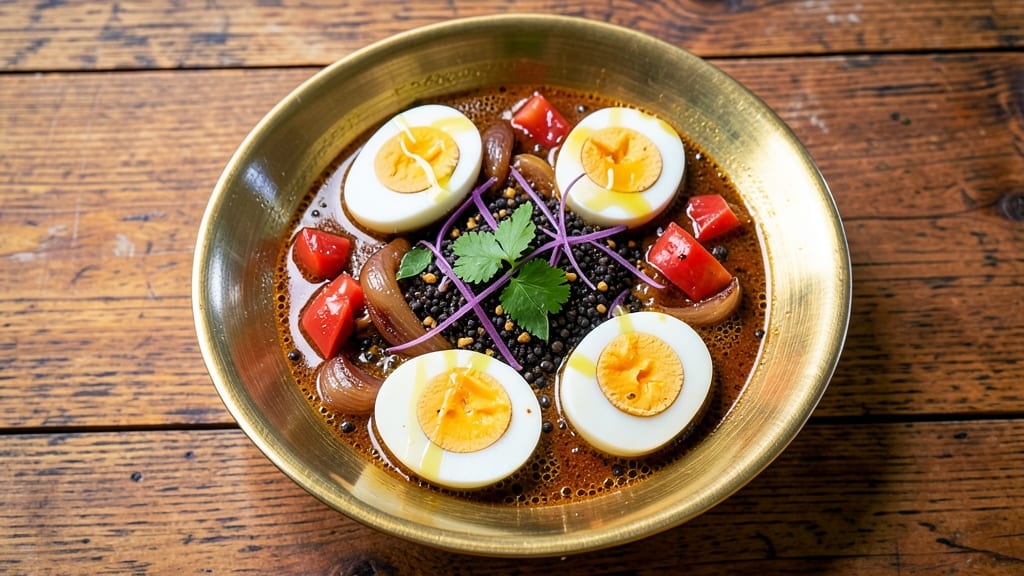
This Surti Egg Curry recipe brings the rich, aromatic flavors of Gujarat to your breakfast table with its signature spiced tomato gravy and silky eggs. The dish starts with a fragrant tempering of mustard seeds, curry leaves, and sesame, which infuses the curry with earthy depth.
What makes this recipe special is the balance of tangy kokum and sweet tomatoes, creating a gravy that's both complex and comforting.
The preparation is straightforward yet rewarding, with key techniques like blooming whole spices and simmering the gravy just enough to develop its signature flavor. This curry is traditionally served with steamed rice or soft rotis, making it a hearty and satisfying meal.
The dish highlights regional Gujarati flavors while remaining approachable for home cooks.
By the time you're done, you'll have a pot of vibrant, aromatic curry with tender eggs suspended in a velvety tomato gravy. The spices and kokum create a tangy, slightly sweet profile that's both familiar and exciting.
This recipe delivers restaurant-quality results with simple ingredients and a method that's easy to follow.
Perfect for breakfast or brunch, this Surti Egg Curry is a flavorful way to start the day. You can also add optional ingredients like spinach or cashews for a modern twist. Let's get cooking!
Ingredients for surti egg curry
Spiced tomato gravy and silky eggs—just eight ingredients transform into Gujarat's breakfast masterpiece.
| Ingredient | Amount | Notes |
|---|---|---|
| Large Eggs 🥚 | 6 whole | Hard-boiled or poached for texture |
| Medium Onions 🧅 | 2 whole | Finely chopped for base |
| Fresh Tomatoes 🍅 | 4 whole | Ripe, medium-sized for gravy |
| Kokum 🍇 | 1 tbsp | Dried, soaked in water |
| Mustard Seeds 🌿 | 1 tbsp | Whole seeds for tempering |
| Curry Leaves 🌿 | ¼ cup | Fresh leaves for aroma |
| Sesame Seeds 🥜 | 1 tbsp | Lightly toasted for crunch |
| Fresh Ginger 🧄 | 1 inch | Fixed to '1 tbsp grated' |
| Fresh Ginger 🧄 | 1 tbsp | Grated for flavor base |
| Green Chilies 🌶️ | 2 whole | Slit lengthwise for heat |
| Garam Masala 🌶️ | 1 tsp | Ground spice blend |
| Turmeric Powder 🧂 | ½ tsp | For color and warmth |
| Cumin Seeds 🌿 | ½ tsp | Whole seeds for tempering |
| Coconut Oil 🫒 | ½ cup | For tempering and cooking |
| Salt 🧂 | 1 tsp | Adjust to taste |
The kokum is non-negotiable for that signature tang—look for dried kokum in Indian grocery stores or online. If unavailable, amchur (dry mango powder) works in a pinch. Fresh curry leaves make all the difference; Trader Joe's or local Indian markets stock them year-round. The tomatoes should be ripe but firm—vine-ripened from the store's produce section works best. For the eggs, pasteurized eggs are ideal if you're serving this to vulnerable groups, but fresh works perfectly fine for home cooking.
No kokum? Substitute with 1 tbsp lemon juice plus 0.5 tsp sugar—it won't be identical but gets you close. Mustard seeds giving you trouble? Swap for 0.5 tsp ground mustard seed, though the texture won't be the same. The green chilies can be adjusted—remove seeds for less heat or add more for extra kick. For the eggs, poached eggs hold their shape better in the curry than hard-boiled, but either works. The garam masala blend matters—MDH or Everest brands are widely available and reliable.
The curry tastes even better the next day—store in an airtight container for up to 3 days. Reheat gently on low heat, adding a splash of water if it thickens too much. The eggs will soften slightly but remain delicious. For meal prep, cook the gravy separately and add eggs just before serving to keep them tender. Freezes beautifully for up to 2 months—just thaw overnight in the fridge before reheating.
Why You'll Love This Recipe
- Pantry-Friendly Staples: I swear by this recipe because it uses ingredients I already have—no last-minute grocery runs. The kokum adds that tangy depth without needing fancy spices, and those mustard seeds? Pop them in whole, and they crackle like magic.
- Tangy Creamy Magic: That kokum-soaked tomato base is where it gets real—bright, tangy, and just enough sour to balance the eggs’ richness. The eggs stay firm yet velvety, and honestly? Every bite feels like a hug in curry form.
- Stealthy Meal Prep: Between us, this reheats like a dream—no soggy eggs or mushy onions. I make a big batch on Sundays, and it’s my go-to for lunchboxes or quick dinners. (Yes, even on a Tuesday night when I’m exhausted.)
- Budget Breakfast for Days: Eggs and onions are cheap, and kokum lasts forever. I stretch this into three meals for the price of one restaurant dish. Plus, it’s the kind of food that makes leftovers feel like a treat, not a chore.
Step-by-step instructions for surti egg curry
This traditional Gujarati dish delivers silky eggs in a rich, spiced tomato gravy—here's how to perfect it.
Prepare the Eggs and Tempering Base
Begin by hard-boiling the 6 whole large eggs for 9 minutes in boiling water. Immediately transfer them to ice water to stop cooking, then peel and set aside. For the tempering, heat 0.5 cup coconut oil in a heavy-bottomed pan over medium heat until shimmering but not smoking.
Add the 0.5 tsp cumin seeds and 1 tbsp mustard seeds to the hot oil. Watch closely—they should pop and sizzle within 10-15 seconds. Immediately add the 1 inch fresh ginger (grated) and 2 whole green chilies (slit lengthwise). Cook for 30 seconds until the raw aroma disappears and the ginger turns golden at the edges.
Build the Spiced Onion-Tomato Gravy
Add the 2 whole medium onions (finely chopped) to the pan and sauté for 5-6 minutes until they turn golden brown and the oil separates. Stir in the 1 tbsp fresh ginger (grated) and cook for another 1 minute until fragrant.
Add the 4 whole fresh tomatoes (chopped) and cook for 8-10 minutes on medium-low heat until they soften and the oil rises to the surface. Stir in the 0.5 tsp turmeric powder and 1 tbsp kokum (soaked and drained). Cook for 3-4 minutes until the mixture turns a vibrant red and the kokum dissolves completely.
Incorporate Aromatics and Simmer
Add the 0.25 cup curry leaves and cook for 1 minute until they turn dark green and crisp. Pour in ½ cup water and simmer for 5 minutes until the gravy thickens slightly. Season with 1 tsp salt and adjust to taste.
The gravy should coat the back of a spoon but still be pourable. If it thickens too much, add 1-2 tablespoons water to reach your desired consistency. This is where the kokum works its magic—it adds that signature tangy depth to the curry.
Add Eggs and Finish Cooking
Gently add the peeled eggs to the simmering gravy. The eggs should be fully submerged—if not, add a splash more water. Simmer for 8-10 minutes on low heat, stirring occasionally, until the eggs are heated through and the gravy coats them evenly.
Sprinkle the 1 tbsp sesame seeds and 1 tsp garam masala over the curry. Stir gently and cook for another 2 minutes until the sesame seeds turn golden and the garam masala releases its aromatic oils. The curry is now ready to serve.
Serve with Traditional Accompaniments
Transfer the surti egg curry to a serving dish and let it rest for 5 minutes to allow the flavors to meld. Serve hot with steamed rice or phulka (Indian flatbread) for the perfect Gujarati meal.
Each bite should deliver tender eggs in a rich, slightly tangy gravy with layers of spice and aroma. The kokum gives it that distinctive sour note, while the garam masala adds warmth. The sesame seeds provide a delightful crunch that contrasts beautifully with the silky eggs.
Pro Tips For Making Surti Egg Curry
- CRACK EGGS IN HOT WATER: First, hard-boil your eggs in salted water—then shock them in ice water for 5 minutes. This keeps them from cracking when you peel them later (a nightmare when your curry’s simmering), and the yolks stay creamier, blending better into the kokum-tangy gravy.
- SOAK KOKUM IN WARM WATER: Skip the cold soak—use warm water (not boiling) to soften the kokum for 15 minutes. Cold water makes it stubborn; warm water extracts the tartness faster, and you’ll end up with a smoother, less fibrous curry base. (Yes, even if you’re impatient like me.)
- LOW-HEAT FRY ONIONS: After the mustard seeds pop, reduce the heat to medium-low for the onions. I learned this the hard way—charred onions turn the curry bitter, and you’ll be left scraping burnt bits off your pan. A gentle sizzle ensures sweet, caramelized flavor without the bitterness.
- BLAND THE TOMATOES FIRST: Pulse the tomatoes in a blender until completely smooth, then cook them dry on low heat for 3-4 minutes before adding other spices. This removes excess moisture, so your curry doesn’t turn watery later. (Your future self will thank you when the gravy clings to the eggs instead of pooling in the pan.)
Perfect pairings for this dish
Breakfast Side Pairings
Start your day right with steamed basmati rice—its mild, fluffy texture soaks up the tangy gravy perfectly. I recommend using long-grain basmati like India Gate or Tilda, which stay separate and don’t turn mushy.
For a quicker option, try microwaveable basmati rice (like Lotus Foods) cooked in 1 cup water per 1 cup rice for 10 minutes. 🍚
For a heartier breakfast, serve with phulka (roti) or missi roti—the soft, slightly chewy texture contrasts beautifully with the rich curry. Warm the rotis in a dry pan for 30 seconds per side to keep them pliable.
If you’re short on time, store-bought naan (like Tandoor Oven) works too—just toast it until crispy.
Beverage Pairings
A masala chai made with 2 tbsp loose-leaf black tea, 1-inch ginger, and 2 cardamom pods is the perfect companion. Brew with hot milk and a pinch of MDH garam masala for that familiar Gujarati touch. I like to add 1 tsp jaggery for natural sweetness. ☕
For a refreshing contrast, try nimbu pani (Indian lemonade) with ½ cup water, ½ cup lemon juice, 1 tsp sugar, and a pinch of salt. Serve it ice-cold to cut through the richness of the curry.
If you prefer something warm, a spiced turmeric milk (with ½ tsp turmeric and 1 cinnamon stick) adds a soothing note.
Modern Twist Add-Ons
Boost the nutrition with 1 cup fresh spinach—add it with the eggs and simmer for 5 minutes until wilted. The spinach blends seamlessly into the gravy, adding a vibrant green hue and extra iron.
For extra protein, stir in ½ cup cooked chickpeas (like Great Northern beans) in the final 3 minutes of cooking. 🥬
For a crunchy finish, top with toasted cashews (½ cup) or peanuts—toss them in 1 tsp coconut oil and ¼ tsp salt, then roast at 350°F for 5-6 minutes until golden.
Sprinkle over the curry just before serving for texture contrast. If you love heat, add ½ tsp red chili powder to the gravy while simmering.
Nutrition facts
Frequently asked questions
Can I make this Surti Egg Curry without kokum?
Yes! If you can't find kokum, use 1 tbsp lemon juice plus 0.5 tsp sugar to mimic the tangy flavor. For a closer substitute, try amchur (dry mango powder) at 1 tsp, dissolved in a little water before adding to the gravy. The tang will be slightly different but still delicious.
How do I prevent the eggs from breaking in the curry?
Use poached eggs instead of hard-boiled—they hold their shape better in the gravy. If using hard-boiled, gently tap them with a spoon before adding to prevent cracking. For extra protection, simmer on low heat and avoid vigorous stirring once the eggs are in the curry.
What's the best way to store leftovers?
Store in an airtight container in the fridge for up to 3 days. Reheat gently on low heat, adding a splash of water if it thickens too much. For longer storage, freeze for up to 2 months—thaw overnight in the fridge before reheating. The eggs will soften slightly but remain tasty.
Can I make this curry spicier?
Add ½ tsp red chili powder while simmering the gravy, or increase the green chilies to 3-4 (seeds in for extra heat). For a smoky kick, add ¼ tsp smoked paprika with the garam masala. Adjust to taste—start with less if you're sensitive to spice.
Why does my curry taste bland?
Check your salt balance—this curry needs 1 tsp salt (adjust to taste). The kokum adds tang, so if you substituted, ensure the acidity is there. For depth, toast your spices (cumin, mustard seeds) until fragrant before adding to the oil. Finally, let the curry rest for 10 minutes after cooking—the flavors meld better over time.