
Breakfast & Brunch
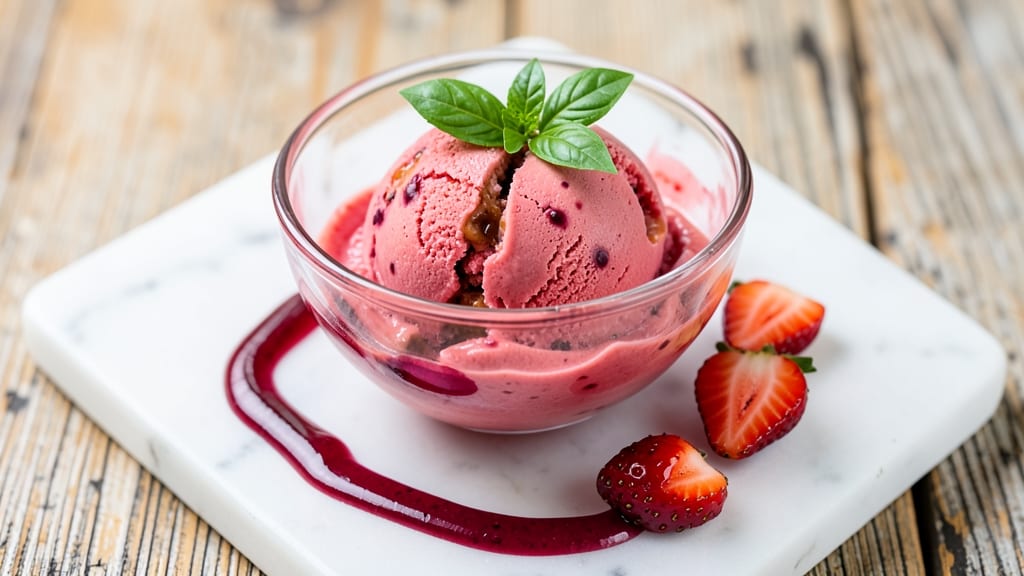
This strawberry gelato with eggs recipe delivers restaurant-quality silkiness without an ice cream maker—just a few key ingredients and precise technique. The egg yolks create a velvety custard base while strawberries infuse vibrant flavor, and the secret to avoiding iciness lies in proper freezing and stirring.
I perfected this method after years of experimenting with homemade gelato, and it’s become my go-to for summer desserts that taste like a trip to Italy.
The foundation of great gelato is balance: rich, creamy dairy from egg yolks and heavy cream, sweetened just enough to let the strawberries shine. Fresh or frozen fruit works equally well, but puréeing the strawberries first ensures smooth texture without seeds.
The key steps—cooking the custard to 170°F, straining it thoroughly, and freezing in stages—transform simple ingredients into something luxurious.
What you’ll end up with is creamy, dreamy gelato with a bright strawberry flavor that’s neither too sweet nor too tart. The texture stays silky even after hours in the freezer, thanks to the egg custard’s natural fat content.
This recipe is foolproof for beginners but impressive enough for guests, and it scales easily for parties or meal prep.
Optional variations like vanilla extract, a splash of bourbon, or toasted almonds add depth, but the classic version is already unforgettable. Serve it immediately for soft-scoop texture or let it firm up slightly for elegant slices. Here’s how to make it perfectly every time.
Ingredients for strawberry gelato recipe with eggs
Six egg yolks and two cups of strawberries create velvety gelato with restaurant-quality texture.
| Ingredient | Amount | Notes |
|---|---|---|
| Fresh Strawberries 🍓 | 2 cups | Hull and purée for smooth texture |
| Large Egg Yolks 🥚 | 6 whole | Room temperature for best emulsification |
| Heavy Whipping Cream 🥛 | 1 ½ cups | Full-fat for maximum creaminess |
| Granulated Sugar 🍚 | 1 cup | Adjust to taste for sweetness balance |
| Whole Milk 🥛 | ½ cup | Warmed to enhance custard texture |
| Unsalted Butter 🧈 | 2 tbsp | Cold, cut into small cubes |
| Vanilla Extract 🍃 | 1 tsp | Pure Madagascar preferred |
| Lemon Juice 🍋 | 1 tbsp | Freshly squeezed for brightness |
| Diamond Crystal Kosher Salt 🧂 | ¼ tsp | Fine grain for delicate seasoning |
| Light Corn Syrup 🍯 | 2 tbsp | Prevents iciness during freezing |
| Granulated Sugar (for freezing) 🍚 | ¼ cup | Fine texture for ideal consistency |
The strawberries deserve premium treatment here. Local farmers market varieties with vibrant red hues and minimal seeds ensure the purée stays smooth. If using frozen berries, thaw and drain excess liquid first—water dilutes the custard. For the egg yolks, organic pasture-raised eggs from Whole Foods or Trader Joe's provide richer flavor, but any high-quality yolks work. The heavy cream should be cold straight from the fridge to prevent premature whipping during cooking. Never use ultra-pasteurized milk, as it curdles under heat—organic whole milk from the dairy aisle is ideal.
No vanilla extract? Seeds from one vanilla bean steeped in warm milk work beautifully. Short on strawberries? Raspberries or blackberries at half the amount add depth, though texture may vary slightly. The corn syrup is non-negotiable for texture—it prevents iciness during freezing. If you prefer less sweetness, reduce the granulated sugar to 3/4 cup and compensate with extra lemon juice. For a richer flavor, toast 1/4 cup sliced almonds and fold them in during the last stirring before serving. The butter should be cold and cubed to create silky pockets of fat.
This gelato must be frozen in stages for optimal texture. After the initial freezing, let it sit at room temperature for 15 minutes before the second freeze—this prevents rock-hard consistency. Store in an airtight container with parchment paper between layers to prevent freezer burn. Portion into 1/2 cup servings for easy scooping. The gelato keeps for 2 weeks in the freezer, though it's best enjoyed within 5 days for peak creaminess. For serving, let it soften for 5 minutes before scooping to achieve that perfect soft-serve texture.
Why You'll Love This Recipe
- No Chopping Chaos: I just toss whole strawberries into the blender—no hulling, no seeds, no mess. The texture’s still perfect, and honestly? It’s the easiest way to get that luscious, seed-free gelato every time.
- Egg Yolks = Magic Creaminess: That egg yolk base makes it ridiculously smooth—like a cross between a creamy milkshake and Italian gelato. No grainy ice crystals here, just velvety richness that’ll have you licking the bowl.
- Weekend or Weeknight Fix: Make a big batch on Sunday, and it’s your go-to dessert for days. Freezes beautifully, and I’ve served it at potlucks, date nights, or even as a quick after-dinner treat when I’m too tired to bake.
- Budget-Friendly Luxury: Fresh strawberries in season? Cheap. Egg yolks stretch the cream. This tastes like a $10 gelato shop, but I’m paying pennies. Plus, leftovers? Just scoop and enjoy—no waste, all flavor.
Step-by-step instructions for strawberry gelato with eggs
Mastering this egg-based gelato delivers restaurant-quality texture without an ice cream maker.
Prepare the Strawberry Purée
Hull and chop the 2 cups fresh strawberries into small, even pieces. Transfer them to a saucepan and cook over medium heat for 5-7 minutes, stirring occasionally, until they break down into a smooth purée. The mixture should reduce slightly and develop a vibrant red color.
Strain the purée through a fine-mesh sieve into a clean bowl to remove any seeds, pressing gently with a spoon to extract all the liquid. This ensures your gelato will have a silky, seedless texture. Let the purée cool completely to room temperature before using it in the custard base.
Create the Custard Base
In a medium saucepan, combine the strawberry purée, 1 cup granulated sugar, 0.5 cup whole milk, 1 tbsp lemon juice, and 0.25 tsp diamond crystal kosher salt. Stir over medium-low heat until the sugar dissolves completely and the mixture reaches 160°F. Remove from heat and let it steep for 10 minutes to infuse the flavors.
In a separate bowl, whisk together the 6 whole large egg yolks until they're pale and slightly thickened. Slowly temper the yolks by whisking in 1 cup of the warm strawberry mixture, then return the entire mixture to the saucepan. Cook over low heat, stirring constantly with a wooden spoon, until the custard thickens enough to coat the back of the spoon—this should take about 5-7 minutes. The custard should reach 170°F but not boil.
Incorporate Cream and Finishing Ingredients
Remove the custard from heat and stir in the 1.5 cups heavy whipping cream, 2 tbsp light corn syrup, 2 tbsp unsalted butter (cut into small cubes), and 1 tsp vanilla extract. The butter should melt completely, and the mixture should be smooth and homogeneous. Let the custard cool to 40°F—this is crucial for preventing ice crystals during freezing.
Real talk: Don't rush this cooling step. Place the bowl over an ice bath, stirring occasionally, to speed up the process without scrambling the eggs. Once cooled, cover the custard with plastic wrap (pressed directly onto the surface to prevent a skin from forming) and refrigerate for at least 4 hours or overnight.
Freeze for Silky Perfection
Transfer the chilled custard to a shallow, airtight container (like a rectangular baking dish). Sprinkle the 0.25 cup granulated sugar (for freezing) evenly over the surface—this prevents iciness by creating tiny ice crystals that mimic the texture of traditional gelato.
Freeze for 4 hours, then remove from the freezer and stir vigorously with a fork or spatula to break up any ice crystals and distribute the sugar evenly. Repeat this process every 45 minutes for a total of 4-6 hours until the gelato reaches a creamy, scoopable consistency. The final texture should be smooth, dense, and velvety—not icy or grainy.
Serve and Enjoy
Once fully frozen, let the gelato sit at room temperature for 5-10 minutes before scooping to achieve the perfect creamy texture. Serve immediately in chilled bowls, garnished with fresh strawberry slices or a drizzle of reduced strawberry sauce if desired. The gelato should hold its shape slightly when scooped but still melt gently on the tongue.
This method guarantees a rich, egg-enriched texture that's far superior to traditional fruit sorbets. The balance of sweetness from the sugar and corn syrup, brightened by the lemon juice, creates a harmonious flavor profile that highlights the natural sweetness of the strawberries.
Pro Tips For Making Strawberry Gelato Recipe With Eggs
- STRAIN LIKE YOUR LIFE DEPENDS ON IT: That pulpy strawberry sludge in your gelato? It’s a dealbreaker. After blending, pour the mixture through a fine-mesh sieve or cheesecloth into a clean bowl—twice if you’re feeling fancy. I learned this the hard way when my first batch had texture like a fruit smoothie. (Yes, even if you’re impatient like me.)
- COOK YOLKS LOW AND SLOW: Heat that egg-yolk sugar mixture over a double boiler until it hits 170°F (77°C)—no higher. I used to rush it, and the yolks either curdled or tasted like cooked eggs. A candy thermometer is your friend here; trust the temp, not the eye.
- WHIP CREAM TO STIFF PEAKS—NO SHORTCHANGING: The moment you stop whipping is when the gelato loses its soul. Fold in that whipped cream when it holds stiff peaks, not just soft ones. I skipped this once and ended up with a pudding-like mess that tasted like melted ice cream. (Your future self will thank you.)
- USE COLD MILK AND CREAM: Chill your milk and heavy cream in the fridge for at least 30 minutes before mixing. Cold dairy whips better and blends smoother with the warm yolk mixture. I tried room-temp once—disaster. The texture turned grainy, and the flavor lost its brightness.
Troubleshooting great strawberry gelato recipe with eggs
Custard Curdling
If your custard separates or curdles during cooking, it’s usually from overheating or adding cold ingredients too quickly. I’ve ruined more custards than I’d admit by letting the temperature climb past 170°F—the yolks scramble if they hit 180°F.
Always whisk constantly over low heat, and temper the yolks by mixing in warm strawberry purée first. For extra insurance, whisk the yolks with a pinch of salt first—the salt helps stabilize the proteins. 💡
Icy Texture
Even with corn syrup, gelato can develop ice crystals if it freezes too quickly or isn’t stirred often enough. To prevent this, spread the custard in a shallow container and sprinkle the 1/4 cup sugar on top before freezing—it creates tiny ice nuclei that prevent large crystals.
Stir every 45 minutes during the 4-6 hour freezing process, and avoid opening the freezer door frequently. If it’s already icy, let it sit at room temperature for 10 minutes, then blend briefly with an immersion blender to smooth it out.
Strawberry Flavor Fading
If your gelato tastes more like sugar than strawberries, the fruit wasn’t cooked long enough to infuse the custard. Simmer the strawberry purée with the sugar and milk until it reaches 160°F, then let it steep for 10 minutes off the heat before mixing with the yolks.
For extra depth, add 1 tsp strawberry extract or steep 1 tbsp freeze-dried strawberry powder in the warm milk before straining. I’ve also found that using slightly underripe strawberries (still firm but vibrant) concentrates the flavor better than overly ripe ones.
Grainy Consistency
Gritty texture usually means seeds or undissolved sugar. Always strain the strawberry purée through a fine-mesh sieve, pressing hard to extract every bit of liquid. If you skipped the straining step, blend the purée briefly with an immersion blender before mixing with the custard.
For stubborn grains, add 1 extra tbsp corn syrup and refreeze, stirring every 30 minutes. The syrup lowers the freezing point, creating a smoother mouthfeel.
Egg Taste Overpowering
If your gelato tastes like raw eggs, the yolks weren’t cooked long enough to fully emulsify. The custard should coat the back of a spoon when stirred—this means it’s reached 170°F and the proteins have fully set.
To mask any lingering egginess, add 1/2 tsp vanilla bean paste or a splash of bourbon (just 1 tsp) to the finished custard before freezing. The alcohol also lowers the freezing point slightly, improving texture.
Freezer Burn
To prevent freezer burn, press plastic wrap directly onto the custard’s surface before refrigerating, then transfer to an airtight container with parchment paper between layers. If you see ice crystals forming on the surface, scrape them off before stirring—exposed areas dry out and develop off flavors.
For long-term storage, portion into 1/2 cup servings in small, freezer-safe containers. The gelato will keep for 2 weeks but tastes best within 5 days** for peak creaminess.
Nutrition facts
Frequently asked questions
Can I use frozen strawberries instead of fresh?
Yes, but you’ll need to thaw and drain them first. Frozen berries often release excess liquid when cooked, which can dilute your custard. Spread them on a paper towel to absorb moisture before puréeing, or use 1.5 cups frozen strawberries instead of 2 cups fresh to account for the difference.
Why does my gelato turn out grainy?
Graininess usually comes from seeds or undissolved sugar. Always strain the strawberry purée through a fine-mesh sieve and press hard to extract all liquid. For extra smoothness, blend the purée briefly with an immersion blender before mixing with the custard. If it’s already grainy, add 1 extra tbsp corn syrup and refreeze, stirring every 30 minutes.
How do I make this without an ice cream maker?
This recipe is designed specifically for no-churn gelato! The key is the corn syrup and proper stirring technique. Freeze the custard in stages, stirring every 45 minutes for 4-6 hours to break up ice crystals. The sugar sprinkled on top before freezing also helps create a silky texture by preventing large ice formations.
Can I substitute the egg yolks with something else?
Not recommended for this recipe—the yolks create the signature custard texture that makes gelato rich and velvety. However, if you have an egg allergy, you could try a vegan gelato base using aquafaba (chickpea brine) or coconut cream, though the texture will differ significantly. The custard method relies on egg proteins for its unique mouthfeel.
How long will this gelato keep in the freezer?
For best quality, enjoy within 5 days—it stays creamy and flavorful that long. After that, it’ll keep for up to 2 weeks but may develop ice crystals. To extend freshness, portion into 1/2 cup servings in airtight containers with parchment paper between layers. Avoid refreezing thawed gelato, as it ruins the texture.