
Beverages
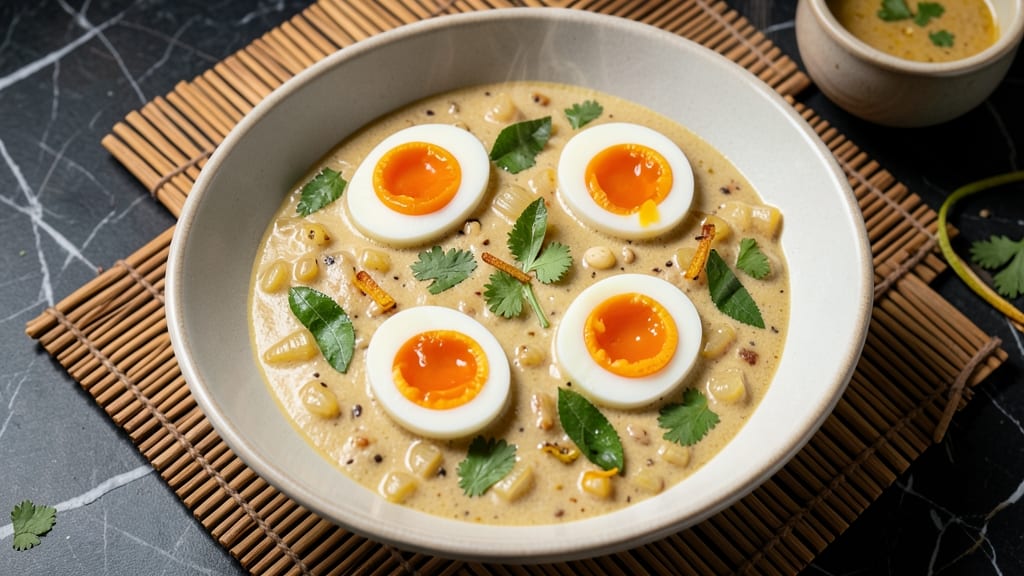
This steamed egg curry transforms simple eggs into a luxurious, fragrant dish with velvety coconut and aromatic herbs. 🌿 The secret lies in gently steaming the eggs until their yolks turn into silky, golden clouds—no overcooking, just perfect texture.
I first discovered this technique during a trip to Kerala, where it’s a staple breakfast, and it’s since become my go-to for elegant yet effortless vegetarian meals.
The rich coconut base builds flavor gradually with toasted spices and fresh herbs, creating a balance of warmth and brightness. Unlike traditional curries that rely on simmering, this method preserves the eggs' delicate texture while infusing them with the surrounding aromas.
The result is a dish that’s both comforting and refined—ideal for brunch or a light dinner.
What makes this recipe special is how the steamed eggs absorb the coconut curry’s essence without losing their natural richness. The dish serves beautifully as a main course or appetizer, especially when paired with fluffy basmati rice or crusty bread.
Every bite delivers a harmonious blend of creamy, tangy, and herby notes that feel indulgent yet balanced.
Ready in under an hour, this curry requires minimal active time but delivers restaurant-quality results. The key steps—preparing the spice paste, simmering the coconut base, and steaming the eggs—are straightforward once you understand the technique.
Whether you’re cooking for guests or treating yourself, this dish proves that simplicity can be luxurious.
Ingredients for steamed egg curry
Elegant yet simple ingredients transform ordinary eggs into velvety, fragrant curry perfection.
| Ingredient | Amount | Notes |
|---|---|---|
| Large Eggs 🥚 | 8 whole | Room temperature for even cooking |
| Coconut Milk 🥥 | 1 ½ cups | Full-fat for creaminess |
| Fresh Cilantro 🌿 | ½ cup | Stems removed, finely chopped |
| Fresh Curry Leaves 🌿 | ¼ cup | Dried substitute at 1/3 amount |
| Yellow Onion 🧅 | 1 medium | Finely diced, about 1 cup |
| Garlic Cloves 🧄 | 6 cloves | Minced for aromatic base |
| Ginger Root 🌿 | 1 inch | Peeled, grated finely |
| Green Chilies 🌶️ | 2 whole | Slit lengthwise for heat |
| Tomatoes 🍅 | 2 medium | Ripe, diced for sauce |
| Coconut Oil 🫒 | 2 tbsp | For toasting spices |
| Ground Turmeric 🌿 | ½ tsp | Fresh root preferred |
| Ground Cumin 🌿 | ½ tsp | Toasted for depth |
| Ground Coriander 🌿 | ½ tsp | Freshly ground preferred |
| Salt 🧂 | 1 tsp | Kosher or sea salt |
| Lemon Juice 🍋 | 1 tbsp | Freshly squeezed |
The coconut milk is non-negotiable—full-fat canned from Thai Kitchen or Goya delivers the richest texture. Fresh curry leaves elevate the dish but can be tricky to find; Indian grocery stores or online retailers like Spicewalla carry them year-round. For the tomatoes, San Marzano if you want to splurge, but any ripe, juicy variety works. The eggs should be large or extra-large for that luxurious yolk-to-white ratio. Toast your spices in coconut oil until fragrant—this builds the aromatic foundation.
No curry leaves? Dried curry powder at half the amount works in a pinch, though it lacks the same floral brightness. Substituting coconut milk? Heavy cream thinned with vegetable broth mimics the richness, but texture will differ. For the green chilies, jalapeños or serranos add heat without altering the dish's essence. The ginger and garlic should be freshly grated and minced—pre-minced jarred versions lack the punch. If you're short on time, frozen chopped ginger and garlic from Trader Joe's are surprisingly good.
This curry reheats beautifully—gentle warming on the stovetop preserves the eggs' texture. Store leftovers in an airtight container for up to 3 days, though the eggs may firm up slightly. For make-ahead prep, assemble the curry base without eggs, then steam the eggs separately and add just before serving. The dish pairs perfectly with jasmine rice or naan bread, both of which absorb the coconut flavors deliciously. Freeze the sauce portion (without eggs) for up to 3 months—just reheat gently and steam fresh eggs when ready.
Why You'll Love This Recipe
- No Chopping Chaos: I swear by this trick—just slice the onion once, let it soften in the coconut milk, and the curry leaves do all the work. The eggs steam right in the pot, so no flipping or frying stress.
- Creamy Without the Guilt: That coconut milk? It turns this into a velvety dream, but the curry leaves keep it bright and aromatic—not heavy. Honestly, my kids ask for seconds before I even finish serving.
- Leftover Goldmine: Steamed eggs hold up perfectly—reheat with a splash of water, and it’s like you made it fresh. Pack it for lunches or freeze portions; the texture stays tender, not rubbery.
- Budget Bright Spot: Eggs and onions are cheap, but the curry leaves and cilantro make it feel fancy. I’ll be real: this feeds four for under $5, and the flavor punches way above its price.
Step-by-step instructions for steamed egg curry
Here's the precise method for achieving silky yolk centers and fragrant coconut-infused curry sauce.
🍳 Step 1: Prepare the Aromatic Base
Heat the 2 tablespoons coconut oil in a heavy-bottomed pot over medium heat until shimmering but not smoking. Add the 1 medium yellow onion and cook for 5-6 minutes until translucent and slightly caramelized at the edges.
Add the 6 cloves garlic, 1 inch ginger root, and 2 whole green chilies (slit lengthwise). Stir constantly for 1-2 minutes until the raw aroma disappears and the garlic turns golden. Real talk: this is where the magic starts—properly toasting your aromatics builds the foundation for depth of flavor.
Next, add the 0.5 teaspoon ground turmeric, 0.5 teaspoon ground cumin, and 0.5 teaspoon ground coriander. Stir for 30 seconds until the spices bloom and fill your kitchen with their warm, earthy aroma. If you're using fresh curry leaves, add the 0.25 cup fresh curry leaves now and let them sizzle for 30 seconds before moving to the next step.
🍳 Step 2: Build the Tomato-Coconut Sauce
Add the 2 medium tomatoes (diced) to the pot and cook for 4-5 minutes until they break down into a thick paste. This step is crucial—you want the tomatoes to soften completely and release their juices, which will form the base of your sauce.
Pour in the 1.5 cups coconut milk and stir well. Bring the mixture to a gentle simmer over medium-low heat, then reduce to the lowest setting. Let it cook uncovered for 8-10 minutes until the sauce thickens slightly and the coconut aroma becomes prominent. You'll know it's ready when the sauce coats the back of a spoon and the oil begins to separate slightly on top.
Season with the 1 teaspoon salt and stir in the 1 tablespoon lemon juice. Taste and adjust seasoning—this is your flavor checkpoint. The sauce should be balanced between the richness of coconut, the acidity of lemon, and the warmth of the spices. If it needs more brightness, add a splash of water or more lemon juice.
👨🍳 Step 3: Prepare the Eggs for Steaming
While the sauce simmers, prepare the 8 whole large eggs. Gently place each egg into a small heatproof ramekin or egg cup (about 3-ounce size). Arrange them in a steamer basket, ensuring they're not touching each other. This spacing prevents them from sticking and allows steam to circulate evenly around each egg.
Bring a pot of water to a gentle simmer (not a rolling boil) and place the steamer basket with eggs inside. Cover and steam for 6-7 minutes until the whites are set but the yolks remain runny. Here's the thing—oversteaming will turn the yolks rubbery, so watch closely. You want them just firm enough to hold their shape when gently shaken, but still liquid inside.
🥘 Step 4: Combine and Finish
Carefully remove the steamed eggs from the basket and place them gently into the coconut sauce. The heat of the sauce will help maintain the eggs' temperature while they absorb the flavors. Let the eggs sit in the sauce for 2-3 minutes to warm through.
Garnish each serving with the 0.5 cup fresh cilantro, chopped finely. The cilantro adds a fresh contrast to the rich coconut and spiced eggs. Serve immediately with steamed basmati rice or crusty naan bread to soak up every last drop of that luxurious sauce.
Each bite should deliver a perfect balance: the silky, warm egg yolk contrasting with the fragrant, slightly tangy coconut curry. The spices should dance on your palate without overpowering, and the fresh cilantro should brighten each mouthful. This is the moment that matters—where all your preparation comes together in perfect harmony.
Pro Tips For Making Steamed Egg Curry
- Crack Eggs Gently: Use a spoon to tap each egg directly into the simmering coconut milk—no splashing. I learned this the hard way when I dropped a whole egg into the pot and ended up with a scrambled mess instead of silky steamed eggs.
- Bloom Curry Leaves First: Toss the curry leaves into the hot oil before onions. Let them sizzle for 10 seconds until they darken slightly—this releases their aroma and prevents them from turning bitter later. (Yes, even if you’re impatient like me.)
- Don’t Overmix Coconut Milk: Stir the coconut milk just enough to blend, then let it sit undisturbed while the eggs steam. Constant stirring breaks the emulsion and makes the curry look greasy. Trust the process—it’ll thicken on its own.
- Reserve Some Cilantro: Chop half the cilantro finely for the curry, but keep the rest whole for garnish. The bright, intact leaves add a pop of color and a fresh finish that makes the dish feel restaurant-worthy. (Your future self will notice.)
Pro cooking tips for this recipe
Steaming Perfection
The secret to flawless steamed eggs lies in temperature control—never let the water boil vigorously. Use a steamer basket (or a colander) placed over a pot with 1-2 inches of water at a gentle simmer (small bubbles, not rolling).
I recommend a stainless steel steamer from OXO for even heat distribution. 🌡️
Arrange eggs in heatproof ramekins (or small egg cups) with ½ inch of space between them to prevent sticking. For extra insurance, lightly grease the ramekins with coconut oil before adding eggs. The steaming time is critical: 6-7 minutes for large eggs—any longer risks rubbery yolks.
Spice Blooming
Toast your spices in coconut oil over medium heat until they sizzle and release aroma—this step is non-negotiable. I use Penzeys Spices for their high-quality blends. Bloom the turmeric, cumin, and coriander for 30 seconds to unlock their full flavor potential.
Fresh curry leaves should dance and crisp for 30 seconds—if they burn, reduce heat immediately.
For deeper flavor, add a pinch of black pepper (½ tsp) when blooming spices. The pepper’s warmth complements the coconut’s richness beautifully. Pro tip: If your kitchen lacks fresh curry leaves, dried curry powder (¼ tsp) works in a pinch, though it lacks floral brightness.
Sauce Thickening
The coconut sauce should coat the back of a spoon but remain light enough to cling to the eggs. Simmer uncovered on lowest heat to prevent curdling. Stir occasionally to avoid scorching—this is where many home cooks go wrong. If the sauce separates, whisk in 1 tbsp water to re-emulsify.
For extra richness, stir in 1 tsp honey or 1 tsp sugar during the final 2 minutes of simmering. This balances the acidity of lemon juice and enhances the coconut’s natural sweetness. Taste frequently—adjust salt and lemon as needed.
Egg Placement
When adding steamed eggs to the sauce, use a slotted spoon to avoid breaking yolks. Let them soak for 2-3 minutes—this allows the sauce to infuse without overcooking.
For presentation, arrange eggs in a single layer in a shallow dish and ladle sauce over them. Garnish with cilantro just before serving to preserve freshness.
To reheat leftovers, warm the sauce separately and gently fold in eggs over low heat for 2-3 minutes. Never microwave—it turns yolks grainy. Store leftovers in an airtight container for up to 3 days (sauce only freezes well for 3 months).
Nutrition facts
Frequently asked questions
Can I use this recipe with store-bought curry paste instead of fresh spices?
Yes, but with adjustments! Use 1 tablespoon of mild curry paste (like Thai Kitchen) and reduce the coconut milk to 1 cup to balance the saltiness. Add 1 teaspoon more turmeric to compensate for the missing fresh aromatics. For best results, simmer the paste in coconut oil for 3 minutes to deepen the flavors.
What if I don't have curry leaves? Can I substitute them?
Use ¼ teaspoon dried curry powder or combine ¼ teaspoon each of dried fenugreek and mustard seeds for a similar earthy depth. For a floral note, add ½ teaspoon dried basil or ¼ teaspoon dried oregano. Remember, fresh curry leaves can't be fully replicated, but these will add complexity.
How do I adjust this recipe for fewer/more servings?
Scale all ingredients proportionally: 4 servings = 8 eggs, 6 servings = 12 eggs. For the sauce, maintain the 1:1 ratio of eggs to coconut milk (e.g., 6 eggs = 1.5 cups coconut milk). Keep the spice quantities the same unless adjusting for heat preferences. The steaming time remains 6-7 minutes regardless of batch size.
Why did my egg yolks turn rubbery? What went wrong?
Overcooking is the most likely cause—steaming for longer than 7 minutes or using boiling water instead of a gentle simmer. Also check your egg freshness: older eggs release more water, making them firmer. For perfect yolks, use room-temperature eggs and steam at 180°F (82°C) max. A kitchen thermometer helps monitor water temperature.
Can I make this curry ahead of time?
Yes! Prepare the sauce up to 3 days ahead (store in an airtight container) and steam eggs fresh when ready to serve. For make-ahead convenience, cook the sauce without eggs, then reheat gently and steam fresh eggs just before combining. The sauce freezes beautifully for 3 months—thaw overnight in the fridge. Never freeze with eggs included.