
Snacks
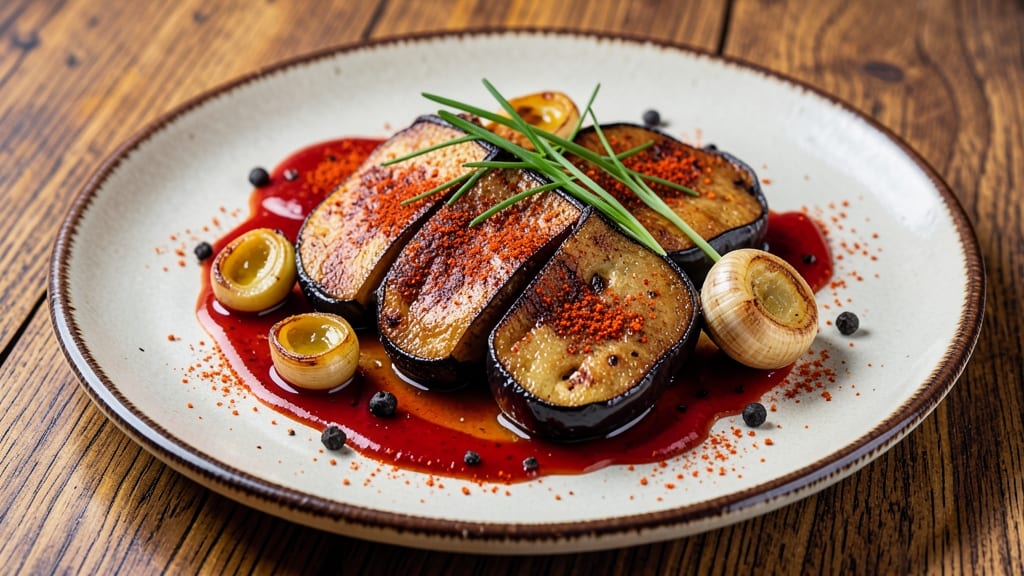
This spicy roasted eggplant recipe transforms simple vegetables into a smoky, charred masterpiece with layers of heat that linger long after the last bite. The key lies in high-heat roasting that caramelizes the eggplant’s natural sugars while developing deep, smoky flavors from the spices. I’ve perfected this method to balance tender, meaty flesh with crispy edges—ideal for vegans craving bold, satisfying textures without compromise.
What makes this dish special is the dual-roasting technique: first charring the eggplant over direct heat for dramatic flavor, then finishing in the oven to ensure even cooking.
A blend of smoked paprika, cayenne, and garlic powder creates a mild-to-medium heat that’s customizable—reduce the cayenne for subtle warmth or double it for fiery intensity. The eggplant absorbs these spices beautifully, turning into a dish that’s both hearty and vibrant.
By the end, you’ll have eggplant slices with glossy, caramelized edges and tender centers, infused with smoky, spicy depth. Serve it with a cooling yogurt sauce (or vegan yogurt) to balance the heat, alongside fluffy basmati rice or crusty bread for soaking up every last bit.
This recipe proves roasted eggplant can be a star—rich, flavorful, and impossible to resist.
The beauty of this method is its flexibility: swap in bell peppers or zucchini for variety, or adjust the spice level to suit your taste. Perfect as a main dish, appetizer, or even a bold side, it’s a weeknight game-changer that delivers restaurant-quality results without the fuss. Let’s get started!
Ingredients for spicy roasted eggplant
Simple ingredients transform into restaurant-quality spicy roasted eggplant with charred edges.
| Ingredient | Amount | Notes |
|---|---|---|
| Large Eggplant 🍆 | 2 whole | Japanese or Italian varieties preferred |
| Extra-Virgin Olive Oil 🫒 | ½ cup | High-quality, fruity variety |
| Smoked Paprika 🌶️ | 2 tbsp | For deep smoky flavor |
| Ground Cayenne Pepper 🔥 | 1 tsp | Adjust for heat preference |
| Garlic Powder 🧄 | 1 tbsp | Freshly ground preferred |
| Onion Powder 🧅 | 1 tbsp | For extra depth |
| Sea Salt 🧂 | 1 ½ tsp | Diamond Crystal preferred |
| Ground Black Pepper 🌶️ | ½ tsp | Freshly cracked |
| Fresh Lemon Juice 🍋 | 2 tbsp | Brightens flavors |
| Vegan Yogurt 🥛 | ½ cup | Unsweetened coconut or almond |
| Fresh Cilantro 🌿 | ¼ cup | Chopped for garnish |
| Basmati Rice 🌾 | 1 cup | Uncooked, for serving |
The eggplant is the star—Japanese or Italian varieties have fewer seeds and more tender flesh, making them ideal for this dish. Whole Foods or local farmers markets often carry these varieties, or check the produce section of your grocery store for eggplants labeled 'Asian' or 'Italian.' Look for firm, glossy skin with no soft spots—this ensures the best texture. If you can't find these, regular eggplant works fine, but expect slightly more seedy flesh. The key to great roasted eggplant is high heat—char those edges for maximum flavor development.
No smoked paprika? Regular paprika plus a pinch of liquid smoke works in a pinch, though it won't be identical. Fresh garlic instead of powder? Use 3 cloves minced and toast them in the oil first for deeper flavor. For the yogurt sauce, coconut or almond-based vegan yogurt is best—avoid soy-based if you want a lighter texture. The lemon juice is non-negotiable though; it brightens the smoky, spicy flavors and prevents the dish from tasting flat. If you're sensitive to heat, reduce the cayenne to 1/2 teaspoon or swap it for red pepper flakes at half the amount.
Store the roasted eggplant in an airtight container for up to 4 days—it actually tastes better the next day as the flavors meld. The yogurt sauce keeps for 3 days in the fridge, though I recommend making it fresh each time for the best texture. For extra convenience, pre-cook the rice and store it separately. This dish reheats beautifully—just warm it gently in a skillet with a splash of water to revive the crispy edges. Portioning the eggplant into single servings before storing makes it perfect for meal prep.
Why You'll Love This Recipe
- One-Pan Magic: I swear by this recipe—just slice, toss, and roast. No chopping boards, no extra pans, and honestly? The eggplant caramelizes into crispy, smoky perfection while you’re still deciding what to drink with it.
- Smoky Heat Fix: That smoked paprika and cayenne combo isn’t just spice—it’s depth. The eggplant soaks up the oil and spices until every bite has this charred, slightly sweet, fiery punch. (Yes, even on a Tuesday night.)
- Meal Prep MVP: Roast a big batch on Sunday, and you’ve got a week’s worth of snacks, salads, or pasta toppings. My kids grab it straight from the fridge—no reheating needed—because the flavors only get better as it sits.
- Budget Crispy Luxe: Eggplant’s cheap, but it feels fancy here. A splash of olive oil, a pinch of cayenne, and you’ve got something that tastes like a $20 restaurant dish. (Between us, my wallet thanks me every time.)
Step-by-step instructions for spicy roasted eggplant with charred edges
Transform simple eggplant into a smoky, spicy masterpiece with perfectly charred edges and tender flesh.
Prep and Marinate the Eggplant
Preheat your oven to 425°F to give it time to fully heat up. Cut the 2 whole large eggplants lengthwise into ½-inch thick slices, yielding about 8 slices total. I use a sharp chef's knife for this—it gives you cleaner cuts and prevents crushing the flesh.
Create the marinade by whisking together the ½ cup extra-virgin olive oil, 2 tablespoons smoked paprika, 1 teaspoon ground cayenne pepper, 1 tablespoon garlic powder, 1 tablespoon onion powder, 1½ teaspoons sea salt, and ½ teaspoon ground black pepper in a large bowl. The mixture should be thick but pourable. Place the eggplant slices in the bowl and turn to coat evenly on both sides. Let them marinate for 15-20 minutes—this ensures the spices penetrate and the skin develops maximum flavor.
Roast Until Charred and Tender
Line two large baking sheets with parchment paper for easy cleanup. Arrange the marinated eggplant slices in a single layer, leaving ½-inch space between each piece. This prevents steaming and ensures even browning. Roast for 20-25 minutes, flipping once halfway through, until the edges are deeply charred and the flesh yields slightly when pressed with a fork.
Here's the thing—don't walk away during this step. The eggplant is ready when it develops those beautiful char lines and the flesh becomes tender but still holds its shape. If you see the edges starting to blacken too quickly, rotate the baking sheet for more even heat distribution. The goal is charred edges with tender, flavorful interior.
Assemble with Yogurt and Fresh Herbs
While the eggplant roasts, cook the 1 cup basmati rice according to package instructions until tender. In a separate bowl, whisk together the ½ cup vegan yogurt and 2 tablespoons fresh lemon juice. This bright, tangy mixture cuts through the smoky heat and adds a creamy contrast.
Once the eggplant is roasted, transfer it to a serving platter. Drizzle the yogurt-lemon mixture evenly over the top, then sprinkle with the ¼ cup chopped fresh cilantro. The herbs add a fresh, vibrant finish that balances the smoky, spicy flavors. Toss gently to distribute the sauce, or serve the yogurt mixture on the side for dipping.
Serve with Perfectly Cooked Rice
Divide the cooked basmati rice among plates and top with the charred eggplant slices. The rice acts as a neutral base that lets the bold flavors of the eggplant shine. For an extra touch, you can lightly toast the rice in a dry skillet for 1-2 minutes before serving to enhance its nutty flavor.
This dish delivers a perfect balance of textures—crispy charred edges, tender eggplant flesh, and creamy yogurt sauce. The smoky heat from the paprika and cayenne pairs beautifully with the bright lemon and fresh cilantro. Serve immediately while the eggplant is still warm and the flavors are at their peak.
Pro Tips For Making Spicy Roasted Eggplant
- SALT THE SLICES FIRST: Toss your eggplant slices in a bowl with 1 teaspoon of salt and let them sit for 15 minutes before roasting. I learned this the hard way—skipping it makes the flesh gummy, and no amount of spice or oil can fix that. Pat them dry afterward, or the oil won’t stick like it should.
- ROAST IN BATCHES: Crowd the pan, and you’ll steam the eggplant instead of crisp it. Use a single layer, and if your sheet pan is small, roast in two batches. High heat (425°F) is non-negotiable—low and slow turns the eggplant into a sad, soggy mess.
- USE THE RIGHT OIL: Extra-virgin olive oil is great for flavor, but it smokes at high heat. For the first 5 minutes, use a neutral oil like avocado or grapeseed to get that initial crust, then swap to EVOO for the rest. Your kitchen won’t smell like burnt toast, and the eggplant will caramelize properly.
- DON’T SKIP THE REST: Pull the eggplant out of the oven when it’s just tender—you’ll finish cooking it with the spices. Tent it with foil and let it sit for 5-10 minutes. This lets the flavors meld and the flesh absorb the smoked paprika and cayenne instead of just sitting there looking half-done. (Yes, even if you’re impatient like me.)
Dietary considerations for this recipe
Vegan-Friendly Foundation
This recipe is naturally vegan—no animal products are used, making it perfect for plant-based diets. The vegan yogurt (coconut or almond-based) adds creaminess without dairy, while the smoked paprika and cayenne deliver bold, spicy flavors. Even the extra-virgin olive oil enhances the dish's richness without compromising dietary needs. 🌱
Gluten-Free Adaptations
All ingredients in this recipe are inherently gluten-free, but double-check your smoked paprika and garlic powder labels—some brands process spices in shared facilities. For extra caution, use certified gluten-free spices.
The basmati rice is naturally gluten-free, but if you're avoiding grains entirely, serve the eggplant with a side of quinoa or roasted sweet potatoes instead.
Spice Level Control
The 1 teaspoon ground cayenne pepper creates a medium heat, but you can adjust it to your taste. For mild heat, reduce to ½ teaspoon or swap for ½ teaspoon red pepper flakes.
If you love fiery flavors, increase to 1½ teaspoons cayenne or add ½ teaspoon chipotle powder for smoky depth. Always taste the marinade before applying it to the eggplant!
Allergen Considerations
This dish is nut-free and dairy-free by default, but if you're sensitive to soy, avoid soy-based vegan yogurts. For a nut-free yogurt, opt for coconut-based brands like So Delicious.
If you're allergic to cilantro, garnish with fresh parsley or dill instead. The recipe is also egg-free and shellfish-free, making it safe for most common allergies.
Low-FODMAP Options
For a low-FODMAP version, reduce the garlic powder to ½ teaspoon or omit it entirely, as garlic can be high in FODMAPs. Skip the onion powder (use ½ teaspoon asafoetida powder instead for depth without onions).
The vegan yogurt should be low-lactose (like coconut-based), and the cilantro is safe in moderation. The eggplant itself is low-FODMAP in small portions.
Nutrition facts
Frequently asked questions
Can I make this spiced eggplant dish without an oven?
For a stovetop version, heat ½ cup olive oil in a large skillet over medium-high heat. Add the marinated eggplant slices and cook for 4-5 minutes per side until deeply charred. Reduce heat to medium-low and cover for 5-7 minutes to finish cooking. The edges won't be as dramatically charred as oven-roasted, but you'll still get tender, flavorful eggplant with a smoky kick.
How do I prevent the eggplant from getting mushy?
Keep slices ½-inch thick and roast at 425°F for 20-25 minutes max—overcooking is the #1 cause of mushiness. Arrange slices in a single layer with space between them to allow air circulation. Flip halfway through and check for tenderness by pressing with a fork. If the flesh holds its shape but yields slightly, it's perfect.
What's the best way to store leftovers?
Store roasted eggplant in an airtight container for up to 4 days—it actually tastes better reheated as flavors meld. For serving, warm gently in a skillet with a splash of water for 2-3 minutes to revive crispy edges. The yogurt sauce keeps separately for 3 days; stir before using. Freezing isn't recommended as textures suffer.
Can I use regular paprika instead of smoked?
Yes, but you'll lose the deep smoky flavor. For best results, use 1½ tablespoons regular paprika + ½ teaspoon liquid smoke to mimic the smokiness. The cayenne and garlic powder will still deliver heat and depth, but smoked paprika creates that signature charred-campfire taste that makes this dish special.
What are good sides to serve with this?
This spicy eggplant pairs beautifully with cooling elements. Try fluffy basmati rice, crusty pita bread, or quinoa to balance the heat. For extra freshness, add a simple cucumber-tomato salad with lemon dressing. The yogurt sauce also makes a great dip for warm naan or roasted zucchini.