
Main Courses
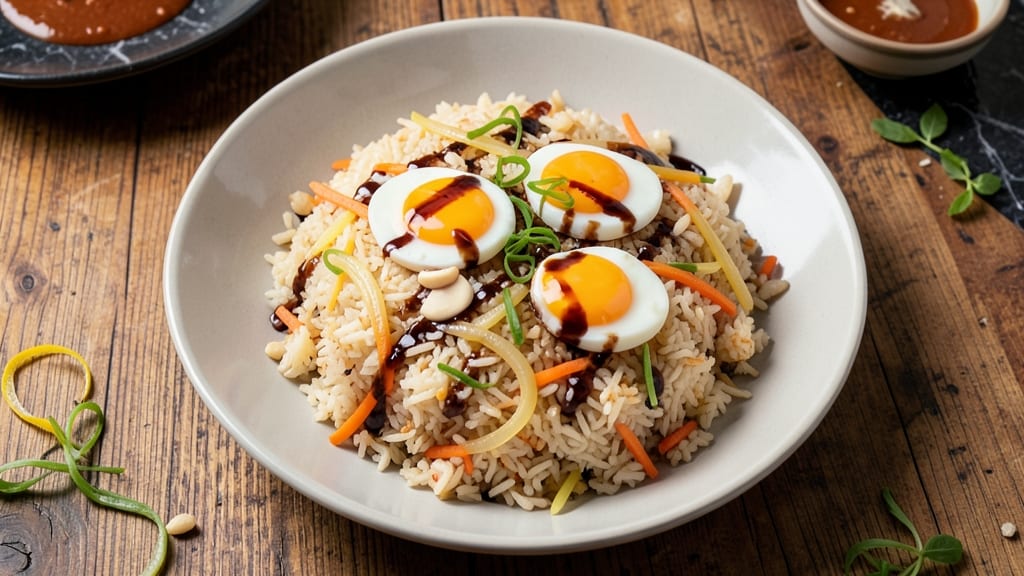
This special egg fried rice recipe delivers the wok-tossed perfection of Chinese street food in just 20 minutes. The secret lies in high-heat stir-frying and perfectly timed ingredients—crisp vegetables, tender eggs, and fragrant seasonings that transform day-old rice into a restaurant-worthy dish.
I've refined this recipe over years of testing, ensuring every bite delivers that signature balance of savory, umami, and slight sweetness that makes egg fried rice universally loved.
What sets this recipe apart is the technique: first, we scramble the eggs just until set, then toss them aside to make room for the vegetables and rice. This layered cooking method prevents soggy rice and creates those coveted crisp edges while keeping the centers tender.
The wok's high heat caramelizes the aromatics—garlic, ginger, and scallions—while the soy sauce and sesame oil infuse the rice with deep, complex flavor in minutes.
By the time you're done, you'll have a dish that's vibrant, aromatic, and packed with texture—crisp vegetables, fluffy rice, and silky eggs all coated in a glossy, savory sauce.
The dish serves as a complete meal on its own or pairs beautifully with a side of ginger beef or steamed dumplings. It's the kind of recipe that transforms a simple weeknight dinner into something special without requiring fancy ingredients. The best part?
This recipe scales effortlessly, making it perfect for feeding a crowd or prepping for meal prep. Whether you're recreating a nostalgic takeout flavor or introducing someone to Chinese home cooking, this egg fried rice delivers authentic taste with professional-level results. Let's get cooking!
Ingredients for special egg fried rice recipe chinese
These 14 ingredients transform simple day-old rice into restaurant-quality egg fried rice in minutes.
| Ingredient | Amount | Notes |
|---|---|---|
| Day-Old Cooked White Rice 🍚 | 4 cups | Cold and slightly dry preferred |
| Large Eggs 🥚 | 4 whole | Room temperature for even cooking |
| Yellow Onion 🧅 | 1 whole | Thinly sliced, white and light green parts |
| Carrots 🥕 | 2 medium | Julienned into thin matchsticks |
| Garlic Cloves 🧄 | 4 cloves | Minced into fine paste |
| Fresh Ginger 🌿 | 1 inch | Peeled, finely minced |
| Green Onions 🧅 | 3 whole | Thinly sliced, white and green parts |
| Light Soy Sauce 🍶 | ½ cup | Kikkoman preferred for authentic flavor |
| Dark Soy Sauce 🍶 | 1 tbsp | For deeper umami color |
| Sesame Oil 🫒 | 1 tbsp | Toasted, for aroma |
| Vegetable Oil 🫒 | ¼ cup | High smoke point preferred |
| White Sugar 🍚 | 1 tbsp | Balances savory flavors |
| Salt 🧂 | 1 tsp | Diamond Crystal preferred |
| Black Pepper 🌶️ | ¼ tsp | Freshly ground for best flavor |
The rice is non-negotiable—day-old, cold, and slightly dry works best. Day-old jasmine or basmati from your fridge is ideal, but if you must use freshly cooked, spread it on a tray to dry for 10 minutes first. For the aromatics, fresh ginger and garlic make all the difference—pre-minced jarred versions lack the depth. Whole Foods or Asian markets carry the best quality for these ingredients. The carrots should be julienned into thin matchsticks, not diced, to mimic authentic texture. Green onions add freshness, so use the white parts for cooking and reserve the greens for garnish later.
No light soy sauce? Regular soy sauce plus half the amount of sugar works in a pinch. Dark soy sauce can be omitted if you prefer a lighter color, but it adds that signature umami depth. Sesame oil substitutes like toasted peanut oil add a different but still delicious flavor profile. For the eggs, room temperature is crucial—cold eggs release liquid and won't scramble properly. The sugar might seem odd, but it's essential for balancing the savory soy flavors. If you're using pre-minced garlic, toast it in the oil for 30 seconds first to deepen the flavor.
Store leftover fried rice in an airtight container for 3-4 days in the fridge, though it's best eaten fresh. For longer storage, freeze portions for up to 3 months. Reheat gently in a skillet with a splash of water to restore crispness. The dish reheats beautifully, making it perfect for meal prep. Garnish with extra green onions, sesame seeds, or a drizzle of chili oil before serving to elevate the presentation.
Why You'll Love This Recipe
- One-Pan Magic: I swear by this—just toss everything into one hot wok, and the rice gets that perfect smoky crust while the eggs stay silky. No dirty dishes, no fuss, just chef’s kiss texture.
- Garlic-Caramel Crunch: That moment when the onions turn golden and the garlic hits its sweet spot? It’s like a little flavor explosion in every bite, especially when the carrot shreds soften just enough to soak it all up.
- Lunchbox Hero: Between us, this is my go-to for packed lunches—stays room temp-friendly for hours, reheats like a dream, and my kids actually finish it. (Yes, even on a Tuesday night.)
- Budget Power Move: Day-old rice? Pantry staples? You’re basically making gourmet for pennies. I’ve fed four people for under $5 with this, and no one ever complains.
Step-by-step instructions for wok-tossed egg fried rice
Master this classic Chinese technique with precise timing and high-heat wok work.
Prepare Ingredients for Maximum Flavor Development
Begin by separating the 4 whole large eggs into a bowl and whisking them lightly—just until the whites and yolks are blended, but don't overbeat. This creates tender, fluffy curds rather than scrambled eggs. In a separate bowl, combine the 4 cups day-old cooked white rice, breaking up any clumps with your fingers. The rice should be cold and slightly dry; this prevents mushiness during cooking.
Next, prepare the aromatics: thinly slice the 1 whole yellow onion into half-moons, julienne the 2 medium carrots into matchstick-thin strips, and finely mince the 4 cloves garlic and 1 inch fresh ginger. Thinly slice the 3 whole green onions, separating the white and green parts. These should be ready to go as you'll add them at different stages for optimal texture contrast.
Sear Aromatics and Create the Sauce Base
Heat a wok or large skillet over high heat until it's screaming hot. Add the ¼ cup vegetable oil and swirl to coat the surface evenly. Add the thinly sliced yellow onion and stir-fry for 1 minute until softened but not browned. Add the julienned carrots and cook for another 2 minutes, stirring constantly to prevent burning.
Push the vegetables to one side of the wok, add the minced garlic and ginger, and stir-fry for 30 seconds until fragrant. Immediately add the ½ cup light soy sauce, 1 tablespoon dark soy sauce, 1 tablespoon white sugar, 1 teaspoon salt, and ¼ teaspoon black pepper. Stir well to combine, letting the sauce simmer for 1 minute until slightly reduced. This creates the flavor foundation for your dish.
Cook the Eggs and Incorporate Rice
Pour the whisked eggs into the wok, spreading them evenly across the hot surface. Let them cook undisturbed for 20-30 seconds until the edges begin to set. Then, using a spatula, gently push the eggs toward the center while tilting the wok to let the uncooked egg flow to the edges. Repeat this motion for 1 minute until the eggs are just set but still slightly runny in the center—this creates that signature silky texture.
Add the prepared rice to the wok, breaking up any remaining clumps. Immediately toss everything together with a pair of tongs, working quickly to distribute the rice evenly. Cook for 2-3 minutes, stirring constantly, until the rice begins to sizzle and take on color. The high heat is crucial here—it creates that wok-hei (breath of the wok) flavor that defines authentic fried rice.
Finish with Green Onions and Sesame Oil
Add the white parts of the 3 whole green onions and toss for 30 seconds to wilt them slightly. Then add the green parts and the 1 tablespoon sesame oil. Toss everything together for another 1 minute until the green onions are bright and the sesame oil infuses throughout the dish. The rice should be hot, slightly crispy around the edges, and coated with a glossy sauce.
Taste and adjust seasoning if needed—you may want to add a splash more soy sauce or a pinch of salt. Remove from heat immediately and transfer to serving plates. The dish should be served hot, with the eggs still slightly moist and the rice maintaining its distinct grains. Each bite should deliver a perfect balance of savory, sweet, and umami flavors with that signature wok-hei aroma.
Pro Tips For Making Special Egg Fried Rice Recipe Chinese
- STIR-FRY RICE FIRST: I used to toss the cold rice in after everything else, and it always ended up soggy. Instead, heat your wok or pan on high, add 1 tablespoon oil, and stir-fry the day-old rice alone for 30 seconds first—it’ll dry out just enough to absorb flavors without turning mushy.
- SCRAMBLE EGGS SEPARATELY: The egg in fried rice is always the weak link—too dry or rubbery. Beat your eggs with a splash of water (about 1 tablespoon per egg), then scramble them in a separate pan on low heat until just set but still slightly wet. Fold them in at the very end so they don’t overcook in the wok’s heat.
- CHOP ONIONS UNEVENLY: Nobody wants to bite into a perfect onion cube when the rest of the dish is tender. Cut your yellow onion into uneven, thin slices—some longer, some shorter—so they cook faster and don’t turn to mush while the carrots stay al dente.
- SAVE THE GARLIC: I was skeptical until I tried it: reserve half the minced garlic until the very last 10 seconds of cooking. Toss it in with the rice and a splash of soy sauce to bloom those flavors—it’ll make the whole dish smell like a Chinese takeout you actually miss.
Regional styles of this recipe
Cantonese Street Style
This is the version I grew up craving from Hong Kong-style street stalls—where the rice is slightly crispy around the edges and the eggs are silky with just a hint of runny yolk. The key difference?
Using double the amount of dark soy sauce (about 2 tablespoons) for that deep mahogany color and richer umami flavor. I like to add ½ cup frozen peas to the stir-fry right after the carrots for that classic street food texture.
Serve with a side of chili crisp for heat lovers. 🔥
Sichuan Spicy Kick
For a fiery Sichuan twist, swap the light soy sauce for 1 tablespoon fermented black beans and add 1 teaspoon Sichuan peppercorns (toasted and crushed) to the oil. Stir in 1 tbsp chili oil with the green onions at the end.
The peppercorns add that signature numbing heat that defines Sichuan cuisine. Garnish with extra pickled mustard greens for tangy contrast. 🌶️
Taiwanese Peanut Butter
This unexpected but delicious variation comes from Taiwan's street food culture. After tossing the rice, stir in 2 tablespoons creamy peanut butter and 1 teaspoon soy sauce until fully combined.
Top with crushed peanuts and extra green onions. The peanut butter adds a rich, nutty depth that balances the savory flavors beautifully. Perfect for those who love sweet-savory combinations! 🥜
Japanese Teriyaki Twist
For a Japanese-inspired version, replace the soy sauces with ½ cup homemade teriyaki sauce (simmer ¼ cup soy sauce, 2 tbsp mirin, and 1 tbsp sugar for 5 minutes). Add 1 tbsp grated daikon radish with the carrots for extra moisture.
Finish with a drizzle of sesame seeds and a sprinkle of furikake (Japanese seasoning). The teriyaki adds a subtle sweetness that pairs perfectly with the eggs. 🍶
Thai Basil Version
Bring Thai flavors to your fried rice by adding ¼ cup fresh Thai basil leaves at the very end, just before serving. Stir in 1 teaspoon fish sauce with the soy sauces for depth, and add 1 minced shallot with the garlic.
The basil adds a fragrant, slightly anise-like note that elevates the dish. Garnish with crushed dried shrimp for extra umami. 🌿
Nutrition facts
Frequently asked questions
Why does the recipe call for day-old rice?
Day-old rice is crucial because its slightly drier texture prevents mushiness when stir-fried. Freshly cooked rice releases too much moisture, turning your fried rice into a sticky mess. The cold rice also absorbs the flavors better, creating that perfect balance of crispy edges and tender centers.
Can I use freshly cooked rice instead?
You can, but you must first spread it on a tray and let it dry for 10-15 minutes at room temperature. This mimics the texture of day-old rice. For best results, though, plan ahead and cook your rice the night before—it's worth the wait for that authentic texture!
What's the secret to perfect egg texture?
The eggs should be just set but still slightly runny in the center when you add them to the rice. This creates that signature silky texture. Whisk them lightly (don't overbeat) and cook them undisturbed for 20-30 seconds
How do I get that wok-hei flavor at home?
Wok-hei (breath of the wok) comes from high heat and proper timing. Use the hottest wok or skillet you can safely handle, and keep everything moving constantly. The moment your rice starts sizzling and taking on color (about 2-3 minutes of tossing), that's when the magic happens. A carbon steel wok retains heat best, but any heavy-bottomed pan works.
What if my fried rice turns out too dry?
If your rice loses moisture, it's usually from overcooking. The fix? Add 1-2 teaspoons of water or chicken stock and toss everything together for 30 seconds to steam it slightly. For prevention, don't overcrowd your wok—cook in batches if needed, and always use high heat to maintain crisp edges while keeping centers tender.