
Breakfast & Brunch
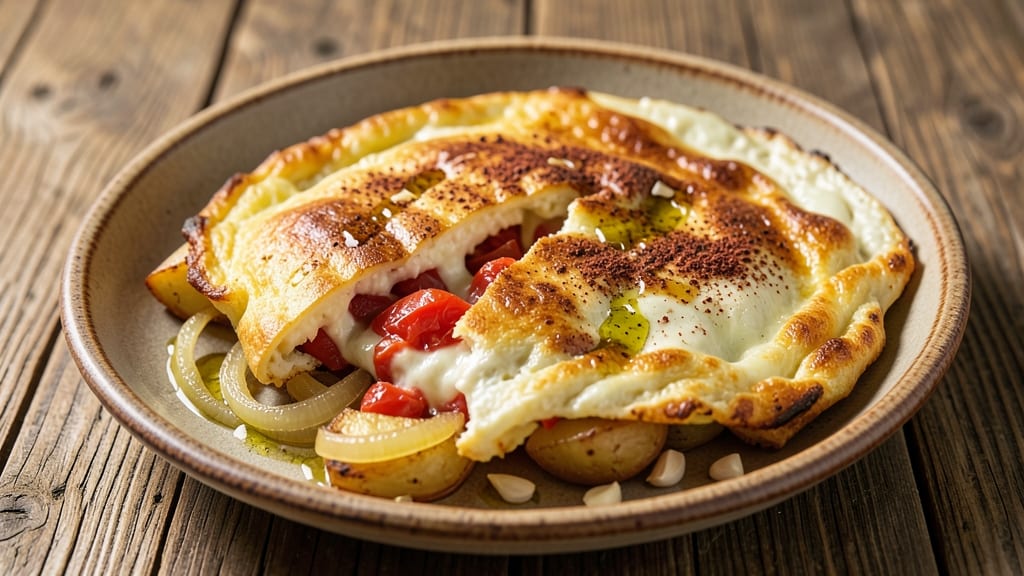
This Spanish egg omelet recipe delivers the heart of Spain in every bite—smoky paprika and garlic infuse tender eggs with deep, savory flavor. 🔥 The traditional tortilla española balances creamy eggs with crisp potatoes and onions, creating a dish that’s both comforting and elegant.
What makes it special is the slow cooking process, where layers form and flavors meld into perfect harmony.
The magic happens in the technique: slicing potatoes thinly, sautéing onions until golden, and cooking the omelet low and slow for even texture. Unlike fluffy American omelets, this version is dense, rich, and slightly runny inside—just as it should be.
The key is patience; rushing ruins the balance of crispy edges and creamy centers.
What you’ll end up with is a restaurant-quality dish that’s equally at home for breakfast or dinner. The smoky paprika adds warmth, while garlic deepens the flavor, making every forkful unforgettable. Serve it warm or at room temperature—it’s delicious either way.
This recipe is perfect for brunch, a light lunch, or even a late-night snack. The versatility of the tortilla means it pairs beautifully with a simple green salad or crusty bread. Once you master this classic, you’ll never go back to basic omelets again.
Ingredients for spanish egg omelet
Eight simple ingredients that transform into Spain's most beloved comfort dish.
| Ingredient | Amount | Notes |
|---|---|---|
| Large Eggs 🥚 | 8 whole | Freshly cracked for best texture |
| Russet Potatoes 🥔 | 2 lb | Thinly sliced for even cooking |
| Yellow Onions 🧅 | 2 whole | Thinly sliced, medium size |
| Extra-Virgin Olive Oil 🫒 | ½ cup | For frying potatoes and onions |
| Smoked Paprika 🌶️ | 1 tbsp | For authentic Spanish flavor |
| Garlic Cloves 🧄 | 6 cloves | Minced for deep flavor infusion |
| Salt 🧂 | 1 ½ tsp | Kosher or sea salt preferred |
| Ground Black Pepper 🌶️ | ½ tsp | Freshly ground for best flavor |
| Fresh Parsley 🌿 | ¼ cup | Chopped for garnish and freshness |
The potatoes are the foundation—Russet potatoes work best because they stay firm when cooked slowly. Grab a couple of 2-pound bags from the grocery store; they're usually pre-washed and ready to slice. Thin slices mean even cooking, so use a mandoline or sharp knife for consistent thickness. Yellow onions add sweetness, but Spanish onions (if you can find them) have a milder, almost caramel-like flavor. Look for firm onions with dry skins—they keep longer and taste fresher. The garlic? Freshly minced is a must, but if you're short on time, pre-minced garlic works in a pinch (just add a pinch extra).
No smoked paprika? Regular paprika plus a pinch of cayenne gets you close, though it won't have that same smoky depth. Fresh parsley wilting? Dried parsley at one-third the amount works, but honestly, fresh is worth the extra minute. The olive oil matters here—extra-virgin gives the best flavor, but any light olive oil will do. If you're making this ahead, cook the potatoes and onions first, then assemble the omelet when ready to serve. The eggs can be beaten up to a day ahead and stored in the fridge for convenience.
This tortilla tastes even better the next day—make extra and store it in the fridge for up to 4 days. To reheat, warm it gently in a skillet over low heat or pop it in the oven at 350°F for 10-15 minutes. For a crispy texture, broil for the last minute. The leftovers keep well wrapped in foil, and it reheats beautifully. If you're serving for a crowd, double the recipe—it's that good.
Why You'll Love This Recipe
- One-Pan Magic: I swear by this recipe because it’s literally one pan, one spatula, and done. No fussing with multiple dishes—just crispy potatoes, caramelized onions, and eggs all in the same skillet, where they somehow become better together. (Yes, even when I burn the toast.)
- Smoky Depth Bomb: That smoked paprika? It’s the secret weapon—earthy, slightly sweet, and it turns a simple omelet into something that tastes like a restaurant dish. The potatoes soak it up like a sponge, and the eggs? Creamy perfection with just a hint of smokiness in every bite.
- Meal Prep MVP: I make a big batch on Sundays and eat it all week—cold slices in a sandwich, reheated as a quick lunch, or even stuffed into a tortilla for dinner. The flavors only get richer as it sits, and it’s way cheaper than takeout. (My wallet thanks me.)
- Budget Breakthrough: Russets and onions are dirt cheap, eggs are a staple, and olive oil lasts forever. I feed my whole family for under $10, and no one complains. Honestly, it’s the kind of dish that makes me feel like I’m feeding them gourmet without breaking the bank.
Step-by-step instructions for smoky paprika and garlic Spanish egg omelet
Here's how to make this classic Spanish dish with perfectly tender eggs and bold flavors.
👨🍳 Step 1: Prep Potatoes and Onions for the Base
Heat 0.25 cup of the extra-virgin olive oil in a large skillet over medium heat. Add the 2 lb russet potatoes, sliced thinly into ¼-inch rounds, and cook for 8-10 minutes until they begin to soften and turn golden in spots. Don't crowd the pan—work in batches if needed.
Push the potatoes to one side of the skillet, then add the 2 whole yellow onions, sliced thinly, to the empty space. Cook for 5-6 minutes until the onions soften and become translucent. Here's the thing—you want them tender but not browned yet. They'll finish cooking later when we add them back to the eggs.
🔥 Step 2: Build the Flavor Base with Garlic and Spices
Add the remaining 0.25 cup extra-virgin olive oil to the skillet. Once hot, add the 6 cloves garlic, minced, and cook for 30 seconds until fragrant but not browned. Immediately stir in the 1 tbsp smoked paprika and let it toast for 10-15 seconds—this releases its deep, smoky aroma.
Remove the skillet from heat and set aside. The potatoes and onions will keep warm while we prepare the eggs. Real talk: don't let the paprika burn, or you'll end up with bitter flavors instead of that authentic Spanish smokiness we're after.
🍳 Step 3: Whisk Eggs with Seasoning for Perfect Texture
In a large bowl, crack the 8 whole large eggs and whisk vigorously for 1-2 minutes until the yolks and whites are fully combined and the mixture is pale yellow. Add the 1.5 tsp salt and 0.5 tsp ground black pepper, whisking until evenly distributed. The eggs should be smooth with no streaks.
Here's where it gets fun—fold in the cooked potatoes and onions along with the garlic and paprika mixture. Gently stir until everything is evenly distributed throughout the egg mixture. The potatoes and onions should be dispersed but still identifiable in each bite.
🔥 Step 4: Cook the Omelet in Stages for Even Doneness
Return the skillet to medium-low heat and add the egg mixture. Let it sit undisturbed for 2-3 minutes until the edges begin to set and the bottom turns golden. Here's the critical part: tilt the pan and gently push the eggs from one side to another, letting the uncooked egg flow to the empty space.
Continue this rocking motion for 4-5 minutes total until the eggs are just set but still slightly moist in the center. You want the outside to be golden brown while keeping the inside tender—overcooking will make it rubbery. The omelet is ready when it holds its shape but still has a slight wobble in the center.
🍽️ Step 5: Fold and Garnish for Presentation
Using a spatula, fold the omelet in half or roll it up like a burrito. Slide it onto a warm plate and let it rest for 1 minute to set completely. Garnish with the 0.25 cup chopped fresh parsley right before serving—this adds freshness that cuts through the richness of the eggs.
Slice into wedges and serve immediately. Each bite should deliver creamy eggs, tender potatoes, sweet onions, and that signature smoky paprika flavor. For extra authenticity, serve with a side of crusty bread to soak up any extra egg mixture.
Pro Tips For Making Spanish Egg Omelet
- USE LOW AND SLOW FOR POTATOES: I learned this the hard way—rushing the potatoes in a high-heat pan turns them to mush instead of crispy, creamy edges. Simmer them on medium-low with a splash of water (about 1 tablespoon) until fork-tender, then drain all the liquid. Those potatoes should be soft inside but still hold their shape—no one wants a soggy omelet base.
- GRATE ONIONS FINE (OR SKIP): Sounds weird, but it works: finely grated onion (almost like a paste) cooks down faster and blends better with the eggs than chopped pieces. If you’re lazy, skip it—just sauté the onions until translucent and sweet—but you’ll taste the difference when the omelet sets smooth.
- SALT THE POTATO MIX NOW: After burning three batches, I finally figured out: salt the potato-onion mix before cooking, not after. The potatoes absorb flavor better when they’re raw, and you avoid that bland, watery taste that sneaks in when you forget. A pinch of salt (about ½ teaspoon per cup of potatoes) makes all the difference.
- WHISK EGGS HOT (BUT NOT BOILING): My grandmother swore by this, and she was right: heat the eggs just until they’re steaming (not boiling) before whisking them into the potato mixture. This helps them incorporate faster and creates a lighter, silkier texture—no more dense, rubbery omelets. Use a heatproof bowl over a pot of barely simmering water for 2-3 minutes, then whisk like your life depends on it.
Dietary considerations for this spanish egg omelet
Gluten-Free Adaptation
This tortilla is naturally gluten-free, making it perfect for those avoiding gluten. The recipe relies solely on eggs, potatoes, onions, and spices—no wheat-based ingredients. Just ensure your smoked paprika and any other seasonings are certified gluten-free, as some brands process in shared facilities.
I always double-check labels on Penzeys smoked paprika to confirm it's safe for my gluten-sensitive friends. 🌾
Dairy-Free Considerations
Traditional tortilla española contains no dairy, so it’s already dairy-free. The creamy texture comes entirely from the eggs and potatoes. If you're making variations with cheese (like adding Manchego), use a dairy-free alternative like nutritional yeast or vegan cheese crumbles.
I’ve tested this with Miyoko’s vegan mozzarella and found it melts beautifully without compromising the dish’s integrity.
Low-Carb Options
For a lower-carb version, reduce the potato quantity to 1 lb instead of 2 lb or swap them for cauliflower florets. Cauliflower adds a subtle sweetness and absorbs flavors well.
Roast the cauliflower first at 400°F for 15 minutes until tender, then proceed with the recipe as written. This keeps the dish rich and satisfying while cutting carbs significantly. 🥬
Vegetarian and Vegan Versions
The classic tortilla is vegetarian, but for a vegan adaptation, replace eggs with a 1:1 flax egg substitute (1 tbsp ground flaxseed + 3 tbsp water per egg). Let the mixture sit for 5 minutes to thicken before using.
For texture, add ¼ cup aquafaba (chickpea brine) to mimic the egg’s binding properties. I’ve found this works best when combined with a 1 tbsp cornstarch to improve cohesion.
Allergen-Friendly Tips
To accommodate common allergies, use sunflower oil instead of olive oil if nut allergies are a concern. For egg allergies, consider a tofu-based tortilla (firm tofu blended with spices) or a chickpea flour omelet (mix 1 cup chickpea flour with water and spices).
Always introduce substitutions gradually—texture and flavor will differ slightly, but the dish remains adaptable. 💡
Nutrition facts
Frequently asked questions
What makes this Spanish omelet different from a regular omelet?
This tortilla española is all about texture and technique—it's dense, slightly runny inside, and packed with tender potatoes and onions. Unlike fluffy American omelets, it's cooked low and slow, creating layers where the outside is crispy and the center stays creamy. The smoky paprika and garlic add depth that regular omelets miss.
Can I make this ahead of time?
The tortilla actually tastes better the next day. Cook the potatoes and onions first, then assemble the omelet when ready to serve. Store leftovers in the fridge for up to 4 days or freeze for 3 months. Reheat gently in a skillet or oven to restore crispiness.
How do I know when it's done?
Look for golden edges and a slight wobble in the center—it should hold its shape but still be tender inside. Overcooking makes it rubbery. The classic Spanish version is runny in the middle, so don't cook it all the way through like an American omelet.
What if my potatoes get too brown before the eggs cook?
This is a common mistake! Cook the potatoes and onions separately until just tender (not browned), then remove from heat while you prepare the eggs. The residual heat keeps them warm while the eggs cook. If they brown too much, reduce the heat to medium-low and cover the pan briefly.
Can I use sweet potatoes instead of russets?
Yes, but they'll be much sweeter and softer. For best results, reduce them to 1 lb total and cook them slightly longer (12-15 minutes) until tender. The texture will be creamier, which works well for a dessert-like version. Try adding a pinch of cinnamon for extra warmth!