
Breakfast & Brunch
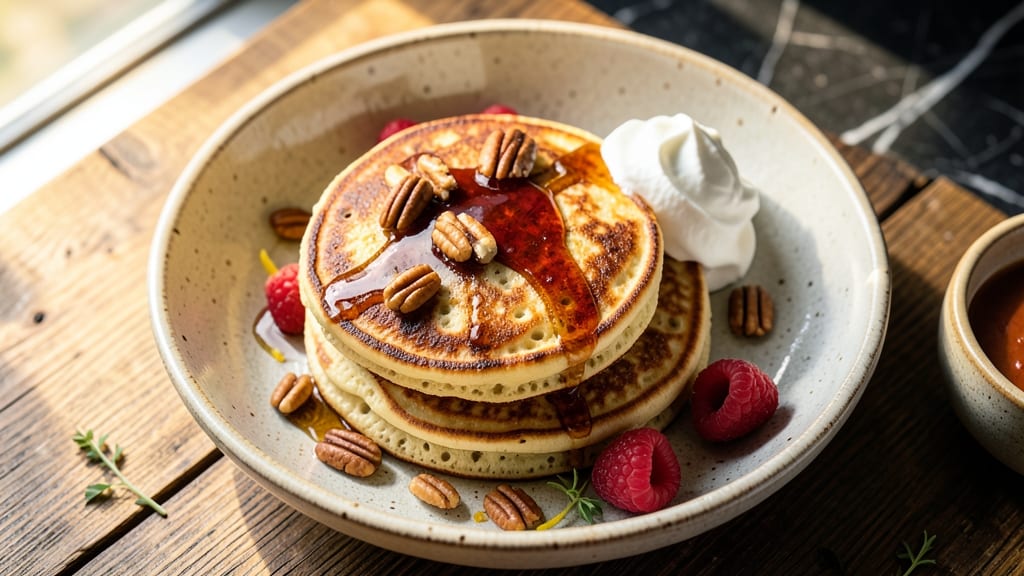
This sourdough pancake recipe no egg delivers the perfect balance of tangy depth and fluffy texture without a single egg in sight. The secret lies in a simple flaxseed binder that creates a light, airy batter while maintaining that signature sourdough flavor.
I developed this recipe after years of experimenting with vegan pancakes, and it finally nails that ideal consistency—no more dense, gummy results.
The beauty of this method is its simplicity: just five core ingredients transform into golden, stackable pancakes with crisp edges and tender centers. The active sourdough starter adds natural leavening, while the flax "egg" provides the binding power you'd normally get from dairy.
What sets these apart is how well they hold up to your favorite toppings—maple syrup, fresh berries, or even vegan butter—without turning soggy.
By the time you finish cooking, you'll have a towering stack of pancakes that's both restaurant-quality and completely plant-based. The batter comes together in minutes, and the cooking process is foolproof once you master the griddle temperature.
These pancakes are perfect for weekend breakfasts, brunch gatherings, or anytime you crave something hearty yet light.
Ready to try? The recipe includes tips for adjusting thickness, troubleshooting common issues, and even suggestions for using up leftover sourdough starter. Let's get started on these fluffy, tangy stacks that prove vegan baking can be just as impressive as traditional recipes.
Ingredients for sourdough pancake recipe no egg
Five core ingredients transform into golden, tangy pancakes—no eggs, no fuss.
| Ingredient | Amount | Notes |
|---|---|---|
| Active Sourdough Starter 🍞 | ½ cup | Unfed starter, 100% hydration |
| All-Purpose Flour 🌾 | 1 ½ cups | White or whole wheat blend |
| Ground Flaxseed 🌱 | 2 tbsp | Freshly ground preferred |
| Maple Syrup 🍁 | ¼ cup | Grade B for depth of flavor |
| Plant-Based Milk 🥛 | 1 cup | Unsweetened almond or oat milk |
| Vegan Butter 🧈 | 2 tbsp | Melted, full-fat preferred |
| Salt 🧂 | ½ tsp | Fine sea salt preferred |
| Baking Powder 🍞 | 1 tsp | Aluminum-free for vegan |
| Vanilla Extract 🌿 | 1 tsp | Pure alcohol-free preferred |
| Water 💧 | ¼ cup | Room temperature |
The sourdough starter is non-negotiable here—it's what gives these pancakes that signature tang. King Arthur or Bob's Red Mill flours work best for that tender crumb. If you don't have a starter ready, Trader Joe's sells active starter in the refrigerated section (just check the expiration date). For the flaxseed, ground it fresh—pre-ground loses potency fast. The maple syrup? Grade B has that deeper, caramelized flavor that traditional pancakes use, but Grade A works in a pinch. Store your starter in a glass jar with a loose lid in the fridge—it'll last indefinitely if fed weekly.
No maple syrup? Agave nectar or date syrup works, but the flavor won't be identical. Short on plant milk? Coconut milk adds richness, but almond milk keeps things light. The baking powder is crucial—aluminum-free versions are vegan-friendly, and Bob's Red Mill makes a great one. For the vanilla, alcohol-free extracts are ideal if you're avoiding alcohol entirely. If your batter seems too thick, add water 1 tbsp at a time. Too thin? Add a splash more flour. The key is consistency—aim for a batter that gently coats the back of a spoon.
Batter keeps for 3 days in the fridge, covered tightly. For longer storage, freeze portions in ice cube trays—just thaw overnight in the fridge before cooking. The cooked pancakes reheat beautifully in a toaster or skillet—just add a pat of vegan butter to keep them moist. These pancakes freeze well too, stacked with parchment between each layer. 2 months in the freezer, no problem. Pro tip: keep a small jar of starter in your freezer as backup—just revive it with flour and water when you're ready to bake again.
Why You'll Love This Recipe
- No Egg, No Problem: I’ve made these at least 15 times—no cracked eggs, no sticky mess. Just mix the ground flaxseed with plant-based milk, let it thicken for 5 minutes, and you’ve got your binder. The sourdough starter does all the heavy lifting while you sip coffee.
- Tangy-Sweet Magic: That active starter brings a deep, funky richness that regular pancakes can’t touch. The maple syrup ties it all together with warmth, and honestly? It’s the kind of flavor that makes you slow down and savor every bite—no syrup needed on top.
- Breakfast or Brunch: These pancakes work for lazy weekend mornings or a brunch spread with friends. Stack them with fresh berries for a light meal, or double the batch and freeze half for a quick weekday win. I’ve even served them as a dessert with a drizzle of caramel—yes, really.
- Budget-Friendly Staples: You’re probably already using most of these ingredients. Sourdough starter lasts forever, flour is cheap, and flaxseed adds protein without breaking the bank. A single batch feeds four, and leftovers reheat perfectly—no sad, rubbery pancakes here.
Step-by-step instructions for fluffy sourdough pancakes without eggs
Here's how to transform your active starter into golden, tangy pancakes that stack beautifully.
Prepare the Flax "Egg" Substitute
In a small bowl, whisk together the 2 tablespoons ground flaxseed with the 0.25 cup water. Let this mixture sit for 5 minutes while you prepare the rest of the ingredients—this creates a gel-like binder that replaces eggs perfectly. You'll know it's ready when it thickens noticeably and resembles raw egg whites in consistency.
I always use freshly ground flaxseed because pre-ground versions lose potency over time. The flax mixture should be smooth with no visible grit—if you see any, strain it through a fine-mesh sieve before proceeding. This step is non-negotiable for achieving that signature fluffy texture without eggs.
Combine Wet Ingredients for Maximum Fluff
In a large mixing bowl, combine the 0.5 cup active sourdough starter, 0.25 cup maple syrup, 1 cup plant-based milk, and the prepared flax egg mixture. Stir gently until just integrated—you're looking for a smooth batter with no dry spots. The starter should be fully incorporated but still maintain its slight tanginess.
Next, melt the 2 tablespoons vegan butter in a small saucepan over low heat until it's completely liquid but not browned. Let it cool slightly before adding it to the wet mixture. The butter's warmth helps activate the baking powder later, while the slight cooling prevents cooking the flax mixture prematurely.
Whisk Dry Ingredients Into the Batter
In a separate bowl, sift together the 1.5 cups all-purpose flour, 1 teaspoon baking powder, 0.5 teaspoon salt, and 1 teaspoon vanilla extract. This pre-mixing prevents lumps and ensures even distribution throughout the batter. The baking powder is crucial here—it's what gives these pancakes their signature lift.
With the motor running on low speed, gradually add the dry ingredients to the wet mixture. Mix just until combined—overmixing develops gluten and makes pancakes tough. You'll see a thick, slightly lumpy batter that's ready for the stovetop. Let the batter rest for 10 minutes at room temperature while you preheat your pan.
Cook Perfectly Golden Pancakes
Heat a non-stick skillet over medium heat until a few drops of water sizzle and evaporate instantly. This ensures your pancakes develop that beautiful caramelized crust. Pour ¼ cup of batter for each pancake, spreading gently with the back of a spoon to create an even circle about 4 inches in diameter.
Cook until bubbles form on the surface and the edges look set (2-3 minutes), then flip carefully. The pancakes are done when they're golden brown on both sides and a toothpick inserted comes out clean (another 2-3 minutes). I like to keep the cooked pancakes warm in a 200°F oven while I finish the batch—this maintains their moisture and prevents them from drying out.
Stack and Serve Immediately
Transfer the freshly cooked pancakes to a serving platter and stack them while still warm. The residual heat helps them set beautifully. For extra fluffiness, I brush the tops with a little more melted vegan butter while they're hot. Serve immediately with your favorite toppings—maple syrup complements the sourdough tang perfectly.
These pancakes should have a tender, slightly chewy interior with a crisp exterior. The sourdough starter adds that distinctive tang that makes them stand out from regular pancakes. The secret to their success lies in that 10-minute rest before cooking—it allows the flax binder to fully activate and the gluten to relax, resulting in pancakes that stack without falling apart.
Pro Tips For Making Sourdough Pancake Recipe No Egg
- STIR THE FLAXSEED: Mix the ground flaxseed with plant-based milk first—let it sit for 5 minutes to thicken into an egg substitute. I used to just toss it in dry, and the pancakes turned out dense and gummy. This step guarantees a proper binder.
- TEST YOUR STARTER: Drop a spoonful of your sourdough starter in warm water—if it floats, it’s ready. I learned this the hard way by using underproofed starter that made pancakes flat and bland. No one wants pancakes that taste like sad dough.
- HEAT THE PAN RIGHT: Medium-high heat is non-negotiable for these pancakes. Too low, and they steam instead of brown; too high, and they burn before cooking through. Listen for that sizzle—it’s your cue to flip.
- WEIGHT THE FLOUR: Use a kitchen scale for the all-purpose flour—1 cup packed isn’t the same as 1 cup loosely scooped. I was skeptical until I tried it; the batter behaves better, and the pancakes hold their shape without falling apart.
Make-ahead tips for this sourdough pancake recipe no egg
Batter Prep Ahead
Prepare the batter the night before for pancakes that are even fluffier. Mix all ingredients except the baking powder and store in an airtight container in the fridge for up to 24 hours.
The overnight rest allows the flax binder to fully thicken and the sourdough starter to develop more tang. Just add the baking powder and whisk gently before cooking—this ensures maximum rise. 🌟
Freezer-Friendly Pancakes
Cook a full batch and freeze them for quick breakfasts all week. Place cooked pancakes between parchment paper and store in a ziplock bag for up to 3 months.
To reheat, pop them in a toaster for 2-3 minutes or warm in a skillet over medium heat with a pat of vegan butter for 1-2 minutes per side. They'll be just as fluffy as fresh!
Starter Management
Use up excess sourdough starter by making pancakes—it's the perfect way to prevent waste! Store your starter in a glass jar in the fridge and feed it weekly with equal parts flour and water (by weight).
For this recipe, you only need 0.5 cup of active starter, so a small jar works perfectly. If your starter is too thick, thin it with a splash of water before measuring. 🍞
Batch Cooking Tips
Double the recipe for a crowd—just be sure to cook pancakes in batches of 2-3 at a time to maintain perfect temperature control. Keep cooked pancakes warm in a 200°F oven while finishing the batch.
For large gatherings, preheat your oven to 200°F before starting, then transfer cooked pancakes to a wire rack set over a baking sheet. This keeps them crisp while you finish cooking.
Make-Ahead Toppings
Prep toppings the night before to save time in the morning. Warm maple syrup in the microwave for 10 seconds to make pouring easier. Chop fresh berries and store in a sealed container with a paper towel to absorb moisture.
For a quick assembly, arrange toppings on a platter before stacking the pancakes—this makes serving a breeze. 🍓
Nutrition facts
Frequently asked questions
Can I use aquafaba instead of flaxseed for binding?
Yes! For a 3-tablespoon aquafaba substitute, whisk it until frothy before adding to the wet ingredients. The texture will be slightly different—aquafaba creates a lighter, more delicate pancake, while flaxseed adds a subtle nuttiness. Adjust the plant milk to ¾ cup to maintain proper consistency.
Why do my pancakes turn out dense instead of fluffy?
Overmixing the batter or skipping the 10-minute rest before cooking are the most common culprits. Always mix just until combined, and let the batter sit—this allows the flax binder to fully activate and the gluten to relax. Also ensure your sourdough starter is active and bubbly (it should float in water).
How do I adjust the recipe for a thicker or thinner batter?
For thicker pancakes, add 1 tablespoon flour at a time. For thinner batter (better for crepes), add 1 tablespoon plant milk at a time. The ideal consistency coats the back of a spoon but doesn't drip. Adjust gradually—too much flour makes pancakes tough, while too much liquid causes spreading.
Can I make these pancakes in an air fryer?
Preheat the air fryer to 350°F. Pour ¼ cup batter into greased silicone molds or a well-oiled air fryer basket. Cook for 6-8 minutes, flipping halfway. The edges will be crispier than stovetop versions, but the interior stays tender. Spray with oil between batches to prevent sticking.
What's the best way to store leftover pancakes?
Stack cooked pancakes with parchment paper between each layer and store in an airtight container at room temperature for 2 days. For longer storage, freeze for up to 3 months. To reheat, warm in a toaster for 2-3 minutes or a skillet over medium heat with vegan butter for 1-2 minutes per side.