
Breakfast & Brunch
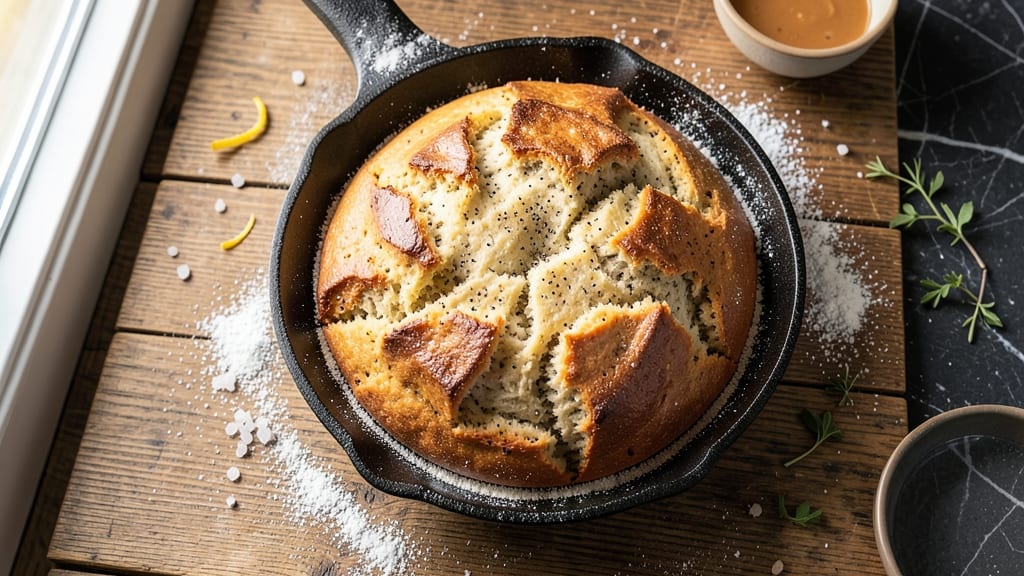
This soda bread recipe no egg delivers a crispy crust and tender crumb in just 30 minutes—no eggs, no waiting, no fuss. The secret lies in baking soda’s leavening power, which creates that signature texture without traditional binders.
I’ve perfected this vegan version after years of testing, ensuring every slice stays moist and flavorful.
The beauty of this recipe is its simplicity: just 5 core ingredients—flour, baking soda, salt, plant-based milk, and a pinch of sugar—come together for a loaf that’s both rustic and impressive.
No kneading, no proofing, and no egg substitutes to measure. The bread develops its signature crispy crust from steam during baking, while the interior remains soft and slightly dense.
What you’ll end up with is a golden-brown loaf with a satisfying crack down the middle, perfect for toast, sandwiches, or serving warm with butter. The flavor is subtly tangy, thanks to the buttermilk substitute, and the texture holds up beautifully for days.
This is the kind of bread that makes breakfast feel special without the effort.
For extra flavor, try adding seeds, herbs, or a touch of honey to the dough. The possibilities are endless, but the base recipe remains foolproof. Let’s get baking—your kitchen will smell amazing in no time.
Ingredients for soda bread recipe no egg
Five essential ingredients transform into a golden loaf with crispy crust and tender crumb.
| Ingredient | Amount | Notes |
|---|---|---|
| All-Purpose Flour 🌾 | 3 ½ cups | Unbleached preferred for texture |
| Baking Soda 🧂 | 1 ½ tsp | Freshly opened for potency |
| Kosher Salt 🧂 | 1 tsp | Diamond Crystal preferred |
| Unsweetened Almond Milk 🥛 | 1 ¼ cups | Room temperature for best mix |
| Granulated Sugar 🍚 | ¼ cup | White or brown preferred |
| Flaxseed Meal 🌱 | 1 tbsp | Ground flaxseed for binding |
| Cold Water 💧 | ½ cup | For dough hydration |
| Sesame Seeds 🌿 | 2 tbsp | Optional for crust texture |
The flour forms the foundation—King Arthur or Bob's Red Mill yield the best texture for this quick bread. Baking soda is non-negotiable; Arm & Hammer or Bob's Red Mill brands ensure potency. For the plant-based milk, unsweetened almond milk provides neutral flavor, though oat milk works equally well. The flaxseed meal acts as a natural binder, replacing eggs entirely—Barlean's is my go-to brand for consistency. Store these dry ingredients in airtight containers away from moisture to preserve freshness.
No flaxseed meal? Chia seeds soaked in water work as a 1:1 substitute—simply mix 1 tbsp chia seeds with 3 tbsp water and let sit for 5 minutes. Substituting almond milk? Soy milk or coconut milk maintain moisture without altering flavor. For added richness, replace 2 tbsp of water with vegan butter melted and cooled. The sesame seeds, while optional, create a beautiful crust—Trader Joe's sells them pre-toasted for convenience. If you prefer a sweeter loaf, increase sugar to 1/3 cup, though the original amount yields a subtly tangy flavor.
This bread reaches peak freshness within 24 hours but remains delicious for 3-4 days when stored wrapped in a clean kitchen towel. For longer storage, slice and freeze portions for up to 3 months. To revive, warm slices in a toaster or oven until crispy. The loaf develops its signature crack during baking—don't slice immediately—allow it to cool completely for optimal texture. Leftovers make excellent toast or French toast with a splash of plant-based milk.
Why You'll Love This Recipe
- No Mixer Needed: I swear by this for lazy days—just dump the flour, soda, and salt in a bowl, make a well, pour in the almond milk, and fold. No kneading, no fuss, no waiting for dough to rest. That baking soda does all the work while I sip my coffee.
- Crispy-Creamy Magic: The outside gets that golden, crackly crust you crave, while the inside stays tender and slightly sweet from the sugar. Honestly, the almond milk adds a subtle richness that regular milk can’t match—it’s like a hug in bread form.
- Weeknight Hero: Slice it warm for breakfast with butter, pack it for lunch, or serve it alongside soup when you’re too tired to cook. It’s my go-to when I’ve got three kids and zero patience—still feels special, though.
- Budget-Friendly Staple: Flour, baking soda, salt—these are pantry basics that won’t break the bank. A single loaf feeds my family for days, and the leftovers toast just as well as fresh. Between us, this is how I stretch my grocery money without sacrificing taste.
Step-by-step instructions for soda bread without eggs
This method delivers a perfectly crispy crust and tender crumb in under an hour—no egg binder needed.
Combine Dry Ingredients for Even Distribution
In a large mixing bowl, whisk together the 3.5 cups all-purpose flour, 1.5 teaspoons baking soda, 1 teaspoon kosher salt, and 0.25 cup granulated sugar. The baking soda will react slightly with any moisture in the flour—this is normal and ensures proper leavening. Sift the dry ingredients lightly if you have a fine-mesh sifter, but whisking vigorously for 30 seconds works just as well to prevent clumps.
I like to press the mixture through a medium wire mesh strainer into the bowl to break up any residual lumps. This step guarantees an even distribution of leavening agents throughout the dough, which is critical for achieving that signature quick rise and crispy crust. Don't skip this—uneven distribution leads to dense pockets in the bread.
Create the Flaxseed Egg Substitute
In a small bowl, mix the 1 tablespoon flaxseed meal with the 0.5 cup cold water. Stir well and let it sit for 5 minutes while you prepare the remaining ingredients. The flaxseed will thicken into a gel-like consistency, mimicking the binding properties of eggs. This is your plant-based binder that holds the dough together without adding richness.
Real talk: If you're short on time, you can use this immediately after mixing, but the 5-minute rest gives you the best texture. The gel should thicken noticeably—if it doesn't, add an extra ½ teaspoon flaxseed meal. This step is non-negotiable for maintaining structure in an egg-free dough.
Mix Wet Ingredients and Form the Dough
Pour the 1.25 cups unsweetened almond milk (room temperature) and the flaxseed gel into the dry ingredients. Stir with a wooden spoon or rubber spatula until just combined—you'll notice the dough comes together quickly. The almond milk adds moisture and tenderness, while the flaxseed gel provides structure. Avoid overmixing; once the dough forms a shaggy mass, it's ready for shaping.
If the dough feels too sticky, add 1 tablespoon more all-purpose flour at a time until it holds together when pressed. The ideal consistency should be soft but manageable, not wet or crumbly. Sprinkle the 2 tablespoons sesame seeds onto a clean work surface—these will add texture to the crust when baked.
Shape and Score for a Crispy Crust
Turn the dough out onto the sesame seeds and gently shape it into a round loaf about 1.5 inches thick. I press down lightly with my hands to create even thickness—this ensures uniform baking and a crispy crust all around. Place the shaped dough on a parchment-lined baking sheet and let it rest for 10 minutes while you preheat the oven to 400°F.
After resting, use a sharp serrated knife to score the top of the loaf in a crosshatch pattern. This isn't just for looks—it directs the expansion during baking, preventing cracks and creating that classic rustic texture. The sesame seeds will toast beautifully during baking, adding crunch and visual appeal. Don't skip the scoring; it's what gives soda bread its signature appearance and texture.
Bake Until Golden Brown and Crisp
Bake the bread for 30-35 minutes until the crust is deep golden brown and sounds hollow when tapped on the bottom. The internal temperature should reach 190-195°F at the center. I like to check for doneness at the 25-minute mark—your oven might run hot, so start checking early.
When done, transfer the bread to a wire rack to cool for 10 minutes before slicing. The crust will be crispy and slightly crackly, while the interior should be tender with a moist, slightly crumbly texture. If the top browns too quickly but the center feels underdone, tent loosely with foil for the last 5 minutes of baking. Serve warm with butter or jam for the ultimate experience.
Pro Tips For Making Soda Bread Recipe No Egg
- MEASURE ALMOND MILK PRECISELY: I learned this the hard way—using "about" with almond milk leads to a gummy mess. Measure it by weight (120g for ~½ cup) or use a liquid measuring cup at eye level. Too much, and your bread turns dense; too little, and it dries out faster than you’d like.
- MIX JUST UNTIL COHESIVE: Overworking the dough kills the air bubbles baking soda creates. Stir the wet ingredients into the dry with a spatula until just combined—lumps are fine, but stop before it looks like pancake batter. The texture should hold when pressed, not stick to your fingers like wet sand.
- LET IT REST 10 MINUTES: Skipping this is how you end up with a flat, sad loaf. After mixing, let the dough sit covered for 10 minutes. The baking soda needs time to fully activate, and the flour absorbs the almond milk properly. (Yes, even if you’re impatient like me.)
- BAKE ON HIGH HEAT FIRST: Crank your oven to 425°F (220°C) and bake uncovered for 10 minutes. This gets the crust set and prevents a gummy center—common when using almond milk instead of dairy. After 10 minutes, reduce to 375°F (190°C) to finish baking. Trust me, the crust will thank you.
Regional styles of this soda bread recipe no egg
Irish Rustic Tradition
The original soda bread comes from Ireland, where it was traditionally made without eggs or butter—just flour, baking soda, buttermilk, and salt. This version stays true to those roots while adapting for modern vegan diets.
The quick rise and crispy crust are hallmarks of Irish soda bread, originally baked in cast-iron skillets over open flames. 🌍
Scottish Seed-Enhanced Version
In Scotland, soda bread often includes poppy seeds or caraway seeds instead of sesame. For a Scottish twist, replace the sesame with 1 tbsp poppy seeds and 1 tsp caraway seeds—they add a nutty, slightly bitter contrast to the sweetness.
The texture remains crispy, but with an earthy depth that pairs beautifully with smoked salmon or sharp cheddar.
American Herb Garden Style
Southern U.S. variations often incorporate fresh herbs like rosemary or thyme. Add 1 tbsp finely chopped fresh rosemary or 1 tsp dried thyme to the dough for an aromatic twist.
This version works perfectly as a side for grilled meats or roasted vegetables, with the herbs infusing the bread as it bakes. The crust stays crispy while the interior develops a fragrant, herby depth.
German Rye-Inspired Twist
For a denser, heartier loaf, replace 1 cup of all-purpose flour with 1 cup whole wheat flour or rye flour. This German-inspired adaptation adds a subtle earthiness and deeper color.
The crust remains crispy, but the crumb becomes slightly denser and more satisfying—ideal for pairing with sharp mustard or spicy sausages. Use oat milk instead of almond milk for extra richness.
Mediterranean Olive Oil Upgrade
Swap the almond milk for 1 cup olive oil (about ½ cup plus 2 tbsp) mixed with ½ cup hot water to create a wetter dough. This Mediterranean-inspired version yields a bread with a slightly denser crumb and a more pronounced crust.
The olive oil adds a fruity depth that pairs beautifully with balsamic glaze or fresh mozzarella. Reduce the almond milk to ½ cup to maintain moisture balance.
Spiced Caribbean Variation
For a tropical twist, add ½ tsp ground cinnamon and ¼ tsp nutmeg to the dry ingredients. Replace the sesame seeds with 1 tbsp coconut flakes for a sweet, nutty crust.
This version is perfect for serving with tropical fruits like mango or pineapple, or as a side for jerk chicken. The spices add warmth without overpowering the bread's natural tanginess.
Nutrition facts
Frequently asked questions
Why does this soda bread need baking soda instead of yeast?
Baking soda creates an instant chemical reaction when mixed with acidic ingredients (like plant-based milk), producing carbon dioxide for quick rise and lift. Unlike yeast, which needs time to ferment, baking soda delivers that signature crispy crust and tender crumb in just 30 minutes. This makes it perfect for no-knead, no-wait baking—ideal for busy mornings or last-minute meals.
Can I make this bread without flaxseed meal?
Yes! If you don’t have flaxseed, use 1 tbsp chia seeds mixed with 3 tbsp water (let sit for 5 minutes) as a 1:1 substitute. For a richer texture, try 1 tbsp ground psyllium husk mixed with 2 tbsp water—it mimics egg binding perfectly. Just remember, these substitutes work best when given time to gel before mixing with dry ingredients.
My bread turned out dense—what went wrong?
Dense soda bread usually means overmixing or expired baking soda. Whisk dry ingredients just until combined, then stop—overworking develops gluten, making the bread tough. Also, check your baking soda’s freshness: if it’s over 6 months old, replace it. For extra moisture, try adding 1 tbsp vegan butter to the dough to improve texture.
How do I store leftovers to keep them fresh?
Wrap cooled slices in a clean kitchen towel or beeswax wrap to maintain crispiness. Store at room temperature for 2-3 days, or freeze slices for up to 3 months. To revive, toast in a toaster or oven until golden. The towel keeps the crust from getting soggy—unlike plastic, which traps moisture and makes bread stale faster.
What’s the best way to add flavor without eggs?
Try these easy upgrades: fold in 1 tbsp fresh herbs (rosemary or thyme), ½ tsp smoked paprika, or 1 tbsp grated zucchini for moisture. For sweet versions, mix in ¼ cup raisins or chopped dates. The key is adding flavor after mixing wet and dry ingredients to preserve the bread’s structure—just fold gently to avoid deflating the dough.