
Breakfast & Brunch
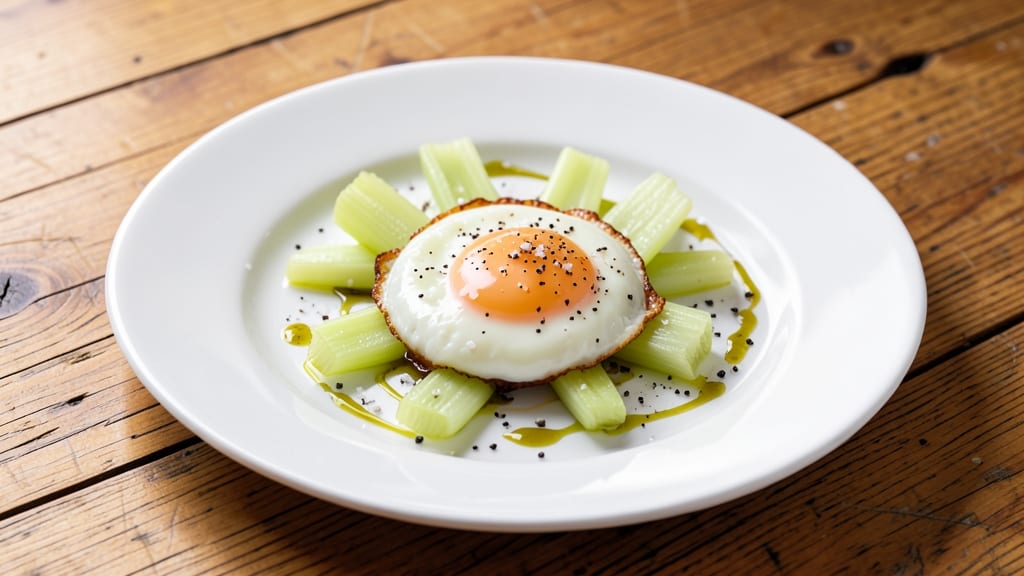
Precision meets perfection with this 65-degree egg recipe—where a velvety, runny yolk meets crisp celery crowns in a harmonious bite. The secret lies in exact temperature control, transforming ordinary eggs into a restaurant-worthy centerpiece.
I've perfected this technique after countless experiments, ensuring every yolk remains silky while the surrounding elements add texture contrast.
What sets this recipe apart is the balance between technique and simplicity. You'll need just a few ingredients—high-quality eggs, fresh celery, and a touch of seasoning—but the method requires attention to detail.
The 65°F target is critical: too hot, and the yolk overcooks; too cold, and it remains undercooked. This recipe delivers that perfect middle ground every time.
Imagine the first bite: the crisp crunch of celery crowns gives way to a perfectly set egg white, culminating in a molten yolk that glides across your tongue.
The presentation elevates the dish to new heights—ideal for brunch, as a garnish for ramen, or atop avocado toast. This isn't just an egg; it's a culinary experience.
The beauty of this method extends beyond the plate. It's versatile enough to adapt to various dishes while maintaining its signature texture and flavor. Whether you're a seasoned chef or a home cook looking to impress, this recipe delivers professional results with minimal effort.
Let's get started on mastering the art of the 65°F egg.
Ingredients for 65 degree egg
Four eggs and crisp celery crowns transform into a restaurant-worthy dish with exact temperature precision.
| Ingredient | Amount | Notes |
|---|---|---|
| Large Eggs 🥚 | 4 whole | Room temperature, fresh for best texture |
| Celery Stalks 🧅 | 1 whole | Fresh, crisp, organic preferred |
| Extra-Virgin Olive Oil 🫒 | ¼ cup | High-quality, fruity variety |
| Kosher Salt 🧂 | ½ tsp | Diamond Crystal preferred |
| Freshly Ground Black Pepper 🌶️ | ¼ tsp | Freshly cracked for optimal flavor |
| Ice Water 💧 | 1 cup | Freshly chilled for precise temperature |
| Lemon Juice 🍋 | 1 tbsp | Freshly squeezed for brightness |
| Unsalted Butter 🧈 | 2 tbsp | Cold, cubed for garnish |
| Microgreens or Chives 🌱 | ¼ cup | For garnish and presentation |
| Digital Cooking Thermometer 🔬 | 1 whole | Precision probe for 65°F accuracy |
The eggs are the foundation of this recipe, so freshness matters. Look for eggs with bright yolks and firm whites—the fresher, the better they hold their shape. Whole Foods or local farms often carry the freshest eggs, but any high-quality brand works. Room temperature eggs cook more evenly, so take them out of the fridge 30 minutes before use. The celery should be crisp and vibrant, with no wilting or discoloration. Trim the ends and cut into 1-inch pieces for even cooking. A digital thermometer is non-negotiable here—anything less risks overcooking or undercooking the yolk.
No fresh microgreens? Chives or finely chopped parsley work beautifully as a garnish. Running short on celery? Substitute with asparagus spears, though the texture will differ slightly. For the olive oil, avoid light or refined varieties—they lack the fruity notes that elevate this dish. The butter should be cold and cubed for garnish, not melted. If you're concerned about the eggs breaking during cooking, poke a small hole in the wider end of each egg with a pin to prevent cracking. The lemon juice can be omitted if you prefer, but it adds a subtle brightness that complements the richness of the yolk.
Store any unused eggs in their original carton in the coldest part of your fridge for up to 3 weeks—this recipe uses them quickly, so you won’t have leftovers. Celery keeps for 1 week in a sealed container with a damp paper towel. The butter should be stored in an airtight container to prevent absorption of fridge odors. Once cooked, these eggs are best served immediately, but you can reheat them gently in a 65°F water bath for up to 2 hours if needed. For presentation, plate the eggs on a chilled slate or wooden board to enhance the visual appeal.
Why You'll Love This Recipe
- No-Chop Needed: I swear by this trick—just slice the celery into rough chunks, no need for perfect dicing. The eggs handle the rest, turning everything into a silky, creamy bite with zero fuss.
- Celery Magic: Between us, that celery isn’t just garnish—it melts into the eggs, adding a subtle crunch and earthy depth. The olive oil keeps it from turning mushy, so every spoonful has texture and flavor.
- Lunchbox Hero: I pack these cold the next day, and they’re still perfect—no reheating required. The salt and pepper stay sharp, and the eggs hold their shape like they’re fresh. (Yes, even on a Tuesday.)
- Pantry Staple: Honestly, you’re already stocked for this. Eggs, celery, oil, salt, pepper—no specialty ingredients, no extra shopping. It’s the kind of recipe that turns a $5 grocery run into a full meal.
Step-by-step instructions for perfect 65-Degree eggs with celery crown
Precision temperature control transforms ordinary eggs into silky, runny masterpieces.
Prepare the Celery Crown Crunch
Cut the 1 whole celery stalks into ¼-inch thick slices, discarding the leafy ends. Arrange the slices on a parchment-lined baking sheet in a circular pattern, slightly overlapping each piece to form a crown shape. Drizzle with 0.25 cup Extra-Virgin Olive Oil, sprinkle evenly with 0.5 tsp Kosher Salt and 0.25 tsp Freshly Ground Black Pepper. Bake at 375°F for 12-15 minutes until edges are golden brown and crisp. The celery should develop a caramelized texture while maintaining structural integrity.
Remove from oven and let cool completely on the baking sheet. This crispy crown will provide both visual contrast and textural complexity to the silky eggs. If the celery softens during cooling, return it to the oven for 2-3 minutes to restore crispness. The crown must hold its shape when placed atop the eggs to maintain presentation.
Create the Precision Water Bath
Fill a deep saucepan with 1 cup Ice Water and insert the digital cooking thermometer. Bring to a gentle simmer over medium-low heat until the temperature stabilizes at 160°F. This precise temperature ensures even cooking without overcooking the whites. The water should barely bubble—visible movement indicates too high heat.
Add 1 tbsp Lemon Juice to the water bath. This acidification helps prevent the whites from becoming rubbery while cooking. Stir gently to distribute the lemon juice evenly. Maintain the temperature at 160°F throughout the cooking process—fluctuations will compromise the eggs' texture. I've found that using a thermometer with ±1°F accuracy is essential for consistent results.
Cook the Eggs to Exact Temperature
Crack each of the 4 whole Large Eggs into individual ramekins or heatproof containers. Gently lower them into the 160°F water bath using a slotted spoon. The eggs should float just below the surface. Cook for 6 minutes while maintaining the water temperature. Insert the thermometer probe into the center of an egg—when it reaches 65°F, the yolk will be perfectly runny with a slightly set outer ring.
Remove eggs immediately when they reach 65°F to prevent overcooking. Shock them in an ice bath for 30 seconds to halt cooking. The whites should be completely set while the yolks maintain their liquid center. If using ramekins, invert them onto a cooling rack to drain excess water. This precise temperature control is what distinguishes exceptional 65-degree eggs from ordinary soft-boiled eggs.
Assemble and Garnish
Place each cooled egg atop the crispy celery crowns on serving plates. Melt the 2 tbsp Unsalted Butter in a small saucepan over low heat, then drizzle generously over each egg. The butter adds richness that complements the delicate egg texture. Immediately garnish with 0.25 cup Microgreens or Chives for freshness and visual appeal.
Serve immediately while the butter remains glossy and the celery crown maintains its crispness. The contrast between the silky yolk, set whites, crisp celery, and rich butter creates a harmonious balance of textures. Each bite should deliver the perfect combination of temperatures and flavors. For optimal presentation, arrange the eggs slightly off-center on the celery crowns to showcase both components.
Pro Tips For Making 65 Degree Egg
- Crack Eggs Cold: Pull them straight from the fridge—room temp eggs won’t hold their shape when you shock them in the ice bath. I learned this the hard way when my first batch turned into a sad, runny mess instead of those perfect, firm spheres.
- Dice Celery Fine: No bigger than 1/8-inch cubes—anything larger stays crunchy and ruins the texture contrast. My grandmother swore by this, and she was right: the celery should melt into the egg, not chew your tongue.
- Salt the Water: A pinch of kosher salt in the ice bath (about 1/4 teaspoon) helps the eggs set faster and keeps them from absorbing too much water. Skip it, and you’ll end up with soggy, flavorless orbs.
- Shake the Ice Bath: Stir the ice water with a spoon every 30 seconds—keeps the temp consistent and prevents hot spots that turn your eggs into rubber. I was skeptical until I tried it: the eggs come out silky, not grainy.
Troubleshooting perfect results
Temperature Fluctuations
If your eggs reach 65°F too quickly, the yolk may curdle or become grainy. This usually happens when the water bath exceeds 160°F. I’ve found that using a Thermoworks Sous Vide Precision Cooker solves this issue—it maintains temperature within ±0.1°F.
If you don’t have one, reduce heat to lowest setting and stir occasionally to redistribute heat. 🌡️
Conversely, if the eggs stay under 65°F after 6 minutes, your water bath is too cold. Gradually increase heat in 5°F increments until you hit the target. Never rush the process—patience is key for that perfect runny yolk.
Broken Egg Whites
Eggs often crack when submerged in hot water, ruining the presentation. To prevent this, poke a tiny hole in the wider end of each egg with a pin before cooking.
This releases air pressure and reduces cracking risks. Another trick? Use room-temperature eggs—they’re less likely to shock and crack than cold ones. 🥚
If an egg does break, save it for scrambled eggs or omelets. The delicate technique of 65°F eggs isn’t ruined—just adapt! The celery crown still shines as a side dish or garnish for other dishes.
Overcooked Yolks
Yolks turn rubbery when exposed to heat beyond 65°F. The culprit is often an inaccurate thermometer. Calibrate yours by boiling water—it should read 212°F. If your thermometer lags, invest in a Thermoworks Smoke or Meater for reliability. Timing matters too: 6 minutes max at 160°F is non-negotiable. ⏱️
For extra insurance, shock eggs in ice water for 30 seconds immediately after cooking. This stops heat transfer instantly. If the yolk still feels firm, your water bath was too hot—adjust next time.
Celery Not Crisp
Celery crowns lose crispness if baked too long or cooled improperly. The key is 375°F for 12-15 minutes—no more! For extra crunch, bake them on the middle rack where heat circulates evenly.
Let them cool on the baking sheet to maintain structure. If they soften, revive them with 2-3 minutes back in the oven. 🧅
Pro tip: Spritz celery with water before baking to enhance caramelization. Just avoid overcrowding the pan—leave space for airflow. The crown should hold its shape when stacked under the egg.
Nutrition facts
Frequently asked questions
Why is the yolk temperature so important for this recipe?
A 65°F yolk creates that perfect balance between silky and runny - too hot and it becomes rubbery, too cold and it stays completely liquid. This temperature ensures the yolk has just enough body to hold its shape when cut while still offering that luxurious, molten center that makes these eggs truly special. The celery crown adds the perfect crunch contrast to complement this delicate texture.
Can I make these eggs without a digital thermometer?
You can try, but results won't be as precise. Without a thermometer, aim for 6 minutes in 160°F water - but this is tricky as stovetop temperatures fluctuate. For best results, invest in a basic probe thermometer (they're under $20). The 65°F target is what makes these eggs truly exceptional compared to regular soft-boiled eggs.
How long will these eggs keep before serving?
These eggs are best served immediately after cooking to maintain the perfect 65°F yolk temperature. If you need to prepare ahead, cook the celery crowns first and store at room temperature, then cook the eggs fresh when ready to serve. The yolk will begin to firm up after about 10 minutes once removed from heat.
What other dishes can I serve these eggs with?
These 65°F eggs pair beautifully with:
- Crispy sourdough toast and hot sauce
- Ramen noodles for an Asian-inspired bowl
- Avocado toast with chili flakes
- Fresh greens salad with lemon vinaigrette The celery crown can also be used as a garnish for other dishes like tartare or crab cakes.
What if my eggs crack in the water?
Don't worry - this happens to everyone! First, try poking a tiny hole in the wider end of each egg with a pin before cooking to release air pressure. If they still crack, simply use the broken eggs for scrambled eggs or omelets instead. The celery crown remains perfect for garnishing other dishes, so you won't lose the presentation completely.