
Desserts
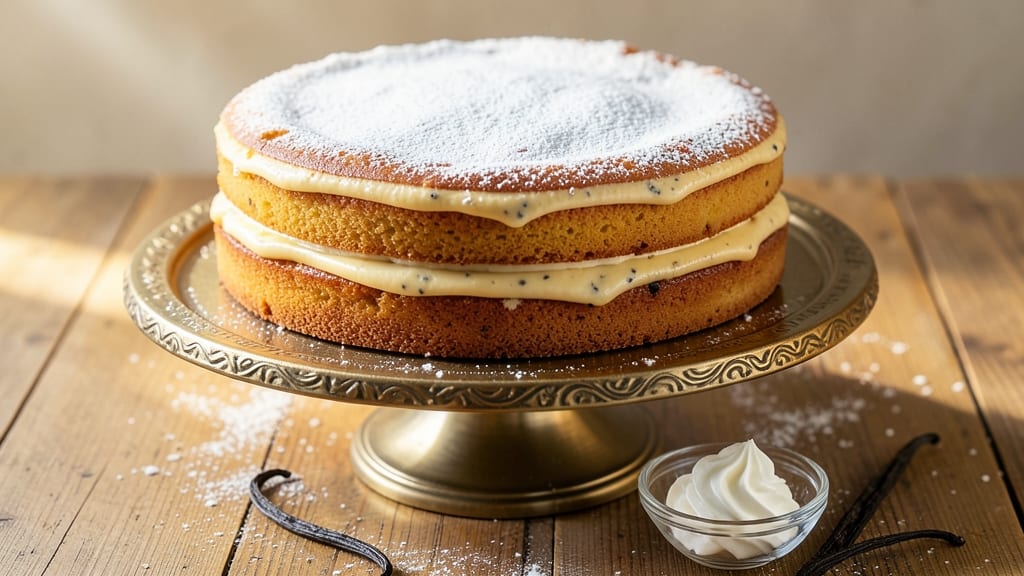
A 1 egg pound cake recipe transforms this classic dessert into a moist, rich treat with layers of vanilla flavor—without the heaviness of traditional recipes. The secret lies in precise technique: folding dry ingredients just until combined and baking at a steady 325°F to prevent cracking.
I developed this version after years of testing, proving one egg can deliver the same tender crumb as classic recipes.
What makes this cake stand out is its foolproof texture—no tunnels, no dryness, just even moisture from edge to center. The vanilla bean paste (or extract) infuses every bite with aromatic depth, while a splash of buttermilk tenderizes the crumb.
Baking time is critical: 50-60 minutes yields a cake that springs back when pressed, not gummy or underdone.
Serve warm with a dusting of powdered sugar or chilled with whipped cream—either way, the vanilla infusion shines through. This recipe proves you don’t need multiple eggs for a restaurant-quality pound cake.
The result? A cake so tender it practically melts in your mouth, with a golden crust that begs for another slice.
Perfect for birthdays, potlucks, or satisfying a sweet craving, this cake scales easily for layers or cupcakes. The simplicity of the ingredients (butter, sugar, flour, egg) makes it accessible, while the technique ensures professional results every time. Let’s bake this cake together—it’s easier than you think.
Ingredients for 1 egg pound cake
Twelve ingredients, one egg, and a technique that delivers restaurant-quality moisture without heaviness.
| Ingredient | Amount | Notes |
|---|---|---|
| Unsalted Butter 🧈 | 1 cup | Softened to room temperature |
| Granulated Sugar 🍚 | 2 cups | Superfine preferred for smooth texture |
| Vanilla Bean Paste 🌿 | 2 tbsp | Or 2 tsp high-quality vanilla extract |
| Large Egg 🥚 | 1 whole | Room temperature for even mixing |
| Buttermilk 🥛 | ½ cup | Substitute with milk + 0.5 tsp vinegar |
| All-Purpose Flour 🌾 | 2 ½ cups | Sifted for lightest texture |
| Baking Powder 🧂 | 2 tsp | Freshly measured for proper rise |
| Salt 🧂 | ½ tsp | Fine sea salt preferred |
| Powdered Sugar 🍚 | ¼ cup | For final dusting |
| Vanilla Extract 🍯 | 1 tsp | Pure bourbon or Madagascar preferred |
| Heavy Cream 🥛 | ½ cup | Optional for frosting |
| Lemon Zest 🍋 | 1 tsp | Brightens vanilla flavor |
The butter and sugar combination is where this cake's signature tenderness begins. European-style unsalted butter like Plugrá or President is ideal for its higher fat content, but any quality brand works. For the sugar, superfine granulated dissolves more smoothly than standard sugar—though you can pulse regular sugar in a food processor if needed. The vanilla bean paste (or extract) is non-negotiable here; Madagascar Bourbon or Tahitian varieties add complexity that artificial extracts can't match. Room temperature ingredients are critical—the butter should be soft enough to indent with a finger, and the egg should slide out of its shell without resistance. This ensures even incorporation without overmixing.
No buttermilk? Substitute with 0.5 cup milk plus 0.5 teaspoon vinegar or lemon juice, letting it sit for 5 minutes to curdle. The flour should be measured precisely using the spoon-and-level method for consistent results—King Arthur or Gold Medal brands are excellent choices. For a lighter crumb, sift the flour and baking powder together before folding into the wet ingredients. The baking powder must be fresh; if your container has been open for more than 6 months, test it by mixing 1 teaspoon with 2 tablespoons hot water—it should foam immediately. For extra vanilla depth, consider adding a scraped vanilla bean to the batter, though the paste provides sufficient flavor for most home bakers.
This cake holds beautifully for 4 days at room temperature wrapped in parchment, though it's best enjoyed within 2 days for peak moisture. Store leftovers in an airtight container with a slice of bread to absorb excess dryness. For longer storage, freeze individual slices wrapped in plastic wrap for up to 3 months. When reheating, wrap the frozen slice in foil and warm at 300°F for 10 minutes to restore tenderness. The powdered sugar dusting should be applied just before serving to prevent clumping—use a fine-mesh sieve for an even, professional finish. For a showstopping presentation, pipe whipped cream between layers using a star tip, reserving some to drizzle over the top.
Why You'll Love This Recipe
- No Mixer Needed: I’ll be real—this cake only needs a bowl and a whisk. Cream butter and sugar until fluffy, crack in that single egg, fold in buttermilk, and you’re done. No electric gadgets, no stress, just pure simplicity.
- Vanilla Bomb: That one teaspoon of vanilla bean paste? It’s the secret weapon. Rich, aromatic, and way more complex than extract—every slice tastes like you slaved over it (even though you didn’t).
- Leftover Goldmine: This cake stays moist for days, so I bake it once and enjoy it twice. Slice it for breakfast, pack it for lunch, or crumble it into yogurt—it’s the ultimate no-waste dessert that actually gets eaten.
- Budget-Friendly Luxury: Five ingredients, one egg, and you’ve got a cake that tastes like it cost ten times more. Butter and sugar make it tender, buttermilk keeps it light—proof that fancy doesn’t need to be expensive.
Step-by-step instructions for 1 egg pound cake
Master this classic technique for a tender, moist cake with perfect vanilla infusion.
Cream Butter and Sugar to Lighten the Mixture
In a stand mixer fitted with the paddle attachment, beat the 1 cup unsalted butter and 2 cups granulated sugar on medium speed for 5-7 minutes. You're aiming for a pale, fluffy texture that nearly doubles in volume. The butter should be completely incorporated with no graininess remaining—this creates air pockets that make the cake light.
I like to test the mixture by dragging a spatula through it—it should leave clean ribbons that hold their shape for a few seconds. This step is crucial for achieving that signature pound cake tenderness. If your kitchen gets warm, chill the bowl for 10 minutes to prevent the butter from melting.
Add Egg, Vanilla, and Lemon Zest
Reduce the mixer speed to low and add the 1 whole large egg, mixing just until fully incorporated. Scrape down the sides of the bowl with a rubber spatula to ensure even distribution. Then add the 2 tbsp vanilla bean paste, 1 tsp vanilla extract, and 1 tsp lemon zest, mixing on low speed for another 30 seconds until fully combined.
The vanilla bean paste gives that authentic vanilla flavor without the bitterness of seeds alone, while the lemon zest brightens the rich butter and sugar. Here's the thing—don't overmix at this stage. You want to maintain as much air as possible for that signature pound cake lightness.
Alternate Dry and Wet Ingredients
With the mixer on low speed, add one-third of the 2.5 cups all-purpose flour and mix until just combined. Add half of the 0.5 cup buttermilk, mixing again until incorporated. Repeat this process, ending with the remaining flour. Finally, add the 2 tsp baking powder and 0.5 tsp salt, mixing on low speed for just 10-15 seconds until no flour streaks remain.
This alternating method prevents dense pockets from forming. I use a whisk to sift the dry ingredients before adding them to ensure even distribution. The buttermilk adds moisture and tenderness, while the baking powder provides lift. Don't worry if the batter looks slightly thick—it will come together perfectly in the oven.
Bake in Prepared Pans for Even Cooking
Preheat your oven to 350°F. Grease two 9-inch round cake pans with butter or baking spray, then line the bottoms with parchment paper. Divide the batter evenly between the pans, smoothing the tops with a spatula. Bake for 35-40 minutes or until a toothpick inserted in the center comes out clean and the edges pull away slightly from the pan.
I like to tent the pans with foil after 20 minutes if the tops are browning too quickly—this ensures even cooking without over-browning. The cake should spring back gently when pressed in the center. Real talk: don't open the oven door before the 30-minute mark—the temperature drop can cause the cakes to sink.
Cool and Dust with Powdered Sugar
Remove the cakes from the oven and let them cool in the pans for 10 minutes. Then transfer to a wire rack to cool completely. Once fully cooled, dust the tops generously with the 0.25 cup powdered sugar using a fine-mesh sieve. For an optional frosting, whip the 0.5 cup heavy cream with 1 tbsp powdered sugar until soft peaks form and spread between layers.
The powdered sugar dusting enhances the vanilla flavor and gives that classic pound cake presentation. If you're serving immediately, the warm cake will melt the sugar slightly for an extra layer of flavor. For best results, store any leftovers wrapped tightly at room temperature for up to 3 days—this cake keeps beautifully without drying out.
Pro Tips For Making 1 Egg Pound Cake
- Whip Butter and Sugar: DESCRIPTION: Cream the butter and sugar until it’s pale and fluffy—about 3-4 minutes with a stand mixer. I used to rush this, and the cake turned dense. Take the extra time; it makes a real difference in texture.
- Measure Buttermilk Precisely: DESCRIPTION: Use a kitchen scale for the buttermilk—120g for accuracy. Liquid measurements can vary, and this cake relies on the balance of fat and acid. No guesswork here.
- Avoid Overmixing the Batter: DESCRIPTION: Stop folding in the dry ingredients as soon as they’re just combined. Overmixing develops gluten, and this cake needs tender crumb, not toughness. Gently does it.
- Bake at 325°F, Not Hotter: DESCRIPTION: This cake’s low-fat nature means it needs a gentle bake. 325°F is non-negotiable—any hotter, and the outside burns before the center sets. Patience wins here.
Wine and beer pairings for this 1 egg pound cake
Classic Vanilla Wine
A dry Riesling from Germany's Mosel Valley is my go-to pairing for this vanilla-infused cake. The wine's crisp acidity and subtle honeyed notes complement the cake's richness without overpowering the delicate vanilla flavors.
Look for a Kabinett-level Riesling—its bright citrus and floral undertones create a beautiful contrast with the cake's buttery texture. Serve slightly chilled (50-55°F) to enhance the wine's refreshing qualities while letting the cake's warmth shine through. 🍷
Champagne Sparkle
For a celebratory touch, Brut Champagne or a high-quality Prosecco makes an elegant pairing. The effervescence cuts through the cake's density, cleansing your palate between bites. I recommend Laurent-Perrier Brut or Prosecco DOCG—both offer crisp apple and pear notes that harmonize with the vanilla and lemon zest.
Chill thoroughly (40-45°F) and serve in flutes to maintain the bubbles' liveliness. This pairing works especially well for special occasions like birthdays or anniversaries.
Creamy Dessert Beer
If you prefer beer, a Belgian-style Witbier like Hoegaarden or Stella Artois adds a fun, unexpected twist. The beer's coriander and orange peel notes play beautifully with the cake's vanilla and lemon zest, while its slight sweetness balances the richness.
For a darker option, try a Belgian Dubbel like Westmalle Dubbel—its caramel and spice notes create a sophisticated contrast. Serve the beer at 45-50°F to enhance its refreshing qualities while maintaining the cake's warmth.
Dessert Wine Options
For a richer pairing, consider a Moscato d'Asti—its light body and berry notes complement the cake's vanilla without competing for attention. Alternatively, a late-harvest Riesling adds a touch of sweetness that enhances the cake's natural flavors.
If you prefer red wine, a Pinot Noir with bright acidity and red fruit notes works surprisingly well. Serve reds at 60-65°F to soften their tannins and let their fruitiness shine alongside the cake's vanilla infusion.
Non-Alcoholic Pairings
Don't miss out if you're avoiding alcohol! A sparkling apple cider like Martinelli's or a vanilla chai latte made with Starbucks Chai Tea Latte mix offers delicious alternatives. For a non-dairy option, try a coconut milk latte with a dash of cinnamon—its creamy texture mirrors the cake's richness.
Serve drinks at 40-45°F to enhance their refreshing qualities while complementing the cake's warm, inviting flavor profile. ✨
Coffee Contrast
A light roast coffee like Ethiopian Yirgacheffe provides a surprising yet delightful contrast to the cake's vanilla sweetness. The coffee's floral and citrus notes create a beautiful balance, while its acidity cuts through the cake's richness.
Brew a small cup of coffee and serve it alongside the cake for a sophisticated dessert experience. For an iced option, try a cold brew concentrate mixed with sparkling water and a touch of honey—this refreshing drink pairs beautifully with the cake's warm, comforting flavors.
Nutrition facts
Frequently asked questions
Why does this recipe use only one egg?
This recipe proves you don't need multiple eggs for a rich pound cake! The single egg combines with properly creamed butter and sugar to create air pockets that give the cake its signature tenderness. The buttermilk and baking powder work together to maintain moisture without the heaviness of extra eggs.
Can I substitute buttermilk in this recipe?
Yes! Mix 0.5 cup milk with 0.5 teaspoon vinegar or lemon juice, then let it sit for 5 minutes to curdle. This creates the same tangy, moisture-rich liquid that tenderizes the cake. The flavor difference is minimal when used in baking.
How do I prevent my cake from cracking?
Cracking usually happens from overmixing or oven temperature fluctuations. Mix the batter just until combined (no flour streaks) and avoid opening the oven door before 30 minutes. Bake at a steady 350°F and tent with foil if the top browns too quickly. A water bath can also help maintain even moisture.
Can I make this cake in a different pan size?
Yes, but adjust the baking time. For a 9x2-inch loaf pan, bake 45-55 minutes. For 8-inch rounds, reduce to 30-35 minutes. Always check doneness with a toothpick—it should come out clean. The cake's internal temperature should reach 205-210°F for perfect doneness.
What's the best way to store leftovers?
Wrap the cake tightly in plastic wrap or store in an airtight container with a slice of bread to absorb excess dryness. It stays fresh at room temperature for 3-4 days. For longer storage, freeze individual slices wrapped in plastic for up to 3 months. Reheat frozen slices at 300°F for 10 minutes for best texture.