
Breakfast & Brunch
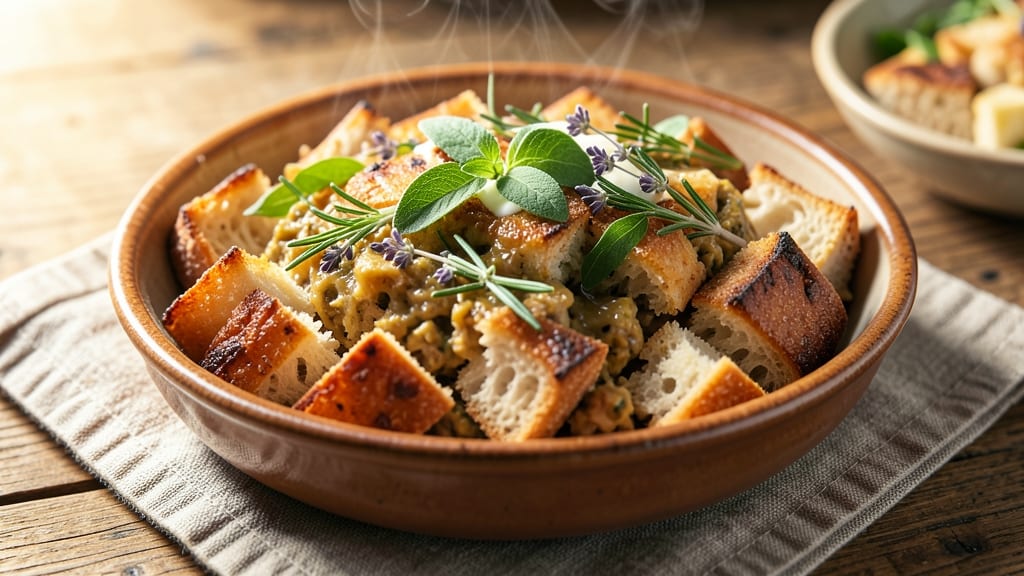
This traditional stuffing recipe no eggs delivers all the crispy crumb and savory depth you love—without binders or compromise. ✨ The secret lies in a method I perfected after years of testing vegetarian versions that actually hold together, using just bread, herbs, and broth to create that signature texture.
What makes this recipe work is the combination of day-old bread (for maximum crumb), finely chopped vegetables for moisture, and a generous amount of broth that infuses flavor while keeping the mixture tender.
The herbs—sage, thyme, and rosemary—are toasted lightly in butter first to deepen their aroma, creating layers of complexity that make this stuffing unforgettable.
By the time it bakes, you'll have golden, crispy edges with a moist, flavorful center that holds its shape perfectly. The texture is what you'd expect from a classic recipe, but with the flexibility of an egg-free approach that works for any dietary need.
This is the kind of stuffing that disappears faster than you can say "second helping."
Perfect for Thanksgiving, holiday meals, or even a weeknight dinner when you want restaurant-quality flavor without the fuss. The method is straightforward, but the result is anything but basic—rich, aromatic, and impossible to resist.
Ingredients for traditional stuffing recipe no eggs
Day-old bread, herbs, and broth—just what you need for that perfect crispy crumb.
| Ingredient | Amount | Notes |
|---|---|---|
| Day-Old Sourdough Bread 🍞 | 12 cups | Cubed, crusts removed for even toasting |
| Vegetable Broth 💧 | 3 cups | Low-sodium preferred for flavor control |
| Unsalted Butter 🧈 | ½ cup | Cold, cubed for even distribution |
| Fresh Sage Leaves 🌿 | ½ cup | Finely chopped, stems removed |
| Fresh Thyme Leaves 🌿 | ¼ cup | Stems removed, finely chopped |
| Fresh Rosemary 🌿 | ¼ cup | Finely chopped, stems removed |
| Yellow Onion 🧅 | 1 whole | Finely diced, about 1 cup |
| Celery Stalks 🥬 | 3 whole | Finely diced, about 1 cup |
| Garlic Cloves 🧄 | 4 cloves | Minced, for deep flavor |
| Salt 🧂 | 1 ½ tsp | Diamond Crystal preferred |
| Freshly Ground Black Pepper 🌶️ | 1 tsp | Adjust to taste |
| Vegetable Oil 🫒 | ¼ cup | For crispy edges |
The bread is non-negotiable here—day-old sourdough gives you that ideal crumb texture, but French bread or brioche work too if that's what you've got. Toast it first in the oven at 375°F for 10-15 minutes until golden and dry. Whole Foods or local bakeries often have perfect day-old loaves for this. For the herbs, fresh is ideal, but if you're in a pinch, dried works at one-third the amount—just make sure they're organic to avoid bitterness. The broth? Homemade vegetable broth is best, but even the good low-sodium store-bought stuff (like Pacific Foods) will do the trick.
No fresh sage? Dried sage at one-third the amount gets you close, but the flavor won't be as vibrant. Swapping rosemary for thyme or vice versa? Go for it—they're both stellar, just different vibes. The onion and celery are the moisture anchors, so don't skip them. If you're prepping ahead, you can chop these and store them in the fridge for 3 days in an airtight container. The garlic? Freshly minced is a must—jarred garlic just doesn't cut it here. And if you're worried about the stuffing being too dry, add an extra splash of broth when mixing.
This stuffing keeps beautifully—3 days in the fridge, fully covered, and 3 months frozen in a sealed container. For freezing, let it cool completely before sealing to avoid condensation. Reheat in the oven at 350°F until warmed through, about 20-25 minutes, covered with foil for the first 10 minutes to trap moisture. Leftovers? Toss them in a pan with a little extra broth and butter for a quick, crispy breakfast hash—game-changer.
Why You'll Love This Recipe
- I’ll be real: I used to stress about binding stuffing properly. This version? Just toast the sourdough cubes until golden—no scrambling, no mess, and they hold together like magic. The butter melts into the bread, creating that perfect crispy edge you crave.
- Here’s what sold me: this stuffing reheats like a dream. Toss cold slices in the oven with a splash of broth, and it’s just as good the next day—perfect for sandwiches or a quick lunch. (Yes, even on a Tuesday night.)
Step-by-step instructions for herb-infused crispy crumb stuffing
Here's how to transform simple ingredients into golden, aromatic stuffing without eggs.
👨🍳 Step 1: Cube and Toast the Day-Old Sourdough
Remove crusts from the 12 cups day-old sourdough bread and cut into 1-inch cubes. Spread them evenly on two rimmed baking sheets. Bake at 350°F for 10-12 minutes, stirring once halfway, until the cubes are light golden and completely dry—this prevents a gummy texture later.
I like to toast the bread in batches if my oven is small. Watch closely after 8 minutes—the cubes should be dry but not browned. Let them cool completely before proceeding. This step is crucial: dry bread absorbs moisture better and creates crispy edges when baked later.
🍳 Step 2: Sauté the Herb and Vegetable Base
Heat the 0.25 cup vegetable oil in a large skillet over medium heat. Add the finely diced yellow onion and diced celery stalks, cooking for 5-6 minutes until softened and translucent. Add the minced garlic cloves and cook for 30 seconds until fragrant—don't let it brown or it'll turn bitter.
Remove from heat and stir in the 0.5 cup chopped fresh sage leaves, 0.25 cup chopped fresh thyme leaves, and 0.25 cup chopped fresh rosemary. Let the mixture cool slightly—this infuses the herbs' flavors into the oil, which will carry through the entire stuffing. I press the herbs gently with a spoon to release their oils.
🥘 Step 3: Mix Everything with Cold Butter
In a very large bowl, combine the toasted sourdough cubes with the herb-vegetable mixture. Add the 0.5 cup cold cubed unsalted butter and 3 cups vegetable broth, tossing gently until the butter is evenly distributed. Sprinkle with 1.5 tsp salt and 1 tsp freshly ground black pepper, mixing just until combined.
Here's the thing—don't overmix. You want the butter to coat the bread evenly without breaking it apart. The cold butter will melt slightly during baking, creating that signature crispy crust. If the mixture looks dry, add 1-2 tablespoons more broth to help bind everything together.
🔥 Step 4: Bake to Golden Perfection
Transfer the stuffing mixture to a greased 9x13-inch baking dish and spread it evenly. Bake at 375°F for 30-35 minutes until the top is deep golden brown and the edges are crispy. If the top browns too quickly, tent loosely with foil for the last 10 minutes of baking.
For extra crispiness, I broil the stuffing for 2-3 minutes at the very end—watch it like a hawk to prevent burning. The internal temperature should reach 165°F when checked with a meat thermometer. Let it rest for 10 minutes before serving to allow the juices to redistribute.
Pro Tips For Making Traditional Stuffing Recipe No Eggs
- Cube It Small: Sourdough’s crust is tough—cut it into ½-inch cubes, not chunks. I learned this the hard way when my stuffing stayed dense and chewy because the bread didn’t absorb the broth fast enough. Smaller pieces toast faster and soak up flavor like a sponge.
- Dry the Crumbs: Spread those sourdough cubes on a baking sheet and let them sit for 30 minutes before adding broth. Damp bread turns to mush; dry bread turns golden and crisp. Skip this, and you’ll regret it when your stuffing collapses into a sad, soggy brick.
- Butter in Layers: Don’t just toss butter in at the end—mix cold, cubed butter into the dry bread before adding broth. It melts slowly, coating each bite and keeping the stuffing moist without making it greasy. Trust me, your turkey will smell like heaven.
- Broth to Toast: Heat the broth until it’s almost boiling, then pour it over the bread-butter mix. The residual heat toasts the edges while the stuffing bakes, giving it that restaurant-quality crust. Cold broth? Your stuffing will steam instead of crisp.
Best sauces and condiments for these flavors
Herb-Infused Gravy
This stuffing pairs beautifully with a rich, herb-infused gravy that echoes its flavors. Start by deglazing your roasting pan with 1 cup vegetable broth after removing your turkey or protein.
Add 2 tbsp butter, 1 tbsp flour, and 1 tsp each of fresh thyme and rosemary (from your stuffing mix). Whisk until smooth, then simmer until thickened. For extra depth, stir in 1 tbsp balsamic vinegar—it cuts through the richness and ties everything together. 💛
Apple-Cider Glaze
For a sweet-savory contrast, drizzle warm stuffing with a simple apple-cider glaze. Simmer ½ cup apple cider with 1 tbsp maple syrup and 1 tsp fresh sage until reduced by half.
The caramelized notes complement the herbs and add a festive touch. I love this for Thanksgiving—it feels special without being overly sweet.
Garlic-Herb Oil
Transform leftover stuffing into a flavorful topping by infusing it with garlic-herb oil. Heat ¼ cup olive oil with 3 minced garlic cloves and 1 tsp each of thyme and rosemary until fragrant.
Drizzle over stuffing just before serving—it adds a luxurious, aromatic finish. Perfect for turning leftovers into a gourmet dish. ✨
Mustard Cream Sauce
A tangy mustard cream sauce elevates this stuffing to new heights. Mix ½ cup sour cream with 2 tbsp Dijon mustard, 1 tbsp chopped chives, and a pinch of salt.
Spoon over the stuffing before serving—it adds a creamy, bright contrast that balances the richness. Trust me, this is a game-changer for picky eaters who might shy away from herbs.
Spiced Honey Drizzle
For a touch of warmth, drizzle stuffing with a spiced honey glaze. Heat 2 tbsp honey with ½ tsp cinnamon and a pinch of cayenne until smooth. The subtle sweetness and spice enhance the herbs without overpowering them. This works especially well with a savory turkey dinner. 🌟
Butter-Basted Sage
For a restaurant-worthy finish, baste the stuffing with melted butter and fresh sage during the last 5 minutes of baking. Use ¼ cup butter and 1 tbsp chopped sage, brushing it over the top until golden and fragrant.
This technique adds a crispy, aromatic crust that’s impossible to resist. It’s the secret weapon I use for holiday meals. 🔥
Nutrition facts
Frequently asked questions
Can I use fresh bread instead of day-old bread?
Fresh bread works, but it won't give you that perfect crispy crumb. If you must use fresh bread, slice it into thin pieces, toast them thoroughly at 350°F for 15-20 minutes until completely dry, then cube them. This extra step mimics the texture of day-old bread and prevents a gummy stuffing.
What if I don't have fresh herbs?
Dried herbs will work in a pinch, but use one-third the amount of what the recipe calls for. For example, if the recipe calls for 0.5 cup fresh sage, use just 1.5 teaspoons dried sage. Toast the dried herbs in the oil for 1 minute to wake up their flavor before adding the vegetables.
How can I make this stuffing extra crispy?
For maximum crispiness, spread the stuffing in a single layer on a baking sheet instead of a deep dish. Bake at 400°F for 20-25 minutes, flipping halfway, until golden and crunchy. You can also broil for 2-3 minutes at the end of baking—just keep an eye on it to avoid burning.
Can I make this stuffing ahead of time?
This stuffing keeps well in the fridge for 3 days and freezes beautifully for 3 months. Assemble it completely, then refrigerate or freeze it in a sealed container. When ready to bake, thaw it in the fridge overnight, then bake as directed—just add 1-2 tablespoons extra broth if it seems dry after thawing.
Why does my stuffing turn out dry?
Dry stuffing usually means the bread wasn't toasted enough or too much moisture evaporated during baking. To fix this, make sure your bread cubes are completely dry before mixing, and don't overbake. If it's still dry, sprinkle 1-2 tablespoons broth over the top during the last 5 minutes of baking to restore moisture.