
Breakfast & Brunch
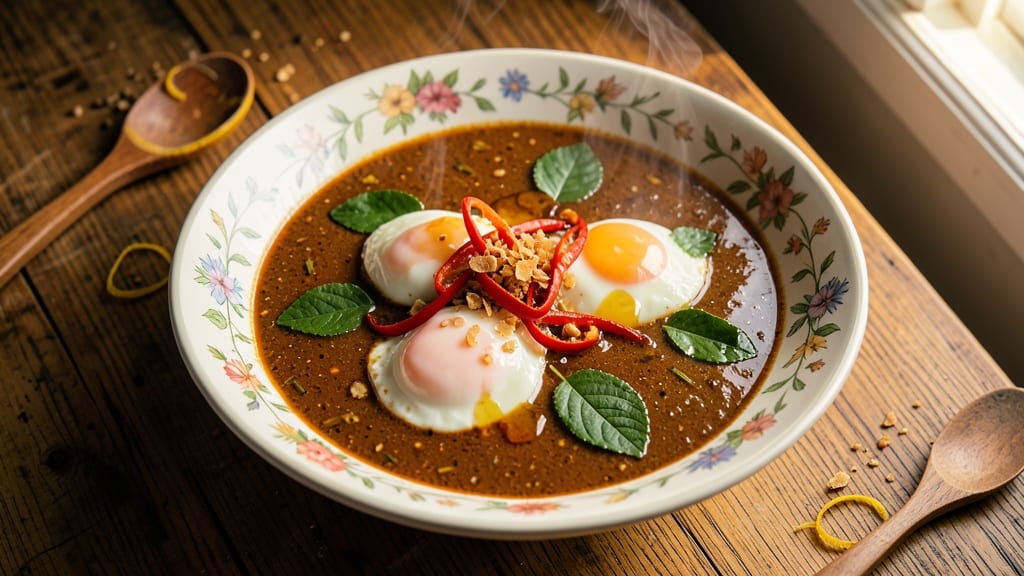
This Thai egg curry recipe transforms breakfast into a fragrant, spicy adventure with tender poached eggs floating in rich coconut cream. 🌟 The secret lies in balancing traditional Thai aromatics—lemongrass, galangal, and kaffir lime—with a touch of heat from chili and fish sauce, all simmered into a velvety sauce that clings to every bite.
The magic happens in layers: first building the fragrant curry base with toasted spices, then gently simmering the coconut milk until it thickens just enough to coat the eggs perfectly. Poaching the eggs in the hot curry ensures they stay soft and silky, absorbing the aromatic flavors without overcooking.
What you’ll end up with is a dish that’s both comforting and exciting—creamy coconut sauce with bright, spicy notes, topped with perfectly poached eggs that add richness and texture. The balance of flavors is what makes this curry special: sweet, spicy, tangy, and umami all in one bowl.
This recipe is perfect for weekend brunches or lazy mornings when you want something more than toast. The curry keeps well in the fridge, so you can make a big batch and enjoy it all week. Let’s get cooking!
Ingredients for thai egg curry
Four eggs, one can of coconut milk, and a handful of Thai pantry staples.
| Ingredient | Amount | Notes |
|---|---|---|
| Large Eggs 🥚 | 4 whole | Freshly poached in curry |
| Coconut Milk 🥥 | 1 can (13.5 oz) | Full-fat for creaminess |
| Fish Sauce 🍜 | 1 ½ tbsp | Red Boat preferred |
| Lemongrass 🌿 | 3 inches | White part only, finely chopped |
| Galangal 🌿 | 2 inches | Peeled, thinly sliced |
| Kaffir Lime Leaves 🍋 | 2 whole | Torn into strips |
| Green Curry Paste 🌶️ | 2 tbsp | Maesri brand recommended |
| Thai Chili Paste 🌶️ | 1 tbsp | Adjust for heat preference |
| Garlic Cloves 🧄 | 4 cloves | Minced for depth |
| Shallots 🧅 | 2 whole | Finely chopped |
| Coconut Sugar 🍯 | 1 tbsp | Or substitute brown sugar |
| Vegetable Oil 🫒 | 2 tbsp | For sautéing |
| Lime Juice 🍋 | 1 tbsp | Freshly squeezed |
| Salt 🧂 | ½ tsp | To taste |
| Fresh Cilantro 🌿 | ¼ cup | Chopped for garnish |
The Thai aromatics are non-negotiable here. Lemongrass and galangal should be fresh—no substitutes will give you that same citrusy, peppery punch. Asian markets are your best bet for quality galangal, but if you can't find it, ginger in a pinch (though it's not the same). Kaffir lime leaves? Freeze extras—they keep for months and add magic to any curry. For the curry paste, Maesri or Maesri-style is ideal, but any good green curry paste works. If you're using a paste with less heat, add an extra dash of chili flakes to balance.
No fish sauce? Soy sauce plus a splash of lime juice gets you close, but you'll lose that umami depth. Short on coconut milk? Light coconut milk plus a splash of heavy cream keeps it creamy. The coconut sugar can be swapped for brown sugar, but the flavor won't be identical—it's that caramel-like sweetness that makes this curry special. Fresh herbs matter here: cilantro for garnish and Thai basil if you can find it (regular basil works in a bind). The eggs? Room temperature poach better—just take them out of the fridge 15 minutes before cooking.
This curry tastes even better the next day—flavors meld beautifully. Keeps for 4-5 days in the fridge, or 3 months frozen. I like to portion it into individual containers so I can grab a bowl for breakfast all week. Reheat gently on low heat or in the microwave with a splash of water to keep it creamy. The eggs will separate a bit when reheating—just stir them back together and serve with steamed jasmine rice.
Why You'll Love This Recipe
- One-Pot Magic: I swear by this recipe—just crack eggs into a simmering coconut milk base with lemongrass and galangal, and let the stovetop do the rest. No flipping, no fussing, just velvety curry magic in one pan.
- Umami Bomb: That first spoonful of fish sauce hitting the hot oil? Instant flavor explosion. The eggs poach in a broth so rich and tangy—slightly funky, slightly sweet—that it tastes like a hug from a Thai street cart.
- Leftovers That Win: Between us, this curry begs for seconds. I make a big batch on Sunday, and by Wednesday, I’m still sneaking bites straight from the fridge. The coconut milk keeps it creamy even after reheating, and the eggs stay perfectly tender.
- Budget-Friendly Luxury: Galangal and lemongrass might sound fancy, but a little goes a long way—plus, they’re cheaper than you’d think. Eggs stretch this dish into a full meal, and the fish sauce adds depth without breaking the bank. Fancy flavors, zero guilt.
Step-by-step instructions for Thai egg curry
This curry comes together in layers of flavor—creamy, spicy, and perfectly balanced.
🍳 Step 1: Build the Aromatic Base
Heat the 2 tablespoons vegetable oil in a large skillet over medium heat. Add the 2 whole shallots and 4 cloves garlic cloves, cooking for 3-4 minutes until the shallots turn translucent and the garlic releases its fragrance. You'll know it's ready when the garlic smells irresistible but hasn't turned brown yet.
Add the 2 tablespoons green curry paste and 1 tablespoon Thai chili paste, stirring constantly for 1-2 minutes until the paste deepens in color and the oil becomes fragrant. Here's where the magic begins—the curry's signature flavors start developing right here. Don't rush this step; let the spices bloom fully before moving forward.
🍳 Step 2: Sauté the Herbs and Add Coconut Milk
Toss in the 3 inches lemongrass (finely chopped), 2 inches galangal (thinly sliced), and 2 whole kaffir lime leaves (torn into strips). Stir for 1-2 minutes until the galangal softens slightly and releases its citrusy aroma—this is what gives Thai curry its unique depth.
Pour in the 1 can (13.5 oz) coconut milk and stir gently to combine. Add the 1.5 tablespoons fish sauce and 1 tablespoon coconut sugar, bringing everything to a gentle simmer. Let it cook uncovered for 8-10 minutes until the coconut milk thickens slightly and the flavors meld together. You'll see the curry transform from a thin sauce to a rich, velvety base—this is your foundation.
🍳 Step 3: Poach the Eggs Directly in the Curry
Crack the 4 whole large eggs directly into the simmering curry, spacing them evenly. Let them cook gently for 3-4 minutes—you want the whites set but the yolks still runny and vibrant. The curry's warmth will gently poach the eggs without overcooking them. Here's the thing: don't stir the eggs once they're in, or you'll break the delicate whites.
After 3 minutes, gently spoon some of the hot curry over the eggs to ensure even cooking. The curry should be hot enough to cook the eggs through but not so hot that it scrambles them. You're aiming for perfect soft poached eggs with just a hint of firmness around the edges.
🥘 Step 4: Finish and Garnish
Remove the skillet from heat and stir in the 1 tablespoon lime juice and 0.5 teaspoon salt. Taste and adjust the seasoning—you might need a touch more fish sauce for saltiness or lime juice for brightness. The curry should be balanced: creamy from the coconut, spicy from the chili, and tangy from the lime.
Sprinkle the 0.25 cup fresh cilantro over the top and let it sit for 2-3 minutes so the flavors meld together. Serve immediately with steamed jasmine rice—each bite should deliver creamy coconut, tender egg, and layers of aromatic herbs. The eggs should be perfectly set but still silky in the center, floating in that rich, spiced coconut sauce.
Pro Tips For Making Thai Egg Curry
- Crack Eggs Cold: Dump them straight from the fridge into the simmering coconut milk—no pre-whisking, no pre-heating. The shock of cold eggs creates a silky, custardy texture instead of scrambled bits. I learned this the hard way after making rubbery egg curry three times in a row.
- Toast Galangal First: Slice it thin, then dry-toast in a hot pan for 1–2 minutes until fragrant—it’ll smell like ginger and citrus. This draws out the oils and deepens the flavor way more than raw slices ever could. (Yes, even if you’re impatient like me.)
- Simmer Fish Sauce Low: Don’t boil it off—keep the heat at a gentle simmer (tiny bubbles, occasional swirls). Fish sauce burns easily, and once it does, you can’t fix the bitter, chemical taste. I was skeptical until I tried it; now I never skip this.
- Strain the Coconut Milk: Use a fine-mesh sieve or cheesecloth to remove the thick pulp before adding it to the pot. This keeps the sauce silky instead of grainy, and it cuts down on the cooking time by avoiding extra thickening. Sounds weird, but it works—trust me.
Pro cooking tips for this recipe
Spice Bloom Mastery
Let the curry paste toast for 1-2 minutes over medium heat before adding coconut milk—this step develops the Maillard reaction, deepening the paste's flavors. I use a 12-inch cast iron skillet because it retains heat evenly.
If your paste is too dry, add 1 teaspoon coconut milk to help it release its oils. 🔥
Galangal Prep Hack
Peel galangal with a microplane for maximum surface area—thin slices release more citrusy aroma than thick chunks. If you can't find fresh galangal, ginger plus 1 tsp lime zest mimics its flavor, though it won't be identical.
I like to shock the slices in ice water for 30 seconds before cooking to mellow their peppery bite slightly.
Egg Poaching Secrets
Use room-temperature eggs for even cooking—they're less likely to crack when cracking into the curry. Add a pinch of salt to the curry before poaching—this helps the whites set faster.
For extra insurance, I cover the skillet with a lid for the first 2 minutes of poaching to trap steam and prevent the eggs from drying out.
Coconut Milk Thickening
Simmer the coconut milk uncovered for 8-10 minutes—this allows excess water to evaporate without curdling. If it separates, whisk in 1 tsp cornstarch mixed with 1 tbsp water and cook for 1 more minute.
I prefer full-fat coconut milk for maximum creaminess, but if using light, add 1 tbsp heavy cream at the end.
Flavor Balancing
Taste your curry after adding lime juice—it should hit all four flavor notes: creamy (coconut), spicy (chili), sweet (sugar), and umami (fish sauce). Need more depth? Add ½ tsp soy sauce for extra umami.
For brightness, an extra ½ tsp lime zest works wonders. The eggs should complement, not overpower—the sauce should be the star.
Equipment Upgrades
A fine-mesh strainer makes removing lemongrass stalks and lime leaves easier after cooking. For precise temperature control, I use a thermometer to keep the curry at 190-200°F while poaching eggs—this prevents overheating. A silicon spatula helps scrape up any stuck-on curry bits without scratching your pan. 💡
Nutrition facts
Frequently asked questions
Can I make this Thai egg curry vegetarian?
Yes! Swap the fish sauce for 1.5 tablespoons soy sauce plus 1 teaspoon mushroom powder for umami depth. Use vegetable broth instead of water when thinning coconut milk if needed, and add 1 cup firm tofu (cubed) to the curry during the last 5 minutes of simmering. The tofu absorbs flavors beautifully.
Why did my coconut milk curdle?
Curdling happens when coconut milk is added to a hot pan too quickly or when the curry boils. To prevent it: reduce heat to medium-low before adding coconut milk, and never let the curry boil. If it happens, whisk in 1 teaspoon cornstarch mixed with 1 tablespoon water and simmer for 1 minute to restore creaminess.
How do I adjust the spice level?
Start with the 1 tablespoon Thai chili paste called for, then taste before serving. For milder heat, reduce to ½ tablespoon. For extra spice, add ½ teaspoon chili flakes or a pinch of cayenne. If you love heat, stir in 1 teaspoon sambal oelek at the end—it adds smoky depth without overpowering.
Can I make this ahead of time?
Prepare the curry base (without eggs) up to 2 days ahead and refrigerate. Reheat gently, then poach the eggs fresh when ready to serve. For best results, store the curry in an airtight container and reheat on low heat with a splash of water to maintain creaminess. The eggs should always be added fresh.
What's the best rice to serve with this?
Jasmine rice is traditional, but thai fragrant rice or even brown rice works well. For extra fluffiness, cook rice with ½ teaspoon salt and 1 tablespoon coconut milk mixed into the water. Serve in individual bowls with the curry spooned over the top—each bite should have equal parts rice and curry.