
Breakfast & Brunch
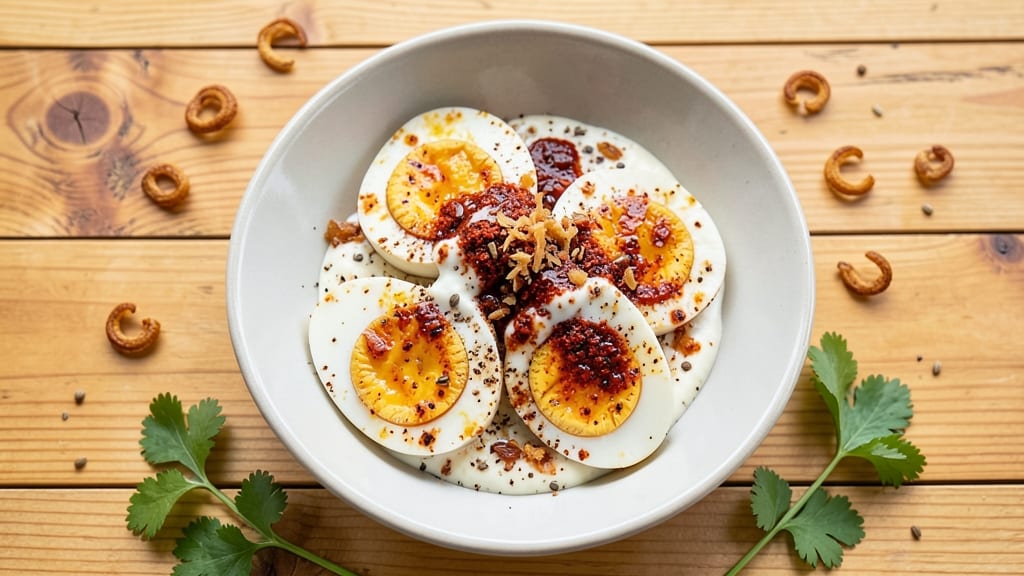
This tandoori egg recipe transforms humble hard-boiled eggs into a restaurant-worthy dish with a smoky charred crust and molten yolk center.
The secret lies in marinating the eggs in a vibrant yogurt-spice blend inspired by North Indian street food—where the smoky aroma of tandoori spices meets the creamy richness of runny yolks.
I developed this technique after realizing how often we overlook eggs as a canvas for bold flavors, and the results are nothing short of spectacular.
The process begins with a 30-minute marinade of yogurt, garam masala, and a touch of turmeric, which tenderizes the eggs while infusing them with warm, earthy spices. After baking or grilling, the eggs develop a crispy, charred exterior that contrasts perfectly with the silky yolk inside.
This dish is vegetarian, protein-packed, and ideal for brunch or as a flavorful appetizer.
What makes this recipe stand out is the balance of textures—crispy shell, creamy yolk, and a hint of spice in every bite. The marinade’s tanginess cuts through the richness, while the charred edges add depth reminiscent of traditional tandoori cooking.
Serve with a cooling cucumber raita or a simple salad to round out the meal.
Ready in under 45 minutes, this dish delivers restaurant-quality results with minimal effort. The key is patience—letting the marinade work its magic and achieving that perfect char. Whether you're hosting brunch or craving something unique, these tandoori eggs will impress without the fuss.
Ingredients for tandoori egg
Eight whole eggs and a bold spice blend transform into restaurant-worthy tandoori eggs with crispy charred edges.
| Ingredient | Amount | Notes |
|---|---|---|
| Large Eggs 🥚 | 8 whole | Fresh, room temperature preferred |
| Plain Whole Milk Yogurt 🥛 | 1 cup | Unflavored, full-fat for creaminess |
| Garam Masala 🌶️ | 2 tsp | Authentic blend for authentic flavor |
| Ground Turmeric 🌿 | ½ tsp | Freshly ground for vibrant color |
| Ground Cumin 🌿 | 1 tsp | Toasted for deeper aroma |
| Ground Coriander 🌿 | 1 tsp | Freshly ground preferred |
| Red Chili Powder 🌶️ | ½ tsp | Adjust for heat preference |
| Fresh Ginger 🧄 | 1 tbsp | Finely grated, fresh only |
| Garlic Cloves 🧄 | 3 cloves | Minced, fresh only |
| Lemon Juice 🍋 | 1 tbsp | Freshly squeezed |
| Olive Oil 🫒 | 1 tbsp | Extra-virgin for richness |
| Salt 🧂 | ½ tsp | Diamond Crystal preferred |
| Black Pepper 🌶️ | ¼ tsp | Freshly ground |
The yogurt is the foundation—full-fat Greek-style yogurt from Whole Foods or Trader Joe's works best for that perfect tang and creaminess. Look for garam masala labeled 'authentic' at Indian specialty stores; MDH or Everest brands are reliable. Fresh ginger and garlic are non-negotiable here—they bring the bright, aromatic base that dried spices can't replicate. If you're short on time, a 5-minute microwave ginger-garlic paste works, but fresh is always superior. The eggs should be large and fresh—older eggs are harder to peel after boiling.
No garam masala? Mix 1 tsp cumin, 1 tsp coriander, 0.5 tsp turmeric, and 0.25 tsp black pepper for a close approximation. Substitute Greek yogurt with plain whole milk yogurt at half the amount if needed, but expect slightly less tang. For extra char, brush the marinated eggs with olive oil before grilling. The lemon juice can be swapped for lime juice at the same amount, though lemon's brightness complements the spices better. If you're sensitive to heat, reduce the red chili powder to a pinch—the garam masala already provides warmth without the burn.
Marinated eggs keep in the fridge for up to 24 hours before cooking, but fresh is best. After charring, serve immediately for that perfect runny yolk. Store cooked eggs in an airtight container for 2-3 days—they reheat beautifully in a skillet with a splash of water. For meal prep, marinate and store eggs in their shells in the fridge, then boil and char as needed. The spices intensify over time, so make fresh marinade daily for peak flavor. Leftovers make great breakfast wraps or salads the next day.
Why You'll Love This Recipe
- No-Yogurt Waste: I swear by this trick—mix the yogurt marinade directly into the eggs, no straining, no extra bowls. That creamy tang from the whole milk yogurt clings to every bite, and honestly? The leftovers taste even better the next day.
- Smoky Warmth in Minutes: Garam masala and cumin aren’t just spices—they’re flavor shortcuts. Toss the eggs in that spice blend, and suddenly you’ve got the charred, smoky depth of a tandoor oven without the fuss. The turmeric gives it that golden glow, too.
- Lunchbox Hero: These eggs hold up like champs. Pack them cold for work or school—still firm, still packed with that garlicky-spiced punch. My kids grab them before their sandwiches, no joke.
- Pantry Magic: Five ingredients, zero specialty items. You’ve got yogurt, eggs, and spices? You’ve got dinner. Between us, this is my go-to when I’m staring at an empty fridge at 6:30 PM.
Step-by-step instructions for tandoori eggs
Transform simple eggs into restaurant-quality tandoori eggs with this precise method.
Prepare the Spice Marinade
In a mixing bowl, combine the 1 cup plain whole milk yogurt, 2 tsp garam masala, 0.5 tsp ground turmeric, 1 tsp ground cumin, 1 tsp ground coriander, 0.5 tsp red chili powder, 1 tbsp finely grated fresh ginger, 3 minced garlic cloves, 1 tbsp freshly squeezed lemon juice, 1 tbsp extra-virgin olive oil, 0.5 tsp salt, and 0.25 tsp freshly ground black pepper. Mix thoroughly until the spices are fully incorporated and the yogurt has a vibrant golden-orange hue.
This marinade is the foundation of the dish—each spice plays a crucial role. The yogurt tenderizes the eggs while the garam masala provides that signature smoky depth. Let the mixture sit at room temperature for 15 minutes to allow the spices to bloom and the flavors to meld together. The consistency should be thick but pourable, similar to heavy cream.
Coat the Eggs Thoroughly
Crack all 8 large eggs into a separate bowl and whisk them gently to combine the yolks and whites. Gradually pour the egg mixture into the spice marinade while stirring continuously with a silicone spatula. This ensures each egg is evenly coated with the aromatic blend.
For best results, let the marinated eggs rest for 30 minutes at room temperature. This allows the spices to penetrate the egg whites slightly, creating a more flavorful crust when cooked. The eggs should now have a vibrant yellow-orange color and a distinct spiced aroma. If you notice any separation between the eggs and marinade, gently stir again to reintegrate them.
Preheat and Prepare the Grill or Pan
Preheat your grill to medium-high heat (around 400°F) or heat a heavy-bottomed skillet over medium-high heat. If using a grill, clean the grates thoroughly with a wire brush to prevent sticking. For the skillet method, add just enough oil to lightly coat the bottom—about 1 teaspoon of olive oil should suffice.
The key to perfect tandoori eggs lies in the cooking surface. You want a hot, dry surface that will create those signature charred spots while keeping the yolks runny. If using a grill, position the eggs 2 inches from the heat source for optimal browning. For the skillet, maintain a steady medium-high heat throughout the cooking process. The eggs should sizzle vigorously when they hit the surface—this indicates they're ready to develop that beautiful crust.
Cook to Charred Perfection
Carefully place the marinated eggs onto the preheated grill or skillet, spacing them about 1 inch apart to allow for even cooking. Cook for 3-4 minutes per side, until the bottoms develop a deep golden-brown crust with visible char marks. The eggs should release easily from the surface when ready to flip—if they stick, gently loosen with a spatula rather than forcing them.
For the ultimate tandoori effect, finish the eggs under the broiler for 1-2 minutes if using a skillet, watching closely to prevent over-browning. The yolks should remain completely runny—this is the hallmark of a perfect tandoori egg. The exterior should be crispy with charred spots, while the interior maintains that luxurious, custard-like yolk. Serve immediately while the crust is still crisp and the yolk is molten hot.
Serve with Traditional Accompaniments
Transfer the cooked tandoori eggs to a serving platter and garnish with additional freshly ground black pepper and a sprinkle of freshly chopped cilantro if desired. Serve immediately with warm naan bread or steamed basmati rice to soak up the rich yolk and spiced juices.
Each bite should deliver a perfect balance of textures—crispy charred exterior giving way to creamy, spiced egg filling. The garam masala and cumin provide that authentic Indian restaurant flavor, while the lemon juice brightens the dish. For an extra touch, serve with a side of mango chutney or tamarind sauce to complement the smoky spices. The eggs should be enjoyed immediately while the crust remains crisp and the yolk maintains its perfect runny consistency.
Pro Tips For Making Tandoori Egg
- Boil Eggs Until Cool: Marinate eggs while still warm—right after boiling. I used to wait until they cooled completely, and the yogurt marinade never stuck properly. Warm eggs absorb the spices better and hold their shape when grilling or baking.
- Strain Yogurt for Smoothness: Whole milk yogurt can be thick and clumpy. Strain it through a fine-mesh sieve or cheesecloth for 10 minutes before mixing—this makes the marinade silky and prevents a grainy texture on the eggs.
- Don’t Overmix the Marinade: Once you add the eggs to the yogurt, give it a gentle toss—just enough to coat. Overmixing breaks the yolks and makes the eggs rubbery. A light, even coating is all you need.
- Broil, Not Bake: Forget the oven’s low-and-slow setting—tandoori eggs need high heat. Broil them on high for 3-4 minutes, watching closely, until the edges are golden and crisp. This mimics the smoky char of a tandoor without drying them out.
Dietary considerations for these flavors
Vegetarian-Friendly Base
This recipe is naturally vegetarian, relying on eggs as the protein source rather than meat or dairy beyond yogurt. The marinade uses plain whole milk yogurt (not dairy-free alternatives) and traditional Indian spices that are universally vegetarian.
For a vegan adaptation, swap the yogurt for a coconut yogurt like So Delicious or Forager brands, though the texture will differ slightly. 🌱
Gluten-Free Assurance
The recipe contains no wheat or gluten-containing ingredients, making it inherently gluten-free. The spices and yogurt used are typically gluten-free, but always double-check labels on garam masala blends—some commercial brands may contain anti-caking agents with gluten.
For extra safety, use certified gluten-free spices like Badia or Spicewalla brands. The charred crust comes purely from the eggs and spices, not any flour-based coatings.
Spice Sensitivity Options
Adjust the heat level easily by reducing the red chili powder to ¼ tsp or omitting it entirely. The garam masala already provides warmth without the burn. For those with mild spice sensitivities, I recommend using mild chili powder from Penzeys or Simply Organic brands, which have lower capsaicin content.
The lemon juice and yogurt help balance any residual heat.
Allergen Considerations
This recipe contains eggs as the primary ingredient, so it's not suitable for those with egg allergies. The yogurt used is dairy-based, which may be problematic for lactose-intolerant individuals unless using a dairy-free alternative.
For nut allergies, all ingredients are naturally nut-free, but always verify spice blends for cross-contamination warnings. The recipe's simplicity makes it easy to identify and avoid potential allergens.
Protein-Packed Nutrition
Each serving provides approximately 12 grams of complete protein per egg, making this a satisfying vegetarian option. The yogurt adds probiotics and calcium, while the spices contribute antioxidants. For a higher-protein version, serve with chickpea-based hummus or tofu scramble on the side.
The dish is naturally cholesterol-conscious when using egg whites, though whole eggs provide additional nutrients like vitamin D and choline.
Nutrition facts
Frequently asked questions
Can I make tandoori eggs without a grill?
A skillet or oven works perfectly! For the skillet method, use a heavy-bottomed pan over medium-high heat with just enough oil to prevent sticking. For oven-baked eggs, place marinated eggs on a parchment-lined tray at 425°F for 12-15 minutes, flipping halfway. The key is achieving that charred crust—use a broiler for 1-2 minutes at the end if needed.
How do I keep the yolks perfectly runny?
Use room-temperature eggs and cook them low and slow—never overheat. For skillets, maintain medium heat and cook for 3-4 minutes per side. If using a grill, position eggs 2 inches from heat and avoid direct flames. The moment the whites set but yolks still jiggle slightly, they're perfect. Serve immediately to prevent overcooking.
What's the best way to store leftover tandoori eggs?
Store cooked eggs in an airtight container in the fridge for 2-3 days. Reheat gently in a skillet with a splash of water to restore crispiness. For longer storage, freeze marinated eggs uncooked in their shells (up to 1 month), then boil and char as needed. The spices intensify when reheated, so fresh is best but leftovers still taste amazing!
Can I make this recipe spicier?
Add ½ tsp cayenne pepper or 1 tsp green chili paste to the marinade for extra heat. For smoky depth, include ½ tsp smoked paprika. Balance with more yogurt or lemon juice if needed. The garam masala already provides warmth, so adjust gradually—taste the marinade before applying to eggs.
Why did my eggs stick to the pan?
This usually happens from too much oil or overcrowding. Use just enough oil to lightly coat the pan and space eggs 1 inch apart. Ensure your pan is hot enough—eggs should sizzle immediately. If they stick, gently loosen with a spatula rather than forcing them. A well-seasoned cast-iron skillet works best for that natural non-stick quality.