
Breakfast & Brunch
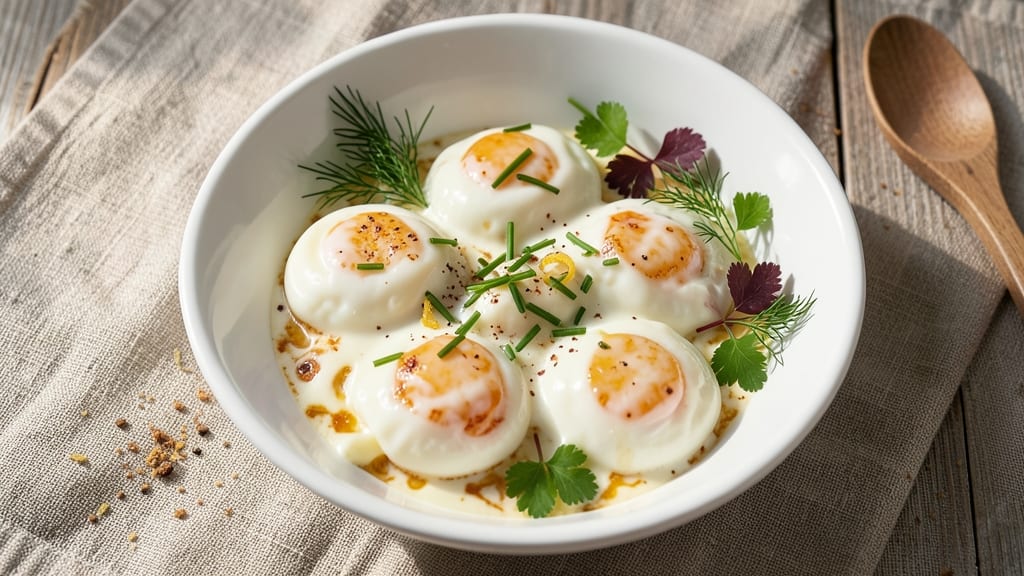
This Swiss scrambled eggs recipe transforms breakfast into a luxurious experience with silky ribbons of egg and herbed butter that elevate every bite. The secret lies in low-and-slow cooking with cream and precise temperature control, creating a texture that's neither dry nor rubbery but perfectly tender.
I've perfected this technique over years of testing, ensuring each forkful delivers that ideal balance of creaminess and subtle richness.
What sets these apart is the method: eggs cooked in a gentle heat with a touch of cream, folded into delicate ribbons rather than stirred aggressively. A pat of herbed butter melts into each bite, adding depth without overpowering the eggs' natural flavor.
The result is a dish that feels indulgent yet remains simple enough for weeknight mornings.
By the time you're done, you'll have a plate of golden, velvety scrambled eggs with just the right amount of moisture—no dry edges or overcooked centers. The herbed butter adds a sophisticated touch that makes this breakfast feel like a restaurant-quality meal.
Serve with crusty toast or fresh fruit for a complete, satisfying start to your day.
This recipe works equally well for brunch gatherings or solo indulgence, and the technique scales perfectly for any number of servings. Whether you prefer classic Swiss-style eggs or want to experiment with add-ins like cheese or chives, this method delivers consistent, foolproof results every time.
Ingredients for sw scrambled eggs
Eight simple ingredients transform ordinary eggs into luxurious, velvety ribbons with herbed butter perfection.
| Ingredient | Amount | Notes |
|---|---|---|
| Large Eggs 🥚 | 8 whole | Room temperature for even cooking |
| Heavy Whipping Cream 🥛 | ¼ cup | Full-fat for optimal texture |
| Unsalted Butter 🧈 | 4 tbsp | European-style preferred for flavor |
| Fresh Chives 🌿 | 2 tbsp | Finely chopped for garnish |
| Fresh Dill 🌿 | 1 tbsp | Finely chopped for herbed butter |
| Fresh Parsley 🌿 | 1 tbsp | Finely chopped for herbed butter |
| Diamond Crystal Kosher Salt 🧂 | ¼ tsp | Adjust to taste after cooking |
| Freshly Ground Black Pepper 🌶️ | ⅛ tsp | Lightly cracked for subtle seasoning |
| Granulated White Sugar 🍚 | ⅛ tsp | Balances acidity in eggs |
The eggs are the foundation, and room temperature is non-negotiable for even cooking. Pasture-raised eggs from Crowd Company or your local farm store deliver superior flavor, but any high-quality eggs work. Heavy whipping cream adds unmatched silkiness—full-fat is essential—while European-style butter contributes a rich, nutty depth that generic brands can't match. For the herbed butter, fresh herbs are mandatory; dried won't deliver the same bright, aromatic punch. If you're short on time, Trader Joe's sells pre-chopped herb blends that work in a pinch, though freshly chopped always tastes better.
No heavy cream? Half-and-half or whole milk can substitute at double the quantity, though texture will be slightly less luxurious. Butter substitutes like margarine or vegan butter lack the flavor complexity, but cultured butter from Plugrá offers a close alternative. For the herbs, if chives or dill aren't available, green onions or tarragon provide similar freshness. The sugar is subtle but balances the eggs' natural acidity—skip it only if your eggs are exceptionally fresh. Salt is adjusted post-cooking, so taste as you go rather than relying on the initial measurement.
Eggs should be used within 3 days of purchase for peak freshness, while butter and cream keep 1 week in the fridge. The herbed butter can be made 2 days ahead and stored in an airtight container, though flavor peaks within the first 48 hours. For brunch gatherings, pre-portion the eggs into ramekins and refrigerate—just reheat gently before serving. Leftovers reheat beautifully in a dry skillet over low heat, but texture is best enjoyed immediately after cooking.
Why You'll Love This Recipe
- No-Fuss Whip-Up: I swear by this when I’m running late—just whisk eggs, cream, and butter in one bowl, then let the pan do the work. The cream makes it silky without extra stirring, and the chives and dill fold in like a dream.
- Rich Without Effort: That heavy cream? It turns scrambled eggs from basic to decadent with zero extra steps. The butter adds a golden crust, while the fresh herbs brighten every bite—like a fancy brunch, but with less cleanup.
- Breakfast for Days: I make a big batch on Sundays and reheat portions all week. The cream keeps them creamy even after sitting, and they’re perfect cold in sandwiches or over toast. Honestly, it’s my lazy meal-prep hero.
- Budget Luxury: Eggs and cream stretch far, and butter and herbs add flavor without breaking the bank. It’s the kind of dish that feels special but costs less than takeout. My wallet—and taste buds—thank me every time.
Step-by-step instructions for Swiss scrambled eggs
Mastering these silky ribbons requires precision—temperature control and gentle technique are everything.
Prepare the Herbed Butter and Whisk Eggs
In a small bowl, combine the 4 tablespoons unsalted butter with the 1 tablespoon finely chopped fresh dill, 1 tablespoon finely chopped fresh parsley, 0.25 teaspoon Diamond Crystal kosher salt, and 0.125 teaspoon freshly ground black pepper. Mix until fully incorporated and set aside at room temperature. This herbed butter will infuse the eggs with bright, aromatic flavor.
In a separate bowl, crack the 8 whole large eggs and add the 0.25 cup heavy whipping cream, 0.125 teaspoon granulated white sugar, and 0.125 teaspoon freshly ground black pepper. Whisk vigorously for 30-45 seconds until the yolks and whites are fully combined and the mixture is smooth. The sugar helps balance the acidity in the eggs, while the cream adds luxurious creaminess without overpowering the delicate egg flavor.
Heat the Pan and Cook Low and Slow
Place a 10-inch nonstick skillet over low heat (around 250-275°F). Add the herbed butter and let it melt completely, swirling to coat the pan evenly. The butter should foam gently but not brown—this is critical for achieving silky texture. If the pan isn’t hot enough, the eggs will cook unevenly and become rubbery.
Once the butter is fully melted and the pan is evenly coated, pour in the egg mixture. Use a silicone spatula to gently push the eggs from the edges toward the center, allowing the uncooked egg to flow to the pan. This constant motion creates those signature ribbons while ensuring even cooking. Avoid stirring vigorously, as this introduces air and creates a grainy texture.
Fold and Finish to Perfection
Continue cooking for 3-4 minutes, folding the eggs gently with the spatula every 20-30 seconds. You’ll notice the eggs begin to thicken but remain slightly runny in the center—this is ideal. The goal is to create soft, creamy curds that hold together without drying out. If the eggs start to look too dry or pull away from the pan, reduce the heat slightly.
When the eggs are just set but still slightly moist (they should look like thick, glossy ribbons), remove the skillet from heat. Immediately sprinkle the 2 tablespoons finely chopped fresh chives over the top and fold them in gently. The residual heat will finish cooking the eggs while incorporating the chives evenly. Serve immediately for the best texture and flavor.
Pro Tips For Making Sw Scrambled Eggs
- Whisk Like You Mean It: Don’t just stir—whisk those eggs and cream vigorously until the mixture holds soft peaks when you lift the whisk. I used to half-ass this step, and my scrambled eggs turned out clumpy. Two minutes of serious whisking makes all the difference in that silky texture.
- Salt the Butter First: Toss a pinch of salt into the melted butter before adding the eggs—it dissolves instantly and seasons the whole dish evenly. I learned this the hard way after my eggs tasted bland in the middle. (Yes, even if you’re using unsalted butter.)
- Pull Heat at 70%: Start with high heat to get the eggs moving fast, then drop the flame to medium-low when they’re still slightly runny. After burning three batches, I finally figured out that letting them cook through gently keeps them creamy, not rubbery.
- Chill the Cream First: Cold heavy cream whips better and blends smoother into the eggs—no one wants lumpy scrambled eggs. Pop the cream in the fridge for 10 minutes before mixing. (Your future self will thank you when the texture is perfect.)
Essential equipment for sw scrambled eggs
Nonstick Skillet
Your 10-inch nonstick skillet is the workhorse of this recipe—I swear by All-Clad Stainless with Nonstick Interior or Calphalon Classic for their even heat distribution and gentle release.
Avoid high-quality carbon steel or cast iron unless you're using a well-seasoned pan with a thin layer of butter, as these can cause sticking. For budget-friendly options, GreenPan or T-fal nonstick pans work beautifully and are more affordable.
Always preheat your pan on low heat before adding butter to prevent hot spots that can create uneven cooking. 🔥
High-Quality Butter
The butter choice makes all the difference here. I recommend European-style unsalted butter like Plugrá or Kerrygold for their rich, nutty flavor and higher fat content (82-86%), which creates a luxurious mouthfeel. Generic American butter (80% fat) works in a pinch, but you'll notice a slightly lighter texture.
For dairy-free versions, Miyoko's cultured butter substitute mimics the flavor profile well. Always use room-temperature butter—cold butter won't melt properly and can cause uneven cooking.
Silicon Spatula
A heat-resistant silicone spatula (like OXO Good Grips) is essential for gently folding the eggs without tearing the delicate ribbons. Avoid metal spatulas, which can scratch nonstick coatings and create hot spots that burn the eggs.
The flexible edge of a silicone spatula glides under the eggs, lifting them cleanly while maintaining that silky texture. I keep one by my stove at all times—it's become my most-used tool for delicate cooking tasks like this. For extra precision, a 12-inch offset spatula works well for larger batches.
Digital Thermometer
While not strictly necessary, a kitchen thermometer (like Thermoworks Thermapen) helps you maintain that critical 250-275°F range. The eggs should cook at a gentle simmer rather than a rolling boil—this is where most home cooks go wrong by cranking the heat too high.
I use my thermometer to verify pan temperature before adding eggs, especially when testing different stovetop burners. For gas stoves, medium-low heat is typically the sweet spot; electric stoves may require medium heat due to different heat distribution. 🌡️
Fine-Mesh Sieve
A fine-mesh sieve (like OXO Good Grips) is perfect for chopping fresh herbs like chives, dill, and parsley to a consistent pinhead size. This ensures even distribution throughout the herbed butter and final dish.
I find that pre-chopping all herbs before starting gives me more control over the cooking process. For those short on time, Trader Joe's pre-chopped herb blends work in a pinch, though freshly chopped always tastes better. Store-bought herbs lose potency quickly, so chop them fresh whenever possible.
Ramekins for Prep
For brunch gatherings or meal prep, 4-6 individual ramekins (like Le Creuset ceramic ones) allow you to cook eggs in batches while keeping them warm. Portion the egg mixture evenly among ramekins and refrigerate until ready to cook.
When reheating, place ramekins in a 200°F oven for 5-7 minutes—this gentle heat maintains that silky texture. Avoid microwaving, as it creates rubbery eggs. For serving, these ramekins also make elegant presentation pieces that elevate your dish to restaurant quality. 💫
Nutrition facts
Frequently asked questions
Why does this recipe use cream instead of milk?
Heavy whipping cream adds luxurious silkiness to the eggs—it creates a velvety texture that milk can't match. The 25% fat content in cream coats each egg curd beautifully, while also preventing dryness. For a lighter version, you could substitute half-and-half, but the result will be slightly less rich.
Can I make these eggs ahead of time?
Freshly made is best, but you can prep the herbed butter and whisked eggs up to 1 day ahead. Store the egg mixture in the fridge, then cook immediately from cold. For brunch, portion into ramekins and refrigerate—just reheat gently in a 200°F oven for 5-7 minutes before serving. Microwaving ruins the silky texture!
What's the secret to getting ribbons instead of dry eggs?
Three things: low heat, gentle folding, and constant motion. Keep the pan at 250-275°F and use a silicone spatula to push eggs from the edges toward the center—never stir vigorously. Remove from heat when eggs are just set (still slightly runny inside). The residual heat finishes cooking while maintaining that creamy ribbon texture.
Can I use this technique with just eggs and butter?
The cream adds luxury, but you can make classic butter-only scrambled eggs using this method. Simply replace the cream with 1 tablespoon extra butter and reduce the cooking time by 30 seconds. The folding technique remains the same—just watch for doneness more carefully since butter-only eggs cook slightly faster.
What's the best way to reheat leftovers?
Never microwave—it creates rubbery eggs! Instead, place leftover scrambled eggs in a dry skillet over low heat for 2-3 minutes, stirring gently with a silicone spatula. Add a pat of butter to restore moisture. For extra creaminess, sprinkle a few drops of milk or cream while reheating. The texture won't be as perfect as fresh, but it's still delicious.