
Breakfast & Brunch
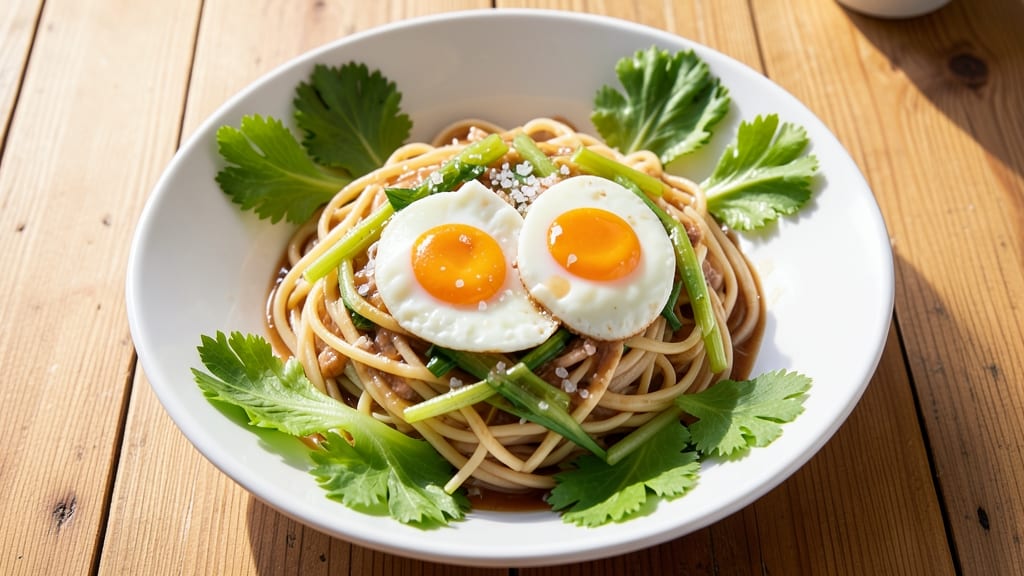
This summer egg noodle recipe transforms a simple breakfast into a restaurant-worthy dish with crispy celery crowns and silky poached eggs. The secret lies in quick-pickling celery for crunch and balancing it with a light, herb-infused broth that keeps the noodles silky without overpowering the fresh flavors.
I developed this dish after craving something lighter than traditional egg dishes but still satisfying enough for brunch.
The dish starts with perfectly poached eggs—firm whites and runny yolks—resting over a bed of chilled egg noodles. The celery crowns, thinly sliced and quick-pickled in rice vinegar and sugar, add a refreshing crunch that cuts through the richness of the eggs.
A sprinkle of fresh herbs and a drizzle of chili oil elevate the flavors without complicating the dish.
What makes this recipe stand out is its balance of textures and temperatures—warm eggs over chilled noodles, crispy celery against tender herbs. It’s the kind of dish that feels indulgent yet light, perfect for summer mornings when you want something special but not heavy.
The assembly is simple, but the result is anything but basic.
Serve immediately for the best experience, or let it sit for 10 minutes to allow the flavors to meld. Pair with a crisp white wine or a refreshing iced tea for a complete summer brunch spread. Here’s how to make it.
Ingredients for summer egg noodle
Fresh ingredients that balance textures and temperatures for a summer brunch showstopper.
| Ingredient | Amount | Notes |
|---|---|---|
| Egg Noodles 🍜 | 8 oz | Fresh or dried, chilled before serving |
| Large Eggs 🥚 | 4 whole | Room temperature for perfect poaching |
| Celery Sticks 🧅 | 4 whole | Thinly sliced into crowns (about 1/4-inch thick) |
| White Vinegar 💧 | ¼ cup | For quick-pickling celery |
| Granulated Sugar 🍚 | 1 tbsp | Balances acidity in pickling liquid |
| Chicken Broth 🍲 | 2 cups | Low-sodium for broth base |
| Fresh Dill 🌿 | ¼ cup | Chopped, stems removed |
| Fresh Chives 🌿 | 0.2 cup | Finely chopped for garnish |
| Chili Oil 🌶️ | 1 tbsp | For finishing drizzle |
| Unsalted Butter 🧈 | 2 tbsp | For finishing noodles |
| Salt 🧂 | 1 ½ tsp | Kosher or sea salt |
| Black Pepper 🌶️ | ½ tsp | Freshly ground |
| Rice Vinegar 💧 | 1 tbsp | For celery pickling |
The celery crowns are the star—look for bright green, crisp stalks at the store. Trader Joe's or local farmers markets have the freshest. Thinly slice them at a slight angle for maximum surface area, which is key for that perfect crunch. If you can't find fresh dill or chives, dried works at half the amount, but fresh is ideal for that bright, summery flavor. For the eggs, use room-temperature eggs—they poach more evenly. I always buy organic, free-range eggs for the best texture, but any good-quality eggs will work.
No fresh herbs? Dried dill and chives are fine (just use half the amount), but fresh is worth the trip to the store. For the broth, low-sodium is a must—you don’t want to overpower the delicate flavors. If you don’t have chili oil, a mix of olive oil and a pinch of red pepper flakes works in a pinch. The rice vinegar for pickling should be unseasoned—seasoned vinegars can add unwanted flavors. For the noodles, fresh egg noodles are ideal, but dried works too—just cook them al dente and chill before serving.
The celery pickling liquid keeps for 3 days in the fridge, so make extra for salads or sandwiches. Store the cooked noodles in an airtight container for up to 2 days, but they’re best fresh. The poached eggs should be served immediately—once they cool, the whites get rubbery. If you’re prepping ahead, pickle the celery and make the broth the night before, then assemble everything in the morning. The dish reheats beautifully if you need to, but it’s best served at room temperature.
Why You'll Love This Recipe
- No Boil, No Stress: I swear by this trick—just a quick soak in the vinegar-sugar bath, and those egg noodles soften perfectly. No pot clogging, no waiting for water to boil, and zero cleanup afterward.
- Sweet-Sour Magic: That vinegar-sugar mix isn’t just for pickling—it transforms the noodles into something crisp-tender with a subtle tang. Honestly, the first bite makes you wonder why you ever ate plain boiled noodles.
- Picnic-Proof Perfection: Pack these in a cooler, and they stay fresh for hours. My kids devour them cold at the park, and honestly? The celery sticks add a satisfying crunch that holds up better than any soggy sandwich.
- Pantry Staple Power: You’ve got eggs, vinegar, sugar, and celery—stuff you already own. Between us, this recipe saved me $12 last month when I forgot to buy lunch meat. It’s my go-to when the fridge is bare but the cravings aren’t.
Step-by-step instructions for crispy celery crowns over silky poached eggs
Here's how to transform simple ingredients into a refreshing summer dish with perfect texture contrast.
Prepare the Crispy Celery Crowns
Slice the 4 whole celery sticks into ¼-inch thick crowns—this thickness ensures they'll crisp beautifully. In a small bowl, combine the sliced celery with the 0.25 cup white vinegar, 1 tbsp rice vinegar, and 1 tbsp granulated sugar. Let this mixture sit for exactly 15 minutes at room temperature. This quick pickle softens the celery slightly while balancing its natural bitterness.
After pickling, drain the celery thoroughly using a fine-mesh strainer. Pat the crowns dry with paper towels—removing all moisture is crucial for achieving crispy texture. Arrange them on a wire rack set over a baking sheet, ensuring they don't touch. Bake at 375°F for 12-15 minutes, flipping halfway through, until they're golden brown and crisp to the touch. The edges should be slightly charred—that's your signal they're perfect.
Poach the Eggs to Silky Perfection
Bring 2 cups of chicken broth to a gentle simmer in a deep skillet—you want small bubbles breaking the surface, not a rolling boil. Crack the 4 whole large eggs into small bowls (this prevents them from breaking in the broth). Using a slotted spoon, lower each egg gently into the broth, keeping the water level just below the yolks. Poach for 3 minutes for runny yolks or 4 minutes if you prefer firmer centers.
While poaching, I like to add ½ tsp salt and ¼ tsp black pepper to the broth to season the eggs as they cook. When the whites are set but still translucent, remove the eggs with the spoon and drain on a paper towel-lined plate. The yolks should remain perfectly round and vibrant—this is the hallmark of a properly poached egg.
Cook the Egg Noodles Al Dente
Bring a pot of well-salted water to a rolling boil. Add the 8 oz egg noodles and cook for 2 minutes less than the package instructions specify. They should be tender but still have a slight bite—this ensures they hold their shape when tossed. Reserve ½ cup of pasta water before draining, as we'll use it to emulsify the butter finish.
Drain the noodles and immediately return them to the pot. Add the 2 tbsp unsalted butter and toss vigorously over medium heat for 1 minute. The butter should melt completely and coat the noodles, creating a silky finish. If the mixture seems dry, add 1-2 tablespoons of the reserved pasta water to create a light sauce.
Assemble and Finish with Fresh Herbs
Divide the cooked egg noodles among 4 plates. Place 2 crispy celery crowns on each portion, arranging them slightly overlapping for visual appeal. Carefully place 1 poached egg on top of the celery, allowing the runny yolk to peek through slightly. The contrast between the crisp celery and silky egg is what makes this dish special.
Drizzle each serving with 1 teaspoon of chili oil and sprinkle generously with the 0.25 cup chopped fresh dill and 0.2 cup chopped fresh chives. The chili oil adds a subtle heat that cuts through the richness of the eggs, while the fresh herbs brighten the entire dish. Serve immediately while the celery remains crisp and the eggs are warm.
Pro Tips For Making Summer Egg Noodle
- BOIL NOODLES AL DENTE: Egg noodles soften fast—test them at 1 minute less than package instructions. They’ll finish cooking in the hot vinegar-sugar bath, and overcooking turns them mushy. I learned this the hard way after slurping a bowl of sad, gummy noodles.
- CUT CELERY SMALLER: Tiny dice (⅛-inch pieces) blend into the dish instead of sitting like crunchy afterthoughts. Skip the sticks unless you’re going for texture contrast—this is a silky summer noodle, not a salad. My grandmother swore by this, and she was right: it disappears into the sauce like magic.
- WHISK EGGS VIGOROUSLY: No streaks, no lumps—beat the eggs until they’re frothy and uniform. Cold eggs from the fridge whip better, and a splash of vinegar (1 tsp) keeps them from curdling when they hit the hot noodles. I was skeptical until I tried it—now I never skip it.
- BALANCE VINEGAR AND SUGAR: Start with 1:1 ratio (1 tbsp vinegar to 1 tbsp sugar), then taste. Too much vinegar? Add a pinch more sugar to mellow the sharpness. Too sweet? A splash of vinegar brightens it up. This isn’t the prettiest method, but it’s the tastiest—no guesswork, just balance.
Pro cooking tips for great summer egg noodle
Celery Pickling Secrets
For that perfect crispy texture, slice celery at a ¼-inch thickness—thinner slices burn faster. Use white vinegar for tang and rice vinegar for depth, balancing with 1 tbsp sugar to prevent harshness. Let celery sit for exactly 15 minutes—no longer, or it’ll soften too much. 🌿
Pat celery completely dry before baking—any moisture ruins crispiness. Bake at 375°F for 12-15 minutes, flipping halfway, until edges are golden. If your oven runs hot, start checking at 10 minutes to avoid burning. The key is charred edges with a tender center.
Poaching Eggs Like a Pro
Use room-temperature eggs—they poach cleaner. Simmer broth gently (tiny bubbles) to prevent breaking whites. Crack eggs into small bowls first to avoid shattering in the pot. Poach for 3 minutes for runny yolks—set a timer! 🥚
Season the broth with ½ tsp salt and ¼ tsp pepper while poaching. Remove eggs with a slotted spoon and drain on a towel-lined plate. If yolks aren’t perfectly round, your broth was too hot—adjust next time.
Noodle Perfection
Cook noodles 2 minutes less than package instructions for al dente texture. Reserve ½ cup pasta water—it’s liquid gold for emulsifying butter. Toss with 2 tbsp butter over medium heat for 1 minute only—overcooking makes them gummy. 🍜
If noodles look dry after tossing, add 1 tbsp pasta water at a time until silky. Chill noodles before serving to enhance their freshness—this is a summer dish, after all!
Assembly Hacks
Arrange celery crowns slightly overlapping for visual appeal. Place eggs directly on celery—this keeps them warm longer. Drizzle chili oil last so it doesn’t pool; sprinkle herbs evenly for color contrast. Serve immediately while celery stays crisp. 💫
For extra flair, add a pinch of flaky sea salt and smoked paprika to the chili oil before drizzling. The smoky-sweet contrast elevates the dish without extra effort.
Nutrition facts
Frequently asked questions
Can I make this summer egg noodle dish ahead of time?
Prep the celery crowns and broth the night before, but assemble everything fresh in the morning. The celery pickling liquid keeps for 3 days in the fridge, and cooked noodles can be stored for 2 days. However, poached eggs must be made fresh—their texture turns rubbery when reheated. Serve immediately after assembly for the best experience!
What if I don't have fresh dill or chives?
Use ½ the amount of dried herbs instead of fresh. For example, if the recipe calls for ¼ cup fresh dill, use 2 tablespoons dried dill. While fresh herbs give the brightest flavor, dried works well in a pinch. You can also substitute with parsley or basil for a different but still summery taste.
How do I fix overcooked noodles?
If your noodles are too soft, toss them with 1 tablespoon of cold butter and a splash of ice water (1 tablespoon) to firm them up. For extra texture, add ½ teaspoon of cornstarch mixed with water to create a light coating. The key is to work quickly—overcooked noodles won't regain their bite, but this method helps improve their mouthfeel.
Can I use a different type of noodle?
Egg noodles are ideal for their rich flavor and texture, but you can substitute with fresh pasta or even rice noodles for a lighter version. Avoid thick spaghetti—they won't complement the delicate flavors. If using dried noodles, cook them 1 minute less than package instructions for al dente texture.
Why did my poached eggs break apart?
This usually happens when the broth is too hot or the eggs are too cold. Use room-temperature eggs and maintain a gentle simmer (small bubbles, not a rolling boil). Crack eggs into small bowls first to avoid shattering, and poach for no longer than 3-4 minutes. If your eggs break, try adding 1 tablespoon of vinegar to the broth next time—it helps set the whites faster.