
Breakfast & Brunch
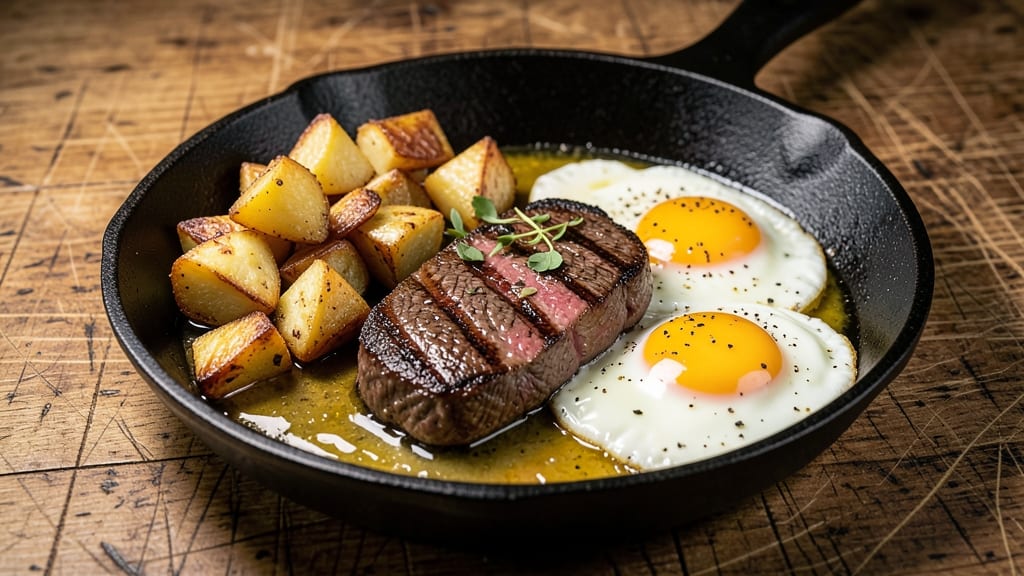
This steak eggs and potatoes recipe transforms breakfast into a hearty, steakhouse-style feast that satisfies any craving. The secret lies in balancing perfectly seared steak with crispy home fries and golden eggs—each component cooked to its ideal doneness. I've refined this plate over years of testing, ensuring every bite delivers that restaurant-quality comfort without the wait.
The magic starts with the potatoes, roasted in duck fat until crispy on the outside while staying tender inside. Meanwhile, the steak—thin-cut for quick cooking—gets a perfect sear in a screaming-hot cast-iron pan, then rests just long enough to stay juicy.
The eggs? Sunny-side-up for that runny yolk perfection, cooked while the steak rests to maintain warmth.
What you end up with is a plate that looks as impressive as it tastes: smoky, savory steak alongside crispy potatoes and rich eggs, all harmonizing in one satisfying bite. The duck fat alone elevates this from ordinary breakfast to a showstopping meal that feels like a reward.
Ready in under 30 minutes, this dish proves comfort food doesn't require hours in the kitchen.
Serve with a side of fresh herbs or a tangy chimichurri for brightness, and you've got a meal that feels like a luxury breakfast or a weekend brunch—no matter the time of day. The best part? Leftovers reheat beautifully, making this the ultimate make-ahead dish for busy mornings.
Ingredients for steak eggs and potatoes
Duck fat, ribeye, and eggs—this trio transforms breakfast into a steakhouse masterpiece.
| Ingredient | Amount | Notes |
|---|---|---|
| Russet Potatoes 🥔 | 2 lbs | Cut into 1-inch cubes, no need to peel |
| Duck Fat 🦆 | ½ cup | For crispy potatoes, render your own or buy pre-rendered |
| Kosher Salt 🧂 | 2 tsp | Diamond Crystal preferred for delicate seasoning |
| Freshly Ground Black Pepper 🌶️ | 1 tsp | Cracked peppercorns for best flavor |
| Thin-Cut Ribeye Steak 🥩 | 1 lb | 1/2-inch thick, trimmed of excess fat |
| Vegetable Oil 🫒 | 2 tbsp | For searing steak, high smoke point required |
| Large Eggs 🥚 | 4 whole | Room temperature for perfect sunny-side-up |
| Butter 🧈 | 2 tbsp | Unsalted, for basting eggs |
| Fresh Thyme 🌿 | ¼ cup | Leaves only, chopped for garnish |
| Garlic Cloves 🧄 | 3 cloves | Minced for chimichurri option |
| Red Wine Vinegar 🍷 | 1 tbsp | For chimichurri, dry red preferred |
| Olive Oil 🫒 | ¼ cup | Extra-virgin for chimichurri |
| Fresh Parsley 🌿 | ¼ cup | Chopped, for chimichurri |
The duck fat is non-negotiable for those crispy, golden potatoes—render your own or grab pre-rendered from Whole Foods or Costco if you're short on time. For the steak, thin-cut ribeye is key; it cooks fast enough to keep the eggs warm while you eat. Look for USDA Choice or Prime if you can find it—marbling makes all the difference. Fresh thyme and parsley? Buy bunches and use half—they keep for days wrapped in damp paper towels. The potatoes? Russets are your best bet—they crisp up perfectly without turning gummy.
No duck fat? Lard or bacon fat works in a pinch (trust me, it's delicious), but duck fat gives that unmistakable smoky depth. For the chimichurri, skip the parsley? Fresh cilantro or basil can stand in, though the flavor shifts slightly. The eggs are the easiest part—room temperature is crucial for that perfect runny yolk. If you're prepping ahead, par-cook the potatoes and store them in the fridge, then crisp them up in the oven when ready to serve. The steak should rest 5-10 minutes after cooking—don't skip this, or it'll be tough.
Potatoes keep 3 days in the fridge if stored in an airtight container, but they're best fresh. The chimichurri stays vibrant for 5 days in the fridge, sealed with olive oil on top. Freeze the steak in portions if you're making extra—thaw overnight in the fridge before cooking. Eggs? Fresh is best, but if you're prepping ahead, keep them cold until you're ready to cook. This whole plate reheats like a dream—20 minutes at 350°F brings it back to life, just as hearty as the first bite.
Why You'll Love This Recipe
- One-Pan Magic: I swear by this trick—just slice the potatoes, sear the steak, and let the duck fat work its magic while you fry the eggs. No flipping between pots, no messy cleanup. That golden crust on the potatoes? Done in the same pan as your steak.
- Duck Fat Luxury: Honestly, duck fat changes everything. The potatoes get that buttery, crispy edge without tasting greasy, and the steak? It’s so tender it practically melts. (Yes, even on a Tuesday night when you’re too tired to impress anyone.)
- Weeknight Powerhouse: This feeds four in 30 minutes or reheats beautifully for lunch. The steak stays juicy cold, the eggs hold up, and the potatoes? They’re basically edible art. My go-to when I need something hearty but still feels like a treat.
- Budget-Friendly Feast: Thin-cut ribeye stretches further than you’d think, and duck fat lasts for weeks. I’ve made this for date nights, lazy Sundays, and even packed leftovers for work—no one ever skips seconds. Solid. Reliable. My secret weapon.
Step-by-step instructions for steakhouse-style steak, eggs, and potatoes
Here's the method that delivers restaurant-quality results in your home kitchen.
Crisp the Potatoes in Duck Fat
Preheat your oven to 425°F and heat the 0.5 cup duck fat in a large oven-safe skillet over medium-high heat until it shimmers. Add the 2 lbs russet potatoes cut into 1-inch cubes, spreading them in a single layer without overcrowding. The fat should sizzle vigorously—this is your signal to cook undisturbed for 20-25 minutes.
Flip the potatoes carefully with a metal spatula and continue cooking for another 15-20 minutes until they're deep golden brown and crispy on all sides. You're aiming for that perfect steakhouse texture—crispy outside, fluffy inside. Remove the potatoes to a paper towel-lined plate to drain excess fat, but keep them warm in the oven if you're cooking other components.
Sear the Ribeye to Medium-Rare Perfection
While the potatoes cook, heat 2 tablespoons vegetable oil in a separate skillet over high heat until it's smoking. Pat the 1 lb thin-cut ribeye steak dry with paper towels and season both sides generously with 2 teaspoons kosher salt and 1 teaspoon freshly ground black pepper2-3 minutes per side for medium-rare.
For the last 30 seconds of cooking, press down gently on the steak with a spatula to ensure even thickness. You'll know it's done when the internal temperature reaches 130-135°F and the edges are deep brown. Transfer the steak to a cutting board, tent loosely with foil, and let it rest for 5 minutes—this is crucial for juicy slices. Keep the rendered fat in the pan for the eggs.
Cook the Eggs Sunny-Side-Up in Steakhouse Style
Return the skillet with steak fat to medium-low heat and add 2 tablespoons butter. Crack the 4 whole large eggs into the pan, spacing them evenly. Let them cook undisturbed for 2-3 minutes until the whites are set but the yolks remain runny and vibrant.
Here's where it gets fun—use a spatula to gently lift the edges of the whites and let the raw egg flow underneath, creating that classic sunny-side-up presentation. Remove the eggs to a plate and keep them warm while you prepare the chimichurri.
Whisk Together the Fresh Chimichurri
In a small bowl, combine the 0.25 cup fresh parsley and 0.25 cup fresh thyme leaves. Add the 3 minced garlic cloves, 1 tablespoon red wine vinegar, and 0.25 cup olive oil. Mix vigorously with a fork until you achieve a vibrant green sauce with a coarse, herby texture.
This bright, tangy sauce cuts through the richness of the steak and eggs beautifully. Taste and adjust seasoning with additional salt if needed. The chimichurri should be bold and fresh—this is your finishing touch that elevates the dish from hearty to restaurant-worthy.
Assemble and Serve with Confidence
Slice the rested steak against the grain into ¼-inch thick slices. Divide the crispy potatoes among four plates, then arrange the steak slices and sunny-side-up eggs on top. Spoon any remaining steak fat from the pan over the eggs for extra richness.
Finish each plate with a generous dollop of chimichurri and a sprinkle of freshly ground black pepper. Serve immediately while everything is piping hot—this is a dish meant to be enjoyed right away. The contrast of crispy potatoes, juicy steak, and silky eggs with that bright chimichurri is pure comfort food perfection.
Pro Tips For Making Steak Eggs And Potatoes
- CUT POTATOES SMALLER THAN YOU THINK: I learned this the hard way—thick slices turn out gummy no matter how long you cook them. Aim for ¼-inch slices (or even thinner if you’re impatient), so they crisp in the duck fat without turning into glue. Yes, it takes a few extra minutes to slice, but the payoff is worth it.
- SALT THE POTATOES BEFORE COOKING: Don’t wait until the end—toss the sliced potatoes with 1 tsp kosher salt per pound right after cutting. This draws out moisture so they crisp up faster in the fat. (Pro move: Let them sit in a colander for 10 minutes before cooking to dry them out even more.)
- SEAR STEAKS IN BATCHES: Thin-cut ribeye is tempting to crowd, but resist. Cook 2-3 steaks at a time in the same pan over high heat—this keeps the temperature steady and gives you a proper crust. If you’re feeding a crowd, work in shifts and keep the cooked steaks warm in a 200°F oven while finishing the rest.
- REST THE POTATOES AFTER CRISPING: They’re golden and tempting, but let the potatoes rest 5 minutes after draining onto a wire rack. This stops the cooking process so they don’t turn soggy when you plate them. (I know, I know—waiting is the hardest part, but it makes a real difference.)
Pro cooking tips for perfect results
Potato Perfection
For crispy, golden potatoes that rival steakhouse quality, use duck fat—it’s non-negotiable for that smoky depth. Cut 2 lbs russet potatoes into 1-inch cubes (no peeling needed) and spread them in a single layer in your skillet.
Overcrowding steams instead of crisps. I swear by Whole Foods pre-rendered duck fat if you’re short on time—just heat it until shimmering before adding potatoes. 🥔
Cook at 425°F for 20-25 minutes undisturbed, then flip carefully. The secret? Medium-high heat the whole time—no lowering it! If your oven runs hot, check at 18 minutes to avoid burning. For extra crispiness, finish under the broiler for 2-3 minutes if your skillet is oven-safe.
Steakhouse Sear
Thin-cut ribeye is your best bet here—½-inch thick slices cook fast enough to keep eggs warm. Pat the steak bone-dry with paper towels before searing; moisture is the enemy of a good crust.
I use vegetable oil (high smoke point) and crank the heat to smoking hot before adding the steak. A cast-iron skillet is ideal, but any heavy pan works in a pinch.
Sear 2-3 minutes per side for medium-rare, then press down with a spatula for the last 30 seconds to ensure even thickness. The internal temp should hit 130-135°F—use a meat thermometer for precision.
Resting is non-negotiable: tent with foil and let sit 5 minutes. This redistributes juices, or you’ll end up with dry slices. 🥩
Eggs Like a Pro
Sunny-side-up eggs are all about low and slow—use the steak fat from your pan for extra richness. Crack eggs into the medium-low heat pan and let them cook undisturbed for 2-3 minutes.
The whites should set while the yolks stay runny and vibrant. For that classic "flowing" look, gently lift the whites with a spatula to let raw egg pool underneath.
Butter is your friend here—add 2 tbsp to the pan for extra flavor and to prevent sticking. If you’re cooking multiple eggs, space them 1 inch apart so they don’t merge.
Keep them warm in a low oven (200°F) while you finish the chimichurri. Pro tip: Room-temperature eggs cook more evenly—take them out of the fridge 30 minutes before cooking. 🥚
Chimichurri Magic
The chimichurri is your flavor bridge—bright, herby, and tangy to cut through the richness. I use 0.25 cup parsley and 0.25 cup thyme (no stems!) because they’re the stars here. Red wine vinegar adds acidity, while extra-virgin olive oil binds everything together.
Pulse in a food processor for 10 seconds to chop finely but keep texture coarse.
Taste as you go—this sauce should be bold, not mild. If it’s too thick, add 1 tsp water; if too thin, stir in 1 tsp more parsley.
Store leftovers in an airtight container with a layer of oil on top to preserve freshness. A drizzle over the eggs right before serving? Game-changer. ✨
Nutrition facts
Frequently asked questions
Can I make this recipe with regular potatoes instead of russets?
Russets are ideal for their crispy texture, but you can use Yukon Golds or red potatoes in a pinch. Just expect slightly softer potatoes—they won't crisp as dramatically. For best results, par-cook them in salted water for 5 minutes first, then finish in duck fat to boost crispiness.
What's the best way to reheat leftovers?
Reheat in a 350°F oven for 15-20 minutes until everything is piping hot. For crispy potatoes, broil for 2-3 minutes at the end. Microwaving works for eggs and steak but will make potatoes soggy. Keep leftovers in an airtight container for up to 3 days.
Can I substitute the ribeye with another steak cut?
Yes! Flat iron or sirloin work well—just adjust thickness to ½-inch for quick cooking. Avoid lean cuts like filet mignon (they dry out easily). For extra flavor, marinate leaner cuts in soy sauce + garlic for 30 minutes before cooking.
How do I make this vegetarian?
Swap steak for portobello mushrooms (marinated in balsamic + olive oil) or crispy tofu (pan-fried in duck fat). Keep the potatoes and eggs, or use tofu scramble instead. For extra protein, add black beans or chickpeas to the chimichurri.
Why did my steak turn out dry?
Most likely you skipped the 5-minute rest after cooking. Juices need time to redistribute—cutting too soon releases them all. Also check your internal temp: 130-135°F is perfect for medium-rare. If using thinner cuts, cook 1 minute less per side and rest immediately.