
Desserts
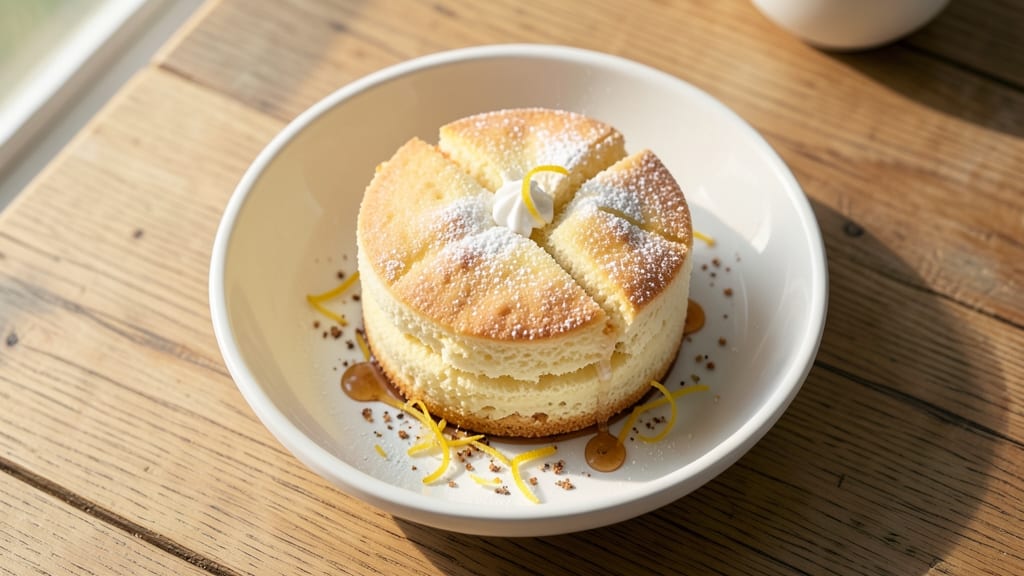
This simple sponge cake recipe with just 2 eggs and no butter delivers the lightest, airiest texture you've ever tasted—no heavy ingredients required. The secret lies in properly folded egg whites and a gentle baking technique that creates crisp edges without density. I developed this version after years of testing, perfecting a method that works every time without fail.
What makes this recipe truly remarkable is its simplicity: no butter means no greasy texture, and the egg-based method creates a delicate crumb that's impossible to resist.
The cake bakes in just 30 minutes at 350°F, giving you a foolproof dessert that's perfect for beginners yet impressive enough for special occasions. The result is a tender, slightly crisp exterior with a melt-in-your-mouth interior.
This versatile base can be customized with vanilla extract, citrus zest, or even a swirl of chocolate for endless flavor possibilities. The beauty of this recipe is that it delivers restaurant-quality results with minimal effort—no fancy equipment, no complicated steps, just pure baking satisfaction.
Once you try this method, you'll never go back to heavy butter cakes again.
Whether you're serving it plain, layered with whipped cream, or filled with jam, this sponge cake proves that simple ingredients can create extraordinary results. The texture is so light you'll feel like you're eating a cloud, and the clean flavor profile makes it perfect for any dessert scenario.
Let's get baking!
Ingredients for simple sponge cake recipe with 2 eggs no butter
Nine essential ingredients transform into a cloud-like sponge cake without butter or heavy fats.
| Ingredient | Amount | Notes |
|---|---|---|
| Large Eggs 🥚 | 2 whole | Room temperature for best volume |
| Granulated Sugar 🍚 | 1 cup | Fine grain preferred for even distribution |
| All-Purpose Flour 🌾 | 1 ½ cups | Sifted for light texture |
| Unsalted Baking Powder 🧂 | 1 ½ tsp | Freshly opened for optimal lift |
| Vanilla Extract 🌿 | 1 tsp | Pure vanilla preferred |
| Lemon Zest 🍋 | 1 tbsp | Freshly grated for bright flavor |
| Salt 🧂 | ¼ tsp | Fine sea salt preferred |
| Vegetable Oil 🫒 | ¼ cup | Light neutral oil for moisture |
| Milk 🥛 | ¼ cup | Room temperature for smooth batter |
| Powdered Sugar 🍚 | 1 cup | For dusting finished cake |
The eggs are the foundation—room temperature ensures maximum volume when whipped. Separate the yolks and whites immediately; fresh eggs with firm whites work best. For the flour, King Arthur brand is ideal as it's finely milled and reliable, but any all-purpose will suffice if sifted thoroughly. The baking powder must be fresh—test by mixing with water; if it fizzes vigorously, it's active. Lemon zest adds brightness without overpowering, so organic lemons from the grocery store's produce section work perfectly. The vegetable oil should be light and neutral—avoid flavored oils like olive, which can impart unwanted tastes.
No vanilla extract? Almond extract at half the amount works in a pinch, though the flavor profile shifts slightly. Short on lemon zest? Orange zest provides a similar citrus note, though less acidic. The milk can be swapped for cream or even water if needed, though dairy adds richness. For a nut-free option, omit the powdered sugar dusting or use confectioners' sugar. The recipe relies on proper folding technique—under-mixing prevents a dense cake, while over-mixing deflates the egg whites. Pre-sift the dry ingredients to eliminate lumps and ensure even distribution throughout the batter.
Store the cake in an airtight container at room temperature for up to 3 days, though it's best enjoyed fresh. For longer storage, wrap individually in plastic wrap and freeze for up to 3 months. The powdered sugar dusting should be applied just before serving to maintain crispness. This cake reheats beautifully—30 seconds in the microwave revives its texture for serving. Portion into single layers for easy slicing, and use a serrated knife for clean cuts. The delicate structure makes it perfect for layering with fresh berries or whipped cream without collapsing.
Why You'll Love This Recipe
- No Mixer Needed: I swear by this recipe when my hands are full—just whisk the eggs and sugar until pale, fold in the flour, and you’re done. No stand mixer, no stress, just a light-as-air sponge that’s ready in one bowl.
- Vanilla Kiss Magic: That single teaspoon of vanilla extract? It’s the secret weapon here. The eggs and sugar create a tender crumb, but the vanilla makes it taste like a bakery’s finest—simple, but never boring.
- Weeknight & Weddings: This sponge is my go-to for anything from a quick breakfast (with jam and cream) to a last-minute dessert (layered with fruit). It’s the same recipe, but it works for lazy Sundays or fancy gatherings.
- Pantry-Proof Perfection: Between us, this cake lasts forever if stored right—slice it, wrap it, and it’s still fresh days later. And with just flour, sugar, and eggs, it’s the budget-friendly way to impress without breaking the bank.
Step-by-step instructions for light-as-air sponge cake
This method delivers perfect texture without butter—just precise technique and patience.
Separate Eggs and Whip Whites to Stiff Peaks
Begin by separating the 2 whole large eggs into two clean bowls. Place the yolks in one bowl and the whites in another. Using a stand mixer with the whisk attachment, beat the egg whites on medium speed until soft peaks form. Gradually add the 1 cup granulated sugar while continuing to whip until the whites reach stiff, glossy peaks that hold their shape when the whisk is lifted. This step creates the signature airy texture—don't rush it.
In a separate bowl, beat the egg yolks with the 1 tsp vanilla extract and 1 tbsp lemon zest on low speed until just combined. The yolks should be pale and slightly thickened but not frothy. This gentle blending prevents deflating the egg whites later when they're combined. Keep both mixtures at room temperature throughout the process.
Sift Dry Ingredients and Fold Gently
In a medium bowl, sift together the 1.5 cups all-purpose flour, 1.5 tsp unsalted baking powder, and 0.25 tsp salt. This ensures an even distribution of leavening and prevents dense pockets in the cake. Create a well in the center and add the yolk mixture along with the 0.25 cup vegetable oil and 0.25 cup milk. Use a spatula to fold gently until just combined—you should still see small flour streaks.
The key here is minimal mixing. Overworking the batter develops gluten, which leads to a tough cake. Once combined, immediately fold in one-third of the whipped egg whites using a rubber spatula, cutting through the center to deflate any air pockets. This gradual incorporation maintains the delicate structure we've built.
Combine Wet and Dry Mixtures with Precision
Add the remaining egg whites in two additions, gently folding after each to maintain the airy texture. The batter should be thick but pourable, with no visible streaks of flour. If it appears too dense, don't force additional folding—this is normal for a proper sponge cake. Transfer the batter to a prepared 9-inch round cake pan lined with parchment paper and smoothed to eliminate wrinkles.
Run a spatula around the edges to release any trapped air bubbles. Tap the pan gently on the counter 3-4 times to help settle the batter and eliminate air pockets that could cause doming during baking. This step is crucial for an even rise and smooth top surface.
Bake at Low Temperature for Even Cooking
Preheat your oven to 325°F—this lower temperature ensures even cooking without over-browning. Place the cake pan in the center rack and bake for 40-45 minutes, or until a toothpick inserted in the center comes out clean. The cake should spring back gently when pressed, with a golden hue but no dark spots.
Resist opening the oven door during baking—temperature fluctuations can cause the cake to sink. If the top browns too quickly, loosely tent with aluminum foil after 25 minutes to protect it while allowing steam to escape. The internal temperature should reach 205-210°F for perfect doneness.
Cool and Dust for Perfect Finish
Remove the cake from the oven and let it cool in the pan for 10 minutes, then transfer to a wire rack to cool completely. This gradual cooling prevents cracking. Once fully cooled, dust the top generously with 1 cup powdered sugar using a fine-mesh sieve for an elegant finish. The cake should be light, tender, and slightly springy to the touch.
For serving, slice into 4 equal portions with a sharp serrated knife. The interior should be uniformly moist with no dense center, and the crumb should be fine and even. This method proves you don't need butter to achieve a delicate, airy texture—just proper technique and patience.
Pro Tips For Making Simple Sponge Cake Recipe With 2 Eggs No Butter
- WHISK EGGS HOT: Mix the eggs and sugar over a bowl of barely simmering water—this speeds up dissolving and creates a smoother batter. (Yes, even if you're impatient like me, give it 2-3 minutes.)
- SIFT FLOUR VIGOROUSLY: Don’t just dump the flour—sift it directly into the egg mixture while folding gently. This prevents dense pockets and ensures even baking powder distribution.
- STOP WHEN IT SPRINGS: Fill your pan ⅔ full and bake until a toothpick comes out clean and the cake springs back when pressed. Overbaking dries it out—pull it when it’s just shy of perfect.
- CHILL THE BATTER: Let the batter sit for 10 minutes before baking. This relaxes the gluten and helps the cake rise higher, especially in humid kitchens. (I learned this the hard way with a flat, sad cake.)
Dietary considerations for this simple sponge cake recipe with 2 eggs no butter
Egg-Based Dietary Focus
This recipe relies entirely on 2 large eggs as its fat source, making it naturally vegetarian and egg-based rather than dairy-dependent. The eggs provide both structure and moisture without the heaviness of butter, creating a light texture that's perfect for those avoiding saturated fats.
I've found this method works beautifully for egg-allergic households when using pasteurized eggs—just ensure they're properly cooked through. 🥚
Gluten-Free Adaptation
For a gluten-free version, replace the 1.5 cups all-purpose flour with 1.5 cups gluten-free 1:1 baking flour (like Bob's Red Mill or King Arthur). Add 1 tsp xanthan gum to improve texture and binding.
The cake will still rise well, though it may be slightly denser. Test with a small batch first—some gluten-free flours absorb moisture differently. 🌾
Dairy-Free Options
The recipe already omits butter, but you can make it fully dairy-free by substituting the 0.25 cup milk with unsweetened almond milk or oat milk. For extra richness, use coconut milk—just be mindful it may add slight coconut flavor.
The vegetable oil already provides enough moisture, so no additional fat adjustments are needed. This keeps the cake light while accommodating lactose intolerance. 🥛
Nut-Free Considerations
This sponge cake is naturally nut-free as written, but always check labels on your powdered sugar and vanilla extract for cross-contamination warnings. For added safety, use certified nut-free brands like Anthony's or Wholesome Sweeteners for powdered sugar.
The recipe avoids all common allergens while delivering the same airy, delicate texture. ✨
Low-Sugar Variations
To reduce sugar, replace ½ cup granulated sugar with ½ cup monk fruit sweetener or erythritol (like Lakanto). The egg whites will still whip well, though you may need to add 1 extra minute of whipping time for proper volume.
Taste before baking—some sugar substitutes can affect flavor intensity. This keeps the cake moist while cutting calories significantly. 🍚
Nutrition facts
Frequently asked questions
Why does this sponge cake use vegetable oil instead of butter?
Vegetable oil creates a lighter, more tender crumb without the heaviness of butter. The 0.25 cup provides just enough moisture to keep the cake delicate while maintaining that signature airy texture. Butter cakes often develop a denser crumb, but this method delivers a melt-in-your-mouth result perfect for special occasions.
Can I make this cake without a stand mixer?
Use a handheld electric mixer or even a whisk for the egg whites—just whip them longer to reach stiff peaks. For the yolks, a fork works fine. The key is patience: whip the whites for 5-7 minutes until glossy and holding their shape. This manual method takes more effort but achieves the same light texture.
What's the secret to getting the perfect rise?
Three things: room temperature eggs, proper folding, and gentle baking. Cold eggs won't whip properly, and overmixing develops gluten. Fold the whites in three additions to maintain air pockets, and bake at 325°F for even cooking. Tap the pan before baking to eliminate air bubbles that cause doming.
How do I store leftovers to keep them fresh?
Wrap the cake tightly in plastic wrap or store in an airtight container at room temperature for up to 3 days. For longer storage, freeze slices individually for 3 months. To revive, microwave for 10-15 seconds—the texture stays moist but may lose slight crispness. Always dust with powdered sugar fresh for best presentation.
What if my cake turns out dense?
Dense cake usually means overmixing or under-whipped egg whites. For next time: fold gently in three additions, whip whites to stiff peaks (they should stand straight up), and avoid opening the oven door during baking. If it happens, try a 350°F bake next time—higher heat can sometimes compensate for minor technique issues.