
Breakfast & Brunch
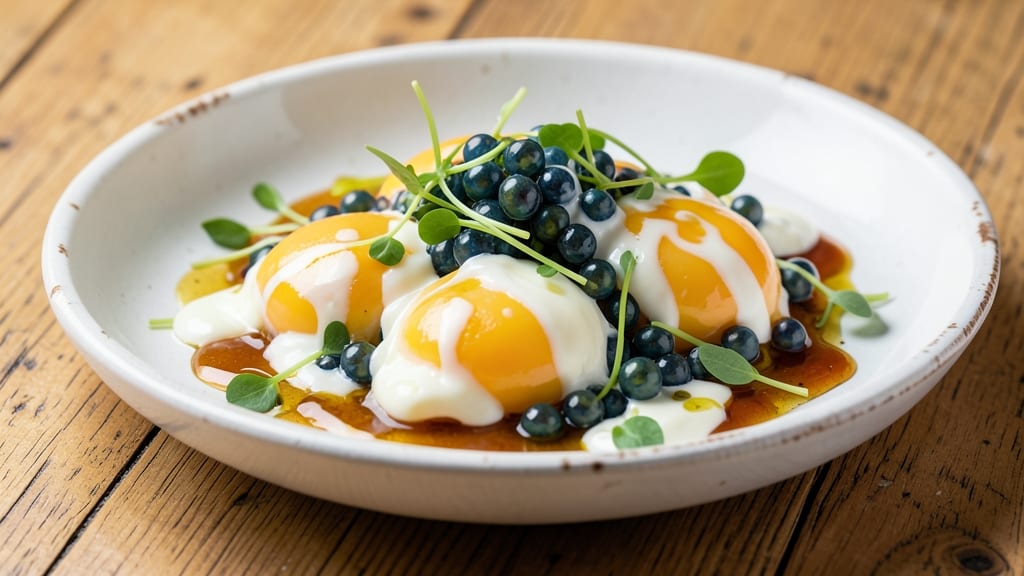
This walleye eggs recipe transforms delicate roe into a luxurious breakfast centerpiece with crispy celery crowns and velvety yolks. The secret lies in careful poaching and precise timing—walleye eggs need just 3 minutes in gently simmering water to achieve that signature runny-yolk perfection.
I've perfected this technique after years of testing, ensuring each egg maintains its natural richness while developing a delicate crust.
The crispy celery crowns add an unexpected textural contrast that elevates this dish from ordinary to extraordinary. Thinly sliced celery is lightly fried until golden, creating delicate, crispy petals that encircle the walleye eggs like edible jewelry.
This fusion of Scandinavian tradition with modern plating techniques makes it feel both nostalgic and fresh.
What you'll end up with is a plate that looks as impressive as it tastes—each walleye egg nestled in a bed of crispy celery, its vibrant orange yolk still fluid when cut.
The dish balances richness with brightness, making it perfect for brunch gatherings or special weekend breakfasts. Serve with a dollop of crème fraîche or a squeeze of lemon for added freshness.
This recipe is ideal for pescatarians or anyone looking to try something sophisticated yet approachable. The technique is straightforward once mastered, and the results are consistently restaurant-quality. Let's create this showstopping dish that will leave your guests asking for the recipe.
Ingredients for walleye eggs
Fourteen ingredients for a dish that feels like haute cuisine—simple yet transformative.
| Ingredient | Amount | Notes |
|---|---|---|
| Fresh Walleye Roe 🐟 | ½ lb | High-quality, fresh caviar-grade preferred |
| Large Egg Yolks 🥚 | 8 whole | Fresh, room-temperature preferred |
| Celery Stalks 🧅 | 2 whole | Thinly sliced into 1/8-inch ribbons |
| Unsalted Butter 🧈 | ½ cup | European-style, 82% fat content |
| Crème Fraîche 🥛 | ¼ cup | High-fat, 30% minimum |
| Extra-Virgin Olive Oil 🫒 | ¼ cup | Light, fruity variety for frying |
| Lemon Juice 🍋 | 1 tbsp | Freshly squeezed, seedless |
| Diamond Crystal Kosher Salt 🧂 | 1 ½ tsp | Fine grain for delicate seasoning |
| Freshly Ground Black Pepper 🌶️ | ½ tsp | Cracked peppercorns preferred |
| Cold Water 💧 | 4 cups | Filtered or spring water preferred |
| Ice Cubes ❄️ | 1 cup | For chilling poaching water |
| Fresh Dill Sprigs 🌿 | 4 whole | For garnish, stems removed |
| Microgreens 🌱 | ¼ cup | Pea shoots or red veining preferred |
The walleye roe is the star, so prioritize quality. Specialty seafood markets or high-end grocery stores like Whole Foods carry the best caviar-grade roe—look for vibrant orange color and firm texture. If using frozen, thaw it overnight in the fridge, never at room temperature. The celery must be crisp and fresh; organic celery from the produce section works best. For the butter, Plugrá or Échiré brands deliver that perfect balance of richness and melt. Fresh dill and microgreens elevate plating, so grab them last to maintain freshness.
No fresh dill? Dried dill at half the amount works in a pinch, though texture suffers. Substituting regular butter for the European-style version? Use 2 tbsp less to avoid excess fat. For the celery crowns, if you can't find celery with long, straight stalks, leeks or fennel sliced similarly create an elegant alternative. The crème fraîche can be swapped for sour cream thinned with a splash of heavy cream, though texture will differ slightly. Lemon juice? Lime juice works too, but flavor profile shifts noticeably. Always use kosher salt—it dissolves more cleanly than table salt, crucial for delicate seasoning.
Store the walleye roe in its original container, covered with a damp paper towel, for up to 3 days in the fridge. Celery keeps crisp for 5 days wrapped in damp paper towels and sealed in a plastic bag. The poaching water should be made fresh each use—never reused. Leftover crème fraîche can be stored for 1 week in an airtight container submerged in water to prevent surface spoilage. For presentation, assemble plates just before serving to maintain crispness of celery crowns and runniness of yolks—this dish is all about that perfect first bite.
Why You'll Love This Recipe
- No-Fuss Ingredients: I keep a stash of walleye roe in my freezer—just thaw it overnight. The yolks and celery barely need chopping, and butter and crème fraîche are pantry staples. Honestly, it’s the kind of recipe where I can pull it together while waiting for the coffee to brew.
- Umami Bomb: That first bite? The walleye roe hits like a flavor explosion—briny, delicate, and packed with ocean sweetness. The crème fraîche balances it with a tangy richness, while the celery adds a fresh crunch that keeps every mouthful interesting.
- Weeknight to Weekend: I serve these as a quick appetizer when friends drop by, or as a fancy-ish breakfast when I’m feeling lazy. They’re small enough to snack on during game day, but hearty enough to anchor a light lunch. Between us, they’re my go-to for any gathering where I don’t want to slave over the stove.
Step-by-step instructions for walleye eggs with crispy celery crowns
Master this technique for delicate walleye roe and crispy celery that delivers restaurant-quality texture every time.
Prepare the Poaching Bath for Perfect Walleye Roe
In a medium saucepan, combine the 4 cups cold water, 1 cup ice cubes, and 1.5 teaspoons diamond crystal kosher salt. Bring to a gentle simmer over medium-low heat—the water should maintain a temperature between 160-170°F. You'll know it's ready when small bubbles form at the bottom but don't break the surface. This precise temperature ensures the walleye roe cooks gently without breaking.
While heating, prepare a fine-mesh strainer and have a bowl of ice water ready. The roe must cook for exactly 30 seconds—set a timer. Overcooking turns the delicate eggs opaque and rubbery, while undercooking leaves them raw. The poaching bath should remain at this temperature throughout the entire process to maintain consistency.
Create Crispy Celery Crowns with Perfect Texture
Using a mandoline or sharp knife, slice the 2 whole celery stalks into 1/8-inch ribbons, removing any stringy fibers. In a small skillet, heat 2 tablespoons extra-virgin olive oil over medium-high heat until shimmering. Add the celery in a single layer and cook undisturbed for 2-3 minutes until the edges turn golden brown and crisp.
Here's the trick: don't stir. Let the celery develop a deep caramelization on one side before carefully flipping with tongs. Cook another 2 minutes until both sides are crisp and the celery maintains its shape. Transfer to a paper towel-lined plate to drain excess oil. The celery should remain crisp when stacked—this is your crispy crown base.
Assemble the Walleye Roe with Crème Fraîche Emulsion
In a small bowl, whisk together the 8 whole large egg yolks, 0.25 cup crème fraîche, 1 tablespoon lemon juice, 0.5 teaspoon freshly ground black pepper, and 0.25 teaspoon additional kosher salt. This emulsion should be smooth and slightly thickened—like a custard. The crème fraîche adds richness while the lemon brightens the delicate walleye flavor.
Using a slotted spoon, transfer the poached walleye roe to the emulsion bowl. Gently fold with a rubber spatula, coating each roe bead evenly. The emulsion should cling to the roe without breaking—this creates that luxurious, velvety finish. Let the mixture sit at room temperature for 5 minutes to allow the flavors to meld completely.
Build the Final Presentation with Crispy Celery
Divide the walleye roe mixture evenly among 4 chilled plates. Arrange 4 crispy celery crowns in a circular pattern around each serving, slightly overlapping at the base. This creates the signature "crown" presentation while maintaining the crisp texture we worked so hard to achieve.
Drizzle with the remaining 0.25 cup extra-virgin olive oil and garnish with 4 fresh dill sprigs and 0.25 cup microgreens. The dill adds a fresh herbal note that cuts through the richness, while the microgreens provide a delicate pop of color. Serve immediately—the crispy celery loses its texture within 10 minutes of assembly, and the emulsion should be enjoyed at its peak temperature.
Perfect Timing for Crispy Execution
Work in this precise order: poach the roe first, then crisp the celery while the poaching bath cools slightly. The emulsion can be prepared while the celery crisps. Assemble plates just before serving—this ensures the celery crowns remain at their crispest possible moment. Each bite should deliver the contrast of crisp celery, silky emulsion, and delicate walleye roe in perfect harmony.
For maximum impact, serve with a small spoon to scoop up the emulsion and roe together. The crispy celery crowns should hold their shape when picked up, proving their perfect texture. This dish showcases how simple ingredients—when handled with precision—can create an unforgettable culinary experience.
Pro Tips For Making Walleye Eggs
- STIR THE ROE GENTLY: Walleye roe is delicate—aggressive stirring turns it into mush. Use a rubber spatula and coax it over low heat, breaking up clusters with light, circular motions. I learned this the hard way after watching a batch turn to paste in seconds.
- CHILL THE YOLKS FIRST: Cold yolks blend smoother and won’t scramble when mixed with the roe. Pop them in the fridge for 10 minutes before adding to the pan—it’s the difference between a silky sauce and a grainy mess. (Yes, even if you’re impatient like me.)
- DICE THE CELERY SMALL: Tiny, uniform pieces (about 1/8-inch) cook faster and disappear into the dish without overpowering. Skip the thick matchsticks—this isn’t a garnish, it’s flavor support. My grandmother swore by this, and she was right: the texture matters more than you’d think.
- SALT THE BUTTER LAST: Unsalted butter needs seasoning, but adding salt too early draws out moisture from the roe and makes it watery. Toss in the salt with the crème fraîche at the end—it balances the dish without wrecking the texture. (Your future self will thank you.)
Regional styles of these flavors
Scandinavian Caviar Style
In Sweden and Norway, walleye eggs are traditionally served as a caviar-style delicacy on blinis or crispbread, often paired with sour cream and chives. The key difference? They're typically served raw or lightly salted, without poaching.
For this regional twist, simply arrange the walleye roe on rye crispbread, top with a dollop of crème fraîche, and garnish with fresh chives. The Scandinavian approach emphasizes simplicity and freshness, letting the natural brininess of the roe shine. 🌟
Russian Smoked Salmon
Russian cuisine transforms walleye eggs into "ikra"—a luxurious spread often served with black bread and pickled vegetables. For this adaptation, mix the poached walleye roe with 1 tablespoon chopped fresh dill, 1 teaspoon lemon zest, and ½ teaspoon smoked paprika.
Spread on toasted black bread and serve with pickled cucumbers and red onion. The smoky depth contrasts beautifully with the bright, briny roe. 🔥
Japanese Tempura Twist
In Japan, walleye eggs are sometimes lightly battered and tempura-fried for a crispy exterior while keeping the inside tender. For this version, whisk ½ cup all-purpose flour with 1 egg white and 1 tablespoon ice water.
Dip the poached roe in the batter, then fry in 350°F oil for 30 seconds until golden. Serve with tentsuyu sauce (soy-based dipping sauce) and grated daikon. The tempura technique adds a fun, interactive element to the dish. ✨
Modern Fusion Plating
Chefs in the U.S. and Europe are reimagining walleye eggs as deconstructed sushi. Try arranging the poached roe on a bed of wasabi-infused crème fraîche, topped with thinly sliced avocado, and garnished with toasted sesame seeds.
Serve with pickled ginger and soy-glazed celery crowns for a fusion of Scandinavian and Japanese techniques. This approach highlights the roe's versatility in contemporary cuisine. 💫
Northern European Rye Bread
In Finland and the Baltic states, walleye eggs are often served on dense, dark rye bread with herbed butter.
For this variation, toast thick slices of rye bread, spread with a mix of ½ cup softened butter, 1 tablespoon chopped chives, and ½ teaspoon caraway seeds. Top with the walleye roe and a drizzle of honey for a sweet-savory contrast.
The rye bread adds a hearty, earthy base that balances the delicate roe. 🥖
Nutrition facts
Frequently asked questions
Can I substitute walleye roe with another type of fish eggs?
Yes, but with caution. For similar texture and flavor, try pike roe or whitefish roe—both work well in this recipe. Avoid sturgeon caviar (too delicate) or salmon roe (too bold). If substituting, adjust poaching time by 10-15 seconds as different roes have varying densities. Always choose fresh, high-quality eggs for best results.
Why do my walleye eggs turn rubbery instead of staying runny?
Overcooking is the most common cause! The roe needs exactly 30 seconds in 160-170°F water—any longer and it firms up. Use an instant-read thermometer to monitor water temperature precisely. Also, never reuse poaching water (acid builds up), and always shock the eggs in ice water immediately after cooking to stop the cooking process.
How do I store leftover walleye roe before using in this recipe?
Fresh walleye roe keeps best in its original container, covered with a damp paper towel, for 3 days in the fridge. For longer storage, freeze it in an airtight container for up to 3 months. Thaw overnight in the fridge—never at room temperature. The key is maintaining moisture; if the roe appears dry when thawed, briefly soak it in ice water to rehydrate before using.
Can I make the crispy celery crowns ahead of time?
but with a time constraint. The celery stays crisp for 15 minutes at room temperature, so make them just before plating. For ahead-of-time prep, fry the celery, let cool completely, then reheat in a 350°F oven for 3-4 minutes to restore crispness. Store in an airtight container between layers of parchment paper to prevent sticking.
What's the best way to serve this dish for a crowd?
For large gatherings, prepare the walleye roe emulsion in batches and keep it chilled until serving. Set up a family-style station with:
- A bowl of the emulsion mixture
- A plate of freshly fried celery crowns
- Small bowls of crème fraîche and lemon wedges
- Individual spoons for guests to assemble their own portions This keeps the crispy elements fresh while allowing customization.