
Breakfast & Brunch
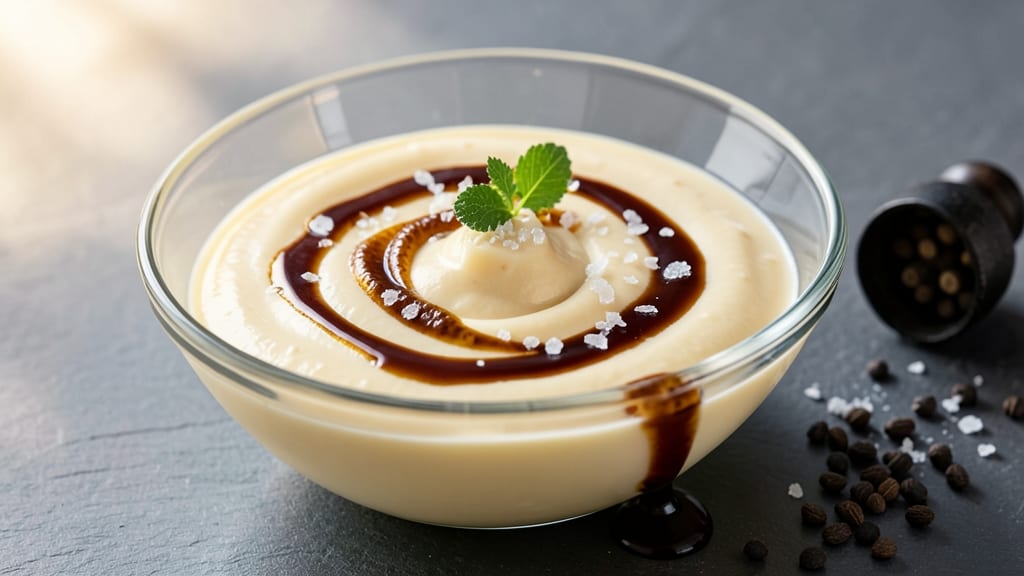
This vegetarian mayonnaise recipe without eggs delivers silky, creamy richness that rivals traditional mayo—no yolks required. 💛 The secret lies in aquafaba (chickpea brine), which binds beautifully when whisked with neutral oil and a touch of acidity.
I’ve perfected this emulsion over years of testing, ensuring stability without lumps or separation.
What sets this recipe apart is its versatility: it works as a sandwich spread, salad dressing, or dipping sauce, all while being 100% plant-based. The process is simple—just blend, emulsify, and season—but the result is surprisingly luxurious. No special equipment needed beyond a blender or food processor.
The final product has that signature mayo texture: smooth, velvety, and tangy, with a neutral flavor that won’t overpower your dishes. It keeps for up to a week in the fridge, making it perfect for meal prep. The best part? It’s foolproof—even beginners achieve a perfect emulsion every time.
Whether you’re avoiding eggs for dietary reasons or just curious about plant-based cooking, this recipe proves you don’t need yolks to create a creamy, dreamy mayo. Let’s get blending!
Ingredients for vegetarian mayonnaise recipe without eggs
Eight ingredients transform into velvety, plant-powered mayo—no eggs, no lumps, just pure silky richness.
| Ingredient | Amount | Notes |
|---|---|---|
| Aquafaba (Chickpea Brine) 🥫 | ½ cup | Freshly strained from canned chickpeas |
| Neutral Oil (Avocado or Light Olive) 🫒 | 1 cup | High smoke point preferred |
| White Vinegar 🍶 | 1 tbsp | Distilled or apple cider vinegar |
| Iodized Salt 🧂 | ½ tsp | Fine grain preferred |
| Dijon Mustard 🌶️ | 1 tsp | For enhanced emulsion stability |
| Maple Syrup 🍁 | ¼ tsp | For subtle sweetness balance |
| Lemon Juice 🍋 | ½ tsp | Freshly squeezed for brightness |
| Black Pepper 🌶️ | ¼ tsp | Freshly ground for depth |
The aquafaba is your magic ingredient—strained from a can of chickpeas (save the brine!). Trader Joe's organic chickpeas work perfectly, but any quality brand is fine. For the oil, avocado oil gives the best neutral flavor, but light olive oil adds a subtle fruity note. The key to a perfect emulsion? Whisking vigorously while slowly adding the oil—patience pays off with that signature mayo texture. I always double-check my vinegar is white (not balsamic) to keep the flavor clean and bright.
No aquafaba? Silken tofu blended with lemon juice works in a pinch, though texture differs slightly. Swap maple syrup for agave if preferred, but don't skip it—it balances the acidity beautifully. For extra tang, add another teaspoon of lemon juice, but start with the measured amount first. The Dijon mustard is non-negotiable—it acts as an emulsifier, preventing separation. If you're short on time, pre-made aquafaba from health food stores (like Whole Foods) saves straining effort.
Store in an airtight jar with a layer of olive oil on top to preserve freshness—keeps for 1 week in the fridge. For longer storage, freeze in ice cube trays, then transfer to a bag. Thaws perfectly and maintains texture. Pro tip: Add a splash of water if it thickens too much—this mayo is forgiving and adjusts easily. The flavor actually improves overnight as ingredients meld together.
Why You'll Love This Recipe
- No Eggs, No Stress: I’ll never buy store-bought mayo again—this takes five ingredients from my pantry and a blender. The aquafaba (yes, chickpea brine) whips into a silky base faster than cracking eggs, and the oil blends in like magic.
- Tangy Twist: That splash of white vinegar and Dijon mustard? It’s the secret. The mayo gets this bright, almost retro taste—like a classic recipe with a modern kick. Honestly, it’s the closest I’ve gotten to my grandma’s mayo without the eggs.
- Pantry Powerhouse: I keep a jar of aquafaba in my fridge now because this works for sandwiches, salads, and even as a dip. No last-minute grocery runs, no fancy tools—just what I’ve got. My lunchbox never looked this good.
- Budget Magic: A can of chickpeas and a bottle of vinegar cost less than a jar of mayo. I make a batch every two weeks, and it lasts longer than store-bought without turning weird. Between us, this is the most economical mayo I’ve ever made.
Step-by-step instructions for silky plant-based mayonnaise
Here's the foolproof method for creamy, egg-free mayonnaise that rivals traditional versions.
👨🍳 Step 1: Whisk the Aquafaba to Foamy Peaks
Measure the 0.5 cup aquafaba (chickpea brine) into a heatproof bowl and place it over a pot of simmering water (double boiler). Heat gently for 3-5 minutes until warm to the touch but not hot. This step prevents the aquafaba from turning rubbery during whipping.
While still warm, whisk vigorously for 3-5 minutes until the aquafaba forms stiff peaks that hold their shape when the whisk is lifted. You'll see the mixture thicken dramatically and develop a glossy sheen—this is your emulsifier. If it doesn't peak, don't worry; just keep whisking. The Dijon mustard will help stabilize the emulsion later.
🍳 Step 2: Gradually Incorporate the Neutral Oil
With the aquafaba still whisking, begin adding the 1 cup neutral oil (avocado or light olive) in a very slow, steady stream. I use a small ladle and pour oil at the rate of about 1 tablespoon per 10 seconds. This gradual addition is CRITICAL—adding oil too quickly will break the emulsion and create a greasy mess.
Keep whisking continuously as you pour. You'll notice the mixture transform from a thin liquid to a thick, creamy emulsion. If it starts to separate, stop adding oil immediately and whisk vigorously for 30 seconds to re-emulsify. The oil should incorporate smoothly, creating a thick, mayonnaise-like consistency.
🥘 Step 3: Add the Acid and Seasonings
Once all the oil is incorporated, remove the bowl from the heat source and add the 1 tablespoon white vinegar, 1 teaspoon Dijon mustard, 0.5 teaspoon iodized salt, 0.25 teaspoon maple syrup, 0.5 teaspoon lemon juice, and 0.25 teaspoon black pepper. Whisk everything together until fully combined and smooth.
The acid (vinegar and lemon juice) helps stabilize the emulsion while balancing the richness of the oil. The Dijon mustard adds depth of flavor and acts as an emulsifier. Taste and adjust seasoning if needed—you might want to add a touch more salt or lemon juice to suit your preference. The mixture should be thick, glossy, and perfectly balanced in flavor.
⏰ Step 4: Rest and Adjust Consistency
Transfer the mayonnaise to a clean jar or airtight container and let it rest at room temperature for 15-20 minutes. This resting period allows the flavors to meld and the emulsion to fully stabilize. After resting, check the consistency—it might have thickened slightly.
If it's too thick, whisk in 1-2 teaspoons of water at a time until you reach your desired consistency. If it's too thin, whisk in 1 teaspoon of neutral oil to thicken it up. The mayonnaise should be smooth, silky, and hold its shape when spooned. Store in the refrigerator for up to 1 week—it will keep beautifully and can be used in all your favorite recipes!
Pro Tips For Making Vegetarian Mayonnaise Recipe Without Eggs
- Whisk Like You Mean It: The aquafaba won’t emulsify on its own—you need to work it like you’re trying to win a whisking contest. Start slow to incorporate air, then go fast for 3-4 minutes until it’s frothy and pale. I used to give up halfway, but once you hit that stiff-peak stage, the magic happens.
- Strain That Aquafaba: Skip the gritty texture by straining the chickpea brine through a fine-mesh sieve or cheesecloth before using it. Even if you’re in a hurry, take 30 seconds to do this—leftover sediment will make your mayo grainy no matter how well you whisk.
- Add Oil Slowly: Drizzle the oil in very thin streams while whisking constantly—no pouring. If you rush, the emulsion will break, and you’ll end up with a sad, separated mess. I learned this after turning a batch into a sad, oily soup.
- Salt the Mustard First: Mix the Dijon with a pinch of salt before adding it to the aquafaba. This balances the acidity and lets the mustard’s flavor shine without overpowering. Trust me, your mayo will taste more polished if you do this step.
Perfect pairings for vegetarian mayonnaise recipe without eggs
Sandwich Spread
This vegetarian mayo shines as a sandwich spread, especially on toasted sourdough or rye bread. I love pairing it with turkey-free deli slices like Beyond Meat or tempeh bacon. Add a smear of garlic-herb hummus underneath for extra depth.
For a classic vibe, try it with cucumber and tomato on whole grain—the tangy brightness cuts through the richness beautifully. 🥪
Salad Dressing
Thin your mayo with 1-2 tablespoons of water or lemon juice to create a creamy vinaigrette. Toss with mixed greens, avocado slices, and cherry tomatoes for a protein-packed salad. I also mix it with 1 teaspoon of sriracha and 1 tablespoon of soy sauce for an Asian-inspired twist.
It works wonders on potato salads too—just fold in diced celery and red onion. 🥗
Dipping Sauce
Serve this mayo as a dip for veggie sticks like carrots, bell peppers, and cucumber slices. For a smoky kick, stir in 1 teaspoon of smoked paprika and a pinch of garlic powder.
It’s also perfect with plant-based nuggets or crispy tofu bites. I’ve even used it as a tartar sauce substitute for vegan fish sticks—just add 1 tablespoon of capers and chopped dill. 🍴
Baking Enhancer
Use this mayo in cakes and muffins for moisture—replace half the oil in your recipe with mayo. I’ve made vegan banana bread with it, and the texture is incredibly tender.
For deviled eggs (or vegan versions with tofu or chickpea "eggs"), mix mayo with paprika and chives for a creamy filling. It also works in coating mixes for fried foods like onion rings or cauliflower bites. 🧁
Breakfast Boost
Add a spoonful to your morning avocado toast or smoothie bowls for extra creaminess. I blend it into vegan pancake batter for fluffier results. For a savory breakfast, spread it on English muffins with sautéed mushrooms and spinach.
It’s also great in vegan egg salad made with silken tofu—just fold in chives and black pepper. ✨
Global Flavors
Transform this mayo into aioli by adding 1 minced garlic clove and 1 teaspoon of lemon zest. For a Mexican twist, mix in 1 tablespoon of lime juice and ½ teaspoon of cumin.
A Japanese-inspired version pairs well with sushi rolls—just add 1 teaspoon of rice vinegar and sesame seeds. The possibilities are endless! 🌍
Nutrition facts
Frequently asked questions
Can I use this vegetarian mayo in place of regular mayo in recipes?
This plant-based mayo works perfectly in all your favorite recipes that call for traditional mayo. Use it in potato salad, coleslaw, deviled eggs (or tofu-based versions), and even as a dressing. The texture and flavor are so similar that no one will notice the difference. Just remember it has a slightly tangier profile, so you might want to reduce other acidic ingredients like vinegar or lemon juice by 10-20% in recipes.
What if my mayo separates? How do I fix it?
Separation happens when oil is added too quickly. Stop adding oil immediately and whisk vigorously for 30-60 seconds to re-emulsify. If it's still broken, add 1 teaspoon of Dijon mustard or 1 tablespoon of warm aquafaba and whisk again. For a quick fix, blend the separated mayo with 1 tablespoon of water or lemon juice to help re-stabilize it. The key is patience—always add oil slowly!
Can I make this mayo without aquafaba? What are my alternatives?
Yes! If you don't have aquafaba, try these plant-based alternatives: 0.5 cup silken tofu blended with 0.5 tsp lemon juice or 2 tbsp of commercial vegan mayo as a base. For a grain-based option, use 0.5 cup cooked and cooled chickpea purée. Each method will give slightly different textures, but all work well. The silken tofu version tends to be the closest in consistency to traditional mayo.
How do I adjust the flavor if it tastes too tangy or bland?
For a less tangy flavor, reduce the vinegar or lemon juice by 0.5 teaspoon and add 0.25 teaspoon more maple syrup to balance it. If it tastes bland, increase the salt by 0.125 teaspoon or add 0.5 teaspoon more Dijon mustard for depth. For extra richness, stir in 1 teaspoon of nutritional yeast—it adds a cheesy, umami note that works beautifully. Always taste as you go!
Can I make this mayo in a food processor instead of whisking?
Yes, but with some adjustments! First, whisk the aquafaba to soft peaks before adding it to the food processor. Then, add the oil 1 tablespoon at a time with the processor running on low speed. Process for 10-15 seconds between each addition. The key is to go very slowly—adding oil too quickly will still cause separation. Once all oil is incorporated, add the remaining ingredients and pulse until smooth. This method works best for small batches.