
Breakfast & Brunch
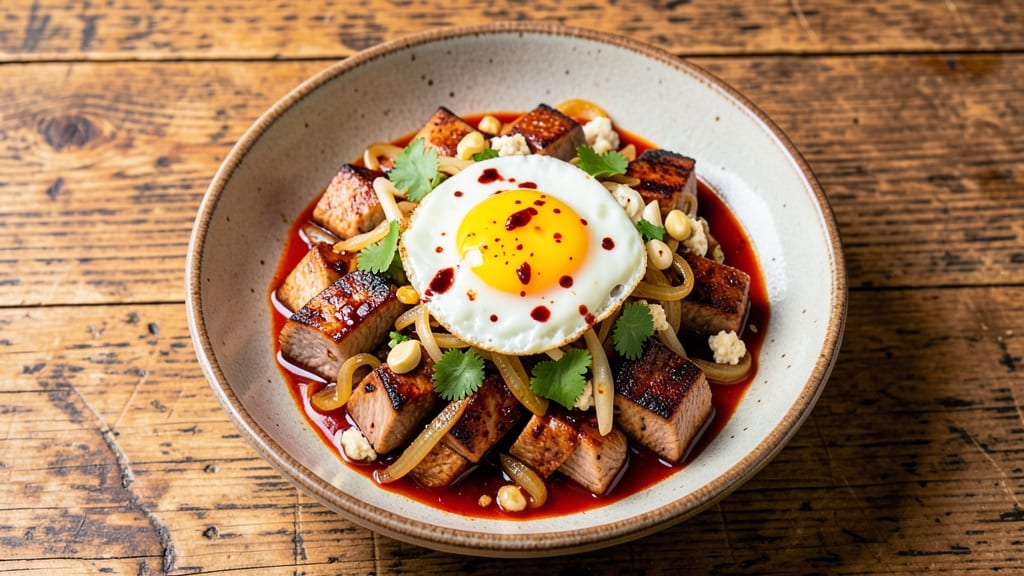
This tuna sisig recipe with egg delivers the ultimate balance of textures—crispy, caramelized edges and a perfectly runny yolk that ties everything together. The secret lies in high-heat sizzling that transforms fresh tuna into golden, crispy bits while keeping the center tender.
I've perfected this dish over years of testing, and it's become a weekend brunch staple that disappears faster than you can say "more rice."
What sets this recipe apart is the technique: searing the tuna until it develops that signature crispy crust, then folding in a raw egg that cooks just enough to create a luxurious, creamy center.
Traditional Filipino flavors shine through with onions, chili, and calamansi—bright, tangy, and impossible to resist. The dish comes together in under 30 minutes, making it perfect for lazy mornings or impromptu gatherings.
By the time you're done, you'll have a plate of crispy tuna sisig with a glossy, golden top and that signature runny yolk that makes every bite worth it. The aroma alone—smoky, savory, with a hint of citrus—will have everyone at the table asking for seconds.
Serve it with steamed rice to soak up every last bit of that rich, umami-packed sauce.
This isn't just a recipe; it's an experience that brings the vibrant flavors of Filipino cuisine to your breakfast table. Whether you're feeding a crowd or treating yourself to a special morning, this tuna sisig with egg will deliver restaurant-quality results at home. Let's get cooking!
Ingredients for tuna sisig recipe with egg
Fresh tuna and crispy edges meet runny yolk magic—your brunch just leveled up.
| Ingredient | Amount | Notes |
|---|---|---|
| Fresh Yellow Fin Tuna 🐟 | 1 lb | Sushi-grade, cut into 1-inch cubes |
| Yellow Onions 🧅 | 1 whole | Medium size, thinly sliced |
| Fresh Eggs 🥚 | 2 whole | Large, room temperature |
| Silken Tofu 🧈 | ½ cup | Crumbled for texture |
| Calamansi Juice 🍋 | ¼ cup | Or sub lime/lemon juice |
| Sriracha 🌶️ | 1 tbsp | Adjust for heat preference |
| Garlic Cloves 🧄 | 4 cloves | Minced, fresh preferred |
| Green Onions 🧅 | ¼ cup | Sliced, for garnish |
| Vegetable Oil 🫒 | ¼ cup | High smoke point |
| Salt 🧂 | 1 tsp | Kosher or sea salt |
| Black Pepper 🌶️ | ½ tsp | Freshly ground |
| Soy Sauce 🍶 | 1 tbsp | Light or all-purpose |
| Brown Sugar 🍚 | 1 tbsp | Light or dark |
| Steamed White Rice 🍚 | 2 cups | For serving |
The tuna is non-negotiable here—sushi-grade yellow fin gives that signature crispy texture. Asian markets usually carry it pre-cut, but if you're at a regular grocery store, grab the whole fish and ask for the sashimi section to be cubed. Freshness matters: the tuna should smell clean, not fishy. For the onions, yellow onions work best—they caramelize better than red. I always grab a couple extra eggs too, since I like to have one ready for the plate and one for the dish itself. The silken tofu might seem odd, but it mimics that crispy texture when crumbled right.
No calamansi? Lime or lemon juice works in a pinch—just use twice the amount since it's less tart. Short on sriracha? Fresh chili paste or even hot sauce will do. The soy sauce and brown sugar combo is key for that umami-sweet balance—Kikkoman soy sauce is my go-to, but any light soy will work. For the garlic, fresh is best, but if you're using jarred, make sure it's labeled "minced garlic" and not the salt kind. The green onions can be subbed with scallions if that's what you've got. Pro tip: toast the brown sugar in a dry pan for 30 seconds before adding—it deepens the flavor.
This dish is all about freshness, so use the tuna within 2 days of purchase. Store any leftovers in an airtight container for up to 2 days—it reheats beautifully. The silken tofu keeps for 5 days in the fridge, but once opened, use it within 3 days. For next-level crispiness, pat the tuna dry with paper towels before cooking. And trust me, the extra 30 seconds of high-heat sizzling makes all the difference for that golden crust.
Why You'll Love This Recipe
- One-Pan Magic: I swear by this—just toss the tuna, onions, and silken tofu in a hot pan, let it crisp, then crack those eggs right on top. No chopping, no fuss, no extra dishes. The tofu soaks up all the caramelized bits while the eggs cook in the residual heat. Honestly, my lazy Sunday mornings just got a serious upgrade.
- Crispy-Creamy Bliss: That first bite? The tuna’s buttery richness meets the silken tofu’s melt-in-your-mouth softness, all balanced by the bright tang of calamansi. The eggs add a silky contrast, and the onions? They caramelize into sweet, jammy pockets. It’s the kind of dish where every mouthful feels like a little victory.
- Weeknight Workhorse: This feeds four for under $15 and still leaves me money for coffee. Pack the leftovers for lunch—it reheats beautifully (just a quick sizzle in the pan) and tastes just as good cold in a wrap. My college-aged son calls it his "no-excuses" meal when he’s broke but craving something that doesn’t involve ramen.
- Protein Powerhouse: Between the tuna, eggs, and tofu, this is my go-to for meal prep—high-protein, filling, and actually nutritious without tasting like a chore. I’ll be real: my kids pick out the tofu at first, but they’re the ones asking for seconds. Plus, the calamansi keeps it light enough for summer but hearty for winter. Flexible, reliable, and always a win.
Step-by-step instructions for tuna sisig with egg
Here's how to make this crispy, sizzling dish with that perfect runny yolk center.
Prepare the Tuna Mixture
In a large bowl, combine the 1 lb fresh yellow fin tuna (cut into 1-inch cubes) with the 1 whole yellow onions (thinly sliced) and 4 cloves garlic cloves (minced). Add the 0.5 cup silken tofu (crumbled), 1 tbsp soy sauce, 1 tbsp brown sugar, 1 tsp salt, and 0.5 tsp black pepper. Mix well until all ingredients are evenly distributed.
This step is crucial for building flavor. The silken tofu adds moisture and texture, while the soy sauce and brown sugar create a perfect balance of sweet and savory. Let the mixture sit for 5 minutes to allow the flavors to meld together before cooking.
Cook the Tuna Mixture
Heat 0.25 cup vegetable oil in a large skillet over medium-high heat. Add the tuna mixture and cook for 8-10 minutes, stirring occasionally, until the tuna is fully opaque and the onions are softened. You'll notice the mixture starts to sizzle and develop a golden crust—that's when you know it's ready.
Don't rush this step. The tuna needs time to cook through completely while maintaining its texture. If the mixture sticks, add a splash of water to deglaze the pan. Once fully cooked, remove the skillet from heat and let it cool slightly for 2 minutes. This prevents the eggs from scrambling when you add them later.
Assemble and Fry the Sisig
Return the skillet to medium heat and spread the tuna mixture evenly across the pan. Drizzle 0.25 cup calamansi juice evenly over the top, then add the 1 tbsp sriracha and mix gently. Let it simmer for 1 minute until the juice is mostly absorbed and the mixture is heated through.
Real talk: this is where the magic happens. The calamansi juice adds a tangy brightness that cuts through the richness of the tuna, while the sriracha brings just the right amount of heat. The mixture should be sizzling but not smoking—if it's too hot, reduce the heat slightly.
Add the Eggs for the Perfect Topping
Make two small wells in the center of the tuna mixture. Crack the 2 whole fresh eggs (room temperature) into the wells. Cover the skillet with a lid and cook for 2-3 minutes until the egg whites are set but the yolks remain runny. You want that luxurious, creamy center that makes this dish special.
Here's the thing—don't overcook the eggs. The moment the whites are just set (no longer translucent) and the yolks still jiggle slightly, it's perfect. If you wait too long, you'll end up with scrambled eggs instead of that dreamy yolk center.
Garnish and Serve Immediately
Remove the skillet from heat and sprinkle the 0.25 cup green onions (sliced) evenly over the top. Serve the tuna sisig immediately with 2 cups steamed white rice on the side. The crispy edges, runny yolks, and tangy-sweet tuna mixture will have everyone reaching for seconds.
This dish is all about contrast—crispy edges, creamy yolks, and that perfect balance of sweet, tangy, and savory flavors. Serve it hot while the eggs are still runny for the ultimate experience. Enjoy your homemade tuna sisig with egg!
Pro Tips For Making Tuna Sisig Recipe With Egg
- CRANK THE HEAT FIRST: Tuna sisig needs that initial sear to build flavor, so blast your pan on high for 30 seconds before adding the tuna. I used to start medium and wondered why the edges never got crispy—high heat for the first minute makes all the difference, especially with fresh yellowfin.
- CUT TUNA AGAINST THE GRAIN: Slice the tuna thinly but perpendicular to the muscle fibers—this keeps it tender even after frying. Thick chunks turn rubbery, and nobody wants that in a dish where texture matters. Use a sharp knife and work quickly to avoid drying.
- FOLD EGGS IN LAST: Add the fried egg after the sisig is off the heat—this prevents the yolk from breaking prematurely. I learned this after making a mess of runny yolks all over the plate. Let the sisig sit for 30 seconds first, then nestle the egg in.
- USE TOFU FOR MOISTURE: Silken tofu isn’t just filler—it keeps the sisig from drying out as it cooks. Dice it into small cubes and add it with the onions early. If you’re short on time, a splash of water or fish stock works, but tofu gives that signature silky texture.
Perfect pairings for this dish
Classic Filipino Sides
No tuna sisig is complete without steamed white rice—the perfect vessel for soaking up that rich, tangy sauce. I always make 2 cups per serving, as this dish disappears fast.
For extra authenticity, serve with atchara, a sweet and sour pickled papaya that adds a refreshing crunch and tartness.
You can find it at Asian markets or make your own with 1 cup diced papaya, 2 tbsp vinegar, 1 tbsp sugar, and ½ tsp salt. 🍚
Crispy Potato Wedges
For a heartier brunch spread, add crispy potato wedges fried in vegetable oil until golden. Toss them with ½ tsp garlic powder and ¼ tsp paprika before serving. The wedges provide a satisfying crunch that balances the creamy eggs and crispy tuna.
I like to bake mine at 425°F for 25 minutes for a lighter alternative to frying.
Fresh Mango Slices
To cut through the richness, serve ripe mango slices on the side. The natural sweetness and juiciness complement the savory-sweet tuna perfectly. For extra flair, drizzle with a little lime juice and sprinkle with chili powder.
I love using Ataulfo mangoes for their buttery texture, but any sweet variety works. 🍈
Filipino Drink Pairings
Complete your meal with a hot tsokolate, a rich Filipino hot chocolate made with dark chocolate, whole milk, and a pinch of cinnamon. For something refreshing, try calamansi juice mixed with sparkling water and a splash of ginger ale.
Both drinks enhance the dish's tropical, tangy flavors without overpowering them.
Spicy Chili Oil Drizzle
For an extra kick, drizzle the finished sisig with spicy chili oil made by infusing ½ cup neutral oil with 1 tbsp crushed red pepper flakes and 1 clove garlic for 10 minutes on low heat.
Strain and let cool before drizzling over the top. This adds a smoky, fiery depth that takes the dish to the next level. 🌶️
Nutrition facts
Frequently asked questions
Can I substitute canned tuna for fresh in this recipe?
Fresh tuna is ideal for that signature crispy texture, but you can use high-quality sushi-grade canned tuna in a pinch. Drain it well and pat completely dry before cooking. For best results, choose tuna packed in water or olive oil (avoid oil-packed varieties for crispiness). You may need to add an extra 1-2 minutes of cooking time to ensure it's fully opaque.
Why does my sisig turn out too greasy?
Greasy sisig usually means too much oil or undercooked tuna. Start by patting the tuna very dry before cooking. Use just 0.25 cup oil and cook on medium-high heat until the tuna is fully opaque (about 8-10 minutes). If it still seems greasy, spread the mixture thinly in the pan to crisp the edges better. The silken tofu helps absorb excess moisture, so make sure it's properly crumbled.
How do I get the perfect runny yolk without scrambling?
Timing is everything! Use room temperature eggs and cook them on medium heat (not high) for just 2-3 minutes with the lid on. The whites should be set but slightly wobbly, while the yolks remain liquid and glossy. If your stove runs hot, reduce the heat slightly. Pro tip: Make the wells in the tuna mixture deeper than the egg height to prevent spillage.
Can I make this ahead of time?
This dish is best served immediately, but you can prep components ahead. Cook the tuna mixture up to Step 3 (before adding eggs) and refrigerate for up to 2 days. Reheat gently in the skillet, then add fresh eggs when ready to serve. For the crispy texture, you'll need to sear it again briefly on high heat. The eggs should always be added fresh for that perfect runny center.
What's the secret to extra crispy edges?
High heat and proper pan choice are key! Use a cast iron or heavy stainless steel skillet and heat it until smoking hot before adding oil. Spread the tuna mixture in a thin, even layer and cook undisturbed for 2-3 minutes to develop that golden crust. The caramelized onions and crispy tuna bits create that addictive texture. For extra crunch, add 1 tbsp cornstarch to the tuna mixture before cooking.