
Soups & Stews
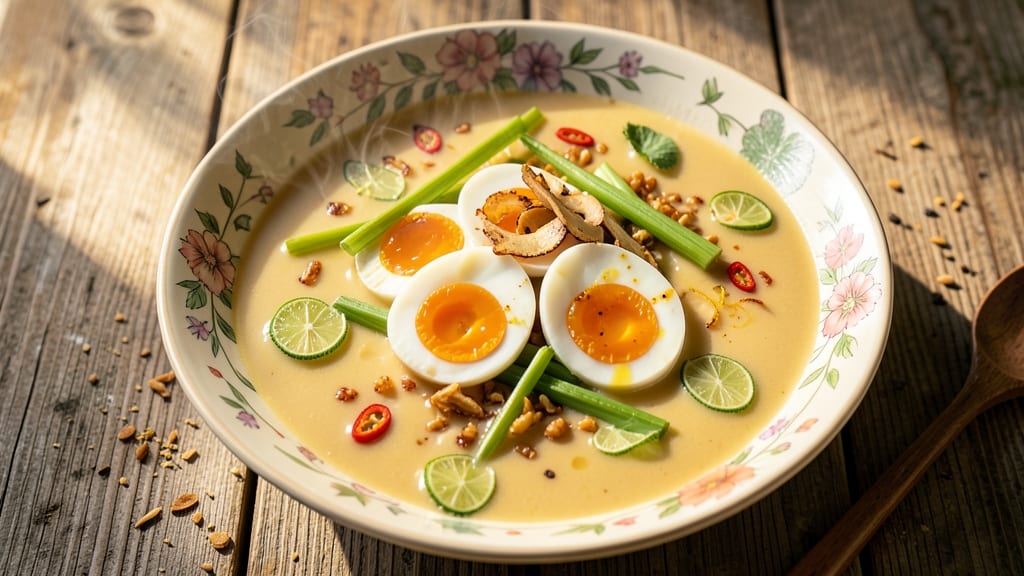
This Thai egg soup recipe brings the aromatic essence of street-side Thai cuisine into your kitchen with its fragrant coconut and lemongrass broth. The secret lies in balancing sweet, sour, and savory flavors through a simmered broth that transforms ordinary eggs into a delicate, silky dish.
I've perfected this recipe over countless batches, ensuring every spoonful delivers that perfect harmony of Thai-inspired comfort.
What sets this recipe apart is the fragrant coconut-lemongrass broth, infused with galangal, kaffir lime leaves, and a touch of fish sauce for depth. The broth simmers gently, allowing the flavors to meld while keeping the eggs tender and perfectly poached.
This isn't just soup—it's a sensory experience that transports you to bustling Thai markets with every bite.
The result is a bowl of perfectly balanced Thai egg soup where each component shines: silky eggs, aromatic broth, and fresh herbs that add a pop of color and freshness.
The dish is simple yet sophisticated, requiring just 30 minutes of active time but delivering restaurant-quality results that impress even the most discerning palates.
Whether you're serving it as a light lunch or a comforting dinner, this soup adapts beautifully to your schedule. The broth can be made ahead, and the eggs are poached to order for that signature silky texture. Here's how to create this fragrant, flavorful masterpiece in your own kitchen.
Ingredients for thai egg soup
Fragrant coconut and lemongrass transform simple eggs into a restaurant-worthy Thai masterpiece.
| Ingredient | Amount | Notes |
|---|---|---|
| Large Eggs 🥚 | 4 whole | Freshly laid preferred for best texture |
| Coconut Milk 🥥 | 1 ½ cups | Full-fat for creaminess, canned preferred |
| Galangal 🌿 | 1 inch | Fresh root, peeled and sliced thin |
| Lemongrass 🌿 | 3 stems | Bruised to release oils, bottom 3 inches only |
| Kaffir Lime Leaves 🍋 | 2 whole | Fresh leaves, torn into pieces |
| Fresh Ginger 🧄 | 1 inch | Peeled and sliced, aromatic variety |
| Fish Sauce 🍶 | 1 tbsp | Red Boat brand preferred for quality |
| Vegetable Broth 💧 | 2 cups | Homemade or quality store-bought |
| Lime Juice 🍋 | 2 tbsp | Freshly squeezed, seeds removed |
| Brown Sugar 🍚 | 1 tbsp | Light or dark, for subtle sweetness |
| Thai Bird's Eye Chilies 🌶️ | 2 whole | Adjust to taste, seeds removed |
| Cilantro Leaves 🌿 | ¼ cup | Fresh, for garnish and brightness |
| Green Onions 🧅 | 3 whole | Thinly sliced, for garnish |
| Salt 🧂 | 1 tsp | Diamond Crystal preferred, adjust to taste |
| Black Pepper 🌶️ | ¼ tsp | Freshly cracked for aroma |
The galangal and lemongrass are the soul of this soup—freshness is non-negotiable. Grab them at Asian markets where they're properly stocked; the grocery store versions often sit too long. Look for galangal with tight, pale skin and no soft spots—it should smell citrusy and peppery. Lemongrass should be firm with no brown ends. Red Boat fish sauce is worth the splurge here—it's the difference between 'okay' and 'wow'. If you can't find fresh galangal, substitute 1 tsp galangal powder, but it won't be the same. The ginger should be young and aromatic, not fibrous or woody.
No fish sauce? Soy sauce works in a pinch, but reduce by half since it's saltier. Short on coconut milk? Light coconut milk at 2x the amount keeps it creamy. The Thai chilies are optional but essential for that signature heat—use bird's eye chilies if you can find them, or sub serrano. For the broth, homemade vegetable broth elevates this, but even quality store-bought like Pacific Foods works. The lime juice should be freshly squeezed—bottled just doesn't cut it. And trust me on the brown sugar: light brown gives subtle caramel notes that balance the acidity perfectly.
This broth keeps beautifully—3 days in the fridge or 3 months frozen. Make a double batch and freeze portions for lazy days. The eggs poach best fresh, but you can pre-make the broth and store it separately. Garnishes like cilantro and green onions stay fresh 3 days wrapped in damp paper towels in the fridge. Want to impress? Serve with steamed jasmine rice—it's a match made in heaven. The soup actually tastes better the next day as flavors meld, so always make extra
Why You'll Love This Recipe
- No Chopping Needed: The galangal and lemongrass? Just slice them thick—no mincing, no fuss. Toss the whole stalks in, simmer, then fish them out later. That’s it. Honestly, I’ve made this soup after work when I’m too tired to even open a knife.
- Creamy Without Heavy: The coconut milk makes this soup rich but light—no greasy aftertaste. The eggs poach in that silky broth, silky yolks cracking open like little edible surprises. Between us, it’s the kind of comfort that doesn’t weigh you down.
- Leftovers That Taste Better: This soup actually improves the next day. The flavors meld deeper, the broth gets more aromatic, and you can just heat it up with a splash of water. I’ve reheated mine three days running—still delicious, still crave-worthy.
- Budget Thai Feast: Galangal and kaffir lime leaves might sound fancy, but they’re cheap staples at Asian markets. A few stalks stretch for multiple batches, and eggs? Always affordable. It’s my go-to when I want restaurant-quality flavors without the price tag.
Step-by-step instructions for Thai egg soup
Here's how to build a fragrant, balanced Thai egg soup that delivers on every aromatic note.
🍳 Step 1: Build the Aromatic Base
Heat a large pot over medium heat and add the 1 inch galangal, 3 stems lemongrass (bruised), 2 whole kaffir lime leaves (torn), and 1 inch fresh ginger (sliced). Cook for 3-4 minutes until the galangal and ginger become fragrant and slightly softened, releasing their essential oils into the pot.
This is where the magic begins—the aromatic foundation. You'll know it's working when the kitchen fills with that distinct Thai herbal scent. If the ingredients start to brown too quickly, reduce the heat slightly to medium-low and continue cooking until properly fragrant.
🍳 Step 2: Develop the Broth
Add the 1.5 cups coconut milk and 2 cups vegetable broth to the pot, stirring to combine. Bring the mixture to a gentle simmer over medium heat, then reduce heat to low and let it cook uncovered for 10 minutes. This slow simmer allows the coconut milk to infuse with the aromatic ingredients, creating a velvety base.
After 10 minutes, taste the broth and adjust seasoning with 1 tbsp fish sauce, 1 tbsp brown sugar, 2 tbsp lime juice, 1 tsp salt, and 0.25 tsp black pepper. The broth should be balanced—sweet, tangy, and savory with a subtle heat. If it needs more depth, add a splash more fish sauce or a pinch of sugar.
🔥 Step 3: Prepare the Eggs for Poaching
While the broth simmers, prepare the 4 whole large eggs by gently whisking them in a bowl until the yolks and whites are fully combined. The eggs should be at room temperature for even cooking—if they're cold, let them sit out for 10 minutes before proceeding.
Here's the thing—Thai egg soup relies on perfectly poached eggs that stay intact but develop a delicate, cloudy center. To achieve this, I like to add a splash of the hot broth to the whisked eggs, about 1 tablespoon, to help them cook more gently when they hit the simmering liquid.
🍳 Step 4: Poach the Eggs Directly in the Soup
Return the pot to a gentle simmer over low heat. Using a small ladle, carefully pour the whisked eggs into the broth one at a time, spacing them evenly. The broth should remain at a very gentle simmer—if it's too vigorous, the eggs will break apart. You want just enough movement to create a soft, cloudy center.
Let the eggs poach for 3-4 minutes until the whites are just set but the yolks remain runny and slightly wobbly. The eggs should float gently in the broth, and when you lift one with a spoon, it should hold its shape but still feel tender. If the broth reduces too quickly, add 1-2 tablespoons of hot water to maintain the proper consistency.
🥘 Step 5: Finish and Serve
Remove the pot from heat and let the soup rest for 2-3 minutes to allow the flavors to meld. Stir in the 2 whole Thai bird's eye chilies (sliced) and let them steep for 1 minute to infuse the broth with heat. Finally, garnish each serving with 0.25 cup cilantro leaves and 3 whole green onions (thinly sliced).
Serve the soup immediately while the eggs are still warm and the broth maintains its velvety texture. Each spoonful should deliver a harmonious balance of coconut creaminess, herbal aromatics, and the delicate poached eggs. The soup's beauty lies in its simplicity—every ingredient plays a crucial role, and nothing should overpower the others.
Pro Tips For Making Thai Egg Soup
- Blister Galangal First: I learned this the hard way—raw galangal tastes like bitter disappointment. Heat a dry pan until smoking, then sear the slices for 30 seconds per side until fragrant and slightly charred. That’s when the real flavor comes out, not when it’s limp and undercooked.
- Crack Eggs Into Warm Broth: Cold eggs sink like stones and cook unevenly. Instead, let the broth simmer until tiny bubbles form at the edges, then gently slide eggs in one at a time. They’ll float properly and set into silky, cloud-like curls—no more rubbery yolks or broken whites.
- Strain the Coconut Milk: Canned coconut milk leaves a gritty aftertaste that ruins the soup’s delicate balance. Line a fine-mesh strainer with cheesecloth, pour the milk through, and give it a gentle squeeze. Your soup will taste smoother and richer—no one will guess you took this extra step.
- Tie the Lemongrass Bundles: Loose lemongrass stalks disintegrate into the broth, turning it into a fibrous mess. Wrap 3-4 stalks together with kitchen twine, then tie a knot at the top. The bundle infuses the soup perfectly and stays intact—no fishing for stalks later.
Creative variations of this thai egg soup
Spicy Tom Yum Fusion
Transform your Thai egg soup into a Tom Yum-inspired version by swapping coconut milk for 2 cups chicken broth and adding 1 stalk lemongrass (bruised) and 2 slices galangal (pounded).
Boost the heat with 3 Thai chilies (whole) and 1 tbsp lime juice, then finish with 1 tsp fish sauce and ½ tsp shrimp paste for umami depth. The broth should sizzle with bright, tangy energy—perfect for spice lovers! 🌶️
Creamy Coconut Curry Twist
Turn this into a Thai coconut curry soup by adding 1 tbsp red curry paste (like Maesri) to the aromatic base. Stir in ½ cup diced tomatoes and ½ cup shredded chicken after the broth simmers.
The curry paste adds smoky depth, while the chicken makes it heartier. Garnish with toasted coconut flakes and lime wedges for a restaurant-worthy bowl. 🥥
Vegetarian Adaptation
Skip the fish sauce and replace it with 1 tbsp soy sauce and 1 tsp miso paste for umami. Use vegetable broth and add ½ cup mushrooms (shiitake or oyster) and ½ cup bok choy (chopped) to the broth.
The mushrooms absorb the coconut-lemongrass flavors beautifully, while the bok choy adds freshness. Top with sesame seeds for texture. 🌱
Herb-Infused Variations
Swap cilantro for Thai basil or mint leaves to give the soup a brighter, more aromatic finish. For a minty twist, add 2 tbsp fresh mint (chopped) at the end.
If you love green onions, try scallions for a milder, sweeter garnish. The herbs should complement the broth’s flavors without overpowering the delicate eggs. 🌿
Protein Swaps
Need more protein? Add 4 oz shrimp (poached in the broth) or ½ cup firm tofu (cubed and simmered). For a meatier version, include 2 oz thinly sliced pork belly (cooked until tender).
Each protein absorbs the broth’s flavors differently—shrimp adds sweetness, pork brings richness, and tofu stays light. 🍤
Seasonal Adjustments
In winter, add ½ cup diced sweet potato (simmered in the broth) for heartiness. For summer, include ½ cup cucumber (thinly sliced) and 1 tbsp rice vinegar for a refreshing, light broth.
Spring calls for pea shoots or baby spinach—toss them in at the end to keep them vibrant. 🌸
Nutrition facts
Frequently asked questions
Can I make this Thai egg soup without coconut milk?
You can substitute with 2 cups light coconut milk or even ½ cup heavy cream + 1 cup vegetable broth for a lighter version. The coconut adds essential creaminess, but the broth's herbal notes will still shine. For a Tom Yum-inspired version, skip coconut entirely and use 2 cups chicken broth instead.
How do I get perfectly poached eggs in my soup?
Use room-temperature eggs and whisk them gently with 1 tbsp hot broth before adding. Simmer the soup at low heat (gentle bubbles) and poach for 3-4 minutes—the whites should set while yolks stay runny. Avoid stirring the broth while eggs cook to prevent breaking.
What if I can't find galangal or kaffir lime leaves?
For galangal, try 1 tsp ginger + ½ tsp galangal powder (if available). Skip kaffir lime leaves and use 1 extra lime wedge plus 2 extra basil leaves for aroma. The dish will still taste great—just slightly different! These ingredients are signature but not dealbreakers.
Can I make this soup ahead of time?
Make the broth 3 days ahead and store in the fridge, or freeze for 3 months. Reheat gently, then poach eggs fresh when serving. The broth actually improves overnight as flavors meld! For best texture, always poach eggs in hot, simmering broth right before eating.
Is this Thai egg soup spicy?
The recipe includes 2 Thai chilies for subtle heat, but you can adjust to taste. For more spice, add 1 extra chili or ½ tsp chili flakes. If you prefer mild, simply omit them—the coconut and lemongrass flavors will still shine. The heat comes from the chilies, not the broth base.