
Breakfast & Brunch
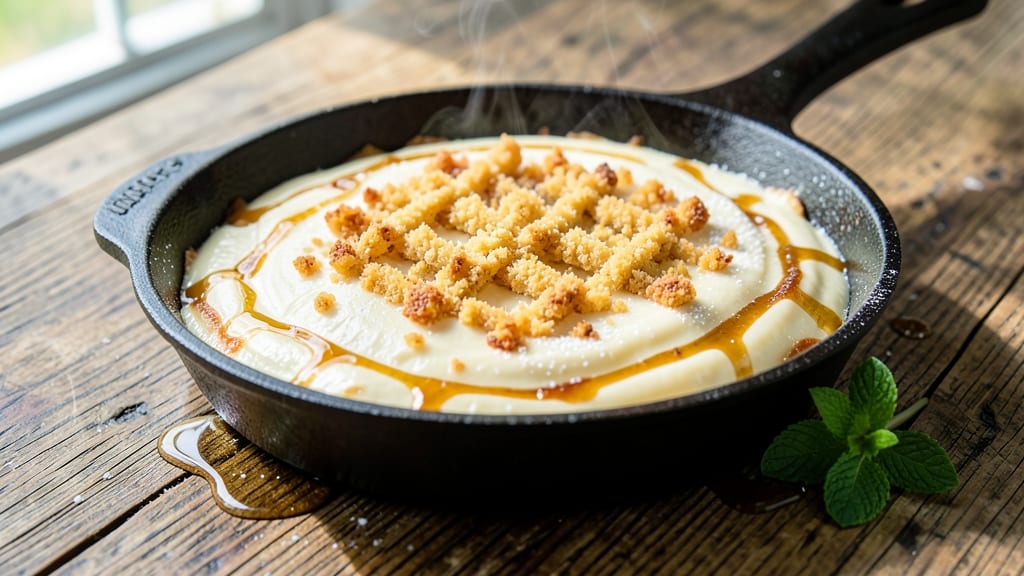
This Southern egg custard recipe delivers the creamy, golden-silk texture that makes it a brunch centerpiece—rich vanilla depth and tender egg custard that melts in your mouth. 💛 The secret lies in a precise balance of eggs, cream, and sugar, baked to perfection in a water bath for that signature silky finish.
I’ve perfected this classic Southern dessert over years of testing, ensuring every bite is velvety without being overly sweet.
The foundation of great egg custard starts with properly tempered eggs and cream, preventing curdling while building that luxurious mouthfeel. A light cornmeal crust adds rustic texture, while bourbon (optional but recommended) deepens the flavor profile with a subtle warmth.
The water bath method guarantees even cooking, eliminating the risk of overbaking or undercooked centers.
What you’ll end up with is a custard so smooth it practically dissolves on your tongue, with a golden hue that’s impossible to resist.
Serve it warm with fresh berries, a drizzle of maple syrup, or a dusting of powdered sugar for a brunch that feels like a Southern Sunday morning. The texture is the star here—silky, rich, and perfectly set.
This recipe works beautifully for holiday brunches, potlucks, or even a special weekend treat. The custard keeps well in the fridge for up to 3 days, making it ideal for meal prep.
For extra indulgence, top with whipped cream or a sprinkle of toasted pecans. Let’s make this Southern classic your new go-to dessert.
Ingredients for southern egg custard
Six simple ingredients transform into velvety Southern custard with golden-silk perfection.
| Ingredient | Amount | Notes |
|---|---|---|
| Large Eggs 🥚 | 6 whole | Room temperature for best blend |
| Heavy Cream 🥛 | 2 cups | Full-fat for richest texture |
| Granulated Sugar 🍚 | 1 cup | Light brown for subtle caramel notes |
| Vanilla Extract 🌿 | 2 tbsp | Pure Madagascar bourbon vanilla |
| All-Purpose Flour 🌾 | ¼ cup | For tempering eggs and cream |
| Cornmeal 🌽 | ¼ cup | Fine-ground for crust texture |
| Unsalted Butter 🧈 | ½ cup | Cold, cubed for crust |
| Bourbon Whiskey 🍷 | ¼ cup | Optional but recommended |
| Salt 🧂 | ½ tsp | Fine sea salt preferred |
| Vanilla Bean Seeds 🌿 | 1 whole | Scraped from 1 pod |
| Milk 🥛 | ½ cup | Whole milk for creaminess |
| Powdered Sugar 🍚 | ¼ cup | For dusting finished custard |
The eggs and cream are the heart of this custard—room temperature is key to prevent curdling. Pasture-raised eggs from the grocery store's refrigerated section work best, but any large eggs will do. For the cream, Whole Foods or Kroger's organic selection gives the richest texture, but regular heavy cream from any store works fine. The vanilla extract? Bourbon vanilla adds depth, but pure vanilla will still taste amazing. Pro tip: scrape those vanilla bean seeds—every little bit counts for that authentic Southern flavor. Don't skip the tempering step with flour, or you'll risk scrambled eggs instead of silky custard.
No bourbon? Substitute with 1 tbsp extra vanilla plus 1 tsp maple syrup—it won't be the same, but close. Running short on cornmeal? All-purpose flour works in a pinch, though the crust won't be quite as rustic. The brown sugar swap? White sugar plus 1 tsp molasses mimics the caramel notes. For the crust, if you're feeling fancy, toast the cornmeal in a dry pan for 2 minutes first—Trader Joe's sells pre-toasted cornmeal if you're short on time. And if you're making this ahead, the custard actually tastes better the second day as flavors meld.
This custard keeps beautifully—3 days in the fridge sealed tightly, or 1 month in the freezer if you portion it into containers. For serving, warm gently in a water bath (just like baking) for 10-15 minutes—microwaving makes it rubbery. The crust? Best eaten fresh, but you can reheat it in the oven at 350°F for 5 minutes if needed. I always make a double batch—one for brunch, one for dessert later. The powdered sugar topping? Save some for garnishing the next day—it keeps for 2 weeks in an airtight container.
Why You'll Love This Recipe
- No-Fuss Ingredients: I keep a bag of flour, eggs, and vanilla in my pantry anyway—this custard just ties them together. Honestly, the heavy cream and sugar are the only things I might need to grab, and that’s it.
- Silky Smooth Magic: That perfect balance of vanilla and sugar? It’s like dessert sneaking into breakfast. The flour gives it just enough body to hold its shape, while the eggs make it impossibly creamy—no lumps, no fuss.
- Breakfast or Dessert: Serve it warm with a drizzle of honey for a lazy weekend brunch, or chill it overnight and slice it like a pudding for a sweet treat. Between us, I’ve even used it to top pancakes—yes, really.
- Leftovers That Don’t Suck: This custard actually improves the next day. I make a big batch on Sundays, and by Wednesday, it’s still rich, still creamy, and still the easiest way to use up a few eggs before the carton expires. Zero waste, all flavor.
Step-by-step instructions for Southern egg custard
Here's how to make the creamiest Southern custard with that signature golden crust.
👨🍳 Step 1: Whisk Eggs and Cream for Smooth Texture
In a large mixing bowl, combine the 6 whole Large Eggs and 1 cup Granulated Sugar. Whisk vigorously for 2-3 minutes until the mixture is pale yellow and slightly thickened. This step is crucial—it incorporates air and helps create that signature silky texture.
Next, add the 2 cups Heavy Cream, 0.5 cup Milk, 2 tbsp Vanilla Extract, and the scraped seeds from 1 whole Vanilla Bean. Whisk gently but thoroughly until fully combined. The custard should be smooth with no visible streaks of egg whites. I like to use a whisk for this part—it creates more air than a mixer would.
🍳 Step 2: Temper and Combine Dry Ingredients
In a separate bowl, whisk together the 0.25 cup All-Purpose Flour, 0.25 cup Cornmeal, and 0.5 tsp Salt. This combination gives the custard its signature crusty texture. Slowly pour about 1 cup of the egg mixture into the dry ingredients while whisking constantly to form a smooth paste. This prevents lumps from forming when you combine everything.
Now, gradually pour this flour mixture back into the main bowl with the egg mixture. Whisk gently but continuously for 1-2 minutes until fully incorporated. The custard should be thick but pourable. If you notice any lumps, strain it through a fine-mesh sieve for a perfectly smooth texture.
🔥 Step 3: Cook the Custard on Low Heat
Pour the custard mixture into a 10-inch cast iron skillet or oven-safe baking dish. Place the skillet over low heat on the stovetop. Stir constantly with a wooden spoon or silicone spatula for 5-7 minutes until the mixture thickens noticeably and begins to bubble gently at the edges.
Here's the thing—you want to cook it just until it thickens but not until it sets completely. It should still have a slight wobble when you gently shake the pan. Remove from heat and stir in the 0.25 cup Bourbon Whiskey (if using) and the 0.5 cup Unsalted Butter, cubed. Let it sit for 1 minute to melt the butter completely.
🥘 Step 4: Bake Until Golden and Set
Preheat your oven to 325°F. Place the skillet in the oven and bake for 30-35 minutes until the custard is set but still slightly jiggly in the center. You'll know it's ready when the top is golden brown and the edges pull away slightly from the pan. If you're unsure, do the "wobble test"—the center should jiggle gently like gelatin.
During the last 5 minutes of baking, watch closely for the crust to develop that beautiful golden color. If it starts to brown too quickly, tent the pan with aluminum foil to prevent over-browning while still allowing it to set properly. The custard should be just set in the center—it will continue to firm up as it cools.
⏰ Step 5: Chill and Serve with Vanilla Dusting
Remove the custard from the oven and let it cool for 10 minutes at room temperature. Then transfer it to the refrigerator and chill for at least 2 hours (or overnight). This step is essential for developing the perfect texture—it allows the custard to set completely while maintaining that creamy interior.
Before serving, dust the top generously with 0.25 cup Powdered Sugar using a fine-mesh sieve. This adds that classic Southern touch and balances the rich custard flavor. Serve chilled in slices with fresh berries or a drizzle of warm maple syrup for the ultimate Southern dessert experience.
Pro Tips For Making Southern Egg Custard
- STRAIN THE CREAM: Heavy cream has a knack for hiding tiny milk-fat specks that turn your custard grainy. After heating the cream and sugar, let it sit for 2 minutes off the heat, then strain it through a fine-mesh sieve into your egg mixture—yes, even if it looks perfect. I learned this the hard way when a batch separated like cottage cheese. Worth the extra 30 seconds.
- WHISK EGGS COLD: Warm eggs whip up like glue. Before adding them to the hot cream, chill the egg mixture in a bowl over ice for 5 minutes—especially if your kitchen’s warm. The cold slows the cooking process, giving you that silky texture instead of rubbery curds. (Pro move: Use a stand mixer on low to avoid over-aerating.)
- SKIP THE BOIL: Southern custard isn’t meant to bubble like a science experiment. Once the mixture returns to a gentle simmer (small, occasional bubbles at the edges), it’s done—usually 3–5 minutes after the flour is dissolved. Boiling it turns the custard into glue. I used to pull it too soon or let it overcook; now I watch the edges like a hawk.
- USE LESS FLOUR: The recipe might call for ¼ cup flour, but you likely only need 2–3 tablespoons. Too much thickens the custard and makes it taste like a thin pancake. Start with the lower amount, then add back 1 teaspoon if it’s too runny—you can always fix thin, but not thick. (Trust me, your taste buds will notice.)
Common mistakes when making this recipe
Overmixing the Eggs
I’ve seen beginners whip those eggs into stiff peaks, thinking more air equals better texture—but that’s a big mistake. Overmixing incorporates too much air, which can cause the custard to set unevenly or even curdle.
Instead, whisk just until the mixture is pale yellow and slightly thickened (2-3 minutes). The goal is to blend, not to aerate like you’re making meringue. 🥚
Skipping the Tempering Step
Adding flour directly to cold eggs is a recipe for disaster—you’ll end up with scrambled eggs instead of silky custard. Always whisk the flour, cornmeal, and salt into a small portion of the egg mixture first to create a smooth paste.
This ensures no lumps form when you combine everything. I’ve ruined more custards than I’d admit by skipping this step!
Baking at Too High Heat
Custard is delicate, and 325°F is the sweet spot—any hotter and you risk a rubbery or grainy texture. I’ve seen people crank the oven to 350°F or even higher, thinking it’ll cook faster.
But custard needs gentle, even heat to set properly. If your kitchen runs hot, tent the pan with foil during the last 5 minutes to prevent over-browning.
Underbaking or Overbaking
The custard should be just set in the center—like gentle Jell-O—when you take it out. Underbaking leaves it too soft, while overbaking turns it dry and chalky. The wobble test is your friend: if the center jiggles slightly, it’s perfect.
If it’s firm, it’s overdone. I’ve had to rescue custards that were left in too long—trust me, it’s not pretty. 🍳
Ignoring the Chill Time
Rushing to serve warm custard straight from the oven is a cardinal sin. The custard needs at least 2 hours in the fridge to fully set and develop its signature texture.
Skipping this step results in a runny, underwhelming dessert. Patience pays off—trust the process, and you’ll be rewarded with that perfect golden-silk consistency.
Using Cold Ingredients
Cold eggs and cream can cause the custard to separate or curdle as it heats. Always use room-temperature ingredients. Pop the eggs out of the fridge 30 minutes before starting, and let the cream sit at room temp for 15 minutes.
I keep a bowl of warm water nearby to speed this up if I’m in a hurry. Cold ingredients are the #1 reason for grainy or lumpy custards.
Nutrition facts
Frequently asked questions
Can I make this custard without bourbon?
The bourbon adds depth, but you can substitute 1 tbsp extra vanilla extract plus 1 tsp maple syrup for a similar sweetness. For a non-alcoholic option, try 1 tbsp orange liqueur or even a splash of almond extract—just reduce the vanilla slightly to balance flavors. The custard will still taste rich and creamy without it.
Why does my custard have lumps?
Lumps usually mean you skipped the tempering step or added flour too quickly. Always whisk the 0.25 cup flour + 0.25 cup cornmeal into a small portion of the egg mixture first to create a smooth paste. If lumps appear, strain the custard through a fine-mesh sieve before baking. Cold ingredients can also cause separation—always use room-temperature eggs and cream.
How do I know when it's fully set?
The custard is done when the center jiggles slightly like gentle Jell-O—not firm, not liquid. Tap the pan gently: if it wobbles but doesn't shake violently, it's perfect. Overbaking makes it dry and chalky, while underbaking leaves it too soft. For extra insurance, insert a knife near the center—it should come out clean but slightly wet, not runny.
Can I make this in a different pan?
Yes! A 9-inch pie dish or 8x8-inch baking dish works well, but adjust baking time: 9-inch dish = 30-35 minutes, 8x8-inch = 25-30 minutes. Cast iron distributes heat best for that signature crust, but oven-safe ceramic or glass pans work too. Just avoid dark pans—they can over-brown the custard before it's fully set.
What's the best way to reheat leftovers?
Never microwave—it makes custard rubbery! Instead, place slices in a baking dish, cover with foil, and warm at 300°F for 10-15 minutes in a water bath (dish in a larger pan with hot water). For individual servings, wrap in foil and reheat in the oven for 8-10 minutes. The texture stays silky when heated gently.