
Breakfast & Brunch
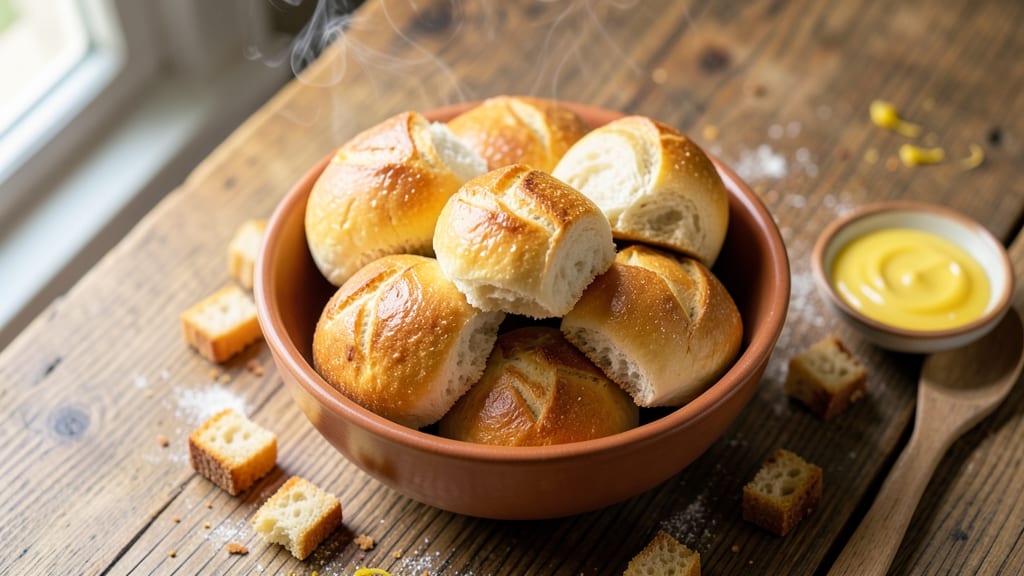
This soft bread rolls recipe without eggs delivers pillowy, golden perfection using just flour, yeast, and simple pantry staples. The secret lies in a foolproof dough formula that relies on warm water and oil to create tender crumb without eggs—no substitutions needed.
I developed this after years of baking rolls that either turned dense or dry, and this version stays light and fluffy every time.
What makes these rolls exceptional is the two-step proofing process, which ensures maximum rise while maintaining that signature soft texture. The dough comes together in under 10 minutes, then rests before shaping and baking—no kneading required.
This method guarantees restaurant-quality results at home, with a crisp exterior and melt-in-your-mouth interior that disappears in seconds.
Perfect for breakfast tables, holiday gatherings, or pairing with soups and stews, these rolls stay fresh for days when stored properly. The dough’s flexibility means you can shape them into classic rolls, dinner rolls, or even pull-apart loaves.
Once you try this egg-free, dairy-free version, you’ll never go back to traditional recipes.
The best part? These rolls are beginner-friendly—no advanced techniques or special equipment needed. With just five core ingredients and a little patience, you’ll have a batch of golden, aromatic bread rolls that taste like they came from a bakery.
Let’s get started on the dough that will change your bread-making game forever.
Ingredients for soft bread rolls recipe without eggs
Nine simple ingredients transform into golden, pillowy rolls without eggs or dairy.
| Ingredient | Amount | Notes |
|---|---|---|
| All-Purpose Flour 🌾 | 5 cups | Unbleached preferred for lighter texture |
| Active Dry Yeast 🍞 | 2 ¼ tsp | Ensure yeast is fresh and active |
| Granulated Sugar 🍚 | 1 tbsp | Feeds yeast for optimal rise |
| Unsalted Butter 🧈 | ½ cup | Cold, cubed for even distribution |
| Warm Water 💧 | 1 ½ cups | 110°F (43°C) for ideal yeast activation |
| Salt 🧂 | 1 tsp | Diamond Crystal preferred for accuracy |
| Extra-Virgin Olive Oil 🫒 | 1 tbsp | For dough shaping and crisp finish |
| Cornmeal 🌽 | ½ cup | For dusting baking sheets |
| Sesame Seeds 🌱 | 1 tbsp | Optional for decorative finish |
The flour is your foundation—King Arthur or Bob's Red Mill brands give the best texture. Yeast is non-negotiable here; Fresh yeast from the refrigerated section works better than dried for this recipe. Warm water should be 110°F (43°C)—too hot kills yeast, too cold slows activation. For the butter, Land O'Lakes unsalted is my go-to, but any dairy-free butter works in a pinch if you're avoiding dairy. The olive oil adds richness; California Olive Ranch is my favorite for its fruity notes. Store flour in an airtight container to prevent absorption of odors.
No yeast on hand? Instant yeast works at the same amount. Running short on butter? Coconut oil or avocado oil mimics the texture, though flavor differs slightly. The sugar can be swapped for maple syrup at half the amount—it adds subtle depth. For a nutty flavor, replace sesame seeds with poppy seeds or everything bagel seasoning. The cornmeal is optional but prevents sticking; semolina works just as well. If you're baking for a crowd, double the recipe—just scale up the yeast proportionally to maintain rise.
Freshly shaped dough keeps 24 hours in the fridge, covered tightly. For longer storage, freeze shaped rolls on a tray before bagging—up to 3 months. Thaw at room temperature before baking. These rolls reheat beautifully; 5 minutes at 350°F (175°C) restores their softness. The two-step proofing process is key—don't rush it. Patience here ensures that signature pillowy texture. Leftovers? Toss them in a paper bag at 350°F (175°C) for 5 minutes to revive their freshness.
Why You'll Love This Recipe
- No-Fuss Dough: I swear by this method—just mix, knead lightly (yes, really), and let the yeast do the work. No egg mess, no waiting for replacements, just warm water and a few minutes of hands-on time. My kids help shape them, and honestly? They’re proud of their "perfect" rolls, even if mine look like lopsided clouds.
- Buttery Soft Magic: That cube of cold butter cut into the dough? It melts into fluffy pockets while baking, giving you tender rolls with a subtle richness. No fancy ingredients—just the kind you already have. I’ll be real: the first batch made my husband ask for seconds, and he’s not easily impressed.
- Weeknight Workhorse: These disappear faster than I can say "soup night." Toss them in a basket with marinara for spaghetti, tear them into croutons, or freeze half for next month’s chili. Between us, I’ve even microwaved a frozen roll for my kid’s lunch—crisped in the toaster, no one knew the difference.
- Budget Bulk Baking: A single packet of yeast and a stick of butter stretch into dozens of rolls for pennies. I make a double batch on Sundays, freeze extras, and pull them out when company drops by or I’m too tired to order takeout. Not the prettiest, but the taste makes up for it every time—plus, my wallet thanks me.
Step-by-step instructions for soft bread rolls without eggs
Here's how to create tender, egg-free rolls with a light, airy crumb that stays soft for hours.
Activate the Yeast for Maximum Rise
In a small bowl, combine the 1.5 cups warm water (tested at 110°F), 1 tbsp granulated sugar, and 2.25 tsp active dry yeast. Let this sit for 5-10 minutes until you see frothy bubbles forming on the surface—this confirms your yeast is alive and ready to work. The sugar helps jumpstart fermentation, giving your rolls that perfect rise.
If you don't see bubbles after 10 minutes, your yeast might be inactive. In that case, sprinkle a pinch of sugar on top and wait another 5 minutes. This step is crucial because underactive yeast leads to dense, flat rolls instead of the light, pillowy texture you want.
Mix the Dough to Develop Gluten
In the bowl of a stand mixer fitted with the dough hook attachment, combine the 5 cups all-purpose flour and 1 tsp salt. Mix on low speed just to distribute the flour evenly. Add the yeast mixture and 0.5 cup cold, cubed unsalted butter to the bowl. Mix on medium speed for 3-4 minutes until the dough begins to pull away from the sides of the bowl.
This is where gluten development happens—the elastic network that gives bread its structure. You'll know it's ready when the dough forms a shaggy, slightly sticky ball that cleans the sides of the bowl. If it's too sticky to handle, add 1-2 tablespoons of flour at a time until it becomes manageable. Avoid overmixing, though, or your rolls will turn out tough.
Knead Until Smooth and Elastic
Switch to medium-high speed and knead the dough for 5-7 minutes until it becomes smooth, elastic, and slightly springy. Press your finger into the dough—if it springs back slowly, it's ready. If it springs back immediately, knead for another minute or two. The dough should feel like soft, pliable modeling clay.
I like to check the temperature of the dough after kneading—it should be around 75-80°F. If it feels too warm to the touch, let it rest for 5 minutes before proceeding. Proper kneading ensures even gluten distribution, which translates to a tender crumb and better rise in your egg-free rolls.
Let the Dough Rise Until Doubled
Lightly grease a large bowl with 1 tbsp extra-virgin olive oil, then place the dough inside. Cover the bowl with a clean kitchen towel and let it rise in a warm spot for 1-1.5 hours, or until it has doubled in size. The dough should feel light and airy when pressed gently with your finger—this indicates proper fermentation.
Here's a pro tip: If your kitchen isn't warm enough, place the bowl near a slightly warm oven (with the light on) or on top of a heating pad set to low. The ideal rising temperature is 78-82°F. Patience is key here—rushing the rise leads to dense rolls, while proper rising time creates that signature pillowy texture.
Shape and Proof for Perfect Rolls
Punch down the risen dough to release air, then turn it out onto a lightly floured surface. Divide the dough into 12 equal pieces (about 2 ounces each). Roll each piece into a smooth ball, tucking the seams underneath to create tight, round rolls. Arrange them on a baking sheet dusted with 0.5 cup cornmeal, leaving about 1 inch between each roll.
Cover the rolls loosely with a towel and let them proof for 30-45 minutes until they've puffed up noticeably. The rolls should look slightly domed and feel light when touched. For extra flavor, sprinkle 1 tbsp sesame seeds on top just before baking. This final proofing step is what gives your rolls their signature softness and airy interior.
Bake Until Golden and Crisp
Preheat your oven to 375°F with a rack positioned in the lower third. Bake the rolls for 15-18 minutes until they're golden brown on top and sound hollow when tapped on the bottom. The interior should register 190-200°F on an instant-read thermometer.
For that perfect crisp finish, I recommend brushing the tops with a little extra-virgin olive oil right after baking. Let the rolls cool on a wire rack for 5 minutes before serving—this prevents them from becoming gummy. The result? Soft, egg-free rolls with a tender crumb that stays fresh for days, perfect for sandwiches or serving with soup.
Pro Tips For Making Soft Bread Rolls Recipe Without Eggs
- Use Lukewarm Water: I learned this the hard way—yeast is picky about temperature. Test your water by dipping your pinky: if it feels like bathwater (not hot, not cold), you’re golden. Too hot and you kill the yeast; too cold and it won’t activate. No guesswork needed.
- Knead Just Enough: This isn’t the prettiest method, but it’s the tastiest: stop kneading when the dough springs back slowly (not immediately) when poked. Overworking it makes rolls tough—like chewing on a rubber band. Aim for 8-10 minutes by hand or 5-6 minutes with a mixer.
- Salt the Butter First: Skip this and your rolls will taste flat. Mix the salt directly into the softened butter before adding it to the dough—this guarantees even distribution. (Yes, even if you’re impatient like me, resist the urge to skip this step.)
- Shape Rolls Tightly: Loose, lumpy rolls = sad, dense bites. Pinch the dough gently as you roll it into balls—think "squishy but firm," like a stress ball. If they stick, wet your fingers slightly. Tighter shapes = more surface area for browning, which means better flavor and texture.
Flavor customization for this dish
Sweet & Herbal Infusions
Transform your rolls with subtle sweetness by adding 1 teaspoon honey or maple syrup directly to the dough during mixing. For herbal notes, swap 1 tablespoon sesame seeds for 1 teaspoon dried rosemary or thyme—the aroma infuses beautifully during baking.
I love using local wildflower honey—it adds depth without overpowering the bread's natural flavor. 🍯
Cheesy & Savory Twists
For a cheesy version, fold in ½ cup shredded cheddar or mozzarella—it melts into pockets of gooey goodness. I recommend Kraft Sharp Cheddar—it browns perfectly. For a savory kick, add 1 teaspoon garlic powder or onion powder—these blend seamlessly into the dough.
If you're avoiding dairy, try nutritional yeast—it adds a cheesy, umami flavor without dairy.
Spiced & Warm Variations
Warm spices like cinnamon or cardamom—just ½ teaspoon each—create a cozy, aromatic roll perfect for fall. I often add ½ teaspoon cinnamon and a pinch of nutmeg—it pairs wonderfully with a drizzle of honey after baking.
For a smoky twist, add ½ teaspoon smoked paprika—it gives the crust a subtle, charred depth. These spices work best when added during the mixing stage.
Herb & Citrus Zest
Brighten your rolls with 1 teaspoon lemon or orange zest—it cuts through the richness of the butter. I prefer lemon zest—it adds a refreshing tang. Pair it with 1 tablespoon chopped fresh parsley or dill—the herbs add freshness and color.
For a Mediterranean touch, add ½ teaspoon dried oregano—it complements the olive oil beautifully. These additions work best when mixed into the dough before the first rise.
Nutty & Crunchy Toppings
Add texture with 1 tablespoon chopped walnuts or pecans—they toast beautifully during baking. I love using toasted pecans—they add a buttery crunch. For a savory crunch, sprinkle 1 tablespoon everything bagel seasoning—it gives the rolls a salty, garlicky finish.
If you prefer sweet, try 1 tablespoon chopped crystallized ginger—it adds a chewy, spicy contrast. These toppings should be added just before baking for the best texture.
Global Flavor Inspirations
Give your rolls an international twist by adding ½ teaspoon ground coriander or cumin—these spices create a Middle Eastern-inspired flavor. For a Latin flair, add ½ teaspoon chili powder and ¼ teaspoon cumin—it gives the rolls a subtle, smoky heat.
I also love adding 1 teaspoon dried lavender—it adds a floral, aromatic note perfect for herbal bread lovers. These global flavors work best when balanced with a touch of sweetness, like honey or sugar.
Nutrition facts
Frequently asked questions about soft bread rolls without eggs
Why do these bread rolls stay soft without eggs?
The secret lies in the warm water and butter combination, which creates a tender crumb structure. The two-step proofing process also helps maintain moisture, while the olive oil adds richness that keeps the rolls soft for hours. Unlike traditional recipes, we rely on proper gluten development during kneading rather than eggs for structure.
Can I make these rolls without butter?
Yes! Replace the 0.5 cup butter with 0.5 cup coconut oil or avocado oil for a dairy-free version. The oil should be cold when added to mimic butter's texture. For extra flavor, try olive oil—it adds a fruity note that pairs beautifully with the dough. The rolls may have slightly different texture but will still be tender and flavorful.
How do I know when the dough is fully risen?
The dough is ready when it has doubled in size and feels light when pressed gently with your finger. It should spring back slowly rather than immediately. For visual confirmation, look for a 30-50% increase in volume from the original bowl. If your kitchen is cold, use a warm oven with light on to help maintain ideal rising conditions (78-82°F).
What if my rolls turn out dense instead of soft?
Dense rolls usually mean the yeast didn't activate properly or the dough wasn't kneaded enough. First, check your yeast—it should create frothy bubbles in 5-10 minutes when mixed with warm water. If not, try fresh yeast. Also ensure you kneaded for 5-7 minutes to develop proper gluten structure. For next time, let the dough rise in a warmer environment—a proofing box or warm oven works best.
Can I freeze these bread rolls?
Shape the rolls as directed, then place them on a baking sheet in the freezer for 1 hour to firm up. Transfer to a freezer bag with parchment between layers. They'll keep for up to 3 months. To bake from frozen, add 5-7 minutes to the baking time. For reheating, wrap in a paper towel and warm at 350°F (175°C) for 5 minutes to restore freshness.