
Desserts
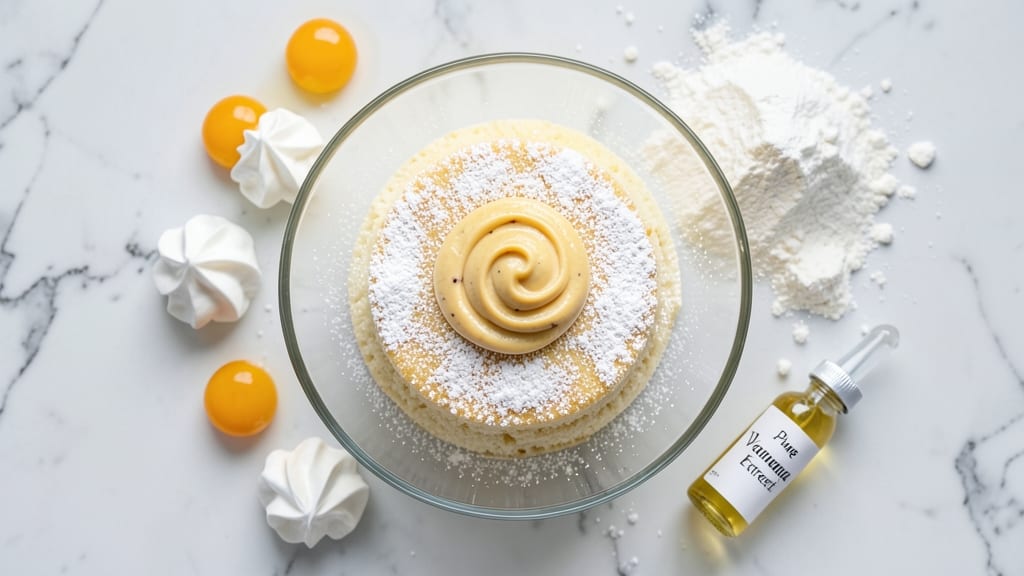
A 6-egg cake delivers the perfect balance of structure and lightness, where each egg contributes to airy layers and tender crumb. This vanilla-infused recipe relies on precise technique—whisking eggs to ribbons and folding dry ingredients gently—to create a cake that’s both elegant and foolproof.
The secret lies in the eggs: their proteins create stability while yolks add moisture, resulting in a bake that’s neither dense nor dry.
The process is straightforward but requires patience: eggs are whipped with sugar until pale and voluminous before being folded into flour and leavening agents. Baking at 350°F for 30–35 minutes ensures a golden crust and a springy interior.
Optional vanilla bean paste elevates the flavor, but pure extract works just as well for a classic touch.
What you’ll achieve is a cake with light-as-air layers, a delicate crumb, and a subtle vanilla aroma that lingers with every slice. Serve it plain for simplicity or dust with powdered sugar and fresh berries for a refined finish.
This recipe proves that even the most basic ingredients—flour, sugar, eggs, and vanilla—can yield restaurant-quality results.
Perfect for birthdays, afternoon tea, or a special dessert, this cake keeps well for 3 days at room temperature or can be frozen for up to 3 months.
The versatility of the recipe means you can adapt it with citrus zest, chocolate shavings, or a lemon glaze—all while maintaining that signature airy texture.
Ingredients for 6 egg cake
Six eggs, precise technique, and vanilla's delicate embrace create this signature light-as-air cake.
| Ingredient | Amount | Notes |
|---|---|---|
| Large Eggs 🥚 | 6 whole | Room temperature for even whipping |
| Granulated Sugar 🍚 | 1 ½ cups | Superfine preferred for smooth texture |
| All-Purpose Flour 🌾 | 1 ½ cups | Sifted for lightest crumb |
| Vanilla Extract 🌿 | 2 tsp | Pure extract or bean paste |
| Baking Powder 🧂 | 1 ½ tsp | Aluminum-free for delicate rise |
| Salt 🧂 | ½ tsp | Fine sea salt preferred |
| Unsalted Butter 🧈 | ½ cup | Cold, cubed for proper creaming |
| Milk 🥛 | ½ cup | Whole milk for richness |
| Powdered Sugar 🍚 | 2 tbsp | Optional for dusting |
The eggs are the foundation here—room temperature is non-negotiable for even whipping. Pasture-raised or organic eggs from Whole Foods or local farms yield richer flavor, though conventional eggs work perfectly fine. Sugar choice matters: superfine sugar dissolves faster, but regular granulated works if pulsed in a food processor. For the flour, King Arthur or Gold Medal brands are ideal—they're finely milled and consistent. The baking powder must be fresh; if your stash is over six months old, toss it. Butter should be cold and cubed—this ensures proper creaming without melting.
No vanilla bean paste? Pure vanilla extract works just as well, though the flavor will be subtler. For a non-dairy option, substitute the milk with whole oat milk (though texture may vary slightly). The powdered sugar is optional but recommended for dusting—Domino brand is finely milled and ideal. If you prefer a citrus twist, swap half the vanilla extract for lemon zest (about 1 tbsp). For chocolate lovers, add 2 oz of high-quality cocoa powder to the dry ingredients. Always sift your dry ingredients together to prevent lumps and ensure even distribution.
This cake keeps beautifully—wrapped in parchment at room temperature for 3 days or frozen for 3 months in an airtight container. For best results, store with a slice of bread to prevent drying. Reheat slices briefly in the oven or microwave for that just-baked texture. The delicate layers are best enjoyed within 2 days of baking, though the flavor continues to develop over time. For serving, pair with fresh berries or a dollop of whipped cream to complement the vanilla notes.
Why You'll Love This Recipe
- No Mixer Needed: I swear by this recipe when I’m in a rush—just whisk those eggs and sugar until they’re light and frothy, then fold in the flour. No stand mixer, no fuss, just pure simplicity that still delivers a tender crumb.
- Vanilla Kiss Magic: That single teaspoon of vanilla extract? It’s the secret weapon. The cake comes out with this warm, cozy sweetness that’s not overpowering—just enough to make you reach for another slice without guilt.
- Breakfast or Dessert: Honestly, I make this for both. Serve it plain with coffee for a protein-packed breakfast, or drizzle with melted chocolate for a quick dessert. The same batter, two totally different vibes.
- Pantry Staples Only: Between us, this recipe is my go-to when I’m low on ingredients. Six eggs, a cup of sugar, flour from the back of the cabinet—it’s budget-friendly and never lets me down. Plus, leftovers stay moist for days.
Step-by-step instructions for light-as-air vanilla cake
This method delivers a tender, airy crumb with perfect rise—every layer meets the promise of delicate vanilla flavor.
Prep Ingredients for Optimal Texture
Separate the 6 whole large eggs into yolks and whites, placing each in separate bowls. Let the whites sit uncovered at room temperature for 10 minutes—this ensures maximum volume when whipped. Sift together the 1.5 cups all-purpose flour and 1.5 teaspoons baking powder into a medium bowl to eliminate lumps and incorporate air.
In a separate small bowl, whisk the 1.5 cups granulated sugar with the 0.5 teaspoon salt until evenly combined. This pre-mixing prevents sugar crystals from forming in the batter later. Cut the 0.5 cup unsalted butter into small cubes and let them soften slightly at room temperature for 15 minutes—they should yield slightly when pressed but not be greasy.
Whip Egg Whites to Stiff Peaks
Using a stand mixer fitted with the whisk attachment, beat the egg whites on medium speed until soft peaks form. Gradually add the sugar-salt mixture while continuing to whip. Increase speed to high and beat for 3-5 minutes until the whites form glossy, stiff peaks that hold their shape when the whisk is lifted. This step is critical—under-whipped whites will collapse during baking.
In a separate large bowl, combine the egg yolks, 2 teaspoons vanilla extract, and 0.5 cup milk. Whisk vigorously for 1 minute until the mixture is pale and slightly thickened. Fold in the sifted flour mixture using a spatula, mixing just until combined—overmixing develops gluten and creates a tough crumb.
Gently Fold Egg Whites for Lightness
Add one-third of the whipped egg whites to the yolk mixture and fold gently with a spatula in a J motion until just combined. Repeat with another third, then the final third, being careful not to deflate the whites. The batter should be thick but still pourable. If it appears too dense, fold in an additional 1-2 tablespoons of the reserved whites.
This folding technique incorporates air without collapsing the structure, which is what creates that signature light-as-air texture. Avoid overmixing—stop as soon as the batter is uniformly colored with no visible streaks of flour.
Bake in Preheated Pans for Even Rise
Preheat the oven to 350°F. Grease three 8-inch round cake pans and line the bottoms with parchment paper. Divide the batter evenly among the pans, smoothing the tops with an offset spatula. Bake for 25-30 minutes, or until a toothpick inserted into the center comes out clean and the edges pull away slightly from the pan.
Watch for the golden dome to form at the top—this indicates proper baking. Rotate the pans halfway through for even browning. Let the cakes cool in the pans for 10 minutes, then transfer to a wire rack to cool completely before layering.
Dust with Powdered Sugar for Finishing Touch
Once fully cooled, place one cake layer on a serving plate. Sift 2 tablespoons powdered sugar evenly over the top, then repeat with the remaining layers. This final step enhances the vanilla flavor and adds a professional finish. Serve immediately or store in an airtight container for up to 3 days—though it’s best enjoyed fresh.
Pro Tips For Making 6 Egg Cake
- Whisk Eggs Until Ribbon Stage: Stop when the mixture coats the whisk and leaves a slow ribbon when lifted—about 2-3 minutes longer than you think. I learned this the hard way after a cake collapsed like a deflated balloon because I rushed. That extra time makes all the difference for a light, airy crumb.
- Sift Flour Twice: Yes, even if it looks fine. The first sift removes lumps, but the second ensures no hidden pockets of baking powder clump together. I was skeptical until I tried it—my cake now rises evenly instead of sinking in the middle.
- Don’t Overmix the Batter: Fold in the flour in two additions, using a spatula to cut through the center. Overmixing develops gluten, and that’s how you end up with a dense, chewy cake instead of tender layers. Trust the process—it’s not gluey when done right.
- Use Room-Temp Eggs: Cold eggs mix unevenly and can leave streaks in the batter. Pop them in warm water for 5 minutes if your kitchen’s chilly—this guarantees a smooth, consistent texture. (Your future self will thank you when the cake turns out perfectly golden.)
Creative variations of this recipe
Citrus Twist Variation
Brighten the flavor profile by swapping 1 teaspoon of vanilla extract for 1 tablespoon of lemon or orange zest (about 1 large lemon or 2 oranges). The citrus oils infuse the eggs during whipping, creating a zesty contrast to the sweetness.
For extra pop, add 1 tablespoon of fresh lemon juice to the yolk mixture. This variation works especially well with white chocolate shavings on top for a dessert that feels fresh and spring-like. 🍋
Chocolate Lover’s Adaptation
Transform this into a decadent chocolate cake by mixing 2 ounces (about ½ cup) of high-quality cocoa powder into the dry ingredients. For a richer version, replace ½ cup of milk with ½ cup of heavy cream and add ¼ cup of melted dark chocolate to the yolk mixture.
Dust the finished cake with powdered sugar and top with raspberries for a stunning presentation. The eggs still provide that signature lightness, while the cocoa deepens the flavor. 🍫
Spiced Chai Version
Infuse warmth by adding 1 teaspoon of ground cinnamon, ½ teaspoon of ground cardamom, and ¼ teaspoon of ground cloves to the dry ingredients. For extra depth, steep 1 chai tea bag in the ½ cup of warm milk before incorporating it into the yolk mixture.
The spices complement the vanilla beautifully, creating a cozy dessert perfect for fall or winter gatherings. Serve with whipped cream and a sprinkle of cinnamon on top. 🌿
Matcha Green Tea Cake
Swap the vanilla extract for 1 tablespoon of high-quality matcha powder (about 1 teaspoon) mixed into the dry ingredients. The earthy notes of matcha pair surprisingly well with the eggs’ richness, creating a visually stunning green cake.
For a modern twist, dust the layers with powdered sugar and add white chocolate drizzle on the sides. This version is ideal for tea lovers or anyone craving a unique flavor profile. 🍵
Coconut Lovers’ Delight
Replace the milk with ½ cup of coconut milk (full-fat for best texture) and add ½ cup of shredded coconut to the dry ingredients. For extra flair, fold in 1 tablespoon of toasted coconut flakes after baking.
The coconut enhances the vanilla flavor while keeping the cake light and airy. Top with mango slices or a drizzle of coconut syrup for a tropical-inspired dessert. 🥥
Almond Flour Gluten-Free Option
For a gluten-free adaptation, replace the all-purpose flour with 1.5 cups of almond flour (finely ground). Reduce the baking powder to 1 teaspoon and add ½ teaspoon of xanthan gum to help bind the batter.
The eggs and almond flour create a naturally moist crumb, while the vanilla adds sweetness. This version is perfect for those with gluten sensitivities but still delivers that signature lightness. 🌰
Nutrition facts
Frequently asked questions
Why does this recipe use 6 eggs instead of the usual 3-4?
The extra eggs create a signature light-as-air texture by incorporating more air during whipping while adding moisture and structure. Six eggs provide the perfect balance for three 8-inch layers—each egg contributes to both tenderness and stability, preventing a dense crumb. The result is a cake with fine, even crumb and excellent rise.
Can I bake this cake in a single 9-inch pan instead of three 8-inch pans?
Yes, but reduce the oven temperature to 325°F and bake for 40-45 minutes. The cake will be thicker, so check for doneness with a toothpick. For best results, use a water bath (wrap the pan in foil and place it in a larger roasting pan with hot water halfway up the sides) to ensure even baking.
What if my egg whites won't whip to stiff peaks?
This usually happens if the whites are too cold or contain traces of fat/yolk. Make sure your bowl and whisk are completely clean, and let the whites sit at room temperature for 10-15 minutes before whipping. If they still don't peak, try adding ½ teaspoon of cream of tartar (an acid) to stabilize them. Avoid overmixing the yolks, as this can carry over to the whites.
How do I store leftovers to keep them fresh?
Wrap each layer tightly in plastic wrap, then place them in an airtight container with a slice of bread to prevent drying. Store at room temperature for up to 3 days or freeze for 3 months. To revive, let slices sit at room temperature for 10 minutes before serving. Reheat briefly in the oven for that fresh-baked texture.
What's the best way to layer and frost this cake?
Use a serrated knife to level the tops of each cooled layer. Place the first layer on a plate, spread ¼ cup of vanilla buttercream (or whipped cream), then add the next layer. Repeat, finishing with the top layer. Frost the entire cake with remaining buttercream, then dust with powdered sugar. For extra flavor, brush layers with 1 tablespoon of vanilla syrup before frosting.