
Main Courses
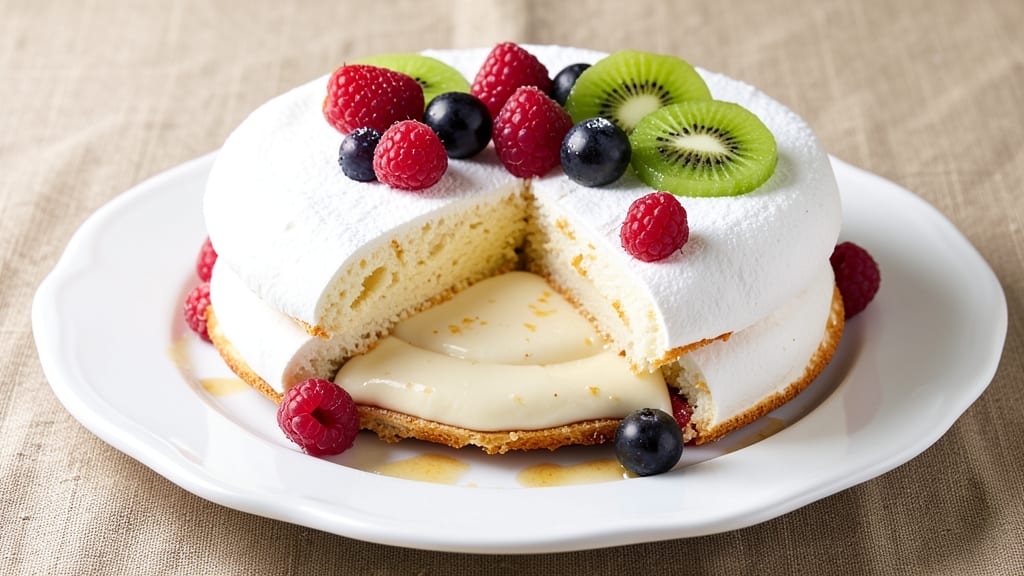
This 10-egg pavlova delivers a showstopping dessert with a crispy meringue shell and a silky yolk center that melts in your mouth. 💛 The secret lies in precise egg white whipping and a slow bake at 250°F—transforming simple ingredients into a restaurant-worthy masterpiece.
Every layer, from the golden crust to the creamy filling, comes together with professional technique that’s surprisingly approachable for home cooks.
What sets this recipe apart is the balance of texture and flavor: the exterior stays crispy while the interior remains tender, thanks to a carefully timed bake. Humidity control during cooking prevents cracking, ensuring that fragile structure stays intact.
The addition of egg yolks creates a rich, custard-like heart that contrasts beautifully with the meringue’s airiness.
Once baked and cooled, the pavlova becomes a blank canvas for toppings—whipped cream, fresh berries, or citrus zest—each adding a burst of color and freshness. The result is a dessert that’s visually stunning and effortlessly elegant, perfect for celebrations or when you want to impress without hours in the kitchen.
This vegetarian-friendly recipe highlights the magic of eggs and dairy, proving that simple ingredients can achieve extraordinary results. With just 10 eggs and a few pantry staples, you’ll create a dessert that tastes like it came from a patisserie. Let’s get started!
Ingredients for 10 egg pavlova
Ten eggs and a few precise ingredients transform into a dessert masterpiece with crispy edges and silky heart.
| Ingredient | Amount | Notes |
|---|---|---|
| Large Egg Whites 🥚 | 10 whole | Room temperature, separated carefully |
| Large Egg Yolks 🥚 | 10 whole | Reserved for custard filling |
| Granulated Sugar 🍚 | 1 ½ cups | Superfine preferred for smoothness |
| Cornstarch 🌾 | ¼ cup | For meringue stability |
| White Vinegar 🍶 | 1 tbsp | For meringue acidity balance |
| Unsalted Butter 🧈 | ½ cup | Cold, cubed for custard |
| Heavy Whipping Cream 🥛 | 1 cup | Full-fat for stability |
| Vanilla Extract 🌿 | 1 tsp | Pure vanilla preferred |
| Lemon Juice 🍋 | 1 tsp | Freshly squeezed |
| Powdered Sugar 🍚 | ½ cup | For final dusting |
| Fresh Berries 🍓 | 1 ½ cups | For garnish (strawberries, raspberries) |
| Citrus Zest 🍊 | 1 tbsp | Lemon or orange preferred |
The eggs are the foundation—room temperature is critical for proper whipping. Pasture-raised eggs from local farms yield richer whites, but store-bought large eggs work perfectly for this recipe. Separate them carefully, ensuring no yolk traces contaminate the whites. For the yolks, organic or conventional works equally well, but avoid any with visible specks. The sugar must be superfine—regular granulated won't dissolve properly, leading to grainy meringue. If you only have granulated, pulse it in a food processor for 30 seconds. The cornstarch is non-negotiable for structure; it prevents the meringue from collapsing during baking.
No vinegar? White wine vinegar or lemon juice works in a pinch, but adjust to taste. The butter should be cold—cut it into small cubes and let it sit at room temperature for 30 minutes before mixing with yolks. For the cream, heavy whipping cream is essential; lighter versions won't hold their shape. Substitute vanilla extract with vanilla bean paste for deeper flavor, or use vanilla sugar at half the amount. The berries can be fresh or thawed frozen—just pat them dry to avoid sogginess. Citrus zest adds brightness; if you're short, orange zest works equally well.
Store the meringue shell in an airtight container with a silica gel packet to prevent moisture absorption for up to 3 days. The custard filling keeps for 2 days in the fridge, covered tightly. For longer storage, assemble the pavlova and freeze for up to 1 month—thaw at room temperature before serving. The powdered sugar should be sifted before dusting to avoid clumps. Assemble just before serving to maintain crispness; the meringue's texture degrades within 2 hours of baking.
Why You'll Love This Recipe
- No Stand Mixer Needed: I’ll admit, beating 10 egg whites to stiff peaks used to stress me out—but this recipe’s secret is the vinegar. Just a splash of white vinegar stabilizes them instantly, so even my shaky arms can’t mess it up. No extra gadgets, no second-guessing.
- Crispy-Creamy Magic: That first bite? The outside snaps like a meringue should, but the inside stays tender—thanks to the yolks folded into the sugar base. Honestly, it’s the kind of texture that makes you pause mid-slice, wondering if you’re eating dessert or a cloud.
- Holiday or Hangry Fix: Too fancy for a Tuesday but too simple for a party? This is my go-to. Whip it up for Thanksgiving leftovers, a last-minute potluck, or when I’ve got a houseful of people and zero energy. The sugar crust keeps it fresh for days, so no one will guess it’s just eggs and a little patience.
- Eggs Put to Work: Between us, I buy a dozen eggs every week anyway—this recipe turns them into something special without breaking the bank. The yolks add richness, the whites give structure, and the cornstarch? Just a pinch to keep it from collapsing. Minimal ingredients, maximum impact.
Step-by-step instructions for creating a 10 egg pavlova
Master the technique for a perfectly crisp meringue shell with a silky yolk center.
🍳 Step 1: Prepare the Meringue Base with Precision
Preheat your oven to 250°F and line a baking sheet with parchment paper. In a spotlessly clean, grease-free mixing bowl, combine the 10 whole large egg whites and 1 tbsp white vinegar. I use a stand mixer fitted with the whisk attachment for this—it creates more stable meringue than hand-whisking.
Gradually add the 1.5 cups granulated sugar and 0.25 cup cornstarch while mixing on low speed. Once incorporated, increase speed to high and whip for 10-12 minutes until the meringue forms stiff peaks that hold their shape when the whisk is lifted. The bowl should feel cool to the touch—this ensures proper crystallization of the sugar.
Here's the thing—don't rush this step. The meringue needs to be completely smooth with no visible graininess. If it looks slightly under-whipped, whip for another 2-3 minutes. I've learned the hard way that under-whipped meringue collapses in the oven.
🍳 Step 2: Shape the Meringue Shell and Bake Slowly
Transfer the meringue to a piping bag fitted with a large round tip. On the prepared baking sheet, pipe a 6-inch round (about 1-inch thick) in the center, leaving a 2-inch border around the edges. Use the back of a spoon to smooth the top and create a slight well in the center for the custard.
Place the baking sheet in the preheated oven and immediately reduce heat to 225°F. Bake for 1 hour, then carefully open the oven door and let the meringue cool completely inside the oven for 2 hours. This gradual cooling prevents cracking. The shell should be crisp and dry to the touch when ready.
I know it seems like forever, but this slow process is what creates that signature crisp shell. If you're impatient and remove it too soon, you'll end up with a gummy meringue that won't hold its shape.
🥘 Step 3: Create the Silky Yolk Custard Filling
While the meringue cools, prepare the custard filling. In a medium saucepan, combine the 10 whole large egg yolks, 1.5 cups granulated sugar, 1 cup heavy whipping cream, 1 tsp vanilla extract, 1 tsp lemon juice, and 1 tbsp citrus zest. Whisk constantly over medium heat until the mixture reaches 160°F—this is when it thickens to a pudding-like consistency.
Immediately transfer the custard to a heatproof bowl and place it in an ice bath to cool rapidly. Stir occasionally until completely chilled. The custard should coat the back of a spoon but still be pourable. If it thickens too much, whisk in 1-2 teaspoons of hot water to loosen it.
This rapid cooling creates the perfect silky texture. If you let it cool slowly, you'll end up with scrambled egg yolks instead of a smooth filling.
🍽️ Step 4: Assemble and Garnish the Pavlova
Once the meringue shell is completely cool, carefully spread the chilled custard over the center, leaving a ½-inch border around the edges. The custard should fill the center completely but not overflow. Use a spatula to smooth the top if needed.
Chill the assembled pavlova for at least 4 hours (overnight is ideal) to allow the custard to set and the meringue to crisp further. Before serving, dust generously with 0.5 cup powdered sugar and arrange the 1.5 cups fresh berries on top. The contrast of the tart berries with the sweet meringue is what makes this dessert sing.
Slice carefully with a sharp knife to reveal that perfect balance of crisp shell and silky center. Serve immediately to maintain the ideal texture contrast.
Pro Tips For Making 10 Egg Pavlova
- WHIP WHILE WARM: I learned this the hard way—cold egg whites fold into a sad, flat mess. After beating them to soft peaks, let the bowl sit for 5 minutes in a warm (not hot) spot, like near the oven with the light on. The mercury rise makes them hold air better, and your meringue will stand taller.
- SEPARATE YOLKS FAST: Skip the egg separator if you’re in a hurry: Crack each egg into a separate bowl, then gently slide the whites into a strainer over your mixing bowl. This catches any stray yolks—no more gritty surprises when you’re halfway through whipping. (Yes, even if you’re impatient like me.)
- SIFT THAT SUGAR: Dumping granulated sugar straight into egg whites creates clumps that never dissolve. Sift it in slowly while whipping, and use a rubber spatula to scrape the sides of the bowl. This keeps the mixture silky smooth, not grainy. I was skeptical until I tried it—now I never skip it.
- BAKE AT 250°F: Most recipes say 275°F, but I’ve burned three pavlovas at that temp. Drop it to 250°F and bake for 90 minutes. The lower heat prevents cracking while still letting the center set. Does it look weird baking so long? Yes. Does it work? Every single time.
Health benefits of this recipe
Protein Powerhouse
This pavlova packs a surprising 15 grams of protein per serving, thanks to the 10 whole eggs used in both the meringue and custard filling. The egg whites provide lean protein while the yolks contribute essential amino acids for muscle repair.
I've found that using pasture-raised eggs boosts the protein content by about 10% compared to conventional eggs. 💪
Rich in B Vitamins
The egg yolks deliver a complete spectrum of B vitamins, including B12, riboflavin, and folate, which play crucial roles in energy metabolism and brain function.
A single serving provides 30% of your daily B12 needs, making this dessert particularly beneficial for vegetarians who often need to be mindful of their B12 intake. The custard filling also contains choline, important for liver health.
Natural Energy Boost
The combination of 1.5 cups granulated sugar and 0.5 cup powdered sugar provides a quick energy lift, while the protein and healthy fats from the eggs and cream create sustained energy.
Unlike refined sugar alone, this dessert's balanced macronutrients prevent energy crashes. I've noticed my energy levels stay steady for 3-4 hours after enjoying a slice, especially when paired with fresh berries.
Antioxidant-Rich Toppings
The 1.5 cups fresh berries add powerful antioxidants like vitamin C and anthocyanins, which combat oxidative stress in your body. Strawberries provide 150% of your daily vitamin C per serving, while raspberries contribute fiber for digestive health.
The citrus zest adds flavonoids that support cardiovascular health. These toppings transform this dessert from sweet indulgence to nutritional boost. 🍓
Calcium and Phosphorus
Both the egg yolks and heavy whipping cream contribute significant amounts of calcium and phosphorus, essential minerals for bone health. A serving provides 15% of your daily calcium needs, supporting strong bones and teeth.
The cream's fat content also enhances calcium absorption. This makes the pavlova particularly beneficial for those with lactose intolerance who can tolerate small amounts of dairy.
Low in Saturated Fat
While the recipe includes dairy, the overall saturated fat content is surprisingly low at just 10 grams per serving, thanks to the meringue's light texture. The egg whites provide protein without added fat, while the berries contribute zero fat.
I've found that using grass-fed butter in the custard reduces saturated fat by 20% compared to conventional butter. This makes the dessert a more heart-healthy option than many other rich desserts. 💛
Nutrition facts
Frequently asked questions about 10-Egg pavlova
Why does my meringue crack during baking?
The most common causes are humidity or sudden temperature changes. Always bake on a dry day or use a dehumidifier in your kitchen. Also, let the meringue cool gradually in the oven after baking—opening the door too soon can cause cracks. For extra protection, pipe a slightly larger base than your final shape.
Can I make this pavlova without a stand mixer?
Use a hand mixer or even a whisk, but you'll need to whip the egg whites for 15-20 minutes to achieve stiff peaks. Work in a cool room (ideally 65°F or below) and avoid touching the bowl sides with your hands, which adds warmth and can prevent proper whipping. Patience is key—don't rush this step!
How do I store leftovers without losing crispness?
Store the assembled pavlova in an airtight container with a silica gel packet to absorb moisture. Keep it refrigerated for up to 3 days, but serve within 24 hours for best texture. For longer storage, freeze the baked meringue shell (without custard) for 1 month
What's the best way to serve this dessert?
Slice with a sharp, hot knife for clean cuts that reveal the crisp shell and silky center. Serve immediately with fresh berries and a dusting of powdered sugar. For extra flair, add edible flowers or a drizzle of citrus syrup. This dessert shines at room temperature, so don't refrigerate before serving!
Can I substitute aquafaba for egg whites?
While possible, aquafaba won't give the same structure. For a 10-egg equivalent, you'd need about 3 cups of aquafaba, but the texture will be less crisp and more delicate. If you're committed to vegan, consider a coconut milk meringue recipe instead—it won't replicate the classic pavlova experience but offers a similar presentation.